Categories Economy
7 days
30 days
All time
Recent
Popular


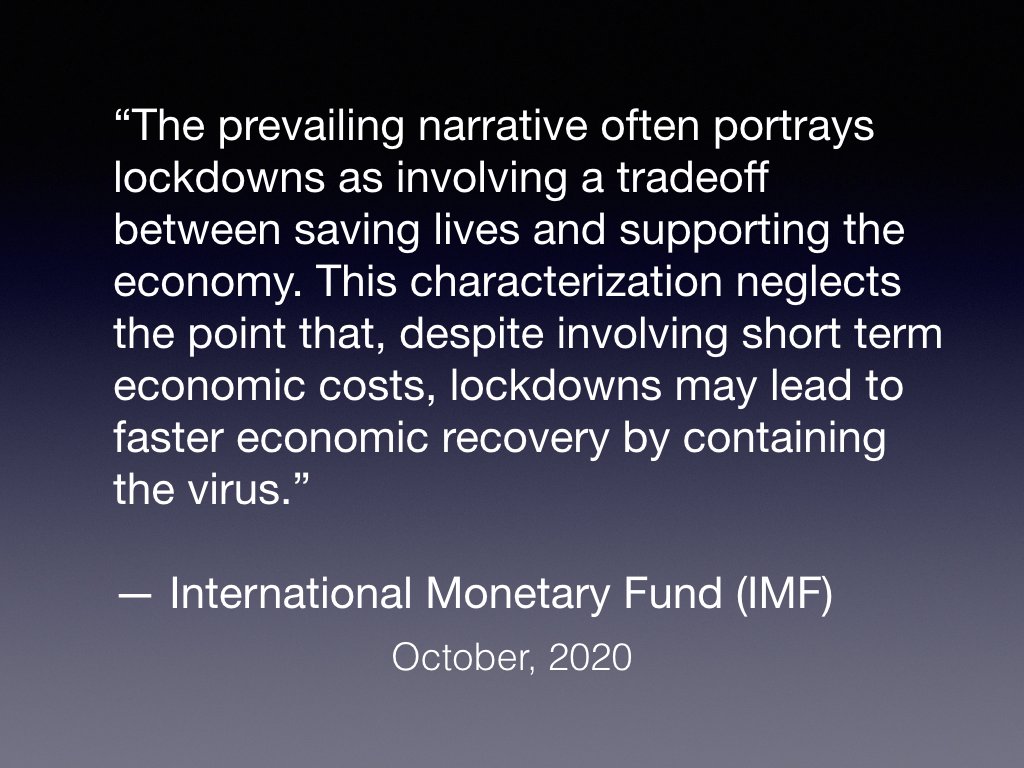
The International Monetary Fund (IMF) is analyzing damage due to COVID and projecting further severe consequences if current policies persist. They state “despite involving short term economic costs, lockdowns may lead to faster economic recovery by containing the virus”
1/
Note: This report doesn’t do a dynamic analysis that makes things much clearer, but it does a thoughtful statistical analysis based upon increasingly available data.
https://t.co/5Xmt8y7lCL
A few more quotes:
2/
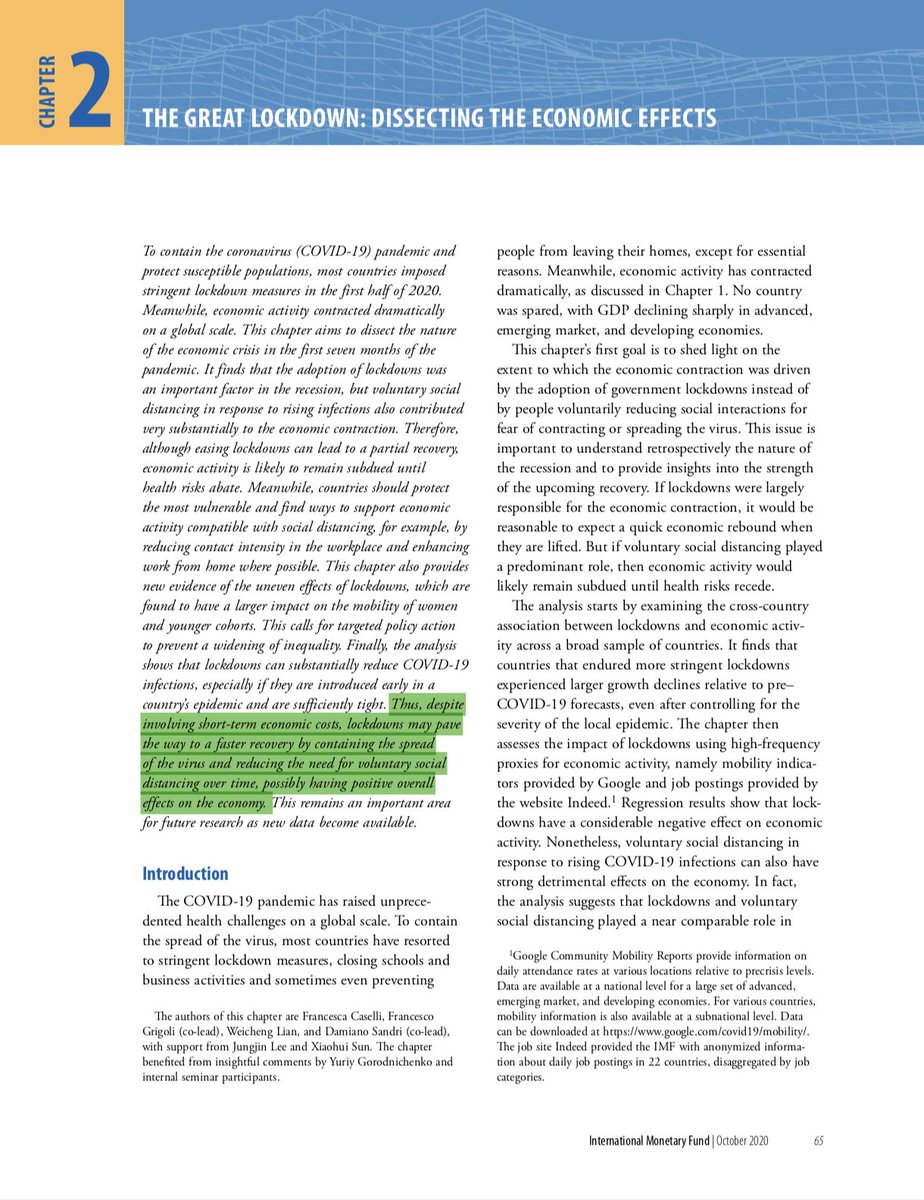
“The analysis also finds that lockdowns are powerful instruments to reduce infections, especially when they are introduced early in a country’s epidemic and when they are sufficiently stringent.”
3/
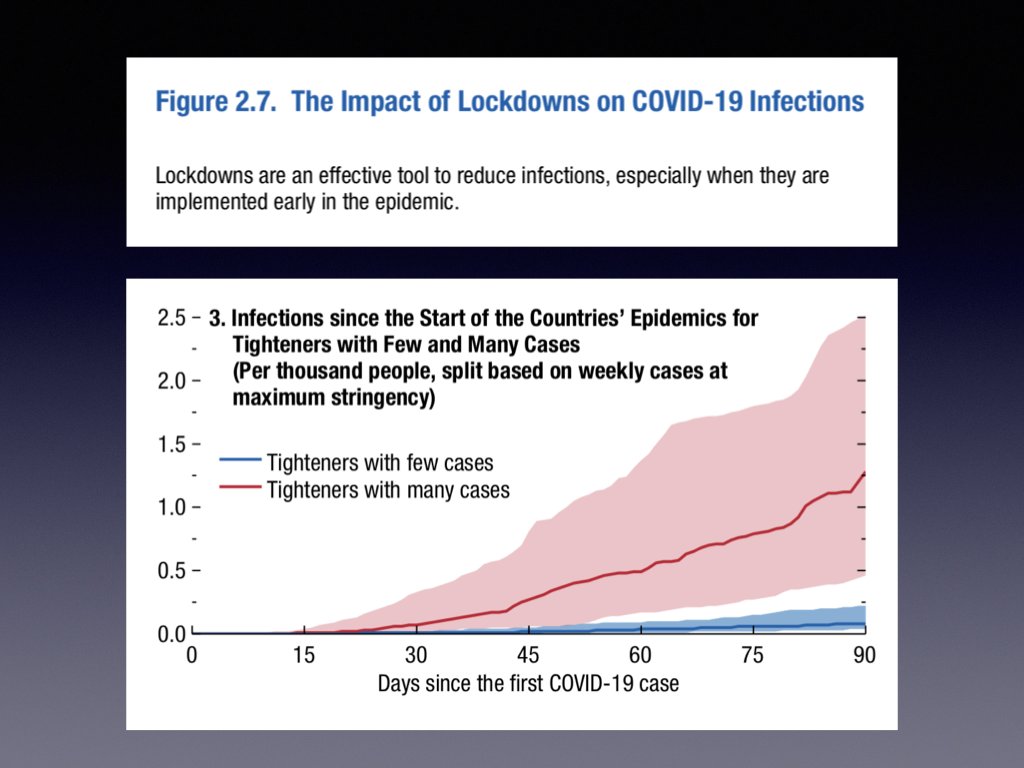
“lockdowns become progressively more effective in reducing COVID-19 cases when they become sufficiently stringent. Mild lockdowns appear instead ineffective at curbing infections.”
4/
“The results suggest that to achieve a given reduction in infections, policymakers may want to opt for stringent lockdowns over a shorter period rather than prolonged mild lockdowns...
5/
1/
Note: This report doesn’t do a dynamic analysis that makes things much clearer, but it does a thoughtful statistical analysis based upon increasingly available data.
https://t.co/5Xmt8y7lCL
A few more quotes:
2/
“The analysis also finds that lockdowns are powerful instruments to reduce infections, especially when they are introduced early in a country’s epidemic and when they are sufficiently stringent.”
3/
“lockdowns become progressively more effective in reducing COVID-19 cases when they become sufficiently stringent. Mild lockdowns appear instead ineffective at curbing infections.”
4/
“The results suggest that to achieve a given reduction in infections, policymakers may want to opt for stringent lockdowns over a shorter period rather than prolonged mild lockdowns...
5/


1/OK, let's take a little break from Coup Twitter, and think about an economic issue:
How can we build up the wealth of the middle class?
2/The typical American has surprisingly little wealth compared to the typical resident of many other developed countries.
This is a fact that is not widely known or appreciated.
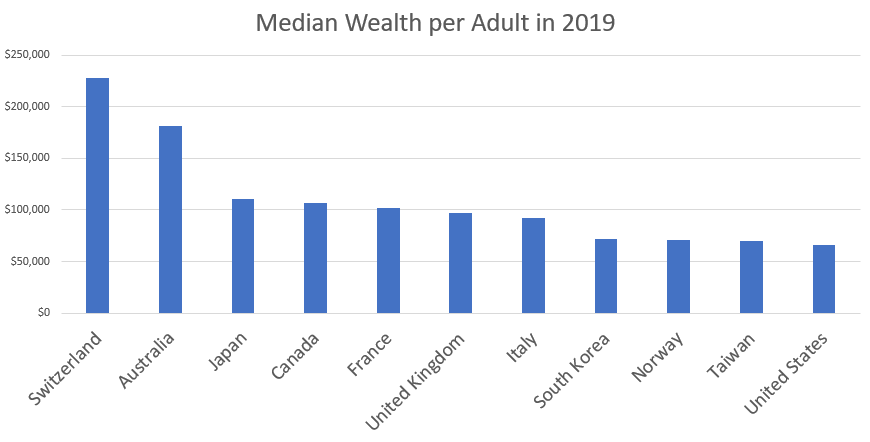
3/Now, some people argue that stuff like Social Security or social insurance programs should be included in wealth. But I chose to focus on private wealth because I think having assets you can sell whenever you want is important to
4/For many decades after World War 2, middle-class wealth in America was on a smooth upward trajectory.
Then the housing crash came, and all that changed. Suddenly the rich were still doing well but everyone else was seeing the end of their American Dream.
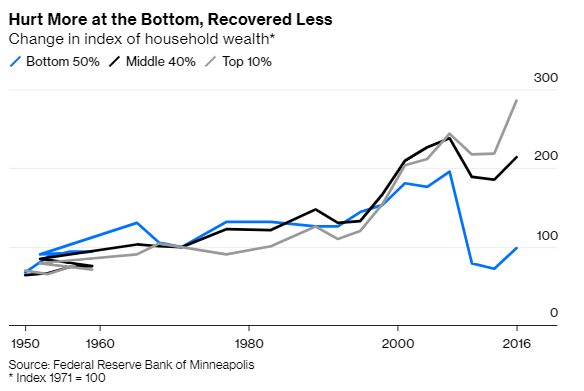
5/Why the divergence?
Because the American middle class has its wealth in houses -- specifically, in the houses they live in.
It's the rich who own stocks.
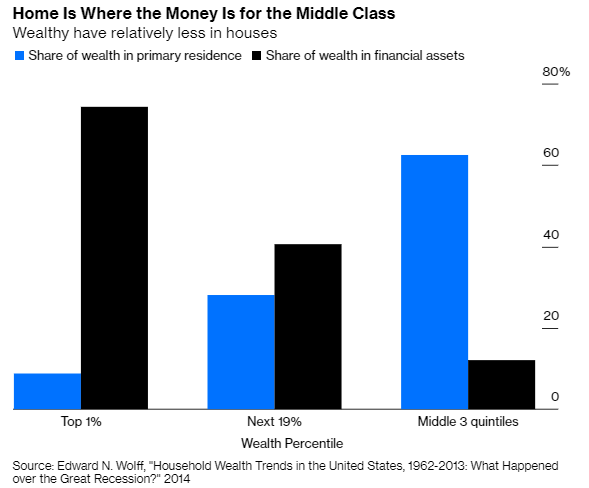
How can we build up the wealth of the middle class?
2/The typical American has surprisingly little wealth compared to the typical resident of many other developed countries.
This is a fact that is not widely known or appreciated.
3/Now, some people argue that stuff like Social Security or social insurance programs should be included in wealth. But I chose to focus on private wealth because I think having assets you can sell whenever you want is important to
Yes, these numbers don't include things like Social Security, just privately held wealth. They're not an attempt to capitalize every possible future income stream.
— Noahtogolpe \U0001f407 (@Noahpinion) January 10, 2021
4/For many decades after World War 2, middle-class wealth in America was on a smooth upward trajectory.
Then the housing crash came, and all that changed. Suddenly the rich were still doing well but everyone else was seeing the end of their American Dream.
5/Why the divergence?
Because the American middle class has its wealth in houses -- specifically, in the houses they live in.
It's the rich who own stocks.


On Jan 6, 2021, the always stellar Mr @deepakshenoy tweeted, this:
https://t.co/fa3GX9VnW0
Innocuous 1 sentence, but its a full economic theory at play.
Let me break it down for you. (1/n)
On September 30, 2020, I wrote an article for @CFASocietyIndia where I explained that RBI is all set to lose its ability to set interest rates if it continues to fiddle with the exchange rate (2/n)
What do I mean, "fiddle with the exchange rate"?
In essence, if RBI opts and continues to manage exchange rate, then that is "fiddling with the exchange rate"
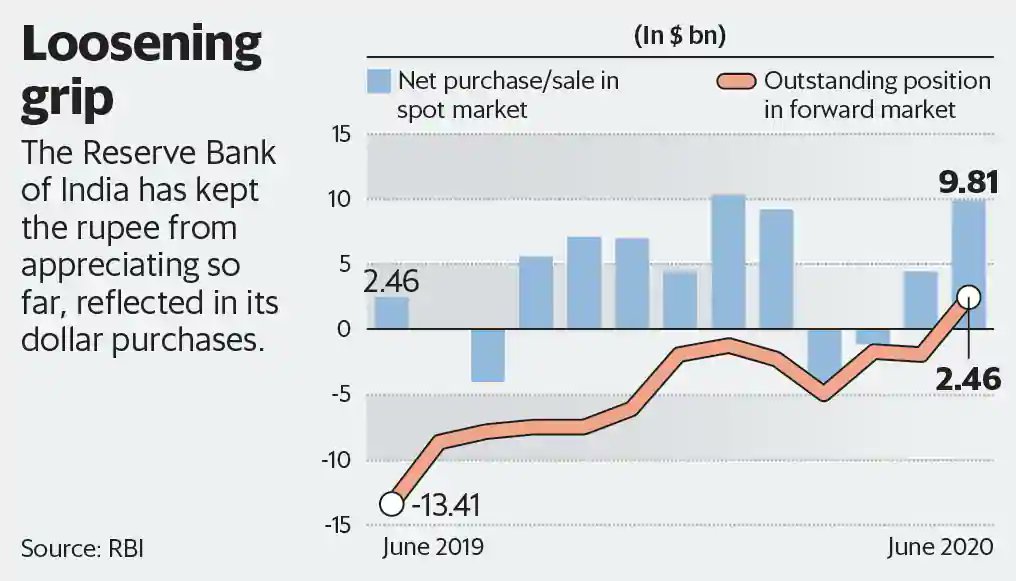
RBI has done that in the past and has restarted it in 2020 - very explicitly. (3/n)
First in March 2020, it opened a Dollar/INR swap of $2B with far leg to be unwound in September 2020.
Implying INR will be bought from the open markets in order to prevent INR from falling vis a vis USD (4/n)
The Second aspect is now, that dollar inflow is happening, and the forex reserves swelled -> implying the rupee is appreciating, RBI again intervened from September, by selling INR in spot markets. (5/n)
https://t.co/9kpWP7ovyM
https://t.co/fa3GX9VnW0
Innocuous 1 sentence, but its a full economic theory at play.
Let me break it down for you. (1/n)
91 day TBills at 3.03%. Interest rates are even lower than RBI has them.
— Deepak Shenoy (@deepakshenoy) January 6, 2021
On September 30, 2020, I wrote an article for @CFASocietyIndia where I explained that RBI is all set to lose its ability to set interest rates if it continues to fiddle with the exchange rate (2/n)
What do I mean, "fiddle with the exchange rate"?
In essence, if RBI opts and continues to manage exchange rate, then that is "fiddling with the exchange rate"
RBI has done that in the past and has restarted it in 2020 - very explicitly. (3/n)
First in March 2020, it opened a Dollar/INR swap of $2B with far leg to be unwound in September 2020.
Implying INR will be bought from the open markets in order to prevent INR from falling vis a vis USD (4/n)
The Second aspect is now, that dollar inflow is happening, and the forex reserves swelled -> implying the rupee is appreciating, RBI again intervened from September, by selling INR in spot markets. (5/n)
https://t.co/9kpWP7ovyM


$600/wk Unemployment Insurance cannot deliver the benefits of a $600/wk Job Guarantee. From the outset, I should say JG is not a replacement for UI, no matter what you may have heard. I’ll get to this later, but read this long 🧶 w/ that in mind.
Automatic stabilization: Both $600/wk UI and JG will provide counter cyclical spending. But UI will be weaker. Counter-cyclical stabilization is not just about the absence of income. It is also about the transmission and structure of economy
Firms don't like to hire the unemployed. Mass and long-term unemployment make the problem worse. JG would recover labor markets much faster than a UI of the same amount, both b/c of the higher direct, induced & tertiary employment effects & b/c of private firm hiring preferences.
JG stabilizes spending patterns better. Uncertain job prospects may mean more cautious spending from the unemployed compared to those w/ guaranteed jobs.
UI is temporary, which makes matters worse. Even if it were permanent, it still won't resolve the problem of job scarcity.
Nations who once achieved tight full employment through active labor market policies demonstrate that unemployment does NOT fluctuate the same way it does w/o them. Direct employment, ELR type policies diminish drastically/even eliminate these amplitudes (eg postwar Japan/Sweden)
Surprised so many smart people bought into the idea that $600/wk UI is the same as $600/wk job guarantee (or better) or that JG jobs must be inherently inessential. I\u2019ve addressed this many times & will post a thread later. Trying not to spend precious family time on Twitter.
— Pavlina R Tcherneva (@ptcherneva) December 29, 2020
Automatic stabilization: Both $600/wk UI and JG will provide counter cyclical spending. But UI will be weaker. Counter-cyclical stabilization is not just about the absence of income. It is also about the transmission and structure of economy
Firms don't like to hire the unemployed. Mass and long-term unemployment make the problem worse. JG would recover labor markets much faster than a UI of the same amount, both b/c of the higher direct, induced & tertiary employment effects & b/c of private firm hiring preferences.
JG stabilizes spending patterns better. Uncertain job prospects may mean more cautious spending from the unemployed compared to those w/ guaranteed jobs.
UI is temporary, which makes matters worse. Even if it were permanent, it still won't resolve the problem of job scarcity.
Nations who once achieved tight full employment through active labor market policies demonstrate that unemployment does NOT fluctuate the same way it does w/o them. Direct employment, ELR type policies diminish drastically/even eliminate these amplitudes (eg postwar Japan/Sweden)


