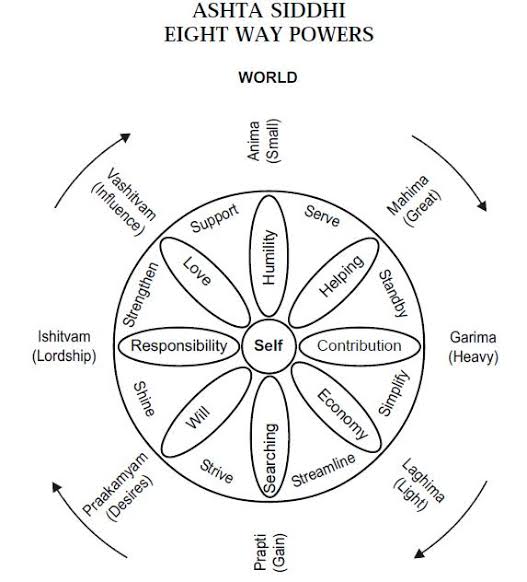
1) Let's talk about a key part of the Chinese creator economy. The creator management and incubator agencies known as Multi-Channel Networks (MCN). We''ll summerise key lessons for the western creator economy.
And know how Li Ziqi got her 12m YouTube subscribers
Enter the MCNs who offers the creator the following:
Their services are more holistic than western MCNs, who's offerings are more domain-specific.
More from Lillian Li
More from Economy


What do a Tory Peer, Selwyn Gummer (Lord Chadlington), David Sumner ( Sumner Group Holdings) and the Sanchez Perez family (drugs money, laundered through Gold mines) have in common?
It’s another company-saving a £50 million PPE contract shaggy dog story
Connections, connections
What a start to the story
“A bulletproof truck trundled down the road in downtown Lima, guarded by 18 policeman
They were wearing body armour & wielding high velocity rifles
No-one was taking any chances
This was a Special delivery for Peruvian Prosecutor for an anti drug trial

That was in 2011, the same year that Lord Chadlington’s daughter got married in Chadlington to Henry Allsopp.
Who was there?
Yes Kirstie Allsopp of Location, location, location and all this Covid nonsense fame) is his sister
Camilla, his Godmother
Jeremy Hunt
Cameron

Well. Come on. Lord Chadlington had been chair of the local Witney Conservative Association. It’s only fair.
Hang on. Julian Wheatland, Director of SCL Group/ Cambridge Analytica had also been chair of Witney Conservative Association...and campaigned for his mate Cameron
Are we sure Julian Wheatland and his side kick Alexander Nix were not there too @JolyonMaugham ?
I mean. They move in the same North Oxford circles.
It’s another company-saving a £50 million PPE contract shaggy dog story
Connections, connections
The *staggering* tale of a Tory Peer and a \xa350m PPE contract. https://t.co/SH2qxOmfQ4
— Jo Maugham (@JolyonMaugham) December 10, 2020
What a start to the story
“A bulletproof truck trundled down the road in downtown Lima, guarded by 18 policeman
They were wearing body armour & wielding high velocity rifles
No-one was taking any chances
This was a Special delivery for Peruvian Prosecutor for an anti drug trial
That was in 2011, the same year that Lord Chadlington’s daughter got married in Chadlington to Henry Allsopp.
Who was there?
Yes Kirstie Allsopp of Location, location, location and all this Covid nonsense fame) is his sister
Camilla, his Godmother
Jeremy Hunt
Cameron
Well. Come on. Lord Chadlington had been chair of the local Witney Conservative Association. It’s only fair.
Hang on. Julian Wheatland, Director of SCL Group/ Cambridge Analytica had also been chair of Witney Conservative Association...and campaigned for his mate Cameron
Are we sure Julian Wheatland and his side kick Alexander Nix were not there too @JolyonMaugham ?
I mean. They move in the same North Oxford circles.



You May Also Like

Stan Lee’s fictional superheroes lived in the real New York. Here’s where they lived, and why. https://t.co/oV1IGGN8R6
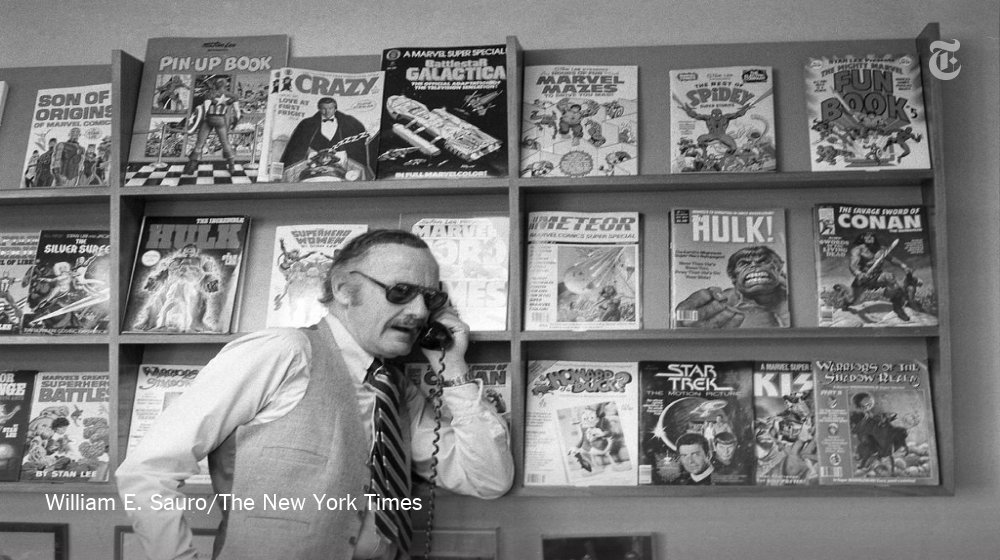
Stan Lee, who died Monday at 95, was born in Manhattan and graduated from DeWitt Clinton High School in the Bronx. His pulp-fiction heroes have come to define much of popular culture in the early 21st century.
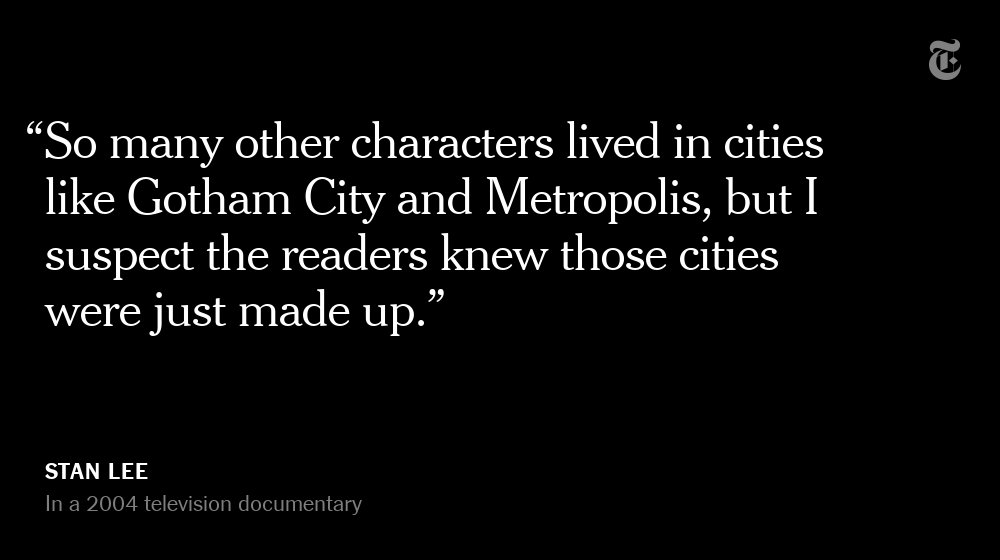
Tying Marvel’s stable of pulp-fiction heroes to a real place — New York — served a counterbalance to the sometimes gravity-challenged action and the improbability of the stories. That was just what Stan Lee wanted. https://t.co/rDosqzpP8i
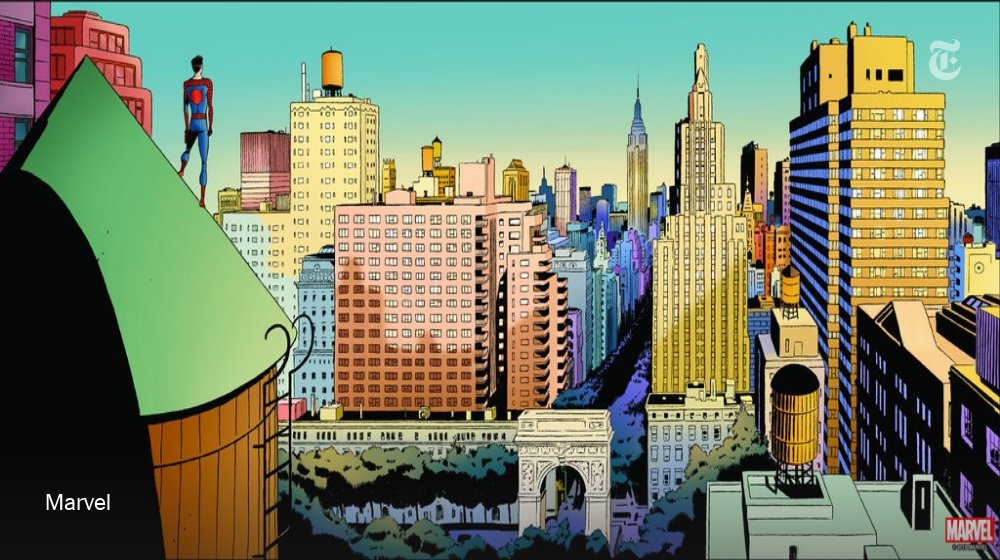
The New York universe hooked readers. And the artists drew what they were familiar with, which made the Marvel universe authentic-looking, down to the water towers atop many of the buildings. https://t.co/rDosqzpP8i
The Avengers Mansion was a Beaux-Arts palace. Fans know it as 890 Fifth Avenue. The Frick Collection, which now occupies the place, uses the address of the front door: 1 East 70th Street.
Stan Lee, who died Monday at 95, was born in Manhattan and graduated from DeWitt Clinton High School in the Bronx. His pulp-fiction heroes have come to define much of popular culture in the early 21st century.
Tying Marvel’s stable of pulp-fiction heroes to a real place — New York — served a counterbalance to the sometimes gravity-challenged action and the improbability of the stories. That was just what Stan Lee wanted. https://t.co/rDosqzpP8i
The New York universe hooked readers. And the artists drew what they were familiar with, which made the Marvel universe authentic-looking, down to the water towers atop many of the buildings. https://t.co/rDosqzpP8i
The Avengers Mansion was a Beaux-Arts palace. Fans know it as 890 Fifth Avenue. The Frick Collection, which now occupies the place, uses the address of the front door: 1 East 70th Street.