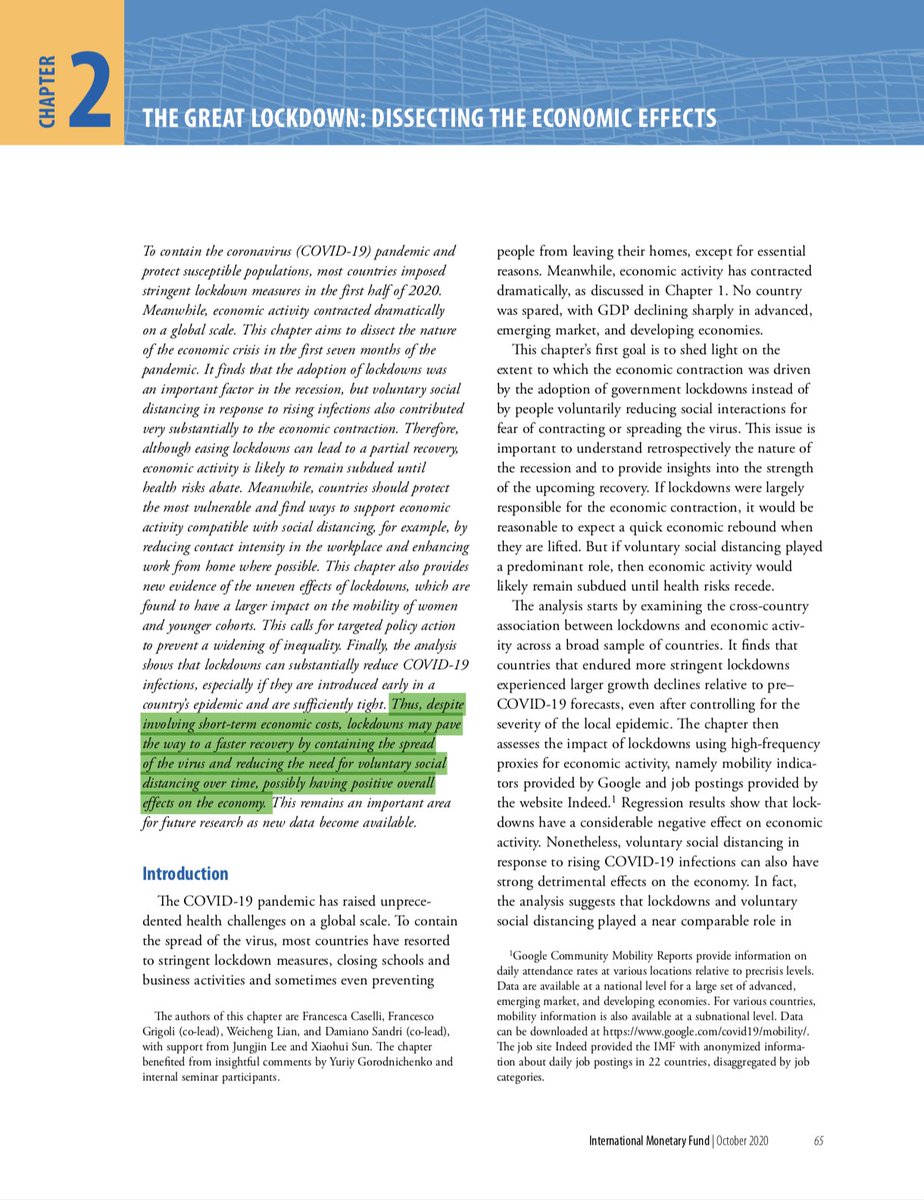
The International Monetary Fund (IMF) is analyzing damage due to COVID and projecting further severe consequences if current policies persist. They state “despite involving short term economic costs, lockdowns may lead to faster economic recovery by containing the virus”

1/

Note: This report doesn’t do a dynamic analysis that makes things much clearer, but it does a thoughtful statistical analysis based upon increasingly available data.

https://t.co/5Xmt8y7lCL

A few more quotes:

2/
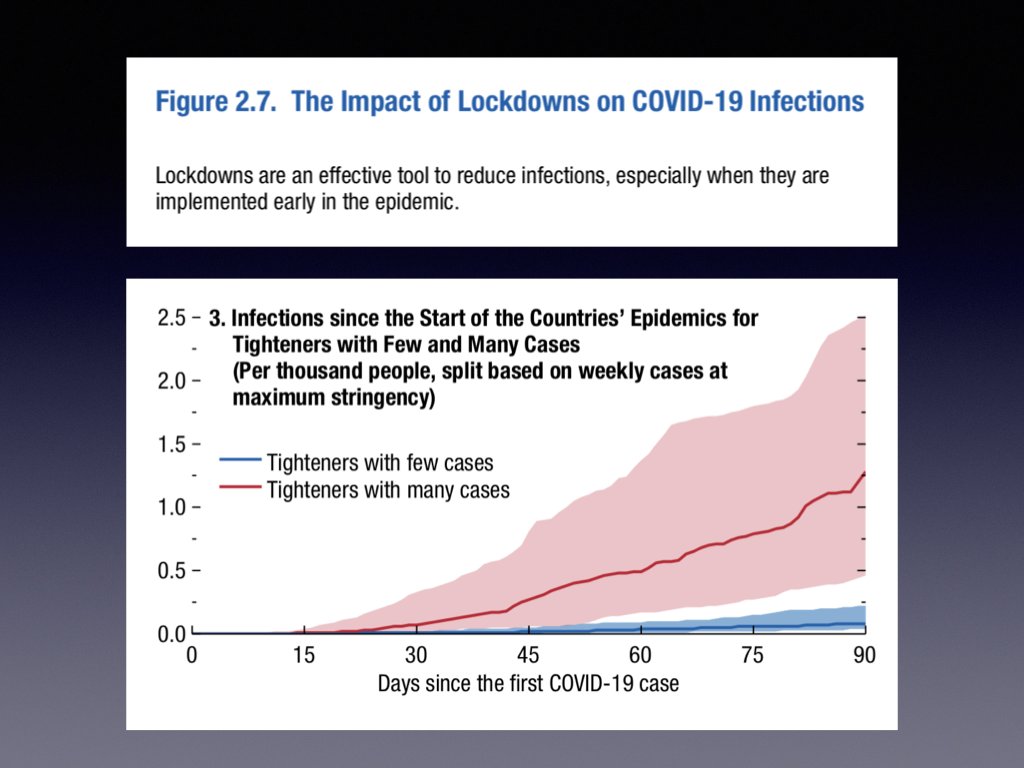
“The analysis also finds that lockdowns are powerful instruments to reduce infections, especially when they are introduced early in a country’s epidemic and when they are sufficiently stringent.”

3/
“lockdowns become progressively more effective in reducing COVID-19 cases when they become sufficiently stringent. Mild lockdowns appear instead ineffective at curbing infections.”

4/
“The results suggest that to achieve a given reduction in infections, policymakers may want to opt for stringent lockdowns over a shorter period rather than prolonged mild lockdowns...

5/
..Based upon past experience, tighter lockdowns appear indeed to entail only modest additional costs while leading to a considerably stronger decline in infections.”

6/
“The analysis also suggests that lockdowns must be sufficiently stringent to reduce infections significantly.”

7/
“The effectiveness of lockdowns in reducing infections suggests that lockdowns may pave the way to a faster economic recovery if they succeed in containing the epidemic and thus limit the extent of voluntary social distancing...

8/
..Therefore the short-term economic costs of lockdowns could be compensated by stronger medium-term growth, possibly leading to positive overall effects on the economy.”

9/
“These findings suggest that economies will continue to operate below potential while health risks persist, even if lockdowns are lifted.”

“Therefore, policymakers should refrain from withdrawing policy support too quickly and preserve spending on social safety nets.”

10/
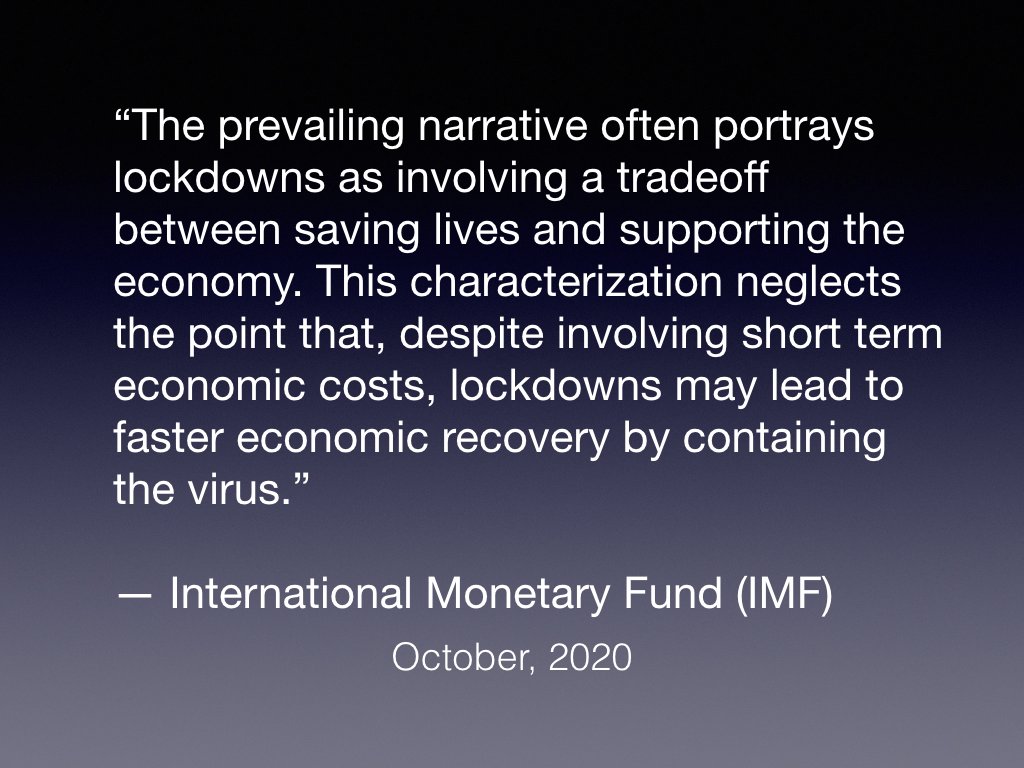
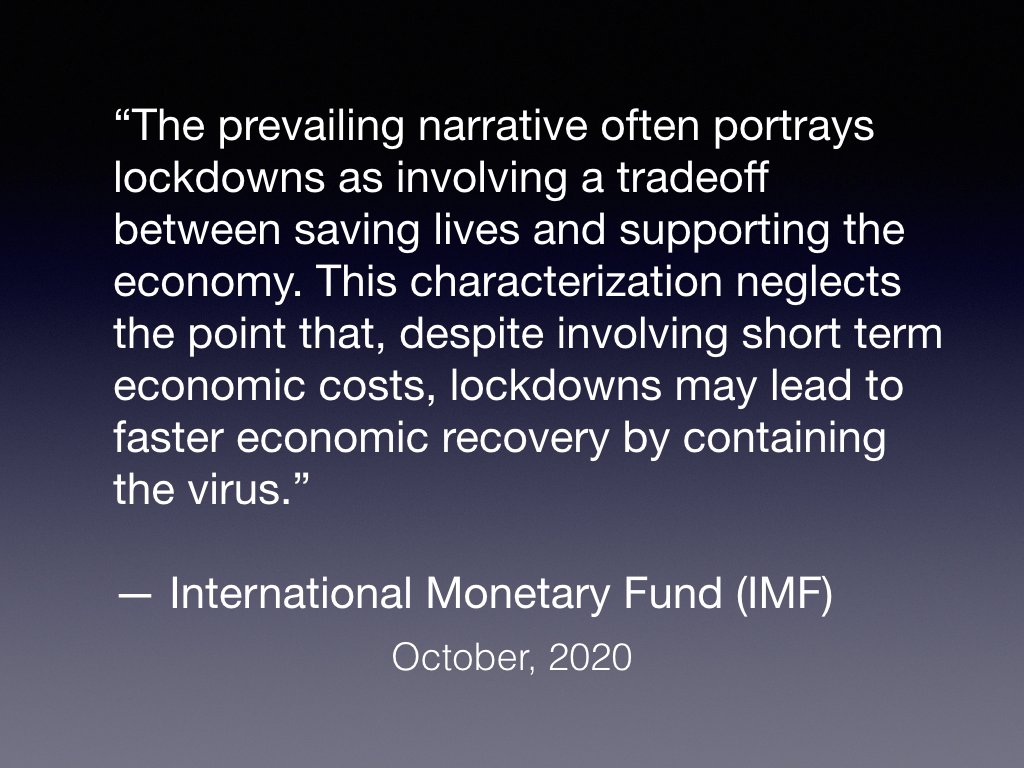
“The prevailing narrative often portrays lockdowns as involving a tradeoff between saving lives and supporting the economy. This characterization neglects the point that, despite involving short term economic costs, lockdowns may lead to faster economic recovery..

11/
by containing the virus and reducing voluntary social distancing. These medium term gains may offset the the short-term costs of lockdowns, possibly leading to positive overall effects on the economy.”

12/

More from Economy

You May Also Like

Recently, the @CNIL issued a decision regarding the GDPR compliance of an unknown French adtech company named "Vectaury". It may seem like small fry, but the decision has potential wide-ranging impacts for Google, the IAB framework, and today's adtech. It's thread time! 👇

It's all in French, but if you're up for it you can read:
• Their blog post (lacks the most interesting details):
https://t.co/PHkDcOT1hy
• Their high-level legal decision: https://t.co/hwpiEvjodt
• The full notification: https://t.co/QQB7rfynha

I've read it so you needn't!

Vectaury was collecting geolocation data in order to create profiles (eg. people who often go to this or that type of shop) so as to power ad targeting. They operate through embedded SDKs and ad bidding, making them invisible to users.

The @CNIL notes that profiling based off of geolocation presents particular risks since it reveals people's movements and habits. As risky, the processing requires consent — this will be the heart of their assessment.

Interesting point: they justify the decision in part because of how many people COULD be targeted in this way (rather than how many have — though they note that too). Because it's on a phone, and many have phones, it is considered large-scale processing no matter what.