
An expert in their field has taken their vast knowledge and distilled it to what's most important. Writing forces you to make difficult decisions on what's important and what's not. Writing demands clarity. You're getting an expert's lifetime of work for $15.
THREAD
The world is littered with hacks and quick fixes.
Magic routines, butter in our coffee, special supplements, exotic foods. All promising to transform our lives.
Nearly all of it is BS. Here are 12 science-backed "hacks" that actually work.
An expert in their field has taken their vast knowledge and distilled it to what's most important. Writing forces you to make difficult decisions on what's important and what's not. Writing demands clarity. You're getting an expert's lifetime of work for $15.
The best way to "hack" knowledge? Have a conversation with those who are informed. They've done the hard part of figuring out of sorting through the mess of information AND making sense of it. Having a conversation brings clarity for application.
Day after day. Sit down to write. Get out to exercise. Whatever the task you're trying to master, just keep showing up.
If you show up enough, you'll get better.
Just getting your 8+ hours has enormous benefits from the psychological to physical. Sleep is when your body restores & grows with its highest output of growth hormones, & when your mind processes and coalesces information. Translating knowledge from superficial to deep
Get out and move. Most should be easy to moderate so you can keep coming back day after day. Some should be moderate/hard. And very occasionally you should "go see god" to remind yourself what going to the well is like.
Being outside can increase creativity, mood, and well-being. Just being near nature, according to one study, was equivalent health-wise to being 7 years younger. Even just looking at pictures of nature can do the trick, improving mood and performance.
One of our fundamental needs as a person is to belong. If we satisfy this need, our health and motivation improve We're more likely to persist, and tackle difficult challenges.
Feeling like we belong allows us to feel secure in who we are.
Moods and behaviors are contagious. Research from the Framingham study found that sadness and happiness rippled through the town. Living nearby a friend who becomes happy increases your probability of becoming happy by 25%
Sitting close to a low performer decreased performance by 30%.
Surround yourself with people who lift you up. https://t.co/KTms7fVddp
When life is too easy, we get bored and unmotivated. When we don't have a shot at winning, our motivation wanes and we give up.
Find challenges that are in the sweet spot of just beyond your current capabilities. A slight stretch.
Find something that is sustainable. Dieting is akin to going all-in on the latest exercise fad, lasting for 3 weeks and giving up exercising for 6 months…It's much better to find something that is sustainable for you.
Follow your interests. Go deep when something catches your eye. But don't be afraid to ditch it and move on to the next thing if it no longer meets your needs. Don't tie your identity too closely to what you do. Explore the world.
A self-transcending purpose allows us to persist a bit longer, perform a bit better. In physical pursuits, our brain loosens the reigns allowing us to dig a bit deeper.
Move. Sleep. Belong.
But that's the point. We spend so much time looking for shortcuts when the boring stuff right in front of us has a much bigger effect.
Choose the boring stuff!
We are seeking the silver bullet, when the reality is we need to zoom back out and nail the basics before we even consider the final 1 percent.
If you like deep dives on topics, consider checking out my free weekly newsletter.
Thanks for taking the time to read my work! https://t.co/Esomf74PKg
More from Science


#DDDD $LBPS $LOAC
A thread on the potential near term catalysts behind why I have increased my position in 4d Pharma @4dpharmaplc (LON: #DDDD):

1) NASDAQ listing. This is the most obvious.
The idea behind this is that the huge pool of capital and institutional interest in the NASDAQ will enable a higher per-share valuation for #DDDD than was achievable in the UK.
Comparators to @4dpharmaplc #DDDD (market capitalisation £150m) on the NASDAQ and their market capitalisation:
Seres Therapeutics: $2.33bn = £1.72bn (has had a successful phase 3 C. difficile trial); from my previous research (below) the chance of #DDDD achieving this at least once is at least
Kaleido Biosciences: $347m = £256m. 4 products under consideration, compared to #DDDD's potential 16. When you view @4dpharmaplc's 1000+ patents and AI-driven MicroRx platform (not to mention their end-to-end manufacturing capability), 4d's undervaluation is clear.
A thread on the potential near term catalysts behind why I have increased my position in 4d Pharma @4dpharmaplc (LON: #DDDD):
1) NASDAQ listing. This is the most obvious.
The idea behind this is that the huge pool of capital and institutional interest in the NASDAQ will enable a higher per-share valuation for #DDDD than was achievable in the UK.
Comparators to @4dpharmaplc #DDDD (market capitalisation £150m) on the NASDAQ and their market capitalisation:
Seres Therapeutics: $2.33bn = £1.72bn (has had a successful phase 3 C. difficile trial); from my previous research (below) the chance of #DDDD achieving this at least once is at least
While looking at speculative pharmaceutical stocks I am reminded of why I am averse to these risky picks.#DDDD was compelling enough, though, to break this rule. The 10+ treatments under trial, industry-leading IP portfolio, and comparable undervaluation are inescapable.
— Shrey Srivastava (@BlogShrey) December 16, 2020
Kaleido Biosciences: $347m = £256m. 4 products under consideration, compared to #DDDD's potential 16. When you view @4dpharmaplc's 1000+ patents and AI-driven MicroRx platform (not to mention their end-to-end manufacturing capability), 4d's undervaluation is clear.

1/ Automobiles and Intake Fraction. Since cars are back in the news I thought I would retweet this model result I offered in early April 2020. I focused only on 1 micron particles & accounted for windows completely closed & cracked slightly open.
2/ Related air exchange rates were based on experimental results in literature for mid-sized sedans. Particle deposition to indoor surfaces were accounted for, as the surface to volume ratio in a 3 m3 cab is large. An important outcome was the intake fraction (IF)
3/ Here, IF is the number of particles (or virions in collective particles) inhaled by a receptor DIVIDED BY the number or particles (or virions in collective particles) emitted by an infector.
4/ Integrated over the two hour drive (in this example) the IF for all windows closed & a receptor at rest is 0.08 (8% of what comes out of the infectors respiratory system ends up in the respiratory system of the receptor). 8%! That is a very high intake factor.
5/ With additional ventilation from cracking a window open drops the IF to 0.012 (1.2%) still relatively high. Can get lower by opening more windows.
Simulation: Riding in car for 120 min w/ infected passenger who seems fine other than a cough every few mins. (1) a lot of SARS-CoV-2 virus (in fine aerosol particles) accumulation in car cabin w/ windows closed; (2) cracking window open slightly = dramatic reduction. #COVID19 pic.twitter.com/bCmrmnLUPG
— Dr. Richard Corsi (@CorsIAQ) April 4, 2020
2/ Related air exchange rates were based on experimental results in literature for mid-sized sedans. Particle deposition to indoor surfaces were accounted for, as the surface to volume ratio in a 3 m3 cab is large. An important outcome was the intake fraction (IF)
3/ Here, IF is the number of particles (or virions in collective particles) inhaled by a receptor DIVIDED BY the number or particles (or virions in collective particles) emitted by an infector.
4/ Integrated over the two hour drive (in this example) the IF for all windows closed & a receptor at rest is 0.08 (8% of what comes out of the infectors respiratory system ends up in the respiratory system of the receptor). 8%! That is a very high intake factor.
5/ With additional ventilation from cracking a window open drops the IF to 0.012 (1.2%) still relatively high. Can get lower by opening more windows.

Localized Surface Plasmon Resonance - an overview | ScienceDirect Topics
https://t.co/mzS7vVSREJ
https://t.co/353PdAX2fa
https://t.co/3yBImjOdd4
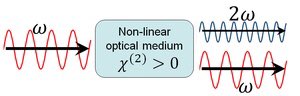
In some cases, almost 100% of the light energy can be converted to the second harmonic frequency. These cases typically involve intense pulsed laser beams passing through large crystals, and careful alignment to obtain phase matching.
https://t.co/mzS7vVSREJ
https://t.co/353PdAX2fa
https://t.co/3yBImjOdd4
In some cases, almost 100% of the light energy can be converted to the second harmonic frequency. These cases typically involve intense pulsed laser beams passing through large crystals, and careful alignment to obtain phase matching.
You May Also Like


The Eye of Horus. 1/*

I believe that @ripple_crippler and @looP_rM311_7211 are the same person. I know, nobody believes that. 2/*
Today I want to prove that Mr Pool smile faces mean XRP and price increase. In Ripple_Crippler, previous to Mr Pool existence, smile faces were frequent. They were very similar to the ones Mr Pool posts. The eyes also were usually a couple of "x", in fact, XRP logo. 3/*

The smile XRP-eyed face also appears related to the Moon. XRP going to the Moon. 4/*
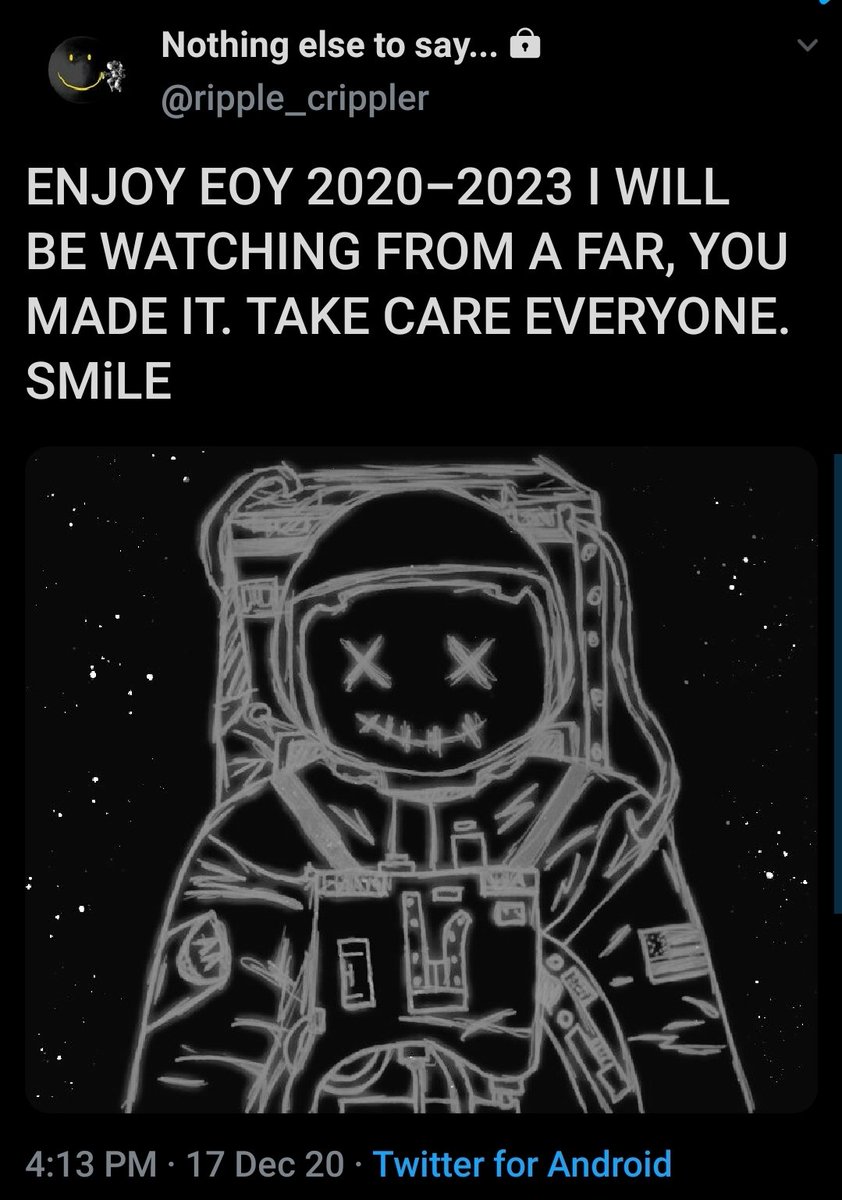
And smile XRP-eyed faces also appear related to Egypt. In particular, to the Eye of Horus. https://t.co/i4rRzuQ0gZ 5/*

I believe that @ripple_crippler and @looP_rM311_7211 are the same person. I know, nobody believes that. 2/*
Today I want to prove that Mr Pool smile faces mean XRP and price increase. In Ripple_Crippler, previous to Mr Pool existence, smile faces were frequent. They were very similar to the ones Mr Pool posts. The eyes also were usually a couple of "x", in fact, XRP logo. 3/*
The smile XRP-eyed face also appears related to the Moon. XRP going to the Moon. 4/*
And smile XRP-eyed faces also appear related to Egypt. In particular, to the Eye of Horus. https://t.co/i4rRzuQ0gZ 5/*


