Skeptics of universities say: "But most of the people who graduate end up leaving."
1/OK, I should really write another thread about university-centric regional development, because I think people often make some (very understandable) mistakes when thinking about this issue.
Skeptics of universities say: "But most of the people who graduate end up leaving."
Educating local kids is good for the nation, but doesn't help a region much.
The way a university helps a region is through RESEARCH.
https://t.co/zud8wNQDTh
But university RESEARCH pulls in OTHER smart people from other regions, and they stay there.
Here's a paper showing that this is the main way universities increase a region's human capital: https://t.co/ofu256tsFi
Companies want to partner with university labs, so they can commercialize the technologies the labs produce. So they invest in the labs, and sometimes they even put their offices in the town.
https://t.co/NiVzQVgn5I
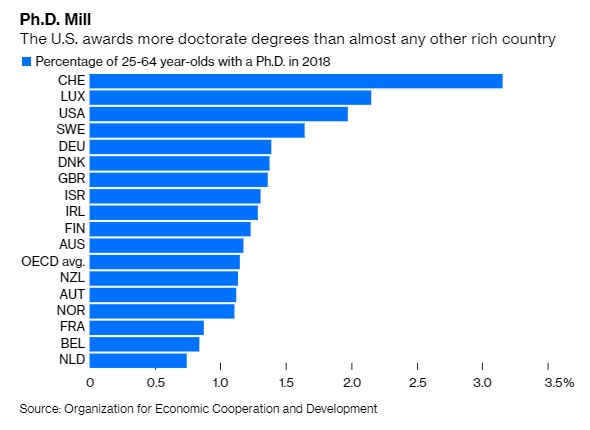
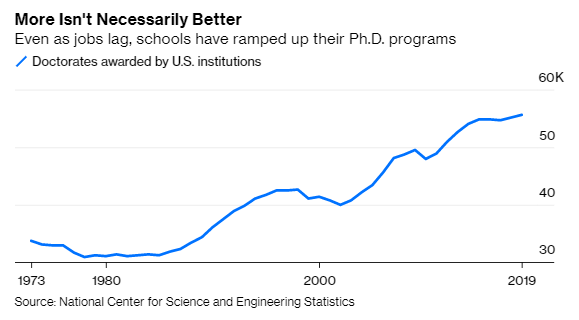
Answer: A little bit. But mainly because this means less tuition money that can be used to fund university research labs.
BUT, the most important thing is to fund research more!!
Critics of university-centric development like to point out that the probability of succeeding at this is very low.
But this doesn't really matter.
My hometown of College Station is no Silicon Valley. But College Station, and its surrounding region, are thriving thanks to a university.
https://t.co/2GduLv9SL5
Beyond the research-and-investment thing I discussed earlier, universities also draw in residents from small towns, creating pleasant small cities.
https://t.co/2xqpKdMZUs
https://t.co/hYSbEKxeV8
In fact, this is unlikely to be a useful approach. https://t.co/uxUcLHzmON
What we have to do is UPGRADE the RESEARCH CAPABILITIES of the second- and third-tier universities.
1. By spending more research dollars there
2. By encouraging companies to partner with the labs there
3. By letting these universities admit more high-paying foreign students
4. A new land grant program?
More from Noah Smith
This thread demonstrates that a lot of academic writing that *looks* like utter nonsense is merely scholars dressing up a useful but mundane point with a ton of unnecessary jargon.
My theory is that the jargon creates an artificial barrier to entry. https://t.co/MqLyyppdHl
If one must spend years marinating one's brain in jargon to be perceived as an expert on a topic, it protects the status and earning power of people who study relatively easy topics.
In econ, a similar thing is accomplished by what recent Nobel prize winner Paul Romer calls "mathiness": https://t.co/DBCRRc8Mir
But mathiness and jargon are not quite the same...
Jargon usually doesn't force you to change the substance of your central point.
Mathiness often does. By forcing you to write your model in a way that's mathematically tractable (easy to work with), mathiness often impoverishes your understanding of how the world really works.
has written about this problem:
Imagine for a moment the most obscurantist, jargon-filled, po-mo article the politically correct academy might produce. Pure SJW nonsense. Got it? Chances are you're imagining something like the infamous "Feminist Glaciology" article from a few years back.https://t.co/NRaWNREBvR pic.twitter.com/qtSFBYY80S
— Jeffrey Sachs (@JeffreyASachs) October 13, 2018
My theory is that the jargon creates an artificial barrier to entry. https://t.co/MqLyyppdHl
If one must spend years marinating one's brain in jargon to be perceived as an expert on a topic, it protects the status and earning power of people who study relatively easy topics.
In econ, a similar thing is accomplished by what recent Nobel prize winner Paul Romer calls "mathiness": https://t.co/DBCRRc8Mir
But mathiness and jargon are not quite the same...
Jargon usually doesn't force you to change the substance of your central point.
Mathiness often does. By forcing you to write your model in a way that's mathematically tractable (easy to work with), mathiness often impoverishes your understanding of how the world really works.
has written about this problem:
"Competitive wokeness", like "virtue signaling" and "preference falsification", seems to be something people on the right say in order to pretend that people on the left don't really believe what they claim to believe.
Basically we have a whole bunch of ways of saying "You can't possibly believe that!!". Which helps us avoid the terrifying fact that yes, people generally do believe it.
Of course, "believe" doesn't mean what it means in econ class. It means that people get a warm feeling from asserting something, even if they don't know what it means. "God is omnipotent", etc.
A lot of times we believe extreme things, simply because asserting those things all together in a group gives us a warm feeling of having an army on our side.
It's not competitive wokeness. It's COOPERATIVE wokeness.
"Virtue signaling" isn't fake or pretend. It's real.
"Virtue", when it comes right down to it, means membership on a team.
Sometimes, to prove you're on a team, it helps to say something people on the other team could never bring themselves to say.
"She now finds herself in the uppermost echelons of the culture industries, where woke liberalism is de rigueur and departures from it are stigmatized." @reihan on Taylor Swift's swing towards politics: https://t.co/cKW4LoY9IV
— The Atlantic (@TheAtlantic) October 11, 2018
Basically we have a whole bunch of ways of saying "You can't possibly believe that!!". Which helps us avoid the terrifying fact that yes, people generally do believe it.
Of course, "believe" doesn't mean what it means in econ class. It means that people get a warm feeling from asserting something, even if they don't know what it means. "God is omnipotent", etc.
A lot of times we believe extreme things, simply because asserting those things all together in a group gives us a warm feeling of having an army on our side.
It's not competitive wokeness. It's COOPERATIVE wokeness.
"Virtue signaling" isn't fake or pretend. It's real.
"Virtue", when it comes right down to it, means membership on a team.
Sometimes, to prove you're on a team, it helps to say something people on the other team could never bring themselves to say.
Krugman is, of course, right about this. BUT, note that universities can do a lot to revitalize declining and rural regions.
See this thing that @lymanstoneky wrote:
And see this thing that I wrote:
And see this book that @JamesFallows wrote:
And see this other thing that I wrote:
One thing I've been noticing about responses to today's column is that many people still don't get how strong the forces behind regional divergence are, and how hard to reverse 1/ https://t.co/Ft2aH1NcQt
— Paul Krugman (@paulkrugman) November 20, 2018
See this thing that @lymanstoneky wrote:
And see this thing that I wrote:
And see this book that @JamesFallows wrote:
And see this other thing that I wrote:
More from Society


Two things can be true at once:
1. There is an issue with hostility some academics have faced on some issues
2. Another academic who himself uses threats of legal action to bully colleagues into silence is not a good faith champion of the free speech cause
I have kept quiet about Matthew's recent outpourings on here but as my estwhile co-author has now seen fit to portray me as an enabler of oppression I think I have a right to reply. So I will.
I consider Matthew to be a colleague and a friend, and we had a longstanding agreement not to engage in disputes on twitter. I disagree with much in the article @UOzkirimli wrote on his research in @openDemocracy but I strongly support his right to express such critical views
I therefore find it outrageous that Matthew saw fit to bully @openDemocracy with legal threats, seeking it seems to stifle criticism of his own work. Such behaviour is simply wrong, and completely inconsistent with an academic commitment to free speech.
I am not embroiling myself in the various other cases Matt lists because, unlike him, I think attention to the detail matters and I don't have time to research each of these cases in detail.
1. There is an issue with hostility some academics have faced on some issues
2. Another academic who himself uses threats of legal action to bully colleagues into silence is not a good faith champion of the free speech cause
How about Selina Todd, Kathleen Stock, Jo Phoenix, Rachel Ara, Sarah Honeychurch, Michele Moore, Nina Power, Joanna Williams, Jenny Murray, Julia Gasper ...
— Matt Goodwin (@GoodwinMJ) February 17, 2021
Or is it only Eric you pop at?
Are they all making it up too Rob?
Are they "beyond parody"? https://t.co/drQssTD0OL
I have kept quiet about Matthew's recent outpourings on here but as my estwhile co-author has now seen fit to portray me as an enabler of oppression I think I have a right to reply. So I will.
I consider Matthew to be a colleague and a friend, and we had a longstanding agreement not to engage in disputes on twitter. I disagree with much in the article @UOzkirimli wrote on his research in @openDemocracy but I strongly support his right to express such critical views
I therefore find it outrageous that Matthew saw fit to bully @openDemocracy with legal threats, seeking it seems to stifle criticism of his own work. Such behaviour is simply wrong, and completely inconsistent with an academic commitment to free speech.
I am not embroiling myself in the various other cases Matt lists because, unlike him, I think attention to the detail matters and I don't have time to research each of these cases in detail.


You May Also Like





Tip from the Monkey
Pangolins, September 2019 and PLA are the key to this mystery
Stay Tuned!
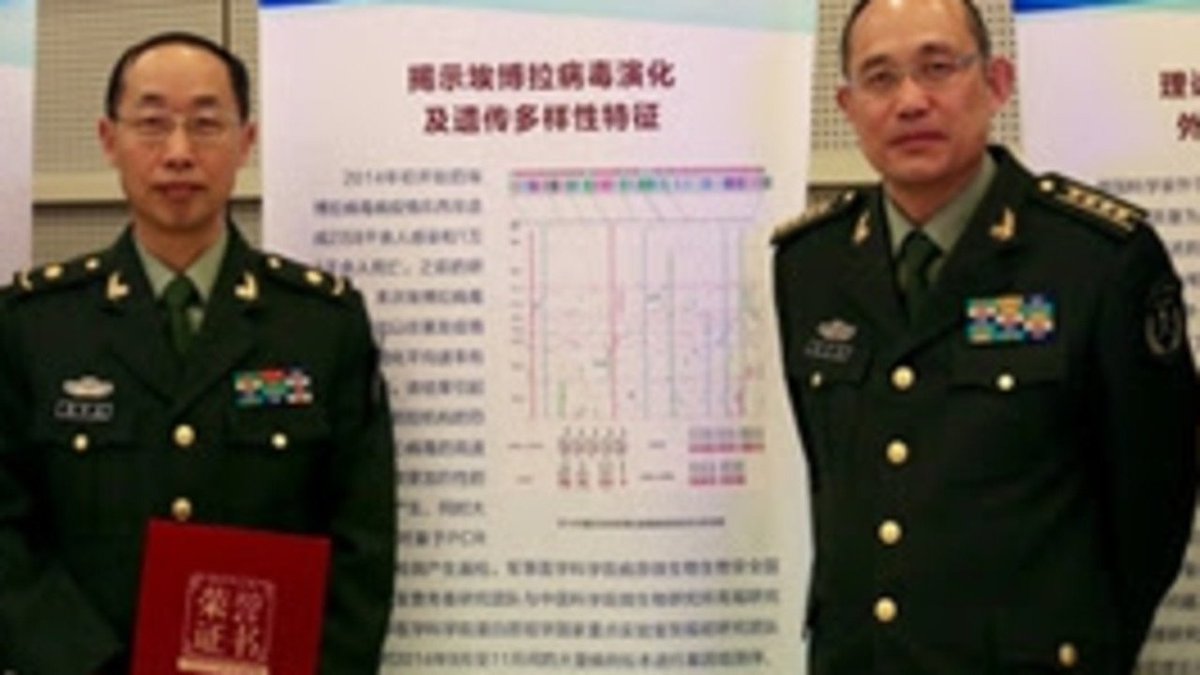
1. Yang
2. A jacobin capuchin dangling a flagellin pangolin on a javelin while playing a mandolin and strangling a mannequin on a paladin's palanquin, said Saladin
More to come tomorrow!

3. Yigang Tong
https://t.co/CYtqYorhzH
Archived: https://t.co/ncz5ruwE2W
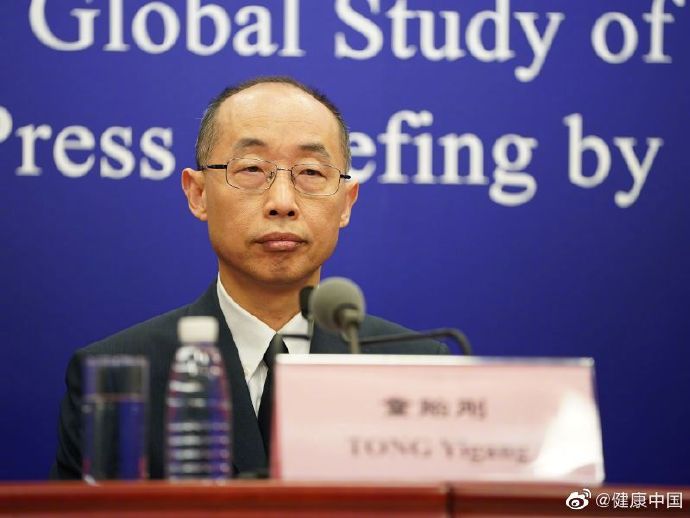
4. YT Interview
Some bats & pangolins carry viruses related with SARS-CoV-2, found in SE Asia and in Yunnan, & the pangolins carrying SARS-CoV-2 related viruses were smuggled from SE Asia, so there is a possibility that SARS-CoV-2 were coming from
Pangolins, September 2019 and PLA are the key to this mystery
Stay Tuned!
1. Yang
Meet Yang Ruifu, CCP's biological weapons expert https://t.co/JjB9TLEO95 via @Gnews202064
— Billy Bostickson \U0001f3f4\U0001f441&\U0001f441 \U0001f193 (@BillyBostickson) October 11, 2020
Interesting expose of China's top bioweapons expert who oversaw fake pangolin research
Paper 1: https://t.co/TrXESKLYmJ
Paper 2:https://t.co/9LSJTNCn3l
Pangolinhttps://t.co/2FUAzWyOcv pic.twitter.com/I2QMXgnkBJ
2. A jacobin capuchin dangling a flagellin pangolin on a javelin while playing a mandolin and strangling a mannequin on a paladin's palanquin, said Saladin
More to come tomorrow!
3. Yigang Tong
https://t.co/CYtqYorhzH
Archived: https://t.co/ncz5ruwE2W
4. YT Interview
Some bats & pangolins carry viruses related with SARS-CoV-2, found in SE Asia and in Yunnan, & the pangolins carrying SARS-CoV-2 related viruses were smuggled from SE Asia, so there is a possibility that SARS-CoV-2 were coming from