Remember: Just because an idea is old doesn't mean it's good.
More from Noah Smith
This is so dumb and incorrect and wrong it's unbelievable.
Facts.
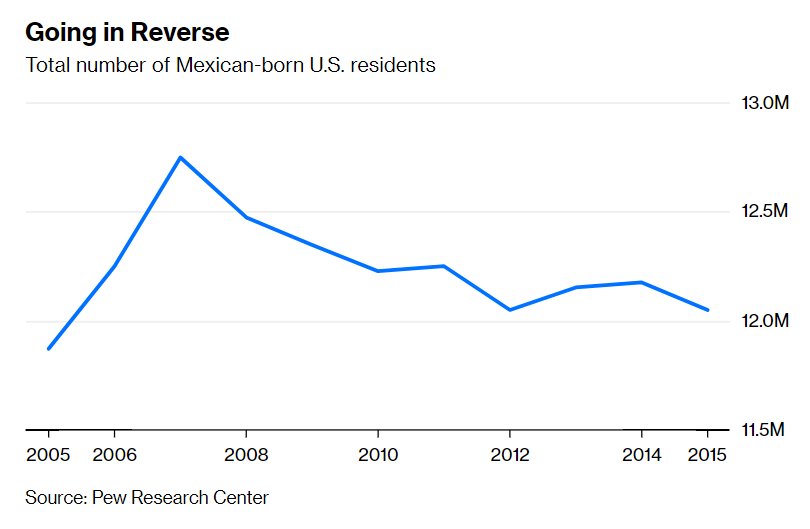
Facts!!
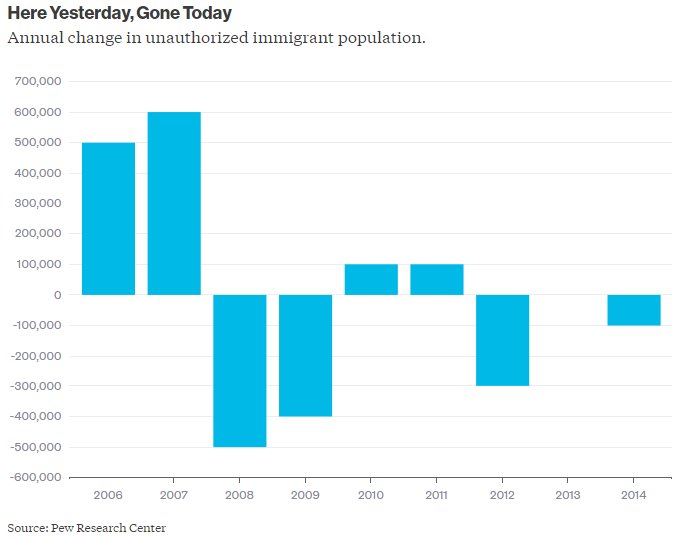
FACTS FACTS
Moar
Secretary of State Mike Pompeo said the U.S. is quickly approaching \u201ca moment of crisis\u201d because of the \u201crecord number of migrants\u201d spilling into the country https://t.co/QuiWPcXswA
— POLITICO (@politico) October 20, 2018
Facts.
Facts!!
FACTS FACTS
Moar
This thread demonstrates that a lot of academic writing that *looks* like utter nonsense is merely scholars dressing up a useful but mundane point with a ton of unnecessary jargon.
My theory is that the jargon creates an artificial barrier to entry. https://t.co/MqLyyppdHl
If one must spend years marinating one's brain in jargon to be perceived as an expert on a topic, it protects the status and earning power of people who study relatively easy topics.
In econ, a similar thing is accomplished by what recent Nobel prize winner Paul Romer calls "mathiness": https://t.co/DBCRRc8Mir
But mathiness and jargon are not quite the same...
Jargon usually doesn't force you to change the substance of your central point.
Mathiness often does. By forcing you to write your model in a way that's mathematically tractable (easy to work with), mathiness often impoverishes your understanding of how the world really works.
has written about this problem:
Imagine for a moment the most obscurantist, jargon-filled, po-mo article the politically correct academy might produce. Pure SJW nonsense. Got it? Chances are you're imagining something like the infamous "Feminist Glaciology" article from a few years back.https://t.co/NRaWNREBvR pic.twitter.com/qtSFBYY80S
— Jeffrey Sachs (@JeffreyASachs) October 13, 2018
My theory is that the jargon creates an artificial barrier to entry. https://t.co/MqLyyppdHl
If one must spend years marinating one's brain in jargon to be perceived as an expert on a topic, it protects the status and earning power of people who study relatively easy topics.
In econ, a similar thing is accomplished by what recent Nobel prize winner Paul Romer calls "mathiness": https://t.co/DBCRRc8Mir
But mathiness and jargon are not quite the same...
Jargon usually doesn't force you to change the substance of your central point.
Mathiness often does. By forcing you to write your model in a way that's mathematically tractable (easy to work with), mathiness often impoverishes your understanding of how the world really works.
has written about this problem:
Krugman is, of course, right about this. BUT, note that universities can do a lot to revitalize declining and rural regions.
See this thing that @lymanstoneky wrote:
And see this thing that I wrote:
And see this book that @JamesFallows wrote:
And see this other thing that I wrote:
One thing I've been noticing about responses to today's column is that many people still don't get how strong the forces behind regional divergence are, and how hard to reverse 1/ https://t.co/Ft2aH1NcQt
— Paul Krugman (@paulkrugman) November 20, 2018
See this thing that @lymanstoneky wrote:
And see this thing that I wrote:
And see this book that @JamesFallows wrote:
And see this other thing that I wrote:
To be honest, I think this is just the effect of Twitter.
If you're on Twitter all the time - as every political commentator now is - it's easy to think that whiny, big-talking Twitter slacktivists are "the Dems".
But what's happening out there on the ground?
This is another reason I think Twitter is so bad for society.
It convinces intellectuals and commentators that practically everyone who's on their side is an extremist.
Which makes them tolerate extremism out of a (false) feeling of necessity.
If you stay on Twitter too much (which we all do now), you start to think that the typical left-of-center person is some British wanker who quote-tweets "Imagine thinking this" to anyone who doesn't like the idea of "ending capitalism".
But he is not typical.
A majority of Americans are not on Twitter.
But *every* journalist, commentator, and intellectual *has* to be on Twitter.
So every journalist, commentator, and intellectual comes face to face with big-talking slacktivist faux-extremists day in and day out.
It's a problem!!
Online bubbles full of shouty faux-extremists are, in general, fine.
The difference is that every journalist, commentator, and intellectual is essentially forced to exist in THIS bubble, because their jobs require it.
Twitter is a dystopian technology.
(end)
If you're on Twitter all the time - as every political commentator now is - it's easy to think that whiny, big-talking Twitter slacktivists are "the Dems".
But what's happening out there on the ground?
— VeryHiddenGeniusHat (@Popehat) October 18, 2018
This is another reason I think Twitter is so bad for society.
It convinces intellectuals and commentators that practically everyone who's on their side is an extremist.
Which makes them tolerate extremism out of a (false) feeling of necessity.
If you stay on Twitter too much (which we all do now), you start to think that the typical left-of-center person is some British wanker who quote-tweets "Imagine thinking this" to anyone who doesn't like the idea of "ending capitalism".
But he is not typical.
A majority of Americans are not on Twitter.
But *every* journalist, commentator, and intellectual *has* to be on Twitter.
So every journalist, commentator, and intellectual comes face to face with big-talking slacktivist faux-extremists day in and day out.
It's a problem!!
Online bubbles full of shouty faux-extremists are, in general, fine.
The difference is that every journalist, commentator, and intellectual is essentially forced to exist in THIS bubble, because their jobs require it.
Twitter is a dystopian technology.
(end)
More from Society

Tomorrow, January 6th, MAGA chuds, Proud Boys, and white supremacists are planned to descend on Washington D.C. to contest the election. Among them will be NSC-131, a New England based neo-Nazi organization. Let's welcome them by saying hi to one of their members, Eddie Stuart!
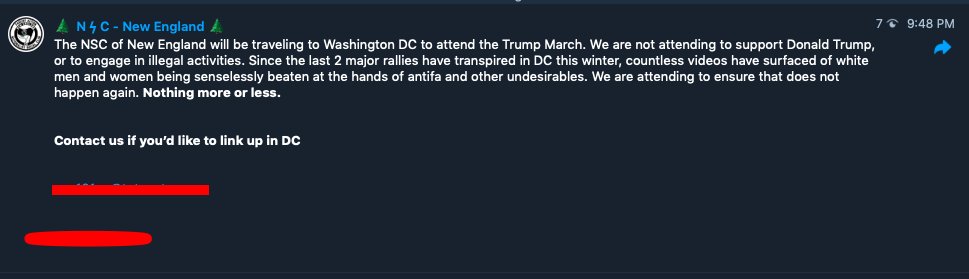
Edward Stuart, from Chester, New Hampshire, has been a member of Nationalist Social Club (NSC) since the very beginning and is a staple participant in their actions. He is known in NSC chats as "Carl Jung" and is well connected in the New England Nazi scene.
2/

NSC-131 is a neo-Nazi group that was started in Massachusetts in early 2020 by Chris Hood. You can learn more about NSC and it's members in these threads:
Eddie describes his ideology as "Esoteric Hitlerism" which is an occult form of Nazism that literally worships Adolf Hitler as a god, or, specifically, as an incarnation of the Hindu God Vishnu. Here is Ed holding the RigVeda with some of his occult Nazi pals. Interesting Ed!
4/
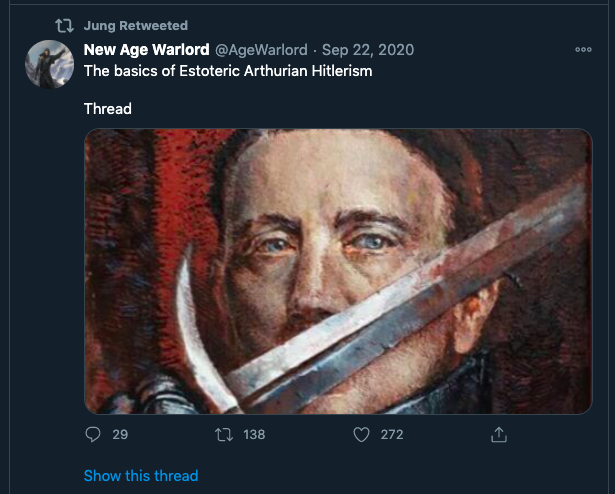
Much of this ideological insight was gained from Eddie's Twitter, where he originally used his "Carl Jung" persona and reposts explicit neo-fascist content and racist memes. In one edited picture, Eddie can be seen at an NSC event in late June 2020 holding a Nazi Sonnenrad flag
5
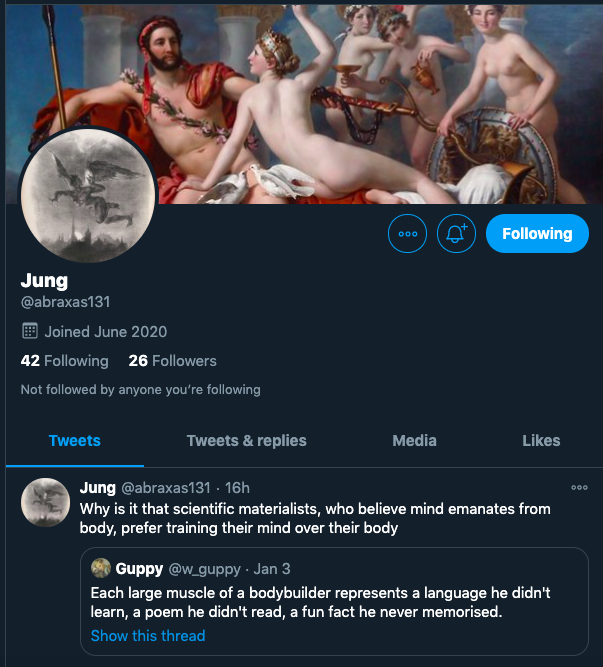
Edward Stuart, from Chester, New Hampshire, has been a member of Nationalist Social Club (NSC) since the very beginning and is a staple participant in their actions. He is known in NSC chats as "Carl Jung" and is well connected in the New England Nazi scene.
2/
NSC-131 is a neo-Nazi group that was started in Massachusetts in early 2020 by Chris Hood. You can learn more about NSC and it's members in these threads:
1/ Let\u2019s talk about a III%er turned Proud Boy turned Resist Marxism turned Patriot Front turned The Base affiliate.
— AntiFash Gordon (@AntiFashGordon) April 10, 2020
He now runs a new crew, the National Socialist Club, based on football hooliganism.\u2070\u2070
Some of you already know him.\u2070\u2070
His name is Chris Hood, of Boston, MA. pic.twitter.com/nXAxWugHcu
Eddie describes his ideology as "Esoteric Hitlerism" which is an occult form of Nazism that literally worships Adolf Hitler as a god, or, specifically, as an incarnation of the Hindu God Vishnu. Here is Ed holding the RigVeda with some of his occult Nazi pals. Interesting Ed!
4/
Much of this ideological insight was gained from Eddie's Twitter, where he originally used his "Carl Jung" persona and reposts explicit neo-fascist content and racist memes. In one edited picture, Eddie can be seen at an NSC event in late June 2020 holding a Nazi Sonnenrad flag
5


You May Also Like


One of the most successful stock trader with special focus on cash stocks and who has a very creative mind to look out for opportunities in dark times
Covering one of the most unique set ups: Extended moves & Reversal plays
Time for a 🧵 to learn the above from @iManasArora
What qualifies for an extended move?
30-40% move in just 5-6 days is one example of extended move
How Manas used this info to book
Post that the plight of the
Example 2: Booking profits when the stock is extended from 10WMA
10WMA =
Another hack to identify extended move in a stock:
Too many green days!
Read
Covering one of the most unique set ups: Extended moves & Reversal plays
Time for a 🧵 to learn the above from @iManasArora
What qualifies for an extended move?
30-40% move in just 5-6 days is one example of extended move
How Manas used this info to book
The stock exploded & went up as much as 63% from my price.
— Manas Arora (@iManasArora) June 22, 2020
Closed my position entirely today!#BroTip pic.twitter.com/CRbQh3kvMM
Post that the plight of the
What an extended (away from averages) move looks like!!
— Manas Arora (@iManasArora) June 24, 2020
If you don't learn to sell into strength, be ready to give away the majority of your gains.#GLENMARK pic.twitter.com/5DsRTUaGO2
Example 2: Booking profits when the stock is extended from 10WMA
10WMA =
#HIKAL
— Manas Arora (@iManasArora) July 2, 2021
Closed remaining at 560
Reason: It is 40+% from 10wma. Super extended
Total revenue: 11R * 0.25 (size) = 2.75% on portfolio
Trade closed pic.twitter.com/YDDvhz8swT
Another hack to identify extended move in a stock:
Too many green days!
Read
When you see 15 green weeks in a row, that's the end of the move. *Extended*
— Manas Arora (@iManasArora) August 26, 2019
Simple price action analysis.#Seamecltd https://t.co/gR9xzgeb9K