Hi @officestudents @EHRC @EHRCChair @KishwerFalkner @RJHilsenrath @trussliz @GEOgovuk

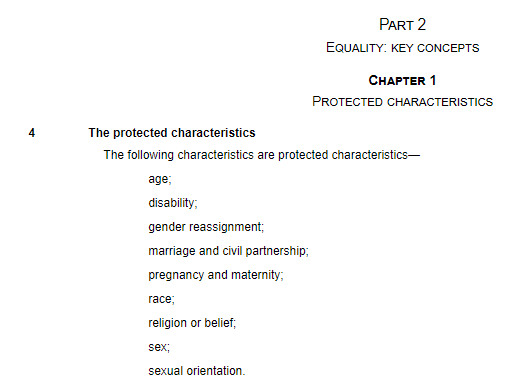
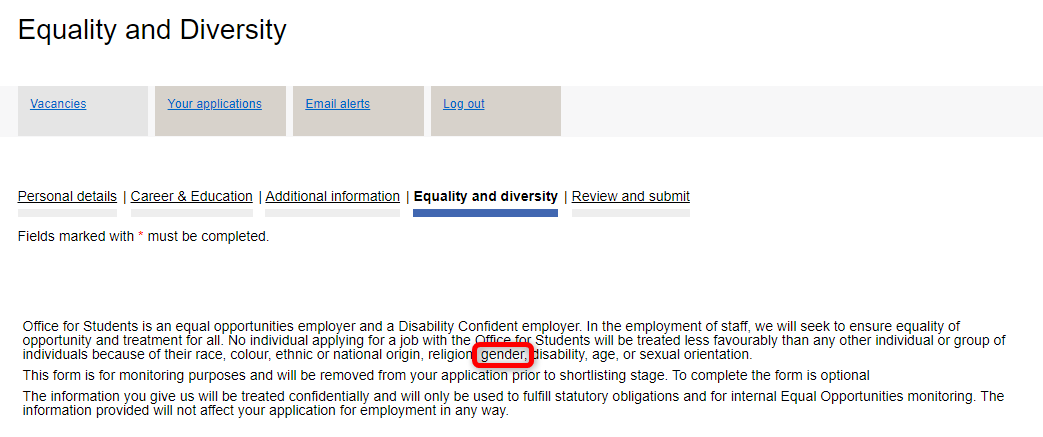
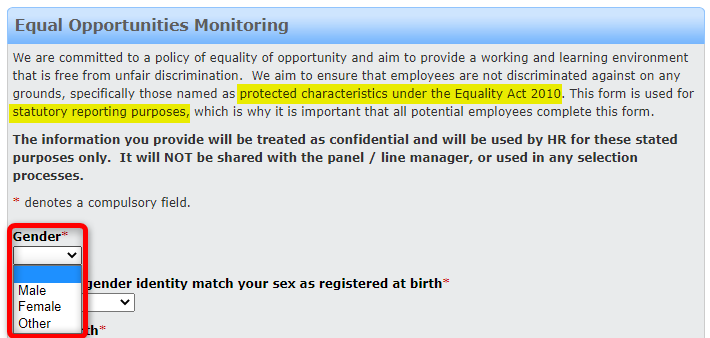
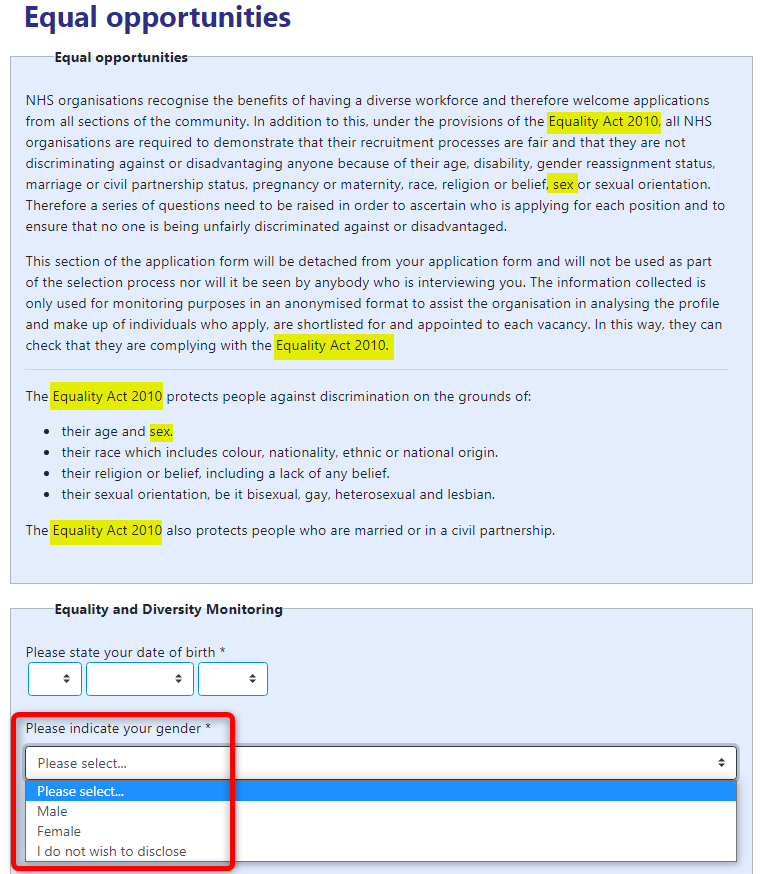
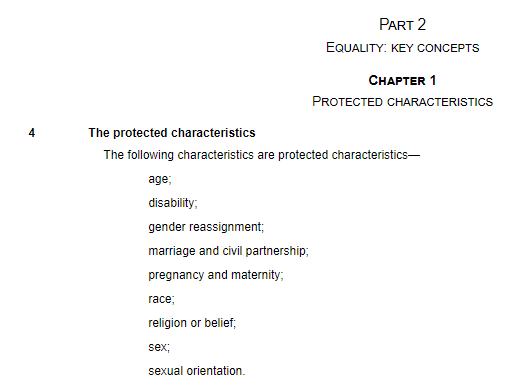
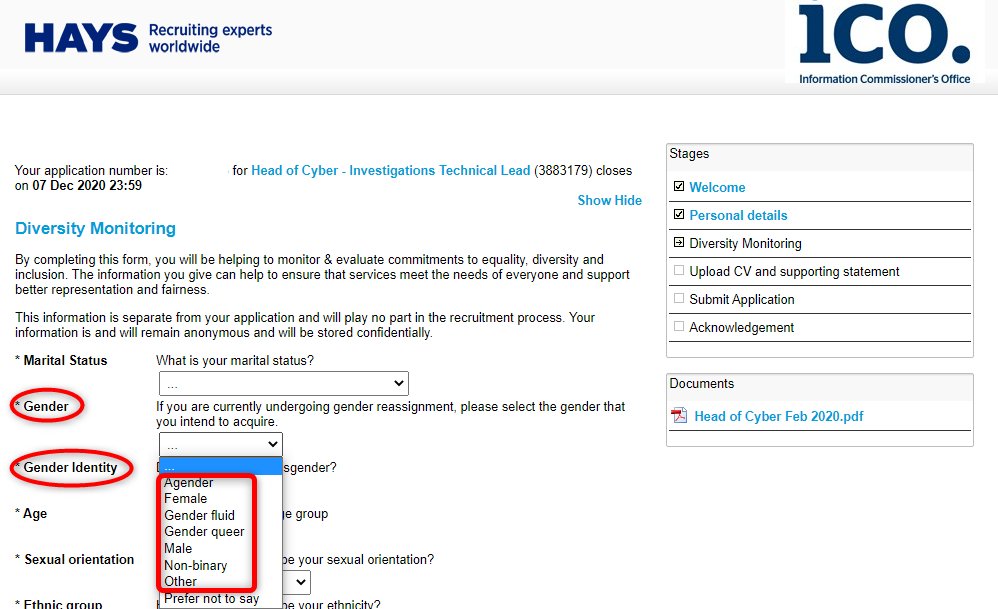
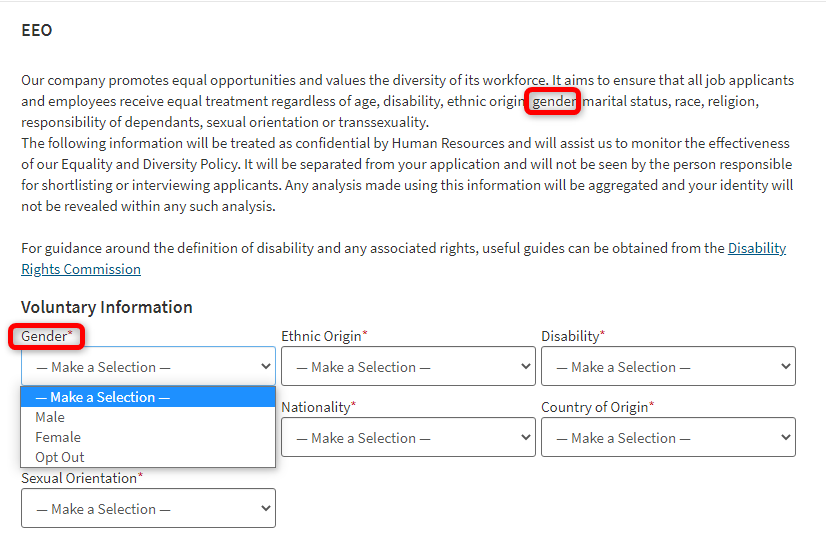
The Equality and Diversity section of your job application has 'gender' in what appears to be a list of the protected characteristics under the Equality Act 2010.

However...

1/15

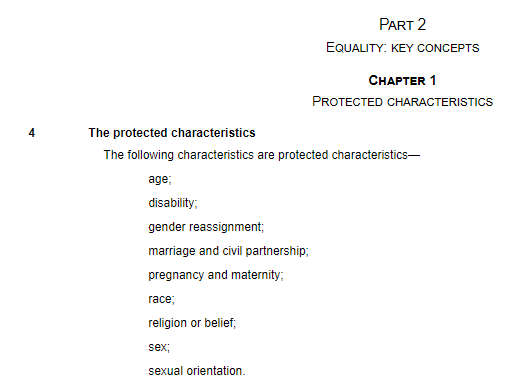
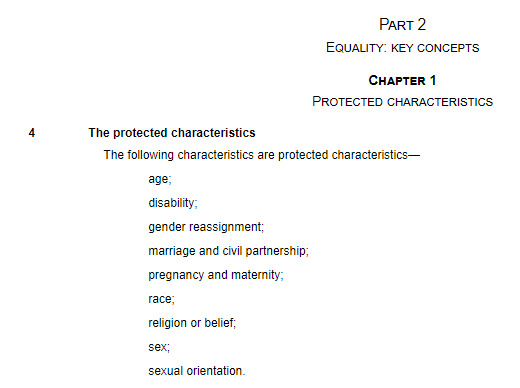
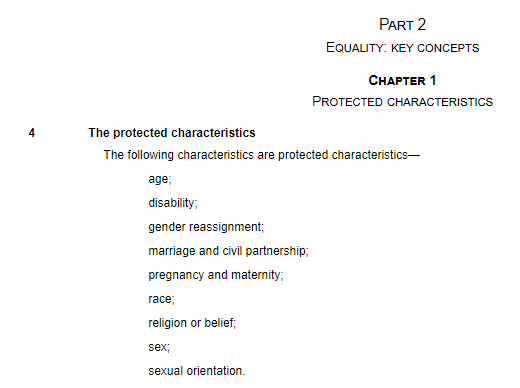
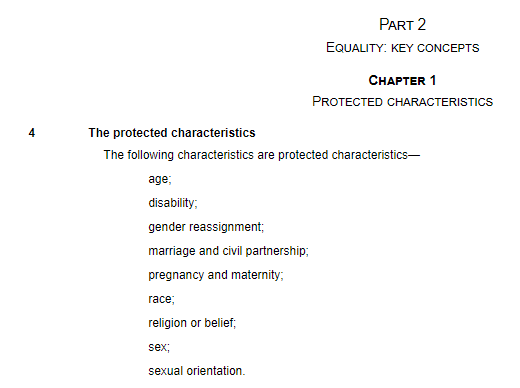
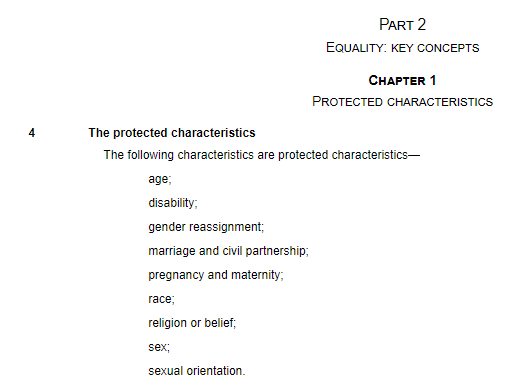
However, 'gender' is not a protected characteristic under the Equality Act 2010 and is not defined in the Act.

https://t.co/qisFhCiV1u

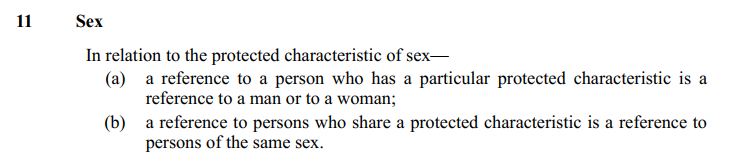
Sex is the protected characteristic under the Act, but that is not on your list.

2/15
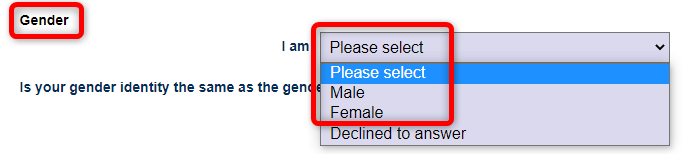
You then ask for the 'gender' of the applicant with options:

Male
Female.

3/15
Again, 'gender' is not a protected characteristic under the Equality Act 2010 and is not defined in the Act.

https://t.co/qisFhCiV1u

4/15
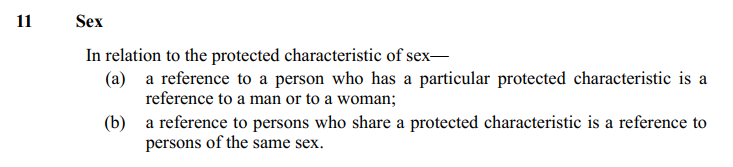
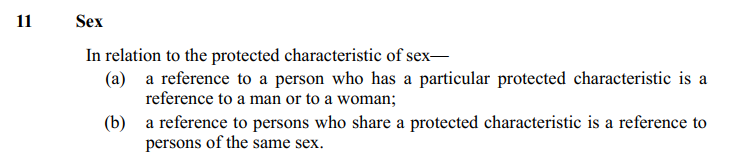
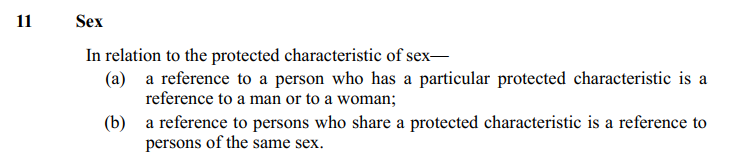
Sex is the protected characteristic and the only two possible options for sex are 'Female' and 'Male' as defined in the Act and consistent with biology, but you don't ask for that.

https://t.co/CEJ0gkr6nF

'Gender' is not a synonym for sex.

5/15
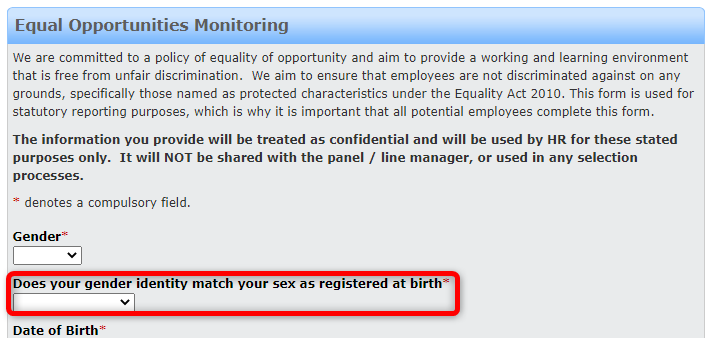
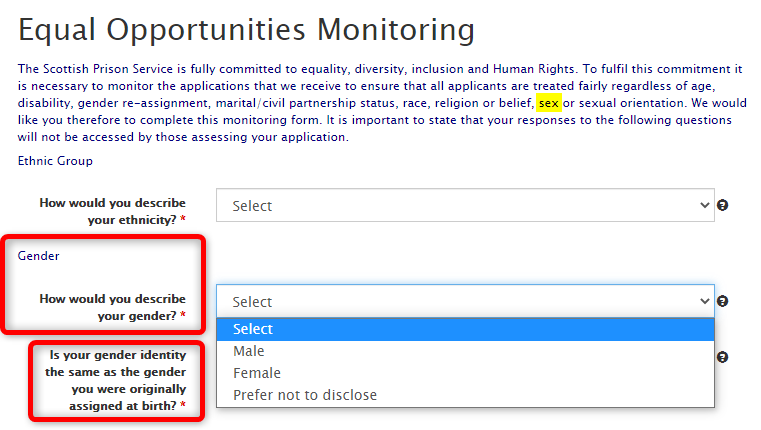
You then ask "Is your gender identity the same as the gender you were assigned at birth"

'Gender identity' and 'gender' are not protected characteristics under the Equality Act 2010 and are not defined in the Act.

6/15
'Gender' at birth is a meaningless concept and 'gender' is not 'assigned' at birth: sex is observed and recorded and is immutable.

7/15
'Gender' and 'gender identity' rely on demeaning, regressive stereotypical notions of societal roles for the two sexes, concepts that I'm sure you would not wish to be associated with.

8/15
Asking about a personal characteristic such as 'gender' that is not a protected characteristic under the Act, may be in breach of the GDPR by processing personal - and potentially Special Category - data without a lawful basis.

9/15
If you choose not to gather data on specific protected characteristics (such as sex), you cannot have the information required to ascertain whether or not you could be discriminating on protected characteristics in recruitment. This could be vital in an employment tribunal

10/15
If you choose to discriminate on characteristics (such as 'gender') that are not protected characteristics under the Act, you may inadvertently indirectly discriminate on protected grounds.

11/15
Given these errors and your use of incorrect terms, it's not clear how you can meet your Public Sector Equality Duty or how you have met it in the past given your data could have been corrupted by those who didn't provide their sex.

12/15
Nor is it clear how you can have had due regard to the other duties given the data you have collected.

13/15
Language and meaning of words are important and proper use & understanding of terms is vital so that the public is aware of what rights they have and what your duties are. Any confusion or inconsistency over meaning may prevent people from accessing their rights in law.

14/15
Will you undertake to correct these errors and to review all your other policies, documents, reports, etc to ensure compliance?

Please respond.

https://t.co/RJAWJ1vJ6s

15/15
@threadreaderapp unroll

More from sexnotgender.info

Hi @EdinburghNapier @ProfAndreaNolan @EHRC @EHRCChair @KishwerFalkner @RJHilsenrath @trussliz @GEOgovuk

The Equal Opportunities section in your job application asks for the 'gender' of the applicant, with options:

Female
Male
Unspecified.

cc @dr_ciaran @BBCWomansHour

1/9


'Gender' is not a protected characteristic under the Equality Act 2010 and is not defined in the Act.

https://t.co/qisFhCiV1u

2/9


Sex is the protected characteristic and the only two possible options for sex are 'Female' and 'Male' as defined in the Act and consistent with biology, but you don't ask for that.

https://t.co/CEJ0gkr6nF

'Gender' is not a synonym for sex.

3/9


Asking about a personal characteristic such as 'gender' that is not a protected characteristic under the Act, may be in breach of the GDPR by processing personal - and potentially Special Category - data without a lawful basis.

4/9

If you choose to discriminate on characteristics (such as 'gender') that are not protected characteristics under the Act, you may inadvertently indirectly discriminate on protected grounds.

5/9
Hi @EdinburghUni @EHRC @EHRCChair @KishwerFalkner @RJHilsenrath @trussliz @GEOgovuk

The DIVERSITY INFORMATION section in yr job application mentions 'legal equality duties'. You then ask "What is your gender identity?" with options

Female
Male
Non-binary
Not-listed
Other

1/13


'Gender identity' is not a protected characteristic under the Equality Act 2010 and is not defined in the Act.

https://t.co/qisFhCiV1u

2/13


Sex is the protected characteristic and the only two possible options for sex are 'Female' and 'Male' as defined in the Act and consistent with biology - 'non-binary' and 'other' are not valid options.

https://t.co/CEJ0gkr6nF

'Gender identity' is not a synonym for sex.

3/13


You then ask "Does your gender identity match your sex registered at birth?"

4/13


Again, 'gender identity' is not a protected characteristic under the Equality Act 2010 and is not defined in the Act.

https://t.co/qisFhCiV1u

5/13
Hi @chelwestft @EHRC @EHRCChair @KishwerFalkner @RJHilsenrath @trussliz @GEOgovuk

The Equal opportunities section in your job application mentions the Equality Act 2010 four times and correctly lists sex as a protected characteristic. However...

1/11


However, you then ask for the 'gender' of the applicant with options:

Male
Female.

2/11

'Gender' is not a protected characteristic under the Equality Act 2010 and is not defined in the Act.

https://t.co/qisFhCiV1u

3/11


Sex is the protected characteristic and the only two possible options for sex are 'Female' and 'Male' as defined in the Act and consistent with biology and there is no way to self-describe one's sex.

https://t.co/CEJ0gkr6nF

'Gender' is not a synonym for sex.

4/11


Asking about a personal characteristic such as 'gender' that is not a protected characteristic under the Act, may be in breach of the GDPR by processing personal - and potentially Special Category - data without a lawful basis.

5/11

More from Society

We finally have the U.S. Citizenship Act Bill Text! I'm going to go through some portions of the bill right now and highlight some of the major changes and improvements that it would make to our immigration system.

Thread:


First the Bill makes a series of promises changes to the way we talk about immigrants and immigration law.

Gone would be the term "alien" and in its place is "noncitizen."

Also gone would be the term "alienage," replaced with "noncitizenship."


Now we get to the "earned path to citizenship" for all undocumented immigrants present in the United States on January 1, 2021.

Under this bill, anyone who satisfies the eligibility criteria for a new "lawful prospective immigrant status" can come out of the shadows.


So, what are the eligibility criteria for becoming a "lawful prospective immigrant status"? Those are in a new INA 245G and include:

- Payment of the appropriate fees
- Continuous presence after January 1, 2021
- Not having certain criminal record (but there's a waiver)


After a person has been in "lawful prospective immigrant status" for at least 5 years, they can apply for a green card, so long as they still pass background checks and have paid back any taxes they are required to do so by law.

However! Some groups don't have to wait 5 years.

You May Also Like

This is a pretty valiant attempt to defend the "Feminist Glaciology" article, which says conventional wisdom is wrong, and this is a solid piece of scholarship. I'll beg to differ, because I think Jeffery, here, is confusing scholarship with "saying things that seem right".


The article is, at heart, deeply weird, even essentialist. Here, for example, is the claim that proposing climate engineering is a "man" thing. Also a "man" thing: attempting to get distance from a topic, approaching it in a disinterested fashion.


Also a "man" thing—physical courage. (I guess, not quite: physical courage "co-constitutes" masculinist glaciology along with nationalism and colonialism.)


There's criticism of a New York Times article that talks about glaciology adventures, which makes a similar point.


At the heart of this chunk is the claim that glaciology excludes women because of a narrative of scientific objectivity and physical adventure. This is a strong claim! It's not enough to say, hey, sure, sounds good. Is it true?