Mollyycolllinss Categories Trading
7 days
30 days
All time
Recent
Popular







In which Chamath quite literally says Robinhood “should go to fucking jail” for obeying legal collateral requirement
Like he actually connects the two and mentions collateral requirements and says RH should go to jail
This is maybe the worst discussion I’ve heard of GME from people who clearly know better. They’re encouraging people to “watch billions” to understand how hedge funds work.
Oh just got to the point where they call for a short term transaction tax to REPLACE the capital gains tax.
Chamath calls lowering the cap gains tax “genius”
Oh now Chamath believes the class actions will work because of the “implied losses,” because users clearly lost tens of billions theoretical gains!
The solution is to move accounts to other brokers (like sofi)
E19 is HERE \U0001f4a7\U0001f426\U0001f4a7
— The All-In Podcast \U0001f4a7\U0001f426 (@theallinpod) January 30, 2021
Breaking down & debating Robinhood's decision:
-- understanding the full WSB saga
-- how/why it happened
-- how it can be prevented in the future & more
\U0001f447\U0001f447
\U0001f50a: https://t.co/w8QSGBUQSi
\U0001f4fa: https://t.co/OU5W2qn7JN
Like he actually connects the two and mentions collateral requirements and says RH should go to jail
This is maybe the worst discussion I’ve heard of GME from people who clearly know better. They’re encouraging people to “watch billions” to understand how hedge funds work.
Oh just got to the point where they call for a short term transaction tax to REPLACE the capital gains tax.
Chamath calls lowering the cap gains tax “genius”
Oh now Chamath believes the class actions will work because of the “implied losses,” because users clearly lost tens of billions theoretical gains!
The solution is to move accounts to other brokers (like sofi)


It is difficult to change a 10-year trend.
Long-term expectations do not change as frequently as daily market fluctuations would make it seem.
A quick update on Treasury rates through the lens of the DKW model
*As of Dec. 31*
1/
In previous threads, I made the distinction between long-term secular trends in growth and inflation and shorter-term (2-6 quarters) trends in nGDP
Right now, the long-term trends are unaltered because long-term trends just don't change that fast but we have a very strong cyclical upturn in the economy, centered primarily on the shift to goods consumption bolstering the manufacturing sector and industrial commodities.
3/
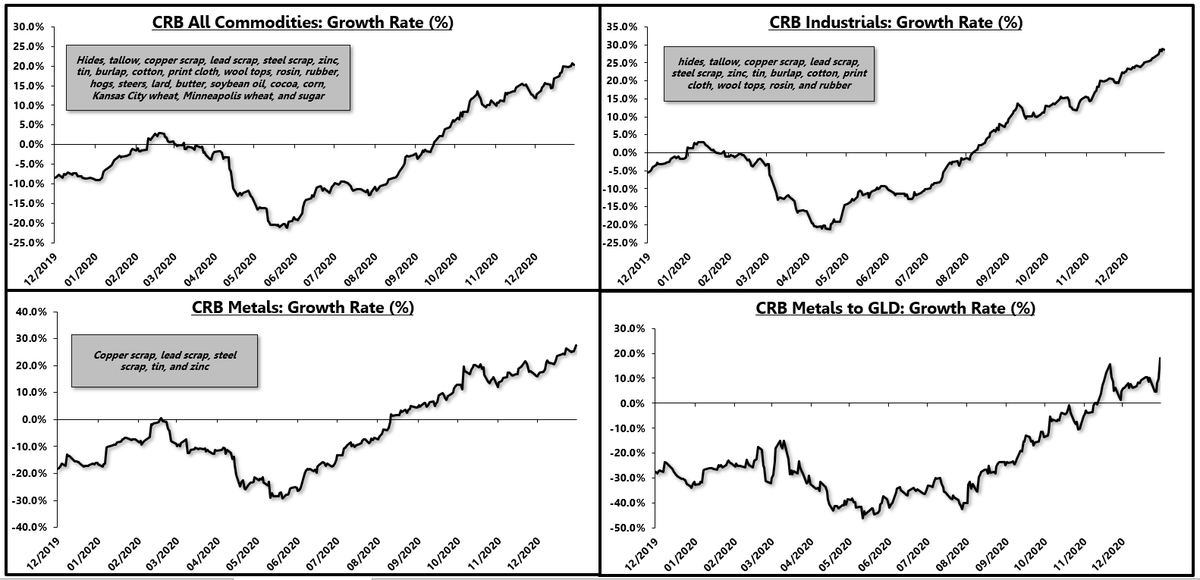
As long as the industrial sector continues to roar, TSY rates will have an upward bias as rates generally follow the trend in nGDP growth
A 10yr TSY has longterm expectations embedded in the rate so several qrters, while important, won't necessarily change the longterm trend
4/
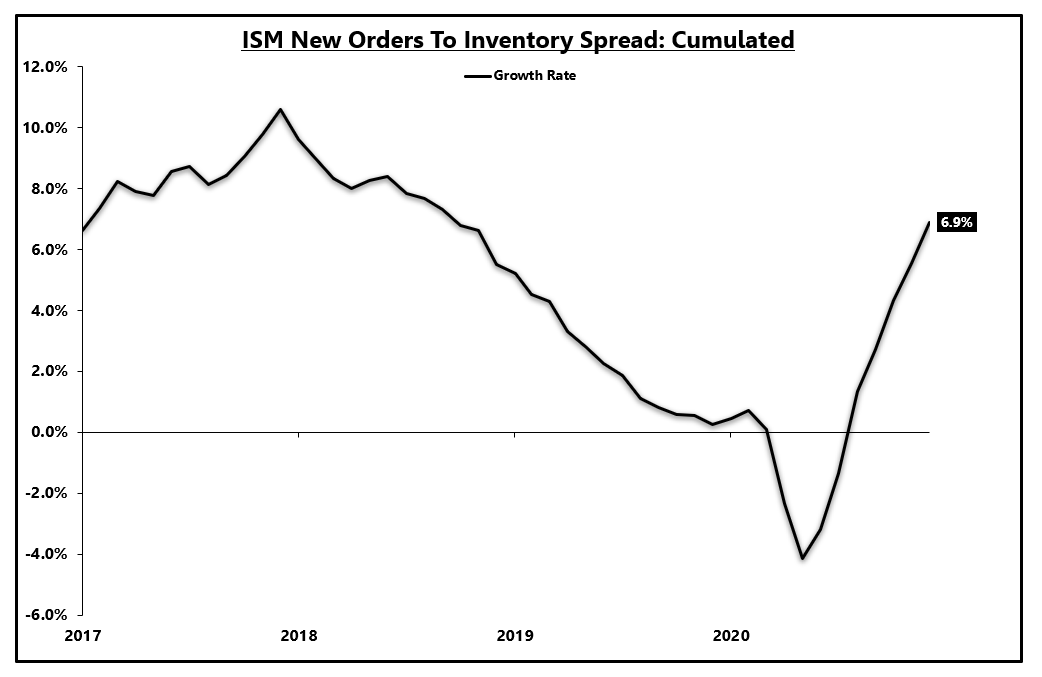
This is confirmed by the Dec update to the DKW model which breaks down *actual* inflation expectations, the expected real short-term rate (real growth), term premium, liquidity premium etc.
The DKW model is one of many models that is useful but has many limitations.
5/
Long-term expectations do not change as frequently as daily market fluctuations would make it seem.
A quick update on Treasury rates through the lens of the DKW model
*As of Dec. 31*
1/
In previous threads, I made the distinction between long-term secular trends in growth and inflation and shorter-term (2-6 quarters) trends in nGDP
Consensus continues to conflate the inflation story, mixing and matching long-term and short-term charts to fit what is generally a secular inflation narrative.
— Eric Basmajian (@EPBResearch) January 4, 2021
Here are my two cents to make the distinction clear.
1)
Right now, the long-term trends are unaltered because long-term trends just don't change that fast but we have a very strong cyclical upturn in the economy, centered primarily on the shift to goods consumption bolstering the manufacturing sector and industrial commodities.
3/
As long as the industrial sector continues to roar, TSY rates will have an upward bias as rates generally follow the trend in nGDP growth
A 10yr TSY has longterm expectations embedded in the rate so several qrters, while important, won't necessarily change the longterm trend
4/
This is confirmed by the Dec update to the DKW model which breaks down *actual* inflation expectations, the expected real short-term rate (real growth), term premium, liquidity premium etc.
The DKW model is one of many models that is useful but has many limitations.
5/

With $GME and $AMC live soon on @mirror_protocol and the absolute madness that played out in the traditional financial markets this week, there's no better than now to go decentralized.
A summary on Mirror Protocol, how it works, and its potential
🧵👇
1/
@mirror_protocol is a decentralized synthetics protocol built primarily on Terra blockchain. It enables users to gain exposure to various real-world assets (stocks, cryptocurrencies, etc.) through the creation and trading of on-chain synthetic assets, called mAssets
2/
At the time of writing, the assets supported consists mainly of US-based equities (e.g. $FB, $AMZN, $ABNB), with other asset class such as cryptocurrencies coming in the pipeline starting with $BTC and $ETH, as well as a number of others currently in governance voting process
3/
The protocol the offers numerous advantages and benefits over traditional exchanges and markets
4/
1) First, unlike the example that we saw with Robinhood this week, there's no central entity with the power to pause/restrict trading on any asset, much less the ridiculous one-sided disablement of buying or selling that we've
A summary on Mirror Protocol, how it works, and its potential
🧵👇
1/
@mirror_protocol is a decentralized synthetics protocol built primarily on Terra blockchain. It enables users to gain exposure to various real-world assets (stocks, cryptocurrencies, etc.) through the creation and trading of on-chain synthetic assets, called mAssets
2/
At the time of writing, the assets supported consists mainly of US-based equities (e.g. $FB, $AMZN, $ABNB), with other asset class such as cryptocurrencies coming in the pipeline starting with $BTC and $ETH, as well as a number of others currently in governance voting process
3/
The protocol the offers numerous advantages and benefits over traditional exchanges and markets
4/
1) First, unlike the example that we saw with Robinhood this week, there's no central entity with the power to pause/restrict trading on any asset, much less the ridiculous one-sided disablement of buying or selling that we've
Robinhood restricted crypto trading due to "extraordinary market conditions" and Coinbase is investigating a site outage LMAO
— Larry Cermak (@lawmaster) January 29, 2021


The is a tech bubble in the stock market, and it will burst soon. The question is, which of the #NGS companies below will come out stronger from the stock market tech bubble bursting? $ILMN $PACB @nanopore @MGI_BGI
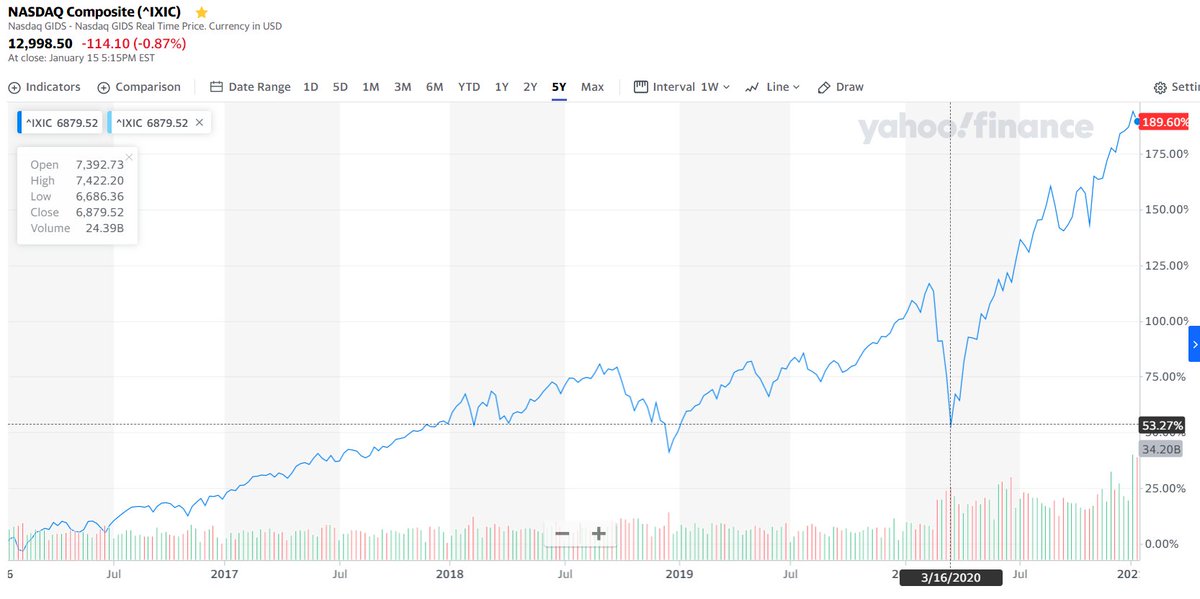
Looking at the NASDAQ for the last 5 years, there was a big drop in March 2020, triggered by the first wave of worldwide #COVID19. The tech bubble was already inflated back then. But the market recovered with a matter of weeks, and kept climbing up.
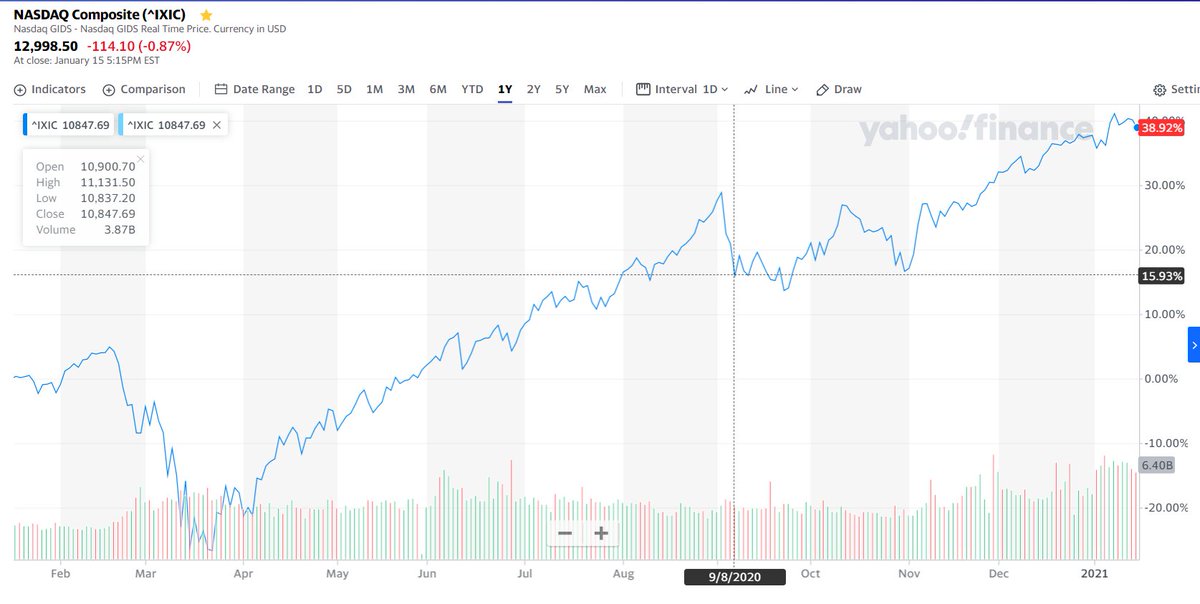
By 9/8/2020 there was another attempt of a correction, mostly #COVID19 related, but again, with a highly inflated tech bubble, the market recovered and quickly jumped another 1,000 points (around 11,800):
Who will come out stronger from the stock market tech bubble in #NGS? https://t.co/TDn5J0glhi
— Albert Vilella (@AlbertVilella) January 11, 2021
Looking at the NASDAQ for the last 5 years, there was a big drop in March 2020, triggered by the first wave of worldwide #COVID19. The tech bubble was already inflated back then. But the market recovered with a matter of weeks, and kept climbing up.
By 9/8/2020 there was another attempt of a correction, mostly #COVID19 related, but again, with a highly inflated tech bubble, the market recovered and quickly jumped another 1,000 points (around 11,800):


