1/1
Section 1 — Supply and Demand

Basic Trading Principles
Demand = Buyers
Buyers = Support

Supply = Sellers
Sellers = Resistance

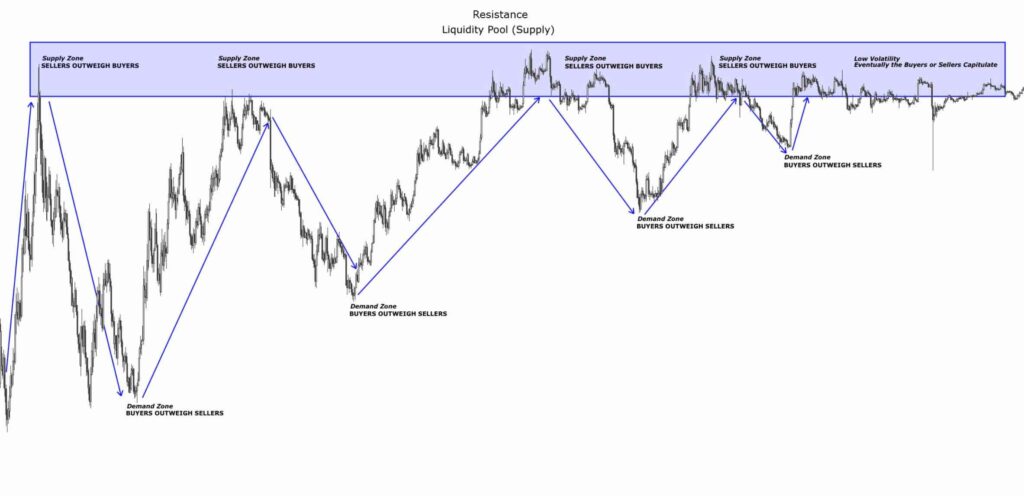
Support will be the level at which demand will outweigh supply, causing the price to rise/increase.
1/2

Resistance will be the level at which supply will outweigh demand, causing the price to fall/decrease.
Supply and demand zones in trading are usually liquidity pools.
When an asset illustrates a sharp rise or decline large institutional players (whales in the case of crypto)
1/3
sometimes miss the entry or exit because of the size of the orders. When this happens they leave pending orders to buy or sell at the base of the liquidity zones, with the expectation that the price will return there to fill the remaining orders.
1/4
A high price rise zone is the demand zone (support) and the zone where price has made a sharp decline is the supply zone (resistance).
Demand Zone (Buyers Present)
Technical Analysis Term = Support
1/5
Supply Zone (Sellers Present)
Technical Analysis Term = Resistance

Important to Remember — Both supply and demand
1/6
zones have a finite number of buyers and sellers. The more a zone is touched the weaker it becomes. This is evident because price rebounds and makes lower highs off demand zones (support) and price drops less and less off supply zones (resistance) making higher lows.
1/7
Each time price reaches the supply zone price is knocked down (falls/decreases), but each time buyers step in they are bidding up price creating a higher low than before. This is a bullish price structure and is called an uptrend.
1/8
Each time price reaches the demand zone price is bid up (rises/increases), but each time sellers step in they are pushing price down creating a lower high than before. This is a bearish price structure and is called a downtrend.

More from Trading

12 TRADING SETUPS used by professional traders:🧵

Collaborated with @niki_poojary

Here's what you'll learn in this thread:

1. Capture Overnight Theta Decay
2. Trading Opening Range Breakouts
3. Reversal Trading Setups
4. Selling strangles and straddles in Bank Nifty
6. NR4 + IB
7. NR 21-Vwap Strategy

Let's dive in ↓

1/ STBT option Selling (Positional Setup):

The setup uses price action to sell options for overnight theta decay.

Check Bank Nifty at 3:15 everyday.

Sell directional credit spreads with capped


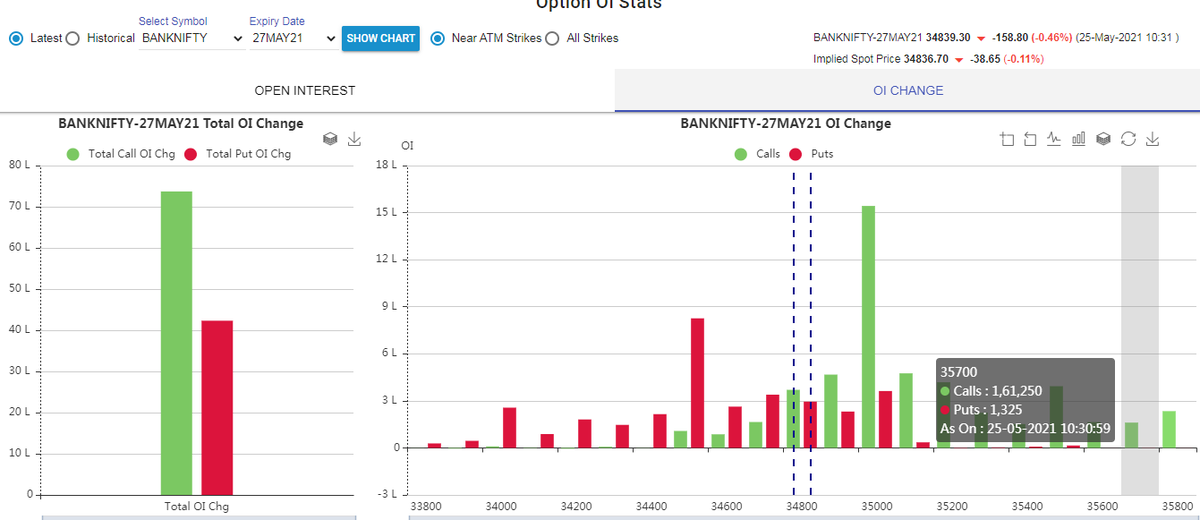
@jigspatel1988 2/ Selling Strangles in Bank Nifty based on Open Interest Data

Don't trade till 9:45 Am.

Identify the highest OI on puts and calls.

Check combined premium and put a stop on individual


@jigspatel1988 3/ Open Drive (Intraday)

This is an opening range breakout setup with a few conditions.

To be used when the market opens above yesterday's day high

or Below yesterday's day's

You May Also Like

The YouTube algorithm that I helped build in 2011 still recommends the flat earth theory by the *hundreds of millions*. This investigation by @RawStory shows some of the real-life consequences of this badly designed AI.


This spring at SxSW, @SusanWojcicki promised "Wikipedia snippets" on debated videos. But they didn't put them on flat earth videos, and instead @YouTube is promoting merchandising such as "NASA lies - Never Trust a Snake". 2/


A few example of flat earth videos that were promoted by YouTube #today:
https://t.co/TumQiX2tlj 3/

https://t.co/uAORIJ5BYX 4/

https://t.co/yOGZ0pLfHG 5/