It is difficult to change a 10-year trend.

Long-term expectations do not change as frequently as daily market fluctuations would make it seem.

A quick update on Treasury rates through the lens of the DKW model

*As of Dec. 31*

1/

In previous threads, I made the distinction between long-term secular trends in growth and inflation and shorter-term (2-6 quarters) trends in nGDP growth

https://t.co/0jBvHOWuHw

2/
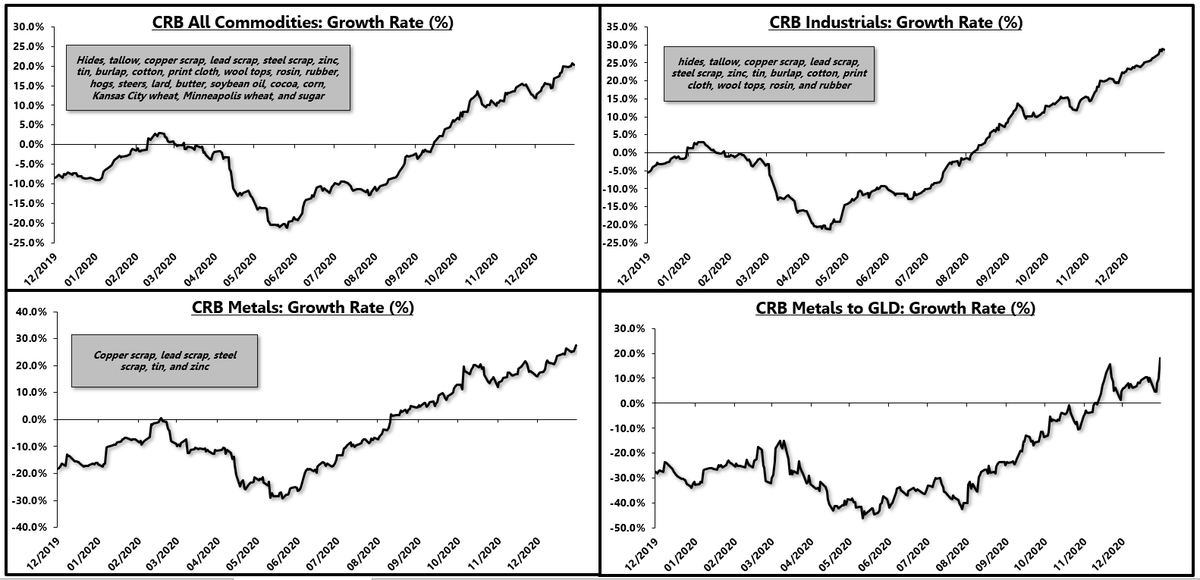
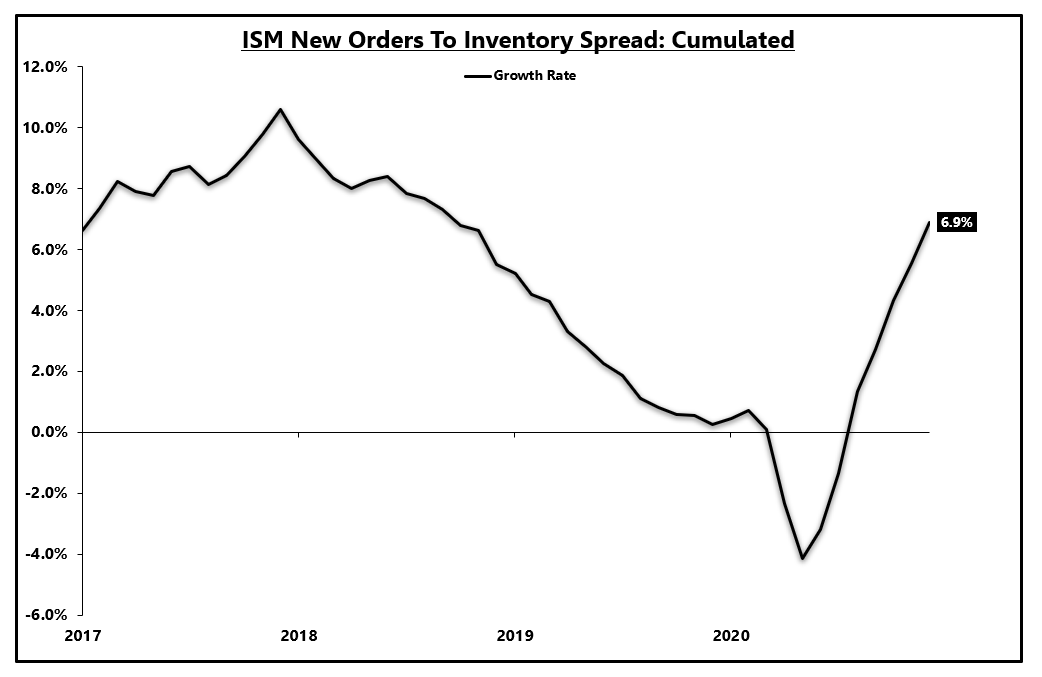
Right now, the long-term trends are unaltered because long-term trends just don't change that fast but we have a very strong cyclical upturn in the economy, centered primarily on the shift to goods consumption bolstering the manufacturing sector and industrial commodities.

3/
As long as the industrial sector continues to roar, TSY rates will have an upward bias as rates generally follow the trend in nGDP growth

A 10yr TSY has longterm expectations embedded in the rate so several qrters, while important, won't necessarily change the longterm trend

4/
This is confirmed by the Dec update to the DKW model which breaks down *actual* inflation expectations, the expected real short-term rate (real growth), term premium, liquidity premium etc.

The DKW model is one of many models that is useful but has many limitations.

5/
As of Dec 31, according to the DKW model, inflation expectations are directionally rising, in line with the industrial upturn, but have only increase ~12bps from the summer low.

It is hard to alter a long-term trend with just a couple of quarters.

6/
Real growth expectations remain on the floor in the DKW model as (again) a transitory upturn in growth won't alter the 10-year average rate of growth all that much.

7/
So what is causing the bulk of the move in Treasury rates?

The real term premium.

Expectations for massive fiscal spending rightfully won't alter the economy's long-term growth prospects but do place extra risk on duration in the near term.

8/
Adding actual inflation expectations and the real ST rate expectations gives what I call the "fundamental" drivers of TSY rates which have increased cumulatively about 14bps since the summer.

This makes sense with the trend in nGDP growth.

9/
In short, the long-term trends that have caused TSY rates to decline for decades are still in place.

Weaker growth and lower inflation over the long-run will depress the risk-free rate.

In the short-term (2-6 quarters), you have to follow the direction in nGDP growth.

10/
Once this manufacturing upturn starts to fade (no signs yet) TSYs will be a great buy again as the next cyclical downturn in the economy will push the long-end to the zero-bound.

11/11
@R_Perli has more timely updates on this model and can perhaps shed some light on the January move in rates so far.

More from Trading

TradingView isn't just charts

It's much more powerful than you think

9 things TradingView can do, you'll wish you knew yesterday: 🧵

Collaborated with @niki_poojary

1/ Free Multi Timeframe Analysis

Step 1. Download Vivaldi Browser

Step 2. Login to trading view

Step 3. Open bank nifty chart in 4 separate windows

Step 4. Click on the first tab and shift + click by mouse on the last tab.

Step 5. Select "Tile all 4 tabs"


What happens is you get 4 charts joint on one screen.

Refer to the attached picture.

The best part about this is this is absolutely free to do.

Also, do note:

I do not have the paid version of trading view.


2/ Free Multiple Watchlists

Go through this informative thread where @sarosijghosh teaches you how to create multiple free watchlists in the free


3/ Free Segregation into different headers/sectors

You can create multiple sections sector-wise for free.

1. Long tap on any index/stock and click on "Add section above."
2. Secgregate the stocks/indices based on where they belong.

Kinda like how I did in the picture below.

You May Also Like

Trading view scanner process -

1 - open trading view in your browser and select stock scanner in left corner down side .

2 - touch the percentage% gain change ( and u can see higest gainer of today)


3. Then, start with 6% gainer to 20% gainer and look charts of everyone in daily Timeframe . (For fno selection u can choose 1% to 4% )

4. Then manually select the stocks which are going to give all time high BO or 52 high BO or already given.

5. U can also select those stocks which are going to give range breakout or already given range BO

6 . If in 15 min chart📊 any stock sustaing near BO zone or after BO then select it on your watchlist

7 . Now next day if any stock show momentum u can take trade in it with RM

This looks very easy & simple but,

U will amazed to see it's result if you follow proper risk management.

I did 4x my capital by trading in only momentum stocks.

I will keep sharing such learning thread 🧵 for you 🙏💞🙏

Keep learning / keep sharing 🙏
@AdityaTodmal