As part of our Knowledge sharing initiative by @FinnacleAcademy and @Investmentbook1, here we are on our post 2 with some of the most important key takeaways of the book “Masterclass with super investors” by @vishalmittal22 & @basrars
Here we go! (1/n)

3)Investment style: “KCPLTD”
- K = Knowledge
- C = conviction
- P = Patience
- L = Luck
- TD = Timely deployment (17/n)
Here is book link if you loved the thread and want to read more about these super investors :)
https://t.co/5nvTS4yDvN
More from Investment Books


Thread Best books recommendation by one of best investor I knew @insharebazaar (Virtually)
He grab many multibagger stocks and His style also unique(1st Seen interview in @TraderHarneet's YT Channel)
He follow Simple process
Young Intelligent Investor who also appeared in ET
1. One Up On Wall Street
2. Rich Dad Poor Dad
Access here : https://t.co/UWOCF732z6
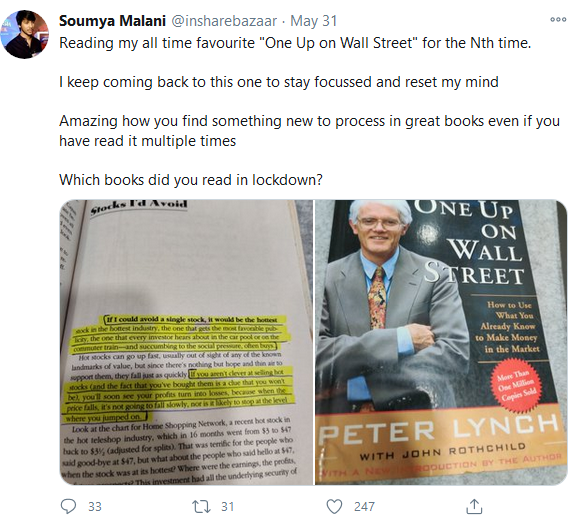
3. The Unusual Billionaires
4. Trading in the Zone
https://t.co/G7mqVPtEM0
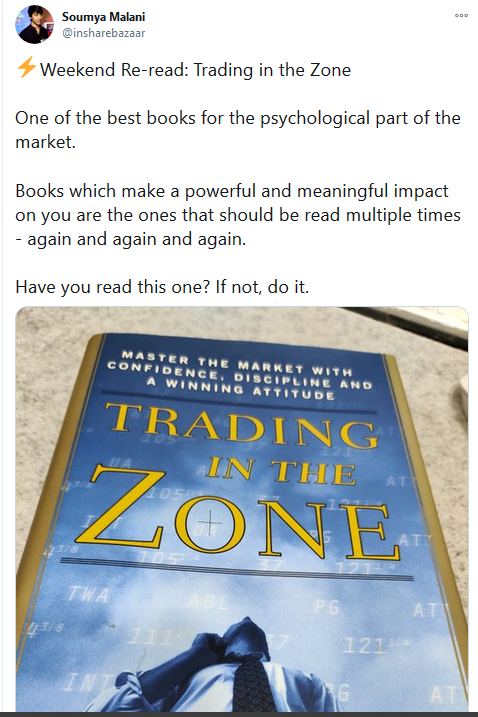
5. Market Wizards
6. The Intelligent Investor
https://t.co/yPKBzYyPAl

7. The Five Rules for Successful Stock Investing
8. Reminiscences of a Stock Operator
https://t.co/PiioB3hdHP

He grab many multibagger stocks and His style also unique(1st Seen interview in @TraderHarneet's YT Channel)
He follow Simple process
Young Intelligent Investor who also appeared in ET
1. One Up On Wall Street
2. Rich Dad Poor Dad
Access here : https://t.co/UWOCF732z6
3. The Unusual Billionaires
4. Trading in the Zone
https://t.co/G7mqVPtEM0
5. Market Wizards
6. The Intelligent Investor
https://t.co/yPKBzYyPAl
7. The Five Rules for Successful Stock Investing
8. Reminiscences of a Stock Operator
https://t.co/PiioB3hdHP
More from Trading





You May Also Like

Moderna CEO Stephane Bancel was previously CEO of bioMerieux in France from 07-10.
Alain Merieux, who owns bioMerieux, was instrumental in the creation of the Wuhan Institute of Virology P4 Lab.
The same people who helped create the virus, also helped to create the vaccines...
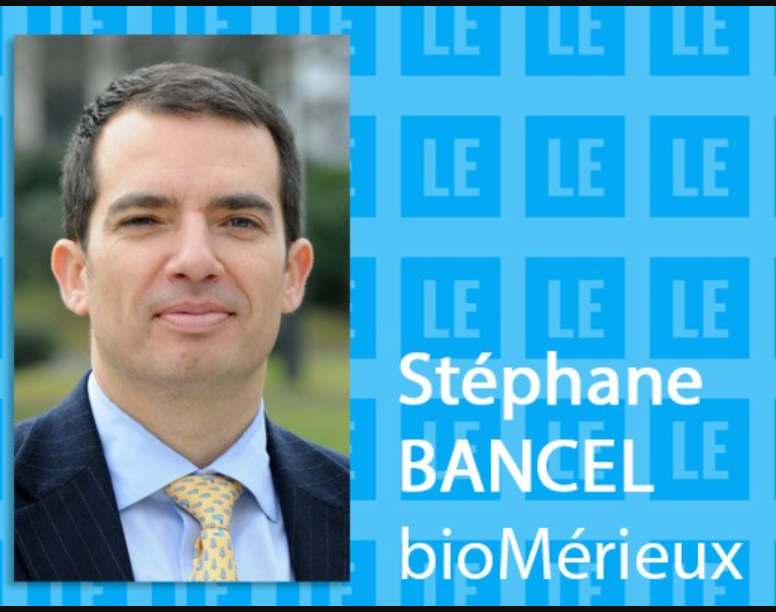
Moderna partnered with French Pasteur Institute in 2015 to develop mRNA vaccine technology.
Pasteur Institute partnered with the Wuhan P4 Laboratory in 2017 along with the Merieux Foundation to study emerging viruses...
https://t.co/yFsHwrNYaK
https://t.co/9M5lydBKhM
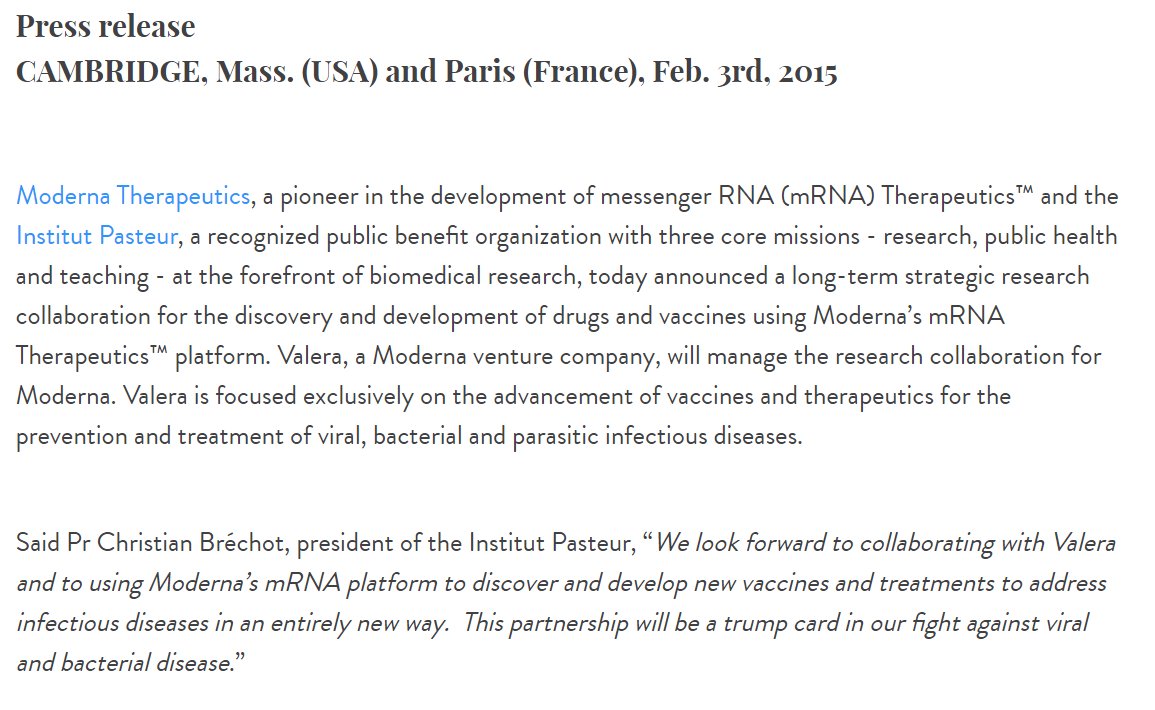
Nobel prize winning scientist Luc Montagnier asserts that Sars-Cov-2 is man-made and originated from the Wuhan Institute of Virology.
Montagnier did extensive work with the Pasteur Institute in France which was partnered with the Wuhan P4.
Merieux Foundation & the Chinese government have worked together since 1965, and partnered to study emerging pathogens in Africa in 2015.
Their research included "PATHOGENS CARRIED BY BATS" that provoke respiratory diseases.
🚨🚨🚨
https://t.co/gVwpT0ssqI

Alain Merieux, who owns bioMerieux, was instrumental in the creation of the Wuhan Institute of Virology P4 Lab.
The same people who helped create the virus, also helped to create the vaccines...
Moderna partnered with French Pasteur Institute in 2015 to develop mRNA vaccine technology.
Pasteur Institute partnered with the Wuhan P4 Laboratory in 2017 along with the Merieux Foundation to study emerging viruses...
https://t.co/yFsHwrNYaK
https://t.co/9M5lydBKhM
Nobel prize winning scientist Luc Montagnier asserts that Sars-Cov-2 is man-made and originated from the Wuhan Institute of Virology.
Montagnier did extensive work with the Pasteur Institute in France which was partnered with the Wuhan P4.
Merieux Foundation & the Chinese government have worked together since 1965, and partnered to study emerging pathogens in Africa in 2015.
Their research included "PATHOGENS CARRIED BY BATS" that provoke respiratory diseases.
🚨🚨🚨
https://t.co/gVwpT0ssqI


This is a pretty valiant attempt to defend the "Feminist Glaciology" article, which says conventional wisdom is wrong, and this is a solid piece of scholarship. I'll beg to differ, because I think Jeffery, here, is confusing scholarship with "saying things that seem right".
The article is, at heart, deeply weird, even essentialist. Here, for example, is the claim that proposing climate engineering is a "man" thing. Also a "man" thing: attempting to get distance from a topic, approaching it in a disinterested fashion.

Also a "man" thing—physical courage. (I guess, not quite: physical courage "co-constitutes" masculinist glaciology along with nationalism and colonialism.)

There's criticism of a New York Times article that talks about glaciology adventures, which makes a similar point.

At the heart of this chunk is the claim that glaciology excludes women because of a narrative of scientific objectivity and physical adventure. This is a strong claim! It's not enough to say, hey, sure, sounds good. Is it true?
Imagine for a moment the most obscurantist, jargon-filled, po-mo article the politically correct academy might produce. Pure SJW nonsense. Got it? Chances are you're imagining something like the infamous "Feminist Glaciology" article from a few years back.https://t.co/NRaWNREBvR pic.twitter.com/qtSFBYY80S
— Jeffrey Sachs (@JeffreyASachs) October 13, 2018
The article is, at heart, deeply weird, even essentialist. Here, for example, is the claim that proposing climate engineering is a "man" thing. Also a "man" thing: attempting to get distance from a topic, approaching it in a disinterested fashion.
Also a "man" thing—physical courage. (I guess, not quite: physical courage "co-constitutes" masculinist glaciology along with nationalism and colonialism.)
There's criticism of a New York Times article that talks about glaciology adventures, which makes a similar point.
At the heart of this chunk is the claim that glaciology excludes women because of a narrative of scientific objectivity and physical adventure. This is a strong claim! It's not enough to say, hey, sure, sounds good. Is it true?