Categories Tech
7 days
30 days
All time
Recent
Popular




The 12 most important pieces of information and concepts I wish I knew about equity, as a software engineer.
A thread.
1. Equity is something Big Tech and high-growth companies award to software engineers at all levels. The more senior you are, the bigger the ratio can be:

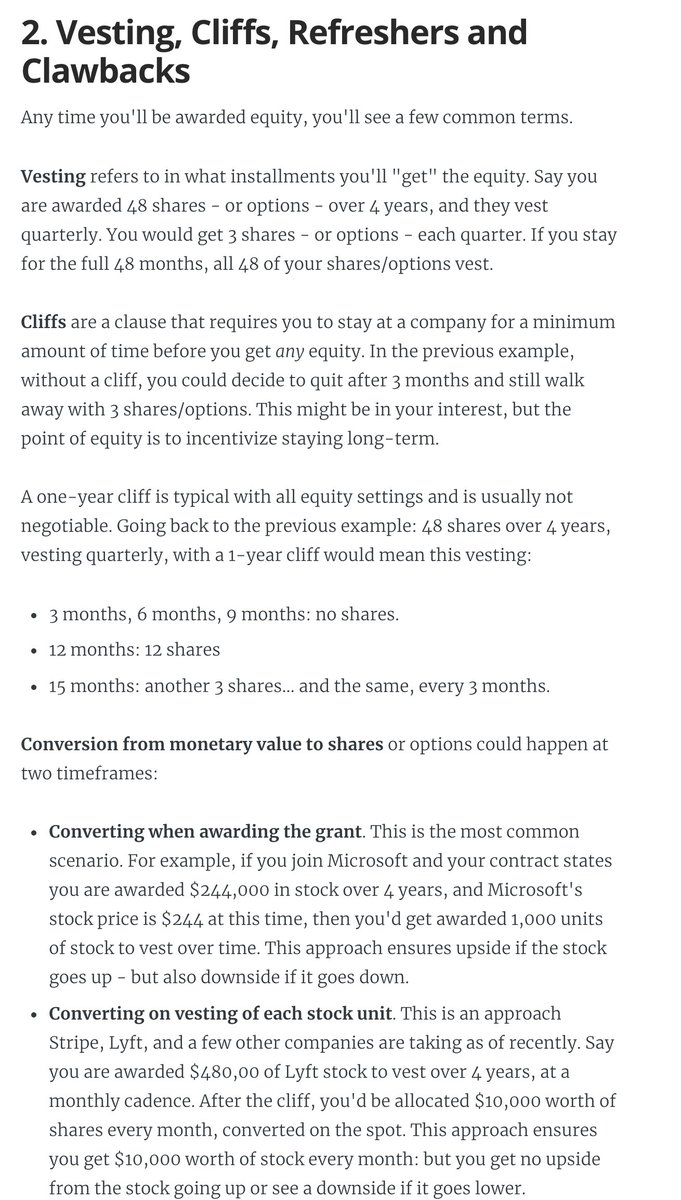
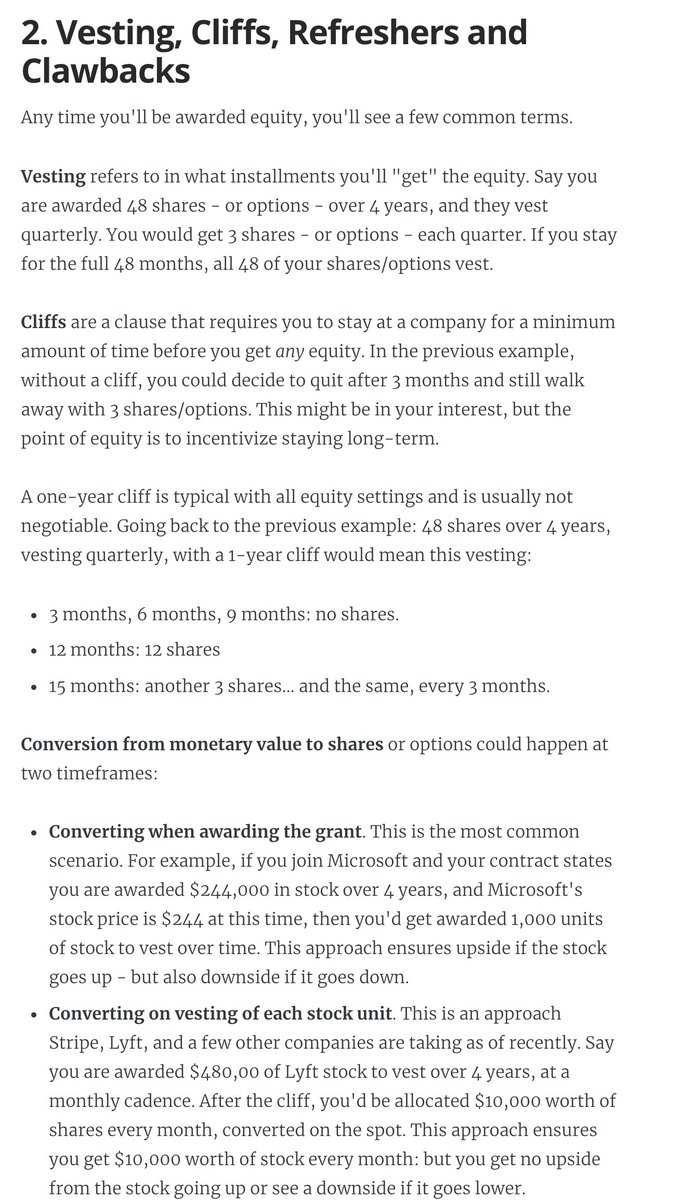
2. Vesting, cliffs, refreshers, and sign-on clawbacks.
If you get awarded equity, you'll want to understand vesting and cliffs. A 1-year cliff is pretty common in most places that award equity.
Read more in this blog post I wrote: https://t.co/WxQ9pQh2mY
3. Stock options / ESOPs.
The most common form of equity compensation at early-stage startups that are high-growth.
And there are *so* many pitfalls you'll want to be aware of. You need to do your research on this: I can't do justice in a tweet.
https://t.co/cudLn3ngqi
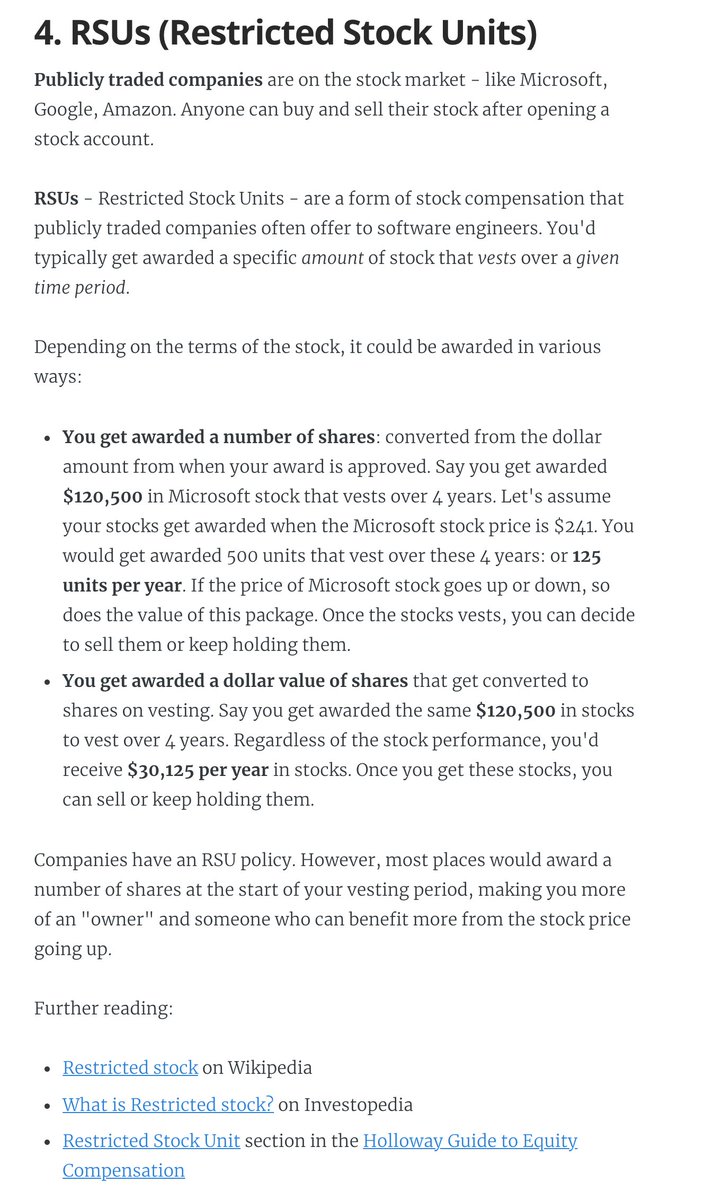
4. RSUs (Restricted Stock Units)
A common form of equity compensation for publicly traded companies and Big Tech. One of the easier types of equity to understand: https://t.co/a5xU1H9IHP
5. Double-trigger RSUs. Typically RSUs for pre-IPO companies. I got these at Uber.
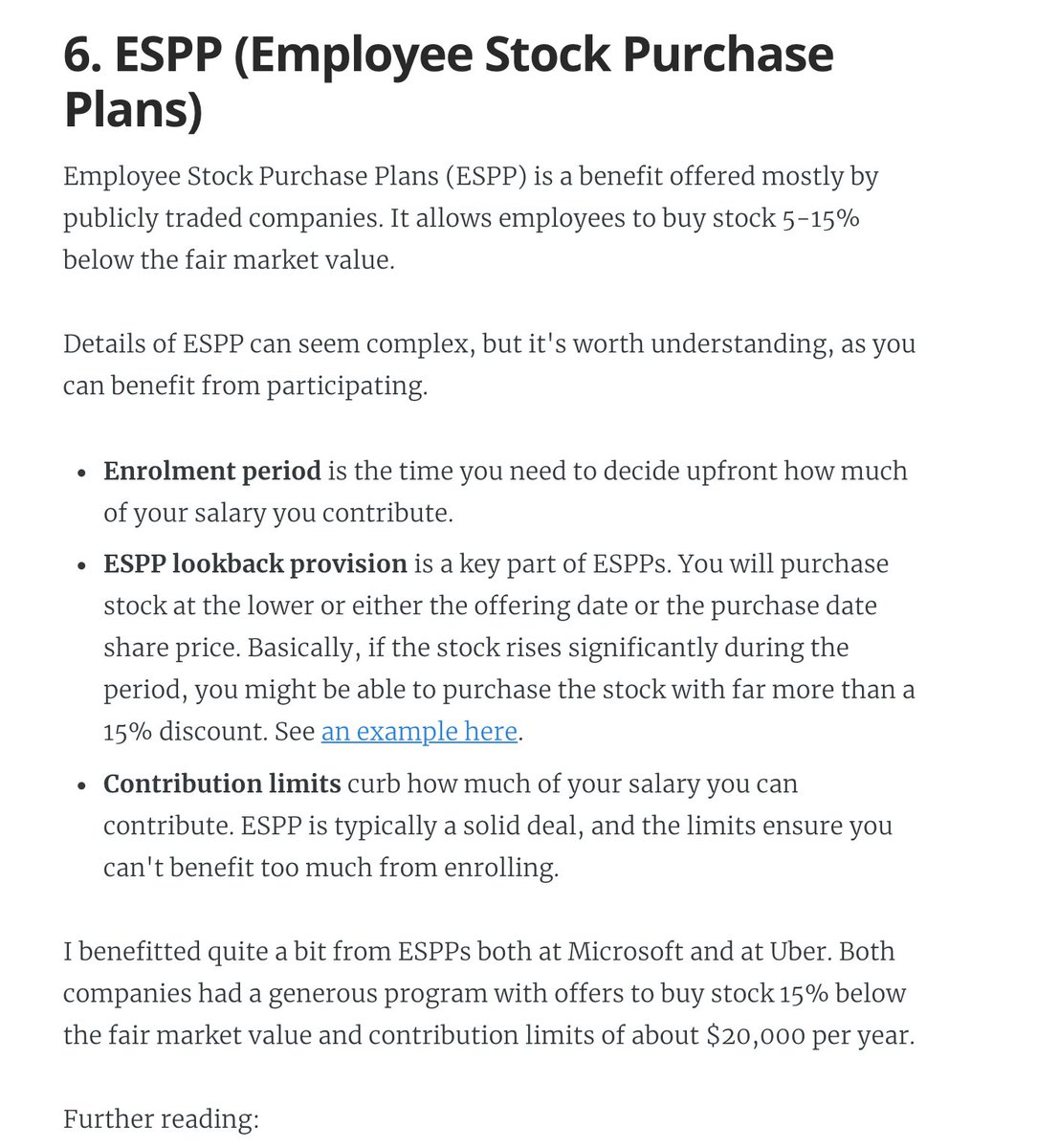
6. ESPP: a (typically) amazing employee perk at publicly traded companies. There's always risk, but this plan can typically offer good upsides.
7. Phantom shares. An interesting setup similar to RSUs... but you don't own stocks. Not frequent, but e.g. Adyen goes with this plan.
A thread.
1. Equity is something Big Tech and high-growth companies award to software engineers at all levels. The more senior you are, the bigger the ratio can be:
2. Vesting, cliffs, refreshers, and sign-on clawbacks.
If you get awarded equity, you'll want to understand vesting and cliffs. A 1-year cliff is pretty common in most places that award equity.
Read more in this blog post I wrote: https://t.co/WxQ9pQh2mY
3. Stock options / ESOPs.
The most common form of equity compensation at early-stage startups that are high-growth.
And there are *so* many pitfalls you'll want to be aware of. You need to do your research on this: I can't do justice in a tweet.
https://t.co/cudLn3ngqi
4. RSUs (Restricted Stock Units)
A common form of equity compensation for publicly traded companies and Big Tech. One of the easier types of equity to understand: https://t.co/a5xU1H9IHP
5. Double-trigger RSUs. Typically RSUs for pre-IPO companies. I got these at Uber.
6. ESPP: a (typically) amazing employee perk at publicly traded companies. There's always risk, but this plan can typically offer good upsides.
7. Phantom shares. An interesting setup similar to RSUs... but you don't own stocks. Not frequent, but e.g. Adyen goes with this plan.


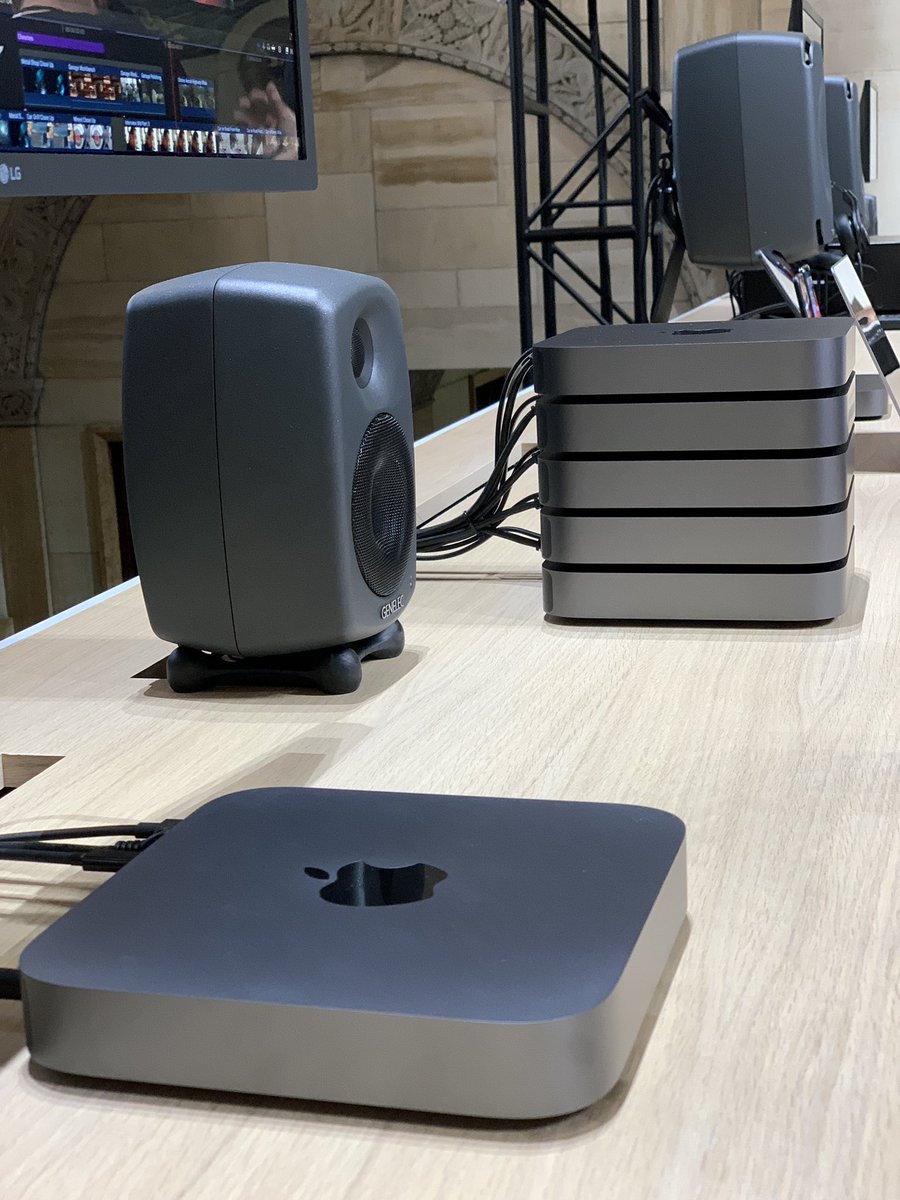
Here’s some Mac mini, iPad Pro, MacBook shots
https://t.co/C9W4D96e2K

https://t.co/qa6JsO8zbE

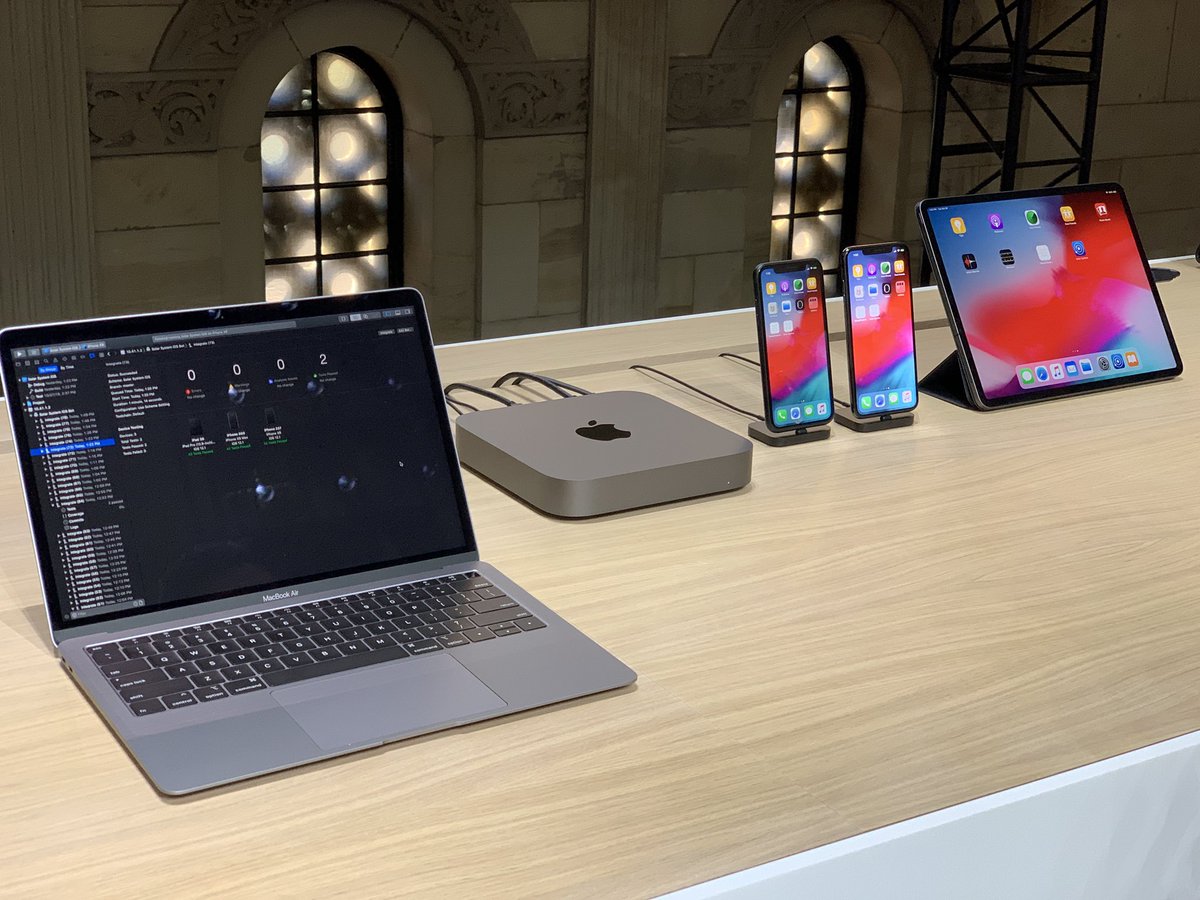
Here’s an interesting rig - MacBook screen sharing a Mac mini which is running Xcode and testing suite which auto runs app on several devices - personal build server. You could never connect the mini to a display from moment of purchase, ever
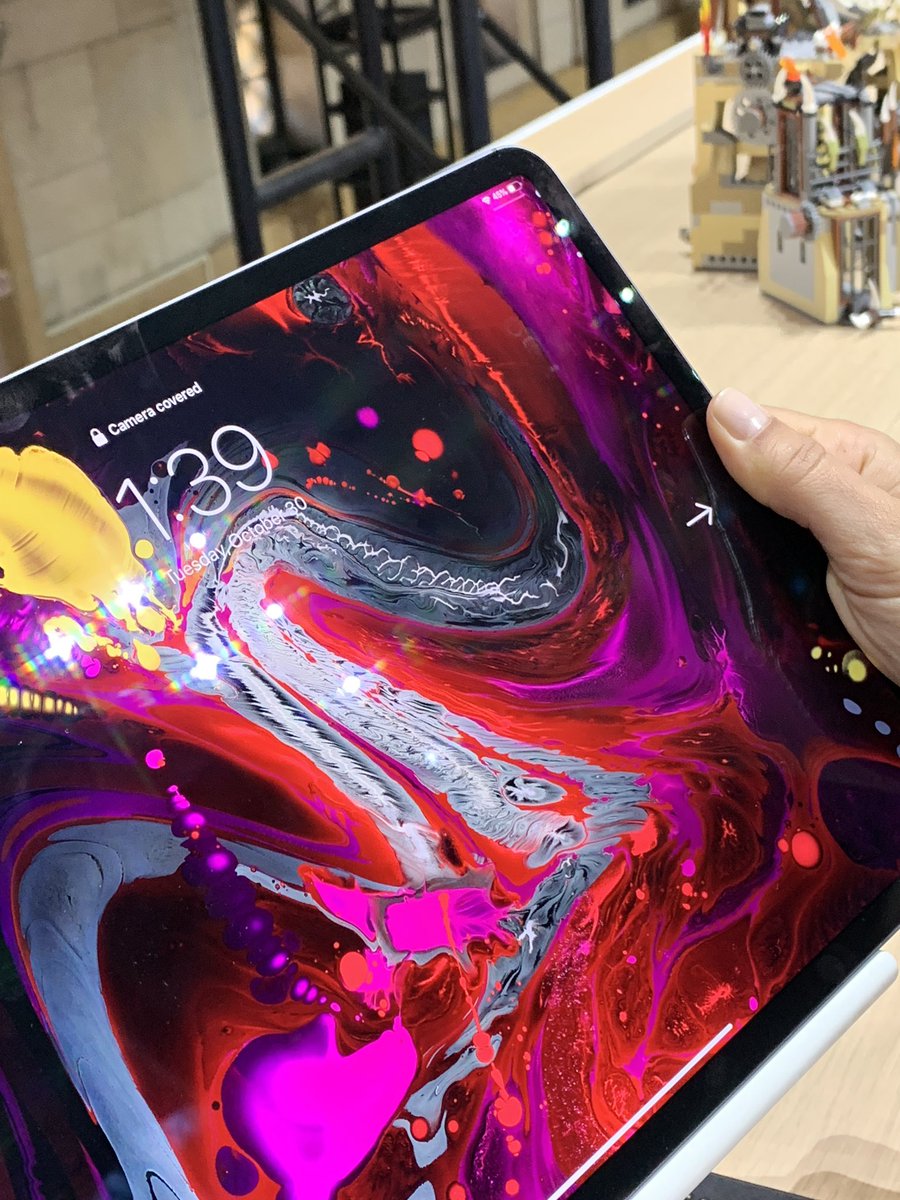
If you cover the Face ID camera it will tell you it’s covered and where the camera is located with an on screen arrow
https://t.co/C9W4D96e2K
https://t.co/qa6JsO8zbE
Here’s an interesting rig - MacBook screen sharing a Mac mini which is running Xcode and testing suite which auto runs app on several devices - personal build server. You could never connect the mini to a display from moment of purchase, ever
If you cover the Face ID camera it will tell you it’s covered and where the camera is located with an on screen arrow





Are you a web developer?
Here's a list of websites that offer free & beautiful website templates:
🧵👇🏻
1. HTML5UP: Very modern, unique responsive HTML5/CSS3 themes
https://t.co/VmAFs2xEUO
2. Templatemo: Minimal, resume, gallery themes and more
https://t.co/hCVsSqg3dx
3. Templated .co: Tons of minimalistic HTML5/CSS3
4. FreeHTML5: Free & premium HTML5 and Bootstrap themes
https://t.co/HqCj21RVry
5. StyleShout: Brilliantly crafted free website templates
https://t.co/AeNAAvmiYx
6. Start Bootstrap: Bootstrap starter
7. Zerotheme: HTML5, Bootstrap, Prestashop templates
https://t.co/WZtbW1gZzv
8. HTML5xCSS3: Collection of wonderful templates in different categories
https://t.co/g47dzRhSnW
9. Colorlib: Almost any category of theme you can think
10: Free CSS: Huge collection of free templates
https://t.co/JzQgKmBBGJ
11. Hubspot: Templates, infographics, banners and much more
https://t.co/T2jAlXYH8E
12. Mobirise: Great looking HTML5/CSS3

One of the best decisions I made during a very turbulent 2020 was to leave conventional coding behind and embrace the #nocode movement. @bubble made this a reality. Although my own journey thus far is premature, I’ve learned a lot so here’s a power thread on....
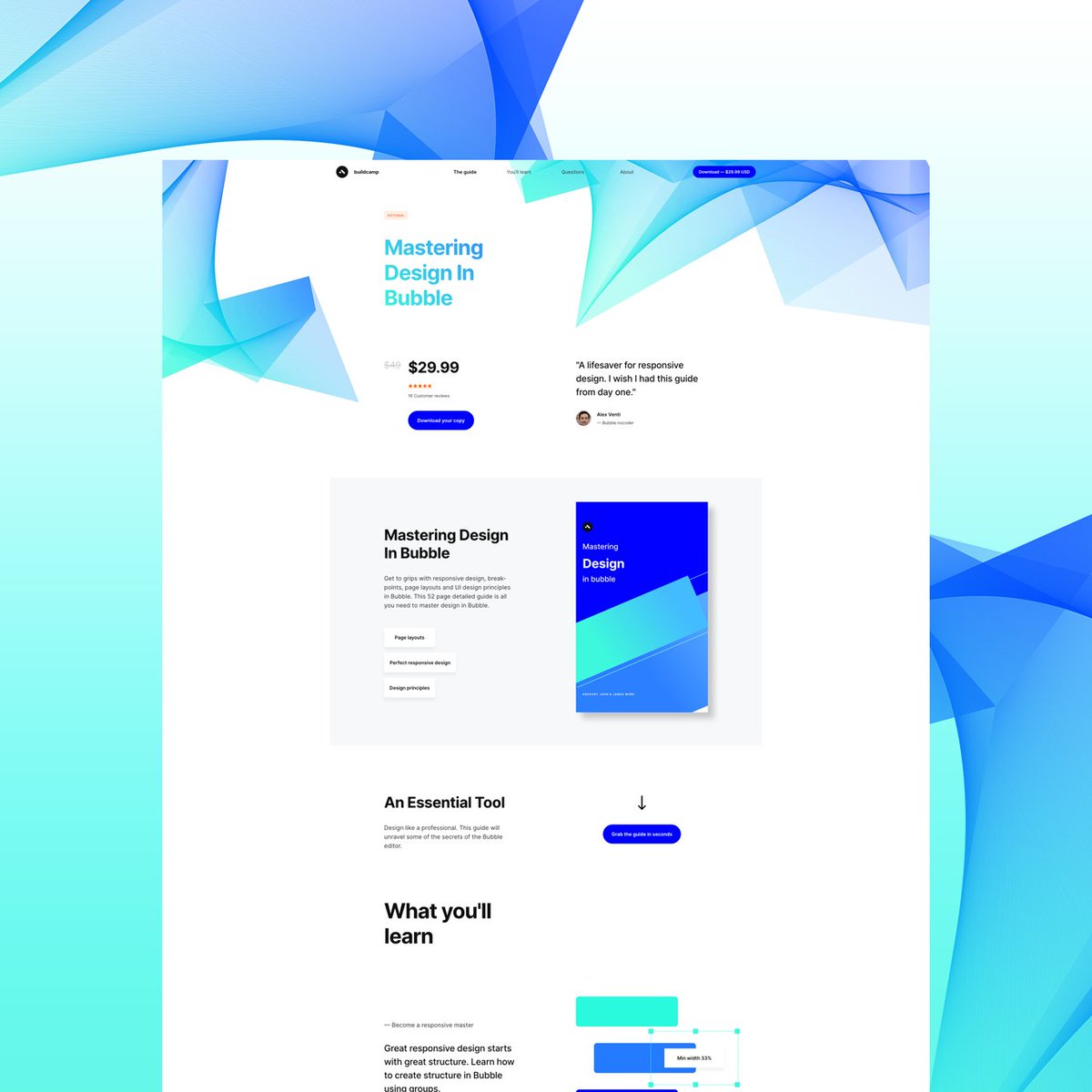
‘How I created @buildcamp sales funnel landing page in under 2hours’.
Preview here 👇
https://t.co/s9P5JodSHe
Power thread here 👇
1. Started with a vanilla bubble app ensuring that all styles and UI elements were removed. Created a new page called funnel and set the page size to 960px as this allows the page to render proportionately on both web and mobile when hitting responsive breakpoints.

2. Began dropping elements onto the page to ‘find the style’. These had to be closely aligned to our @buildcamp branding so included text, buttons and groups - nothing too heavy. Played around with a few fonts, colors and gradients and thus pinned down the following style guide.
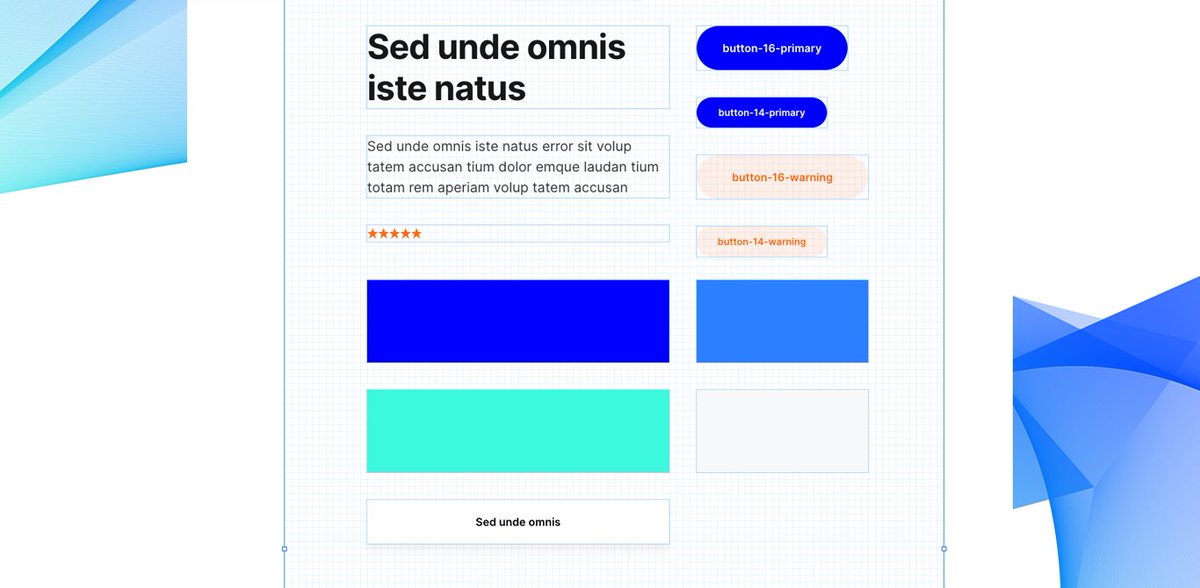
3. Started to map out sections using groups as my ‘containers’ to hold the relevant information and imagery needed to pad out the sales pitch. At this point, they were merely blocks of color #ff6600 with reduced opacity set to 5% to ease page flair.

‘How I created @buildcamp sales funnel landing page in under 2hours’.
Preview here 👇
https://t.co/s9P5JodSHe
Power thread here 👇
1. Started with a vanilla bubble app ensuring that all styles and UI elements were removed. Created a new page called funnel and set the page size to 960px as this allows the page to render proportionately on both web and mobile when hitting responsive breakpoints.
2. Began dropping elements onto the page to ‘find the style’. These had to be closely aligned to our @buildcamp branding so included text, buttons and groups - nothing too heavy. Played around with a few fonts, colors and gradients and thus pinned down the following style guide.
3. Started to map out sections using groups as my ‘containers’ to hold the relevant information and imagery needed to pad out the sales pitch. At this point, they were merely blocks of color #ff6600 with reduced opacity set to 5% to ease page flair.





(1) Some haters of #Cardano are not only bag holders but also imperative developers.
If you are an imperative programmers you know that Plutus is not the most intuitive -> (https://t.co/m3fzq7rJYb)
It is, however, intuitive for people with IT financial background, e.g. banks
(2)
IELE + k framework will be a real game changer because there will be DSLs (Domain Specific Languages) in any programming language supported by K framework. The only issue is that we need to wait for all this
(3) Good news is that the moment we get IELE integrated into Cardano, we get some popular langs. To my knowledge we should get from day one: Solidity and Rust, maybe others as well?
List of langs: https://t.co/0uj1eBfrYj, some commits from many years ago..
@rv_inc ?
#Cardano
(a) Last but not least, marketing to people with Haskell, functional programming with experience and decision makers in banks is a tricky one, how do you market but not tell them you want to replace them. In the end one strategy is to pitch new markets, e.g. developing world
(b) As banks realize what is happening they maybe more inclined to join - not because they would like to but because they will have to - in such cases some development talent maybe re-routed to Plutus / Cardano / Algorand / Tezos


THREAD: How is it possible to train a well-performing, advanced Computer Vision model 𝗼𝗻 𝘁𝗵𝗲 𝗖𝗣𝗨? 🤔
At the heart of this lies the most important technique in modern deep learning - transfer learning.
Let's analyze how it
2/ For starters, let's look at what a neural network (NN for short) does.
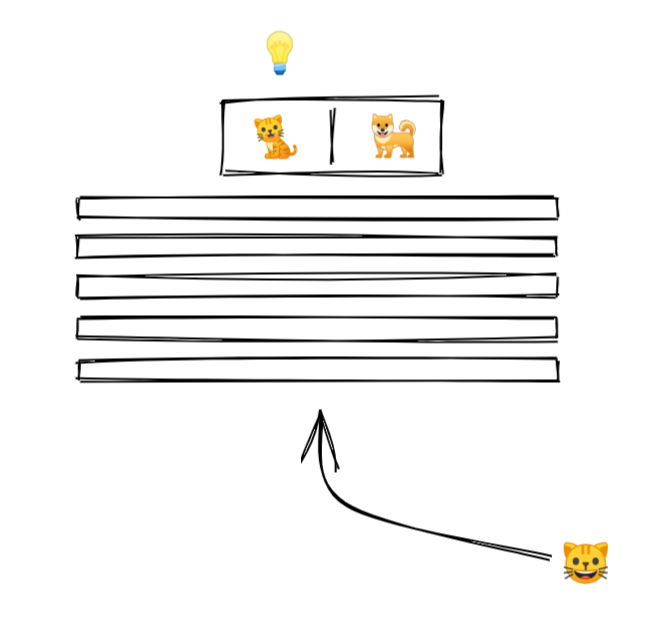
An NN is like a stack of pancakes, with computation flowing up when we make predictions.
How does it all work?
3/ We show an image to our model.
An image is a collection of pixels. Each pixel is just a bunch of numbers describing its color.
Here is what it might look like for a black and white image

4/ The picture goes into the layer at the bottom.
Each layer performs computation on the image, transforming it and passing it upwards.
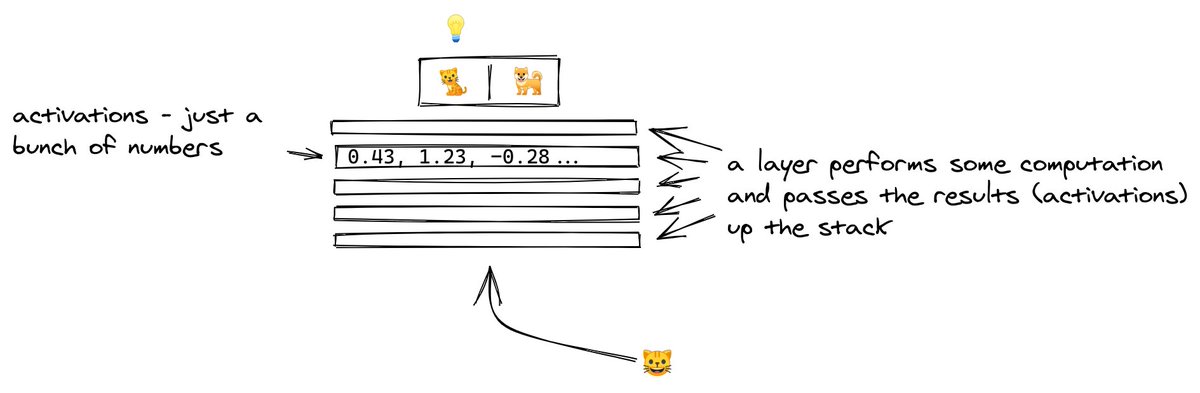
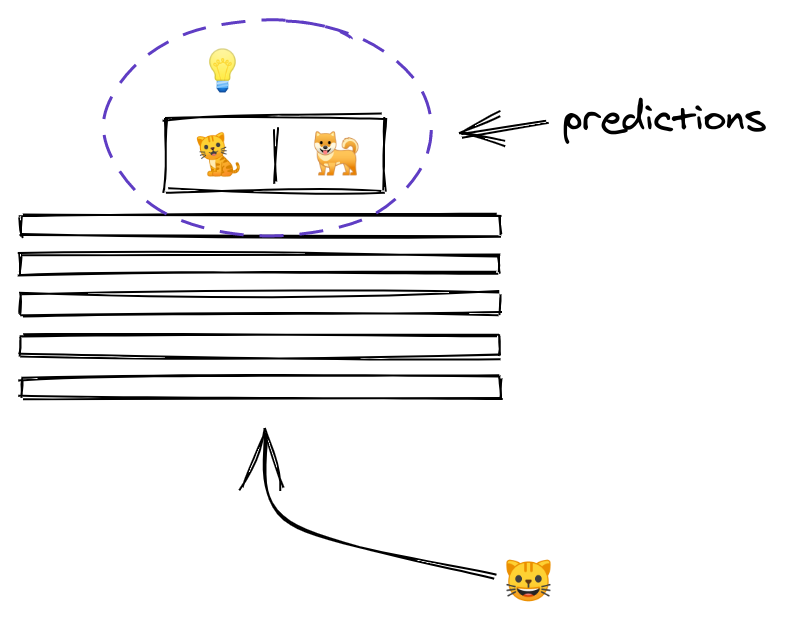
5/ By the time the image reaches the uppermost layer, it has been transformed to the point that it now consists of two numbers only.
The outputs of a layer are called activations, and the outputs of the last layer have a special meaning... they are the predictions!
At the heart of this lies the most important technique in modern deep learning - transfer learning.
Let's analyze how it
THREAD: Can you start learning cutting-edge deep learning without specialized hardware? \U0001f916
— Radek Osmulski (@radekosmulski) February 11, 2021
In this thread, we will train an advanced Computer Vision model on a challenging dataset. \U0001f415\U0001f408 Training completes in 25 minutes on my 3yrs old Ryzen 5 CPU.
Let me show you how...
2/ For starters, let's look at what a neural network (NN for short) does.
An NN is like a stack of pancakes, with computation flowing up when we make predictions.
How does it all work?
3/ We show an image to our model.
An image is a collection of pixels. Each pixel is just a bunch of numbers describing its color.
Here is what it might look like for a black and white image
4/ The picture goes into the layer at the bottom.
Each layer performs computation on the image, transforming it and passing it upwards.
5/ By the time the image reaches the uppermost layer, it has been transformed to the point that it now consists of two numbers only.
The outputs of a layer are called activations, and the outputs of the last layer have a special meaning... they are the predictions!