1. SWARMING (of people and machines)
2. DISTRIBUTED AND INDIRECT LEARNING
3. DISTRIBUTION OF PROVISION (not power but provision)
4. ACCEPTANCE OF STANDARDS (identification and adoption of)
5. INCENTIVES & FUNDING MODELS (worth based / outcome based models)
6. FOCUS ON INTENT (long term goals)
7. MANAGEMENT OF CONSTRAINTS (including enabling constraints)
8. FOCUS ON PRINCIPLES (over beliefs)
9. SUPPLY CHAIN MANAGEMENT
10. IMMERSION
11. RESOURCE MANAGEMENT
12. SUSTAINABILITY (not just tickboxes in a CSR)
13. REUSABILITY (of components including exaptation)
14. MANAGING INERTIA (models for identifying and managing)
15. RESILIENCE (both engineering and ecological)
16. MOBILISATION (of people and resources)
17. MANIPULATION (of perceptions and defense against)
18. SITUATIONAL AWARENESS
19. AUGMENTED INTELLIGENCE (not replacement of human capital but addition to)
20. REDUCTION OF WASTE
21. RADICALISATION (beyond PR)
22. PROTECTIONISM (including conservation)
23. CORPORATE SHARING (including models for using open source)
24. ADAPTATION (anticipation of change and reacting to)
25. PERCEPTION OF TRUST (creation and maintenance)
26. ETHICS
27. SECURITY (in a virtual world including defense against deep fakes)
28. SOFT POWER (application to a corporate setting)
29. AUTONOMOUS (people and machines, structures and systems for)
30. SIMULATION (including digital twins)
31. BASELINES (re-evaluation and use of)
32. AUTOMATION (of processes, identification of such)
33. LOCATION
34. DIVERSITY (creating sustainable and resilient systems)
35. SAFETY (including psychological)
36. BIOLOGICAL MIMICRY (learning from nature)
37. LOGISTICS
38. EXPERIENTIAL MODELS (mechanisms of learning)
39. ASSET OPTIMISED BUSINESS MODELS
40. FORECASTING (and scenario planning)
41. AMORPHOUS BOUNDARIES (fluidity between systems)
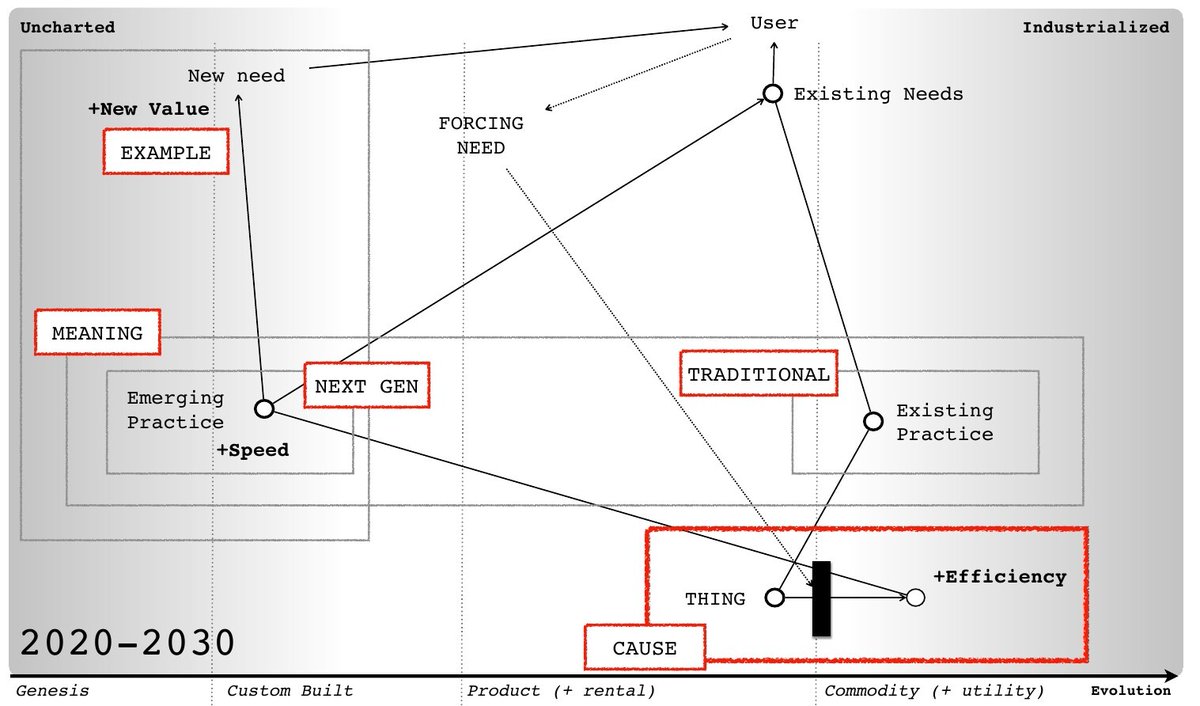
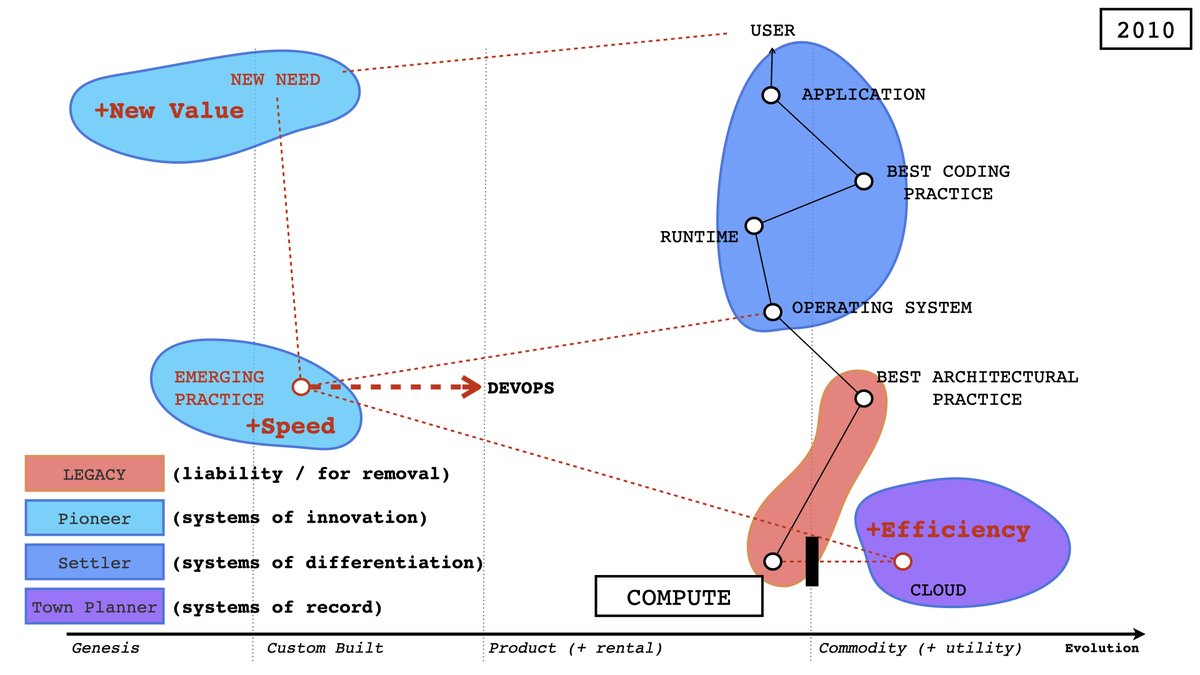
It's the change of practices that defines the future. Technology is just the enabler, the cause. What I'm interested in is of those practices that are changing, which ones will matter.
X : Containers is not in the list.
Me : They are irrelevant to me. They do not define the future. They are a discrete technology looking for a set of practices to support it. What I concern myself with is what the future corporation looks like.
X : Are you saying that companies are undergoing change across that entire list?
Me : Yes. Driven by underlying technology changes. How widespread and how relevant these practices are is another question that I'm exploring. Hidden within them are potential principles.
X : Principles?
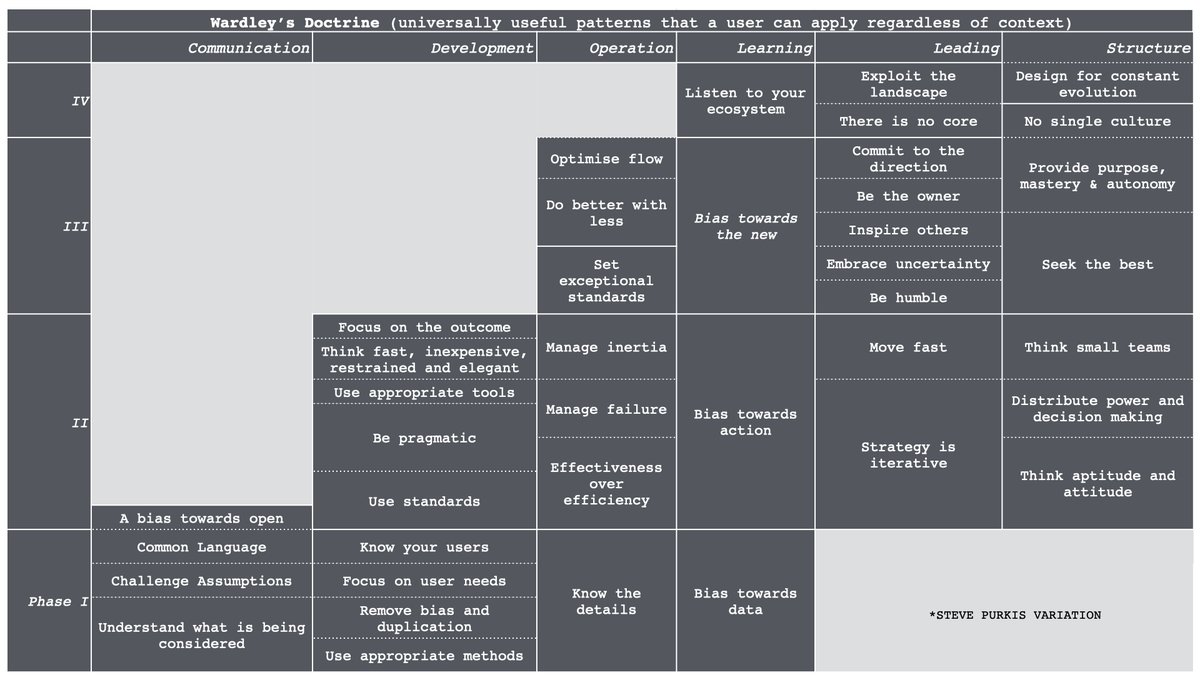
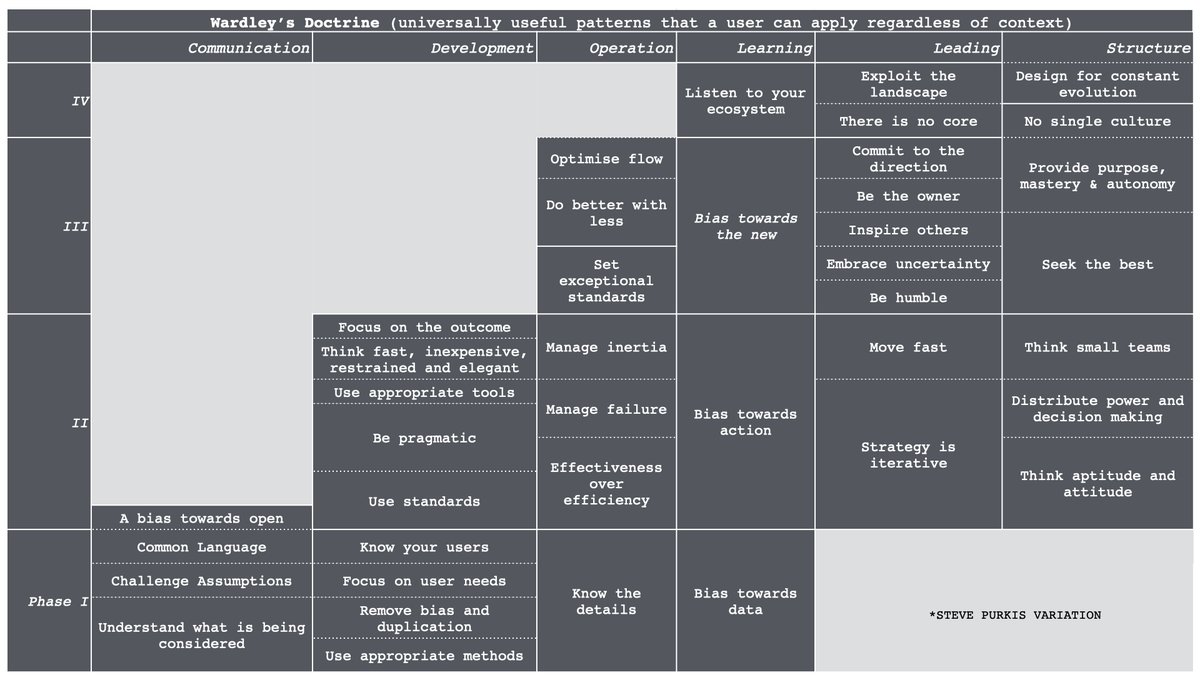
Me : Universally useful patterns, the sum of which I call doctrine. Take a company like Amazon, hand all its technology to a competitor like IBM, within 15 years Amazon will still come out on top ... why? ... better principles. Technology is not what matters.
X : So principles are practices?
Me : They are specifically the practices that are universally useful i.e. regardless of context. They are things you should do i.e. focus on user needs, understand what is being considered etc.
X : Aren't they values?
Me : Values are our beliefs.
X : What's the difference?
Me : In some collectives you might value "integrity" or "honesty" or "God". Those are not a universal principles, it is a belief specific to that collective that may not hold up in some other collective.
X : What about agile?
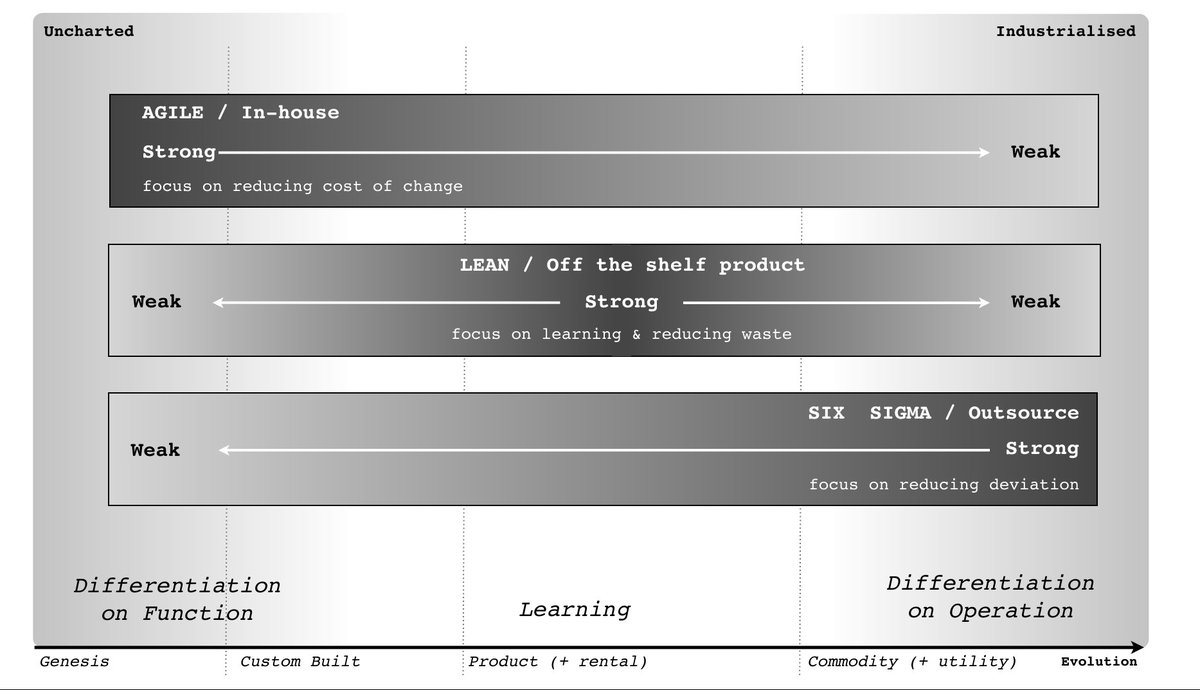
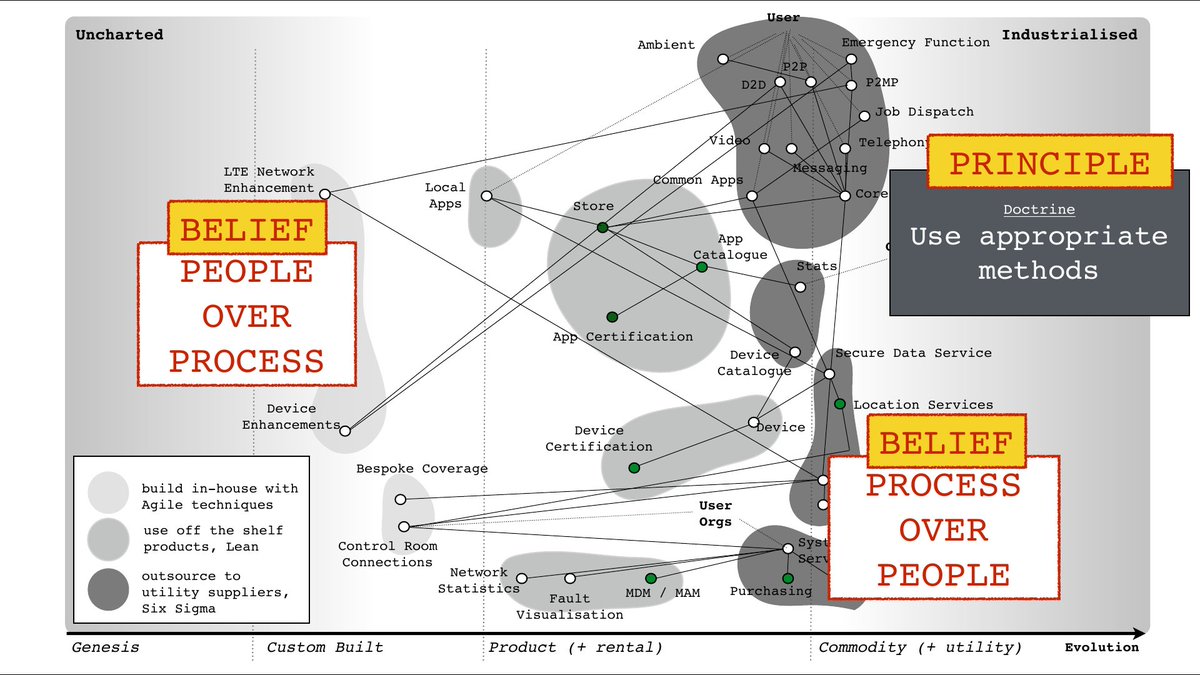
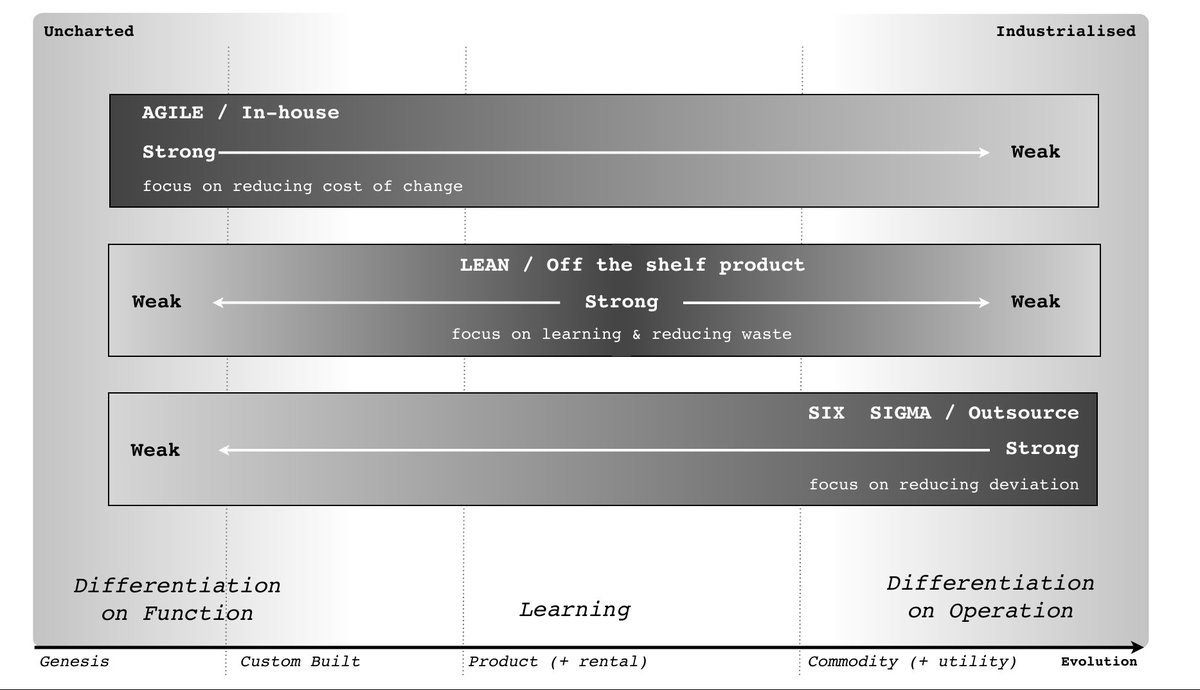
Me : That is a practice which is context specific i.e. it holds up in some cases depending upon how evolved the thing is. It is not universal, it is not a principle. Depending upon context, six sigma might be better.
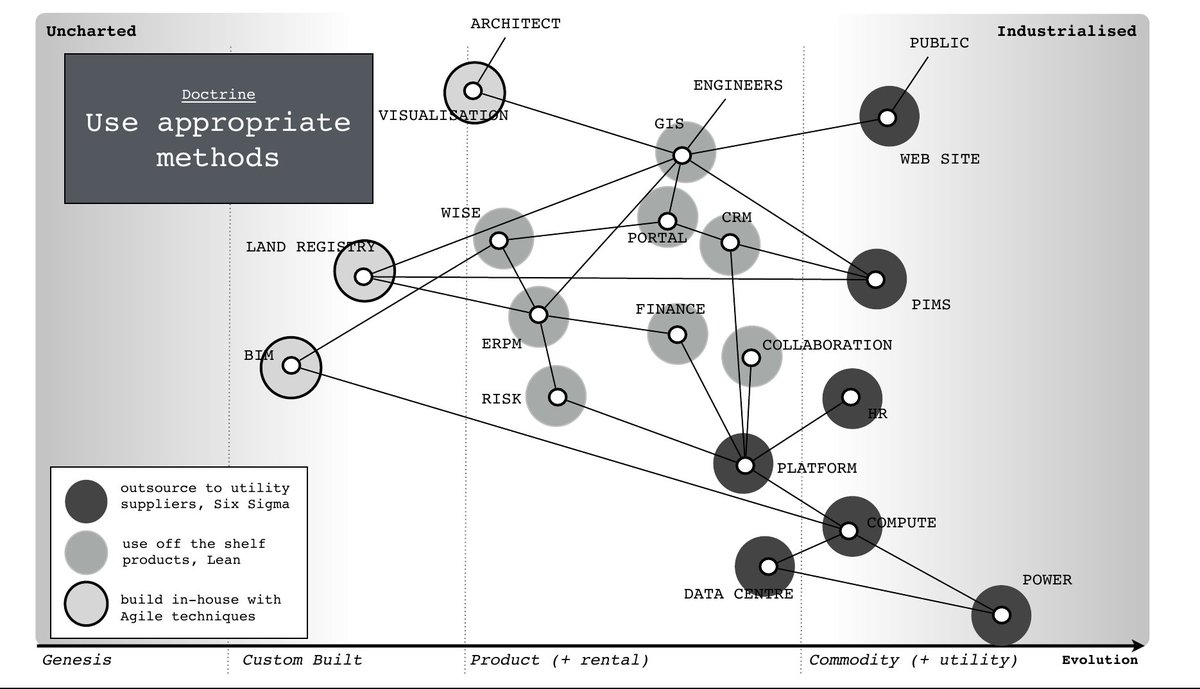
... if you want the principle, then it is "use appropriate methods" ... that is universal, holds up in all contexts.
Often people use principles when they mean beliefs or they describe context specific practices as principles or as values ... it can get very confusing ...
In my world ...
Values are things we believe in. They are beliefs of our collective.
Practices are the way we should do stuff. They are not beliefs, most are context specific.
Some practices are universal. They are principles.
Doctrine is the collection of principles.
So, Agile is a context specific practice for creating the novel and new. Six sigma is a practice.
People over process is a belief. A counter belief of process over people exists and can co-exist.
Use appropriate methods is the principle.
In mapping terms ...
Of course, if you don't map then ... well, without situational awareness of the context then it would be hard to explain the above. You just breakdown into arguments of Agile vs Six Sigma and people shouting "its culture!" ... good luck with that.
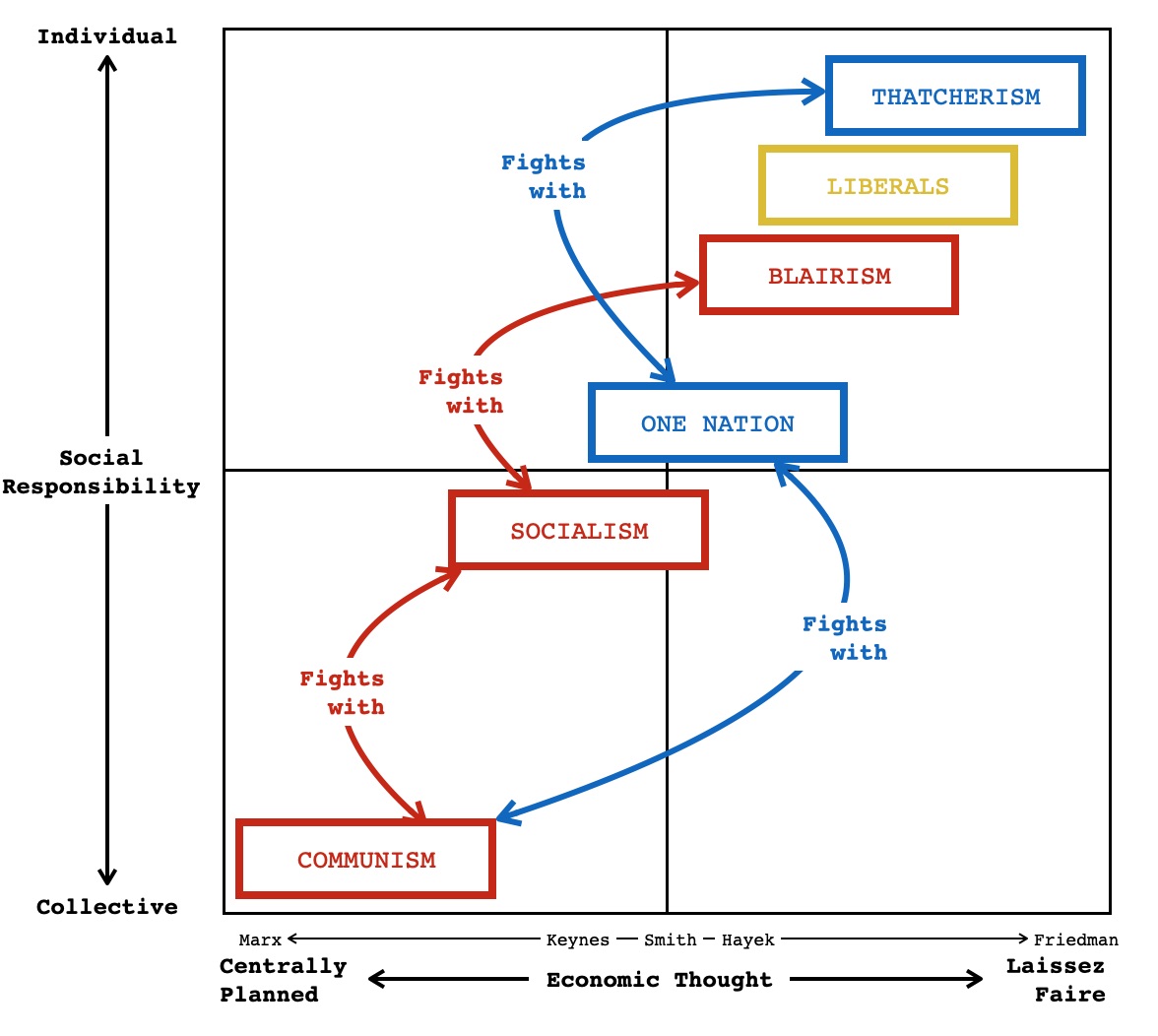
It's the same with economics, just the labels change i.e. "centrally planned" vs "market" ... of course, as Deng Xiaoping worked out long ago, the principle is apply appropriate methods ... "it doesn't matter if the cat is black or white, as long as it catches mice".
X : You don't care about containers?
Me : Seriously? I'm sure they are important to you. If they matter to you then they matter to you. I care about principles.
X : It seems very academic.
Me : Lol. Born in the fire of competition. It's anything but.
X : You make a lot of typos.
Me : Does it really matter? Did you understand what I'm talking about?
X : Yes, but you make a lot of typos.
Me : You should see my general writing. It's barely English.
X : What about 5G?
Me : Facepalm. I give up. Take me to your technology gods and sacrifice me to the latest meme. Throw in a bit of AI, bitcoin and digital transformation for good measure.