One of the best decisions I made during a very turbulent 2020 was to leave conventional coding behind and embrace the #nocode movement. @bubble made this a reality. Although my own journey thus far is premature, I’ve learned a lot so here’s a power thread on....

‘How I created @buildcamp sales funnel landing page in under 2hours’.

Preview here 👇

https://t.co/s9P5JodSHe

Power thread here 👇
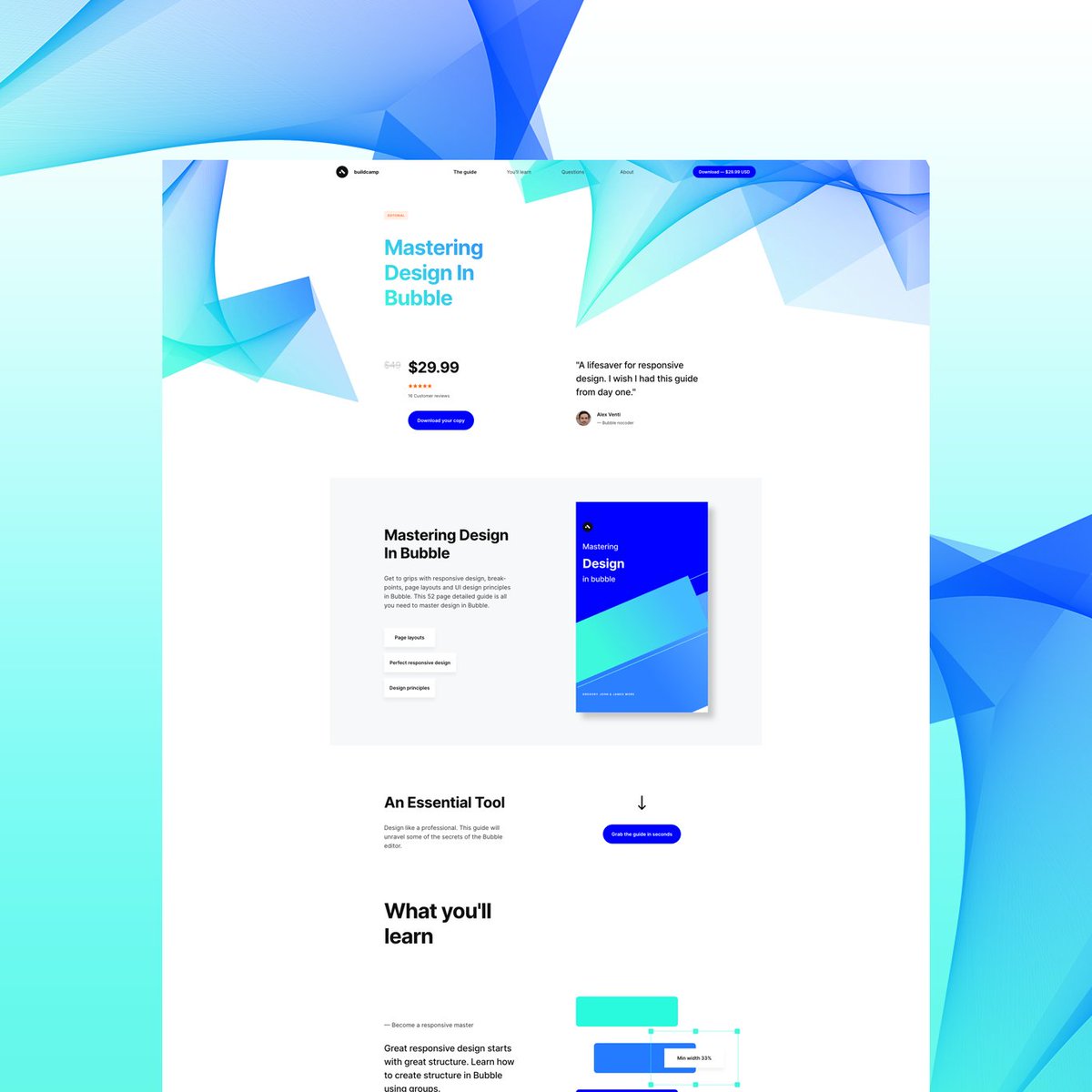
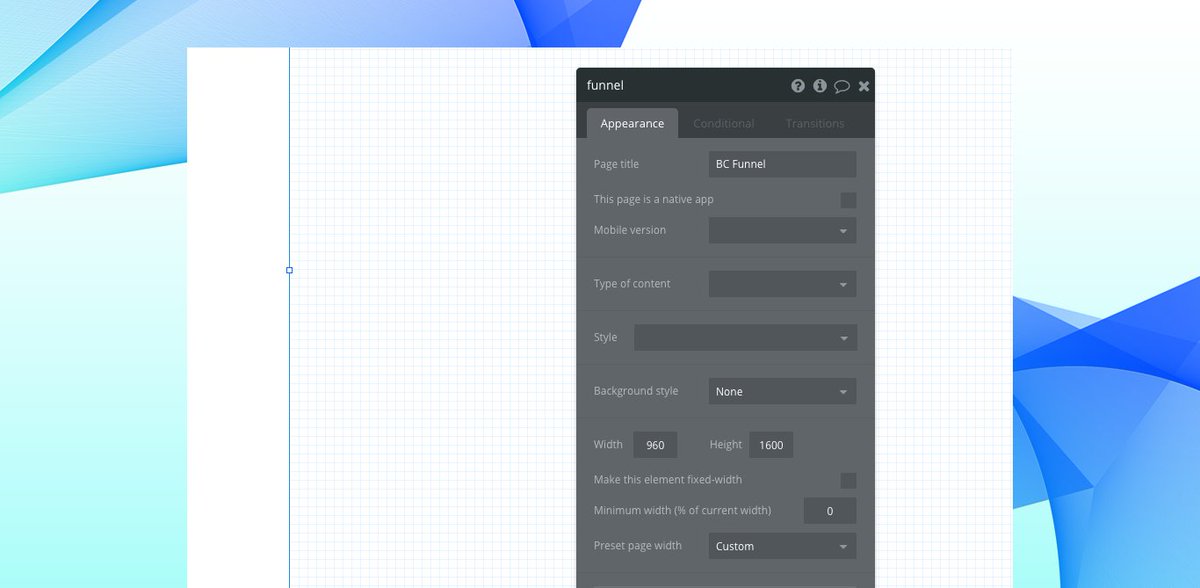
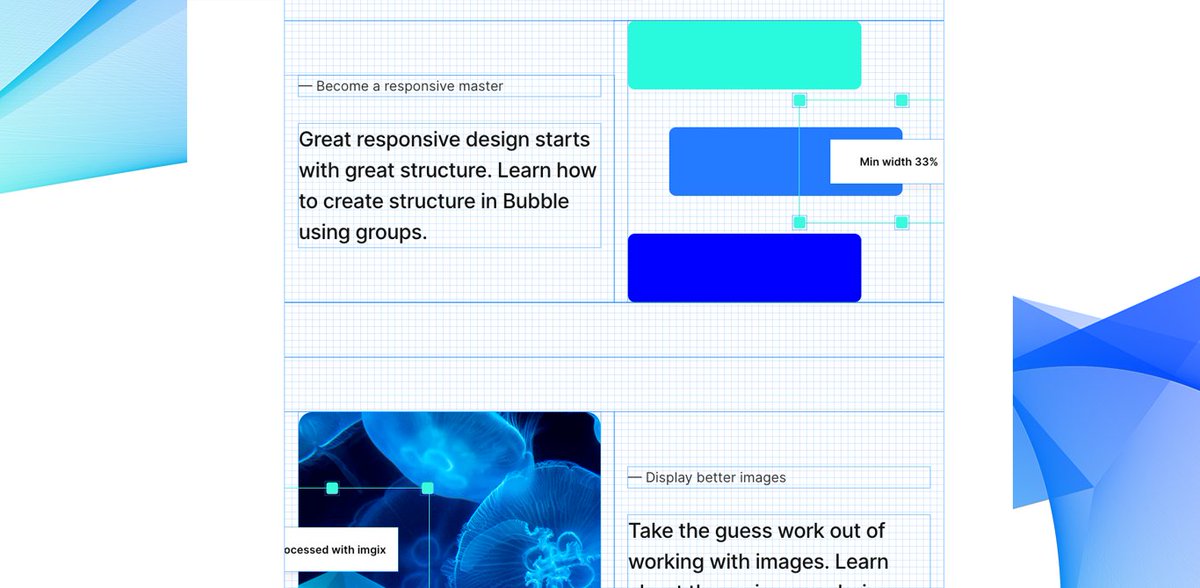
1. Started with a vanilla bubble app ensuring that all styles and UI elements were removed. Created a new page called funnel and set the page size to 960px as this allows the page to render proportionately on both web and mobile when hitting responsive breakpoints.
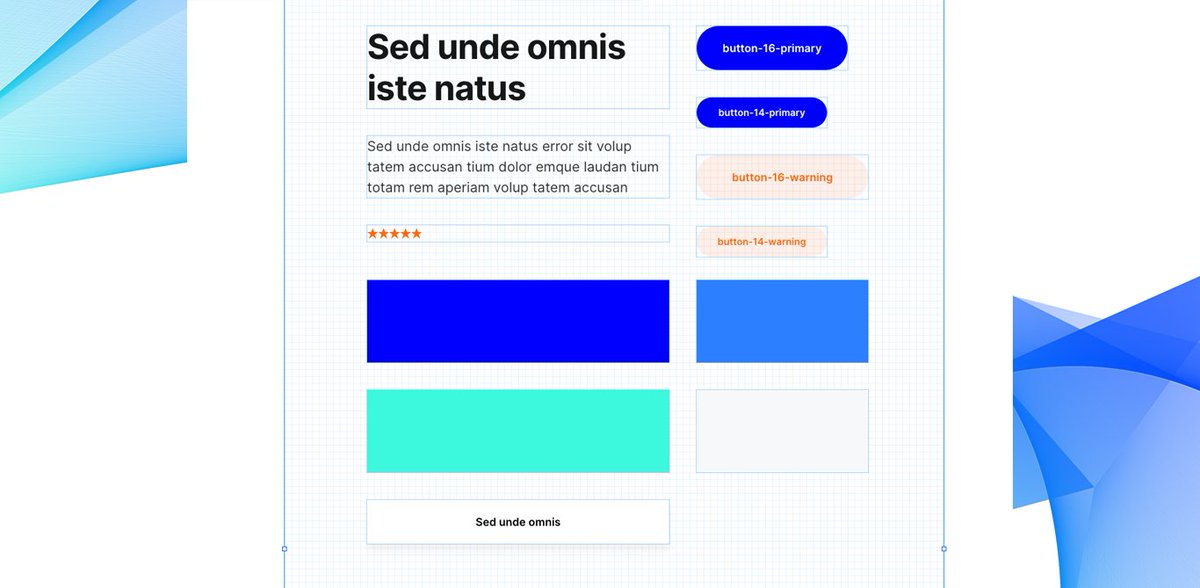
2. Began dropping elements onto the page to ‘find the style’. These had to be closely aligned to our @buildcamp branding so included text, buttons and groups - nothing too heavy. Played around with a few fonts, colors and gradients and thus pinned down the following style guide.
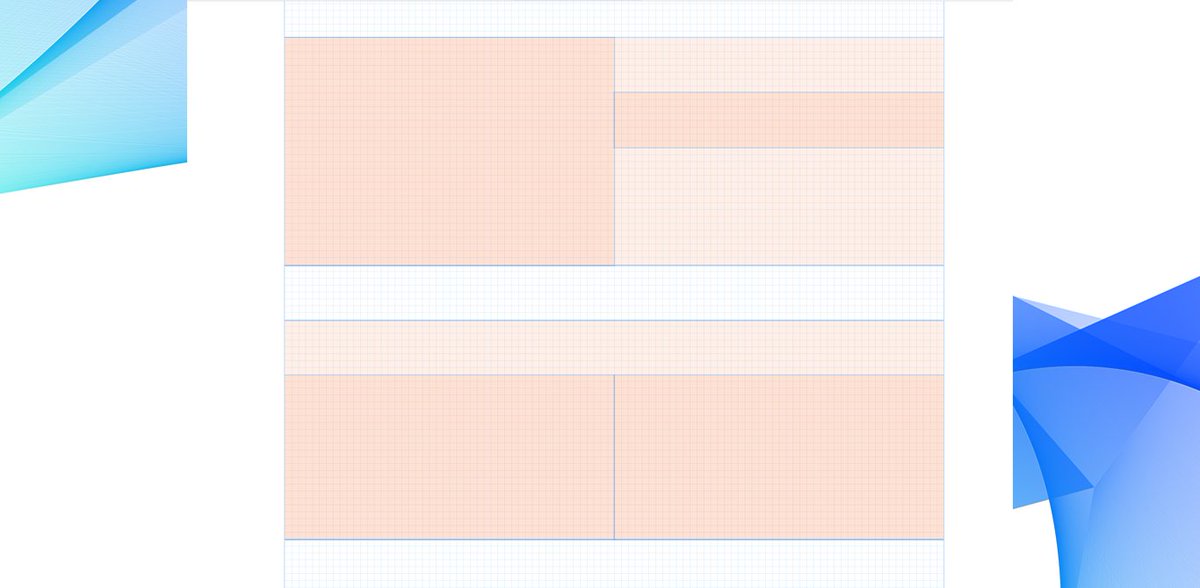
3. Started to map out sections using groups as my ‘containers’ to hold the relevant information and imagery needed to pad out the sales pitch. At this point, they were merely blocks of color #ff6600 with reduced opacity set to 5% to ease page flair.
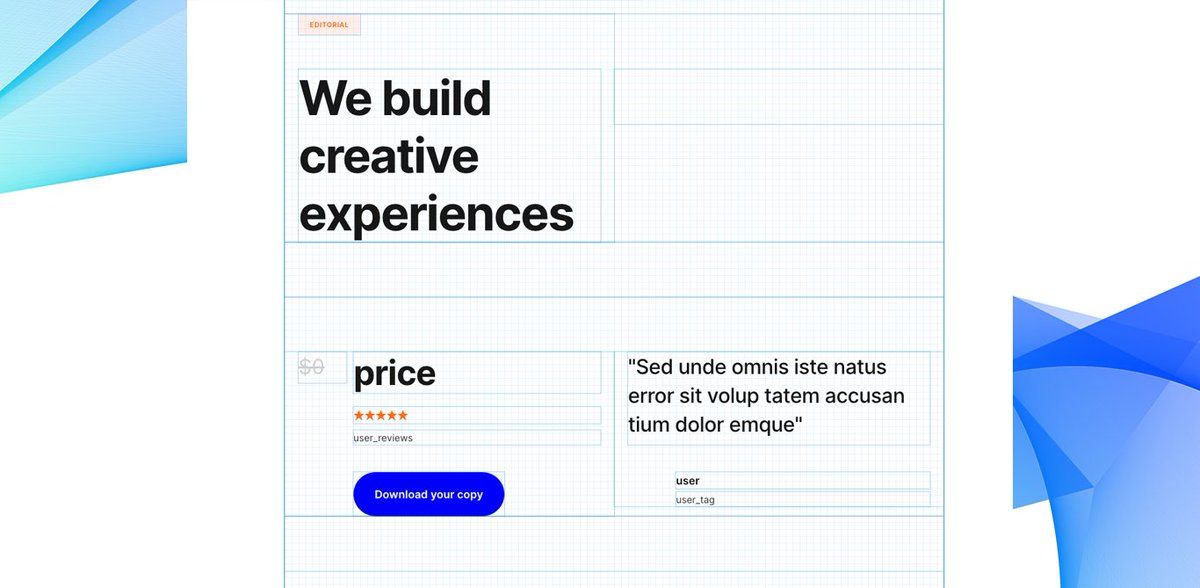
4. Working from top down, I created the page structure using the containers as placeholders and part-filled each with some dummy lipsum content. By using lipsum enables you to not get bogged down with sniffy content creation. A designer's thorn!
5. Fired up Photoshop and started to create some complimentary images to be used in some of the placeholders. Using the colors I defined in the style guide, I was able to create the following custom imagery to retain page uniform/consistency.
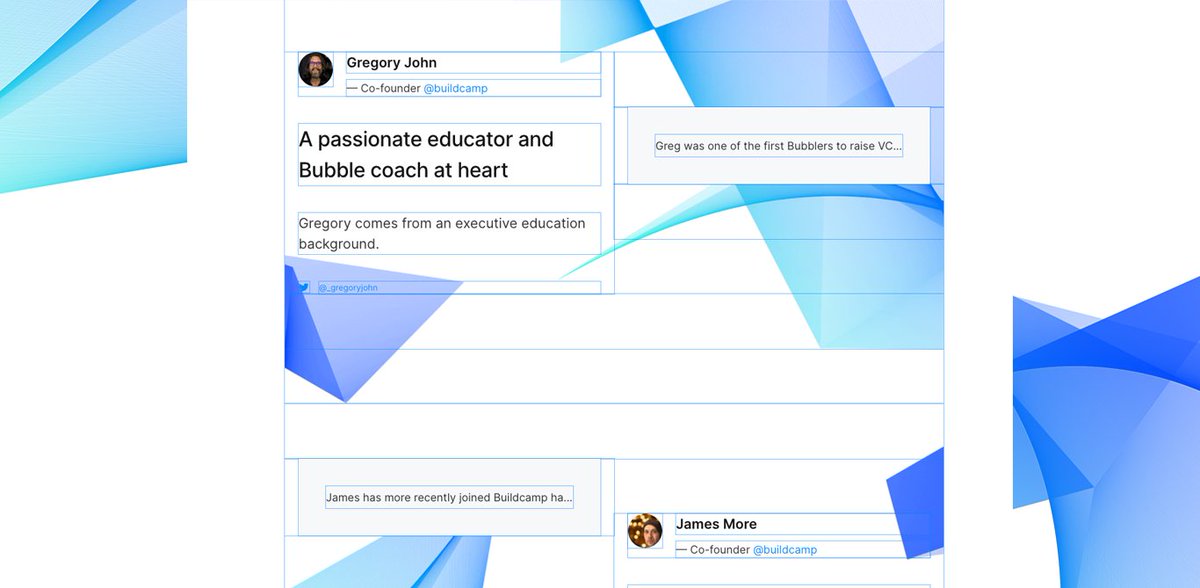
6. At this point I had a firm understanding on how I envisaged the final page to render so my wingman @_gregoryjohn crafted out the content which allowed me to scale and set the correct placeholder heights.
7. Instead of having large open white-space in between sections, I opted to set an image as the groups background to draw attention to certain CTAs and aid page flow. With the parent page itself having its own isometric master-background image.
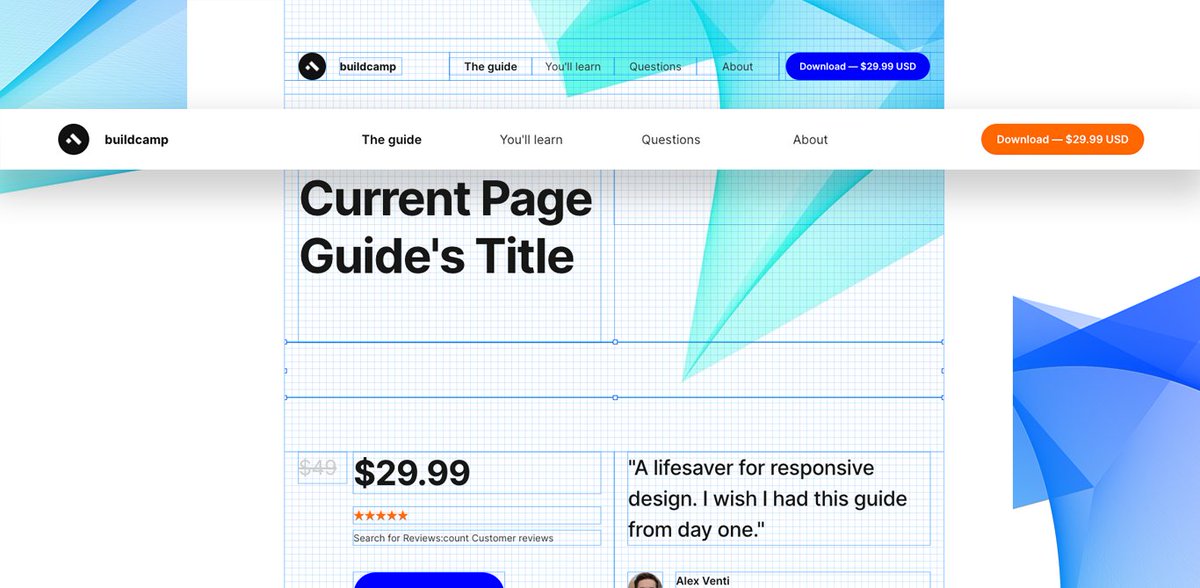
8. I then created a transparent floating header with a conditional to set the background color to #FFFFFF when the current page scrolling is/or above 160. Created 4 anchor text elements which onclick scroll to X_container further down the page.
9. Added some further minor UI/UX enhancements. These inc the guide cover shadow by applying an outset shadow style to 20/20/20/0 with #000000 20% opacity.
10. A pro-active call-out floating group which is hidden on page load. When current page scrolling is/or above 160 > animate (NoBounceLeftIn) floating group > with the reverse being done to hide when current page scrolling is/or below 160.
A simple tweet could never portray how much gratitude I have for @estraschnov and @jphaas1 in pursuing their vision into such a powerful and scalable product. @bubble thank you, I applaud you.

More from Tech

THREAD: How is it possible to train a well-performing, advanced Computer Vision model 𝗼𝗻 𝘁𝗵𝗲 𝗖𝗣𝗨? 🤔

At the heart of this lies the most important technique in modern deep learning - transfer learning.

Let's analyze how it


2/ For starters, let's look at what a neural network (NN for short) does.

An NN is like a stack of pancakes, with computation flowing up when we make predictions.

How does it all work?


3/ We show an image to our model.

An image is a collection of pixels. Each pixel is just a bunch of numbers describing its color.

Here is what it might look like for a black and white image


4/ The picture goes into the layer at the bottom.

Each layer performs computation on the image, transforming it and passing it upwards.


5/ By the time the image reaches the uppermost layer, it has been transformed to the point that it now consists of two numbers only.

The outputs of a layer are called activations, and the outputs of the last layer have a special meaning... they are the predictions!

You May Also Like

First thread of the year because I have time during MCO. As requested, a thread on the gods and spirits of Malay folk religion. Some are indigenous, some are of Indian origin, some have Islamic


Before I begin, it might be worth explaining the Malay conception of the spirit world. At its deepest level, Malay religious belief is animist. All living beings and even certain objects are said to have a soul. Natural phenomena are either controlled by or personified as spirits

Although these beings had to be respected, not all of them were powerful enough to be considered gods. Offerings would be made to the spirits that had greater influence on human life. Spells and incantations would invoke their


Two known examples of such elemental spirits that had god-like status are Raja Angin (king of the wind) and Mambang Tali Arus (spirit of river currents). There were undoubtedly many more which have been lost to time

Contact with ancient India brought the influence of Hinduism and Buddhism to SEA. What we now call Hinduism similarly developed in India out of native animism and the more formal Vedic tradition. This can be seen in the multitude of sacred animals and location-specific Hindu gods