#AcademicTwitter #phdchat
https://t.co/RZ8pV1XjOW
Are you a potential PhD student deciding which programs to apply to? Check out this except from "Work Your Career" where @loleen_berdahl and I give guidance on choosing the PhD program that best suits you. https://t.co/2G328d6O38
— Dr. Jonathan Malloy (@JonathanMalloy) November 27, 2020
We also include this handy table. pic.twitter.com/V4BOr7YI1B
Thinking of applying for a PhD? @JonathanMalloy and I created a flowchart to help you think through the decision (from our @utpress book, Work Your Career, which devotes a chapter to how to apply for PhD programs).@AcademicChatter #AcademicTwitter #gradschool https://t.co/nvTpqLjq0v
— Loleen Berdahl (@loleen_berdahl) November 23, 2020
Currently sticking myself in Stage 3 and hoping I can skip right to 5. (From "Work Your Career" by Loleen Berdahl & Jonathan Malloy) pic.twitter.com/yefE9ScNxl
— Emma SJ Green (@EmmaSJGreen) June 17, 2019
This came in yesterday and can't put it down @loleen_berdahl and @JonathanMalloy. Favorite chapter so far. Only wish this came out 5 years ago when I started my #PhD. This is a must read ! pic.twitter.com/UwUMkLVqmj
— David Said (@d_said91) December 1, 2020
As summer winds down, are you prepared to tackle the term? Work Your Career authors @Loleen_Berdahl and @JonathanMalloy share a free excerpt from their helpful guide, offering practical advice on how you can get (and stay) organized: https://t.co/roYX77FTi8. #BackToSchool pic.twitter.com/ncfy4ZL0ze
— University of Toronto Press (@utpress) September 2, 2019
New on #FirstView: @Gold_Dana\u2019s review of \u201cWork Your Career: Get What You Want from Your Social Sciences or Humanities PhD\u201d by @Loleen_berdahl & @JonathanMalloy & \u201cThe Oxford Handbook of Publishing\u201d by @Angusph & @michaelbhaskar - https://t.co/IwEydaajw8 pic.twitter.com/w2wvlqvC0t
— CJPS_RCSP (@CJPS_RCSP) September 23, 2019
Work Your Career: Get What You Want from Your Social Sciences or Humanities PhD (my reading notes) https://t.co/JHREthOiD2 by @loleen_berdahl and @jonathanmalloy is an honest and frank book. No rosy promises. The truth, and nothing more than the truth.
— Dr Raul Pacheco-Vega (@raulpacheco) September 12, 2019
I find it remarkable that a section of society not rejoicing that children very rarely ill with COVID compared to other viruses and much less infectious than adults
— Michael Absoud \U0001f499 (@MAbsoud) February 12, 2021
Instead trying prove the opposite!
Why??
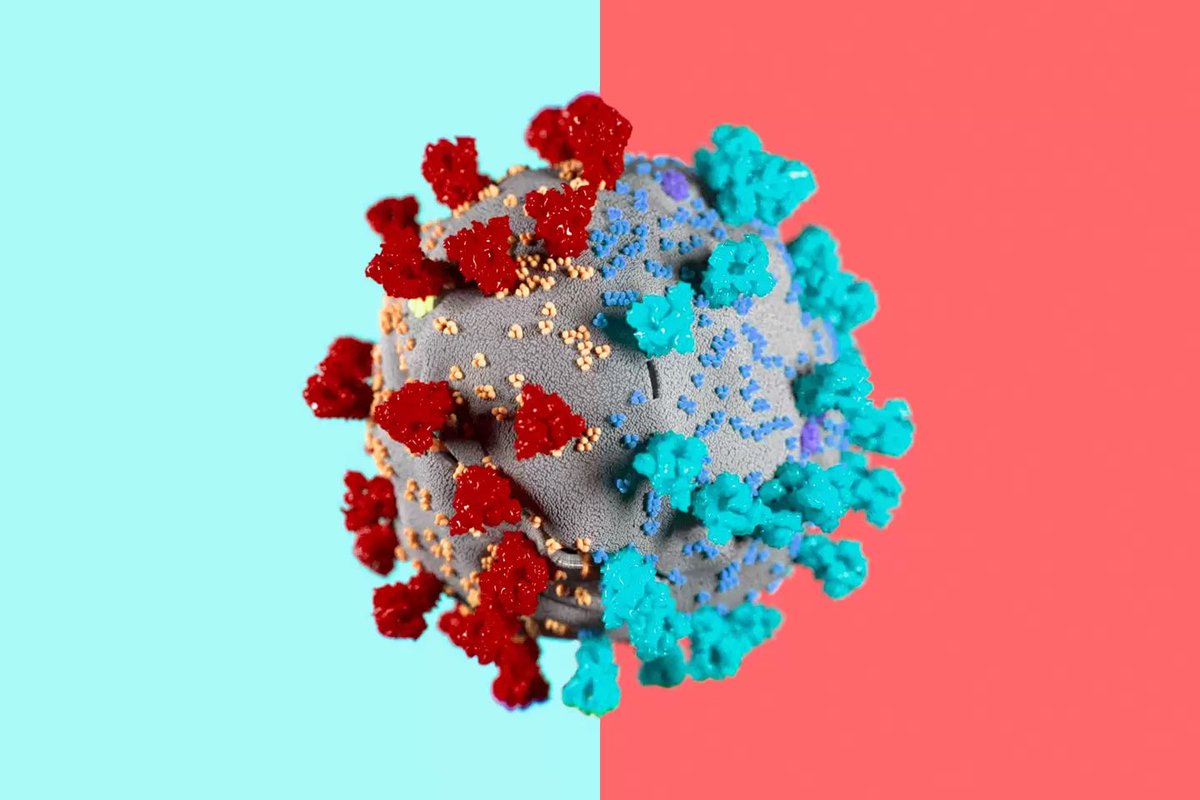
Immunocompromised 45 year old suffered from #COVID19 for 155 days before he died. The virus was changing very quickly inside the man's body\u2014it acquired a big cluster of >20 mutations\u2014resembled the same ones seen in #B117 & #B1351. (NPR audio Part 1 of 2)\U0001f9f5https://t.co/7kWiBZ1xGk pic.twitter.com/ZJ7AExB78Y
— Eric Feigl-Ding (@DrEricDing) February 8, 2021
2) NPR report audio part 2 of 2:
— Eric Feigl-Ding (@DrEricDing) February 8, 2021
Dr. Li couldn't believe what they found. "I was shocked," he says. "When I saw the virus sequences, I knew that we were dealing with something completely different and potentially very important." pic.twitter.com/HT3Yt6djFd