1. I find it remarkable that some medics and scientists aren’t raising their voices to make children as safe as possible. The comment about children being less infectious than adults is unsupported by evidence.
I find it remarkable that a section of society not rejoicing that children very rarely ill with COVID compared to other viruses and much less infectious than adults
— Michael Absoud \U0001f499 (@MAbsoud) February 12, 2021
Instead trying prove the opposite!
Why??
https://t.co/psnsLaHAZM
More from Adam Hamdy
1. I believe the government is about to make another huge mistake. Where is @UKLabour in all this? I have some questions @Keir_Starmer should be asking urgently. Please RT to raise awareness.
2. Where is the modelling or evidence to support a focused protection vaccination strategy? The government has chosen it as its preferred strategy but it must have considered other options. Will the government publish the data and the alternative options considered?
3. A responsible government will have modelling for 20%, 50% and 80% vaccine coverage, and projections for the number of infections, Long Covid and deaths in each scenario. Where are those models? On what basis has the government opted for the 20% scenario?
4. The government should also have modelled each of these scenarios against a backdrop of low, medium and high community transmission. What is the impact of each vaccination scenario against varying levels of community transmission?
5. There should also be some assessment of incidence of reinfection and likely evolution of variants given different levels of community transmission. What does this assessment tell us?
It seems increasingly likely that, come March, the govt is planning to say to under-65s without pre-existing conditions: go forth and get Covid https://t.co/BhHNG3M2DR
— D_Shariatmadari (@D_Shariatmadari) January 10, 2021
2. Where is the modelling or evidence to support a focused protection vaccination strategy? The government has chosen it as its preferred strategy but it must have considered other options. Will the government publish the data and the alternative options considered?
3. A responsible government will have modelling for 20%, 50% and 80% vaccine coverage, and projections for the number of infections, Long Covid and deaths in each scenario. Where are those models? On what basis has the government opted for the 20% scenario?
4. The government should also have modelled each of these scenarios against a backdrop of low, medium and high community transmission. What is the impact of each vaccination scenario against varying levels of community transmission?
5. There should also be some assessment of incidence of reinfection and likely evolution of variants given different levels of community transmission. What does this assessment tell us?
1. This thread has been given a new lease of life today. People keep saying, "We can't do #ZeroCovid, it doesn't fit with our way of life."
Look around.
What way of life?
The one we used to have?
The UK has been under varying degrees of restriction since March 23rd 2020.
2. Nearly a year of having our social and economic freedoms curtailed in one way or another. Nearly a year of muted economic activity. Nearly a year of mass death and disease.
#ZeroCovid doesn't fit with a way of life that doesn't exist anymore.
3. The question isn't whether it fits with our old freewheeling ways, but whether it would lead to better outcomes than the UK's current (poorly defined) strategy? Experiences in New Zealand, Australia, Vietnam, China, Taiwan and elsewhere very much suggest it would.
4. #ZeroCovid isn't about what's possible. It's about what's necessary. Decide what's necessary and figure out a way to make it possible. We can't force travellers to quarantine in hotels for two weeks? Why not? Taiwan does. And if that's what's necessary, why aren't we doing it?
5. I've heard some odd things said about #ZeroCovid
Simple-minded clod Matt Hancock said Zero Covid is impossible because no country has had zero cases.
Zero Covid sets out an ambition. It signals a country treats any infections as serious
Look around.
What way of life?
The one we used to have?
The UK has been under varying degrees of restriction since March 23rd 2020.
1. \u201c#ZeroCovid is impossible\u201d
— Adam Hamdy (@adamhamdy) January 4, 2021
I\u2019ve been arguing for #ZeroCovid before it even had a name, so I\u2019ve heard most of the counter arguments.
It\u2019s too expensive.
If countries like Vietnam can afford it, why can\u2019t we?https://t.co/1XUyzOuHtc
2. Nearly a year of having our social and economic freedoms curtailed in one way or another. Nearly a year of muted economic activity. Nearly a year of mass death and disease.
#ZeroCovid doesn't fit with a way of life that doesn't exist anymore.
3. The question isn't whether it fits with our old freewheeling ways, but whether it would lead to better outcomes than the UK's current (poorly defined) strategy? Experiences in New Zealand, Australia, Vietnam, China, Taiwan and elsewhere very much suggest it would.
4. #ZeroCovid isn't about what's possible. It's about what's necessary. Decide what's necessary and figure out a way to make it possible. We can't force travellers to quarantine in hotels for two weeks? Why not? Taiwan does. And if that's what's necessary, why aren't we doing it?
5. I've heard some odd things said about #ZeroCovid
Simple-minded clod Matt Hancock said Zero Covid is impossible because no country has had zero cases.
Zero Covid sets out an ambition. It signals a country treats any infections as serious


1. The problem facing Europe & the US isn't a scientific one. Scientists have been clear for months: public health and economic & social wellbeing are best served by policies that supress the virus. The #JohnSnowMemo cites evidence that makes this
2. Some media commentators seek to present the issue of how to respond to the virus in simplistic terms: Lockdown vs Herd Immunity. This a mischaracterisation. The countries that have tackled #COVID-19 best have used a range of public health
3. Almost every scientist acknowledges lockdown equals failure. It is a sign governments have failed to implement the measures needed to allow life to be lived more or less as normal, without risking exponential growth in transmission.
4. There is an active misinformation campaign that is being aided and abetted by certain sections of the media and some politicians. The campaign would have us believe that if we open up and shield the vulnerable, all will be well. This approach has been derided as inhumane...
5. ...by the WHO, and ridiculous by Dr Fauci for many reasons. It is based on faulty logic, and the proponents of this approach have submitted no evidence that it can be achieved nor any practical examples of how they would do so.
2. Some media commentators seek to present the issue of how to respond to the virus in simplistic terms: Lockdown vs Herd Immunity. This a mischaracterisation. The countries that have tackled #COVID-19 best have used a range of public health
The Swiss Cheese model of #COVID19 defence, by @MackayIM.
— Dr Zo\xeb Hyde (@DrZoeHyde) October 24, 2020
No single measure is sufficient, but put together they can stop the virus.
I particularly like Misinformation Mouse, nibbling away at one of the slices. pic.twitter.com/c1gfTai2Hj
3. Almost every scientist acknowledges lockdown equals failure. It is a sign governments have failed to implement the measures needed to allow life to be lived more or less as normal, without risking exponential growth in transmission.
4. There is an active misinformation campaign that is being aided and abetted by certain sections of the media and some politicians. The campaign would have us believe that if we open up and shield the vulnerable, all will be well. This approach has been derided as inhumane...
5. ...by the WHO, and ridiculous by Dr Fauci for many reasons. It is based on faulty logic, and the proponents of this approach have submitted no evidence that it can be achieved nor any practical examples of how they would do so.
More from Science





JUST ONE PERSON—UK 🇬🇧 scientists think one immunocompromised person who cleared virus slowly & only partially wiped out an infection, leaving behind genetically-hardier viruses that rebound & learn how to survive better. That’s likely how #B117 started. 🧵 https://t.co/bMMjM8Hiuz
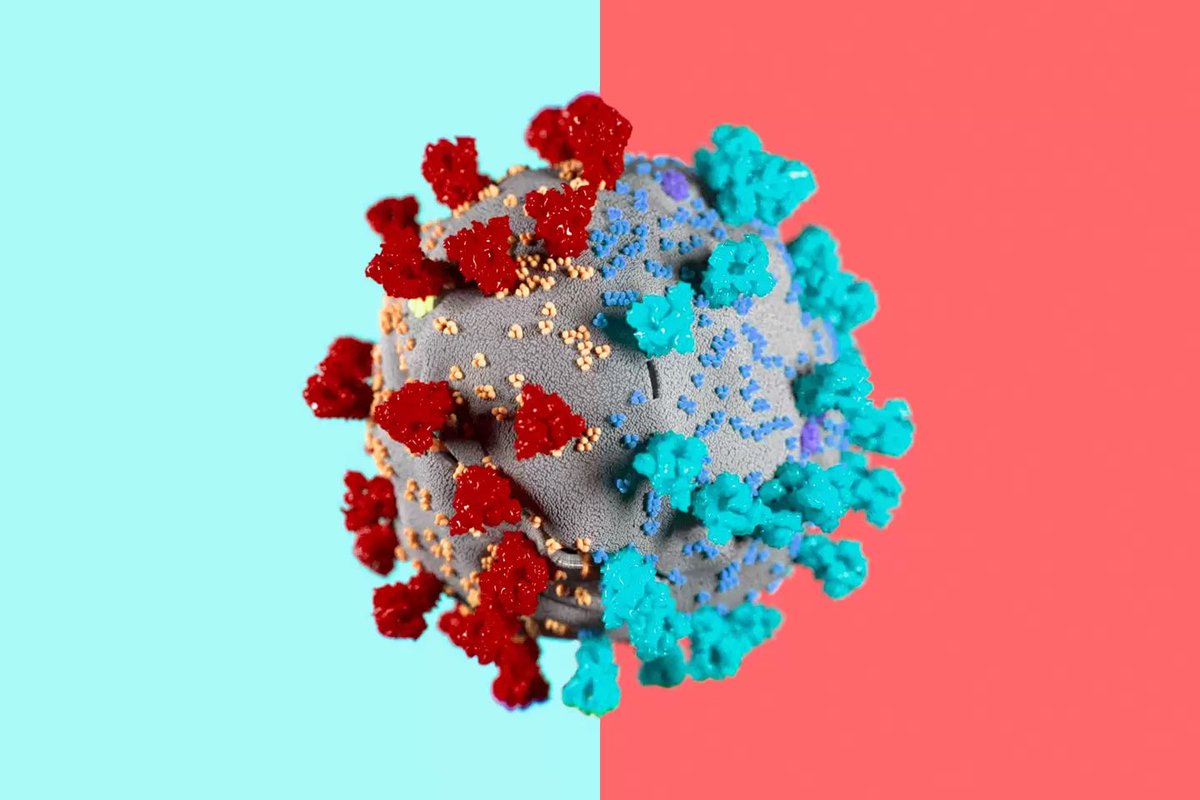
2) The leading hypothesis is that the new variant evolved within just one person, chronically infected with the virus for so long it was able to evolve into a new, more infectious form.
same thing happened in Boston in another immunocompromised person that was sick for 155 days.
3) What happened in Boston with one 45 year old man who was highly infectious for 155 days straight before he died... is exactly what scientists think happened in Kent, England that gave rise to #B117.
4) Doctors were shocked to find virus has evolved many different forms inside of this one immunocompromised man. 20 new mutations in one virus, akin to the #B117. This is possibly how #B1351 in South Africa 🇿🇦 and #P1 in Brazil 🇧🇷 also evolved.
5) “On its own, the appearance of a new variant in genomic databases doesn’t tell us much. “That’s just one genome amongst thousands every week. It wouldn’t necessarily stick out,” says Oliver Pybus, a professor of evolution and infectious disease at Oxford.
2) The leading hypothesis is that the new variant evolved within just one person, chronically infected with the virus for so long it was able to evolve into a new, more infectious form.
same thing happened in Boston in another immunocompromised person that was sick for 155 days.
3) What happened in Boston with one 45 year old man who was highly infectious for 155 days straight before he died... is exactly what scientists think happened in Kent, England that gave rise to #B117.
Immunocompromised 45 year old suffered from #COVID19 for 155 days before he died. The virus was changing very quickly inside the man's body\u2014it acquired a big cluster of >20 mutations\u2014resembled the same ones seen in #B117 & #B1351. (NPR audio Part 1 of 2)\U0001f9f5https://t.co/7kWiBZ1xGk pic.twitter.com/ZJ7AExB78Y
— Eric Feigl-Ding (@DrEricDing) February 8, 2021
4) Doctors were shocked to find virus has evolved many different forms inside of this one immunocompromised man. 20 new mutations in one virus, akin to the #B117. This is possibly how #B1351 in South Africa 🇿🇦 and #P1 in Brazil 🇧🇷 also evolved.
2) NPR report audio part 2 of 2:
— Eric Feigl-Ding (@DrEricDing) February 8, 2021
Dr. Li couldn't believe what they found. "I was shocked," he says. "When I saw the virus sequences, I knew that we were dealing with something completely different and potentially very important." pic.twitter.com/HT3Yt6djFd
5) “On its own, the appearance of a new variant in genomic databases doesn’t tell us much. “That’s just one genome amongst thousands every week. It wouldn’t necessarily stick out,” says Oliver Pybus, a professor of evolution and infectious disease at Oxford.






You May Also Like

**Thread on Bravery of Sikhs**
(I am forced to do this due to continuous hounding of Sikh Extremists since yesterday)
Rani Jindan Kaur, wife of Maharaja Ranjit Singh had illegitimate relations with Lal Singh (PM of Ranjit Singh). Along with Lal Singh, she attacked Jammu, burnt - https://t.co/EfjAq59AyI

Hindu villages of Jasrota, caused rebellion in Jammu, attacked Kishtwar.
Ancestors of Raja Ranjit Singh, The Sansi Tribe used to give daughters as concubines to Jahangir.

The Ludhiana Political Agency (Later NW Fronties Prov) was formed by less than 4000 British soldiers who advanced from Delhi and reached Ludhiana, receiving submissions of all sikh chiefs along the way. The submission of the troops of Raja of Lahore (Ranjit Singh) at Ambala.
Dabistan a contemporary book on Sikh History tells us that Guru Hargobind broke Naina devi Idol Same source describes Guru Hargobind serving a eunuch
YarKhan. (ref was proudly shared by a sikh on twitter)
Gobind Singh followed Bahadur Shah to Deccan to fight for him.

In Zafarnama, Guru Gobind Singh states that the reason he was in conflict with the Hill Rajas was that while they were worshiping idols, while he was an idol-breaker.
And idiot Hindus place him along Maharana, Prithviraj and Shivaji as saviours of Dharma.

(I am forced to do this due to continuous hounding of Sikh Extremists since yesterday)
Rani Jindan Kaur, wife of Maharaja Ranjit Singh had illegitimate relations with Lal Singh (PM of Ranjit Singh). Along with Lal Singh, she attacked Jammu, burnt - https://t.co/EfjAq59AyI
Tomorrow again same thing happens bcoz fudus like you are creating a narrative oh Khalistan. when farmers are asking MSP. (RSS ki tatti khane wale Kerni sena ke kutte).
— Ancient Economist (@_stock_tips) December 5, 2020
U kill sikhs in 1984 just politics. To BC low IQ fudu Saale entire history was politics.
Hindu villages of Jasrota, caused rebellion in Jammu, attacked Kishtwar.
Ancestors of Raja Ranjit Singh, The Sansi Tribe used to give daughters as concubines to Jahangir.
The Ludhiana Political Agency (Later NW Fronties Prov) was formed by less than 4000 British soldiers who advanced from Delhi and reached Ludhiana, receiving submissions of all sikh chiefs along the way. The submission of the troops of Raja of Lahore (Ranjit Singh) at Ambala.
Dabistan a contemporary book on Sikh History tells us that Guru Hargobind broke Naina devi Idol Same source describes Guru Hargobind serving a eunuch
YarKhan. (ref was proudly shared by a sikh on twitter)
Gobind Singh followed Bahadur Shah to Deccan to fight for him.
In Zafarnama, Guru Gobind Singh states that the reason he was in conflict with the Hill Rajas was that while they were worshiping idols, while he was an idol-breaker.
And idiot Hindus place him along Maharana, Prithviraj and Shivaji as saviours of Dharma.