https://t.co/D9Qwt9Y6zu
1. Ultimate blockchain, NFT and crypto learning thread 👇
(warning 100's of hrs of content)
https://t.co/D9Qwt9Y6zu
https://t.co/DRQwQWHVho
https://t.co/B8HfP2USOH
https://t.co/btUuUALVc8
https://t.co/ypUJxbCBRT
https://t.co/61llZyS0z5
https://t.co/4gQEOviQ5A
https://t.co/PTSoWCUYJN
https://t.co/qp161jfGve
https://t.co/5aPOxzIgne
https://t.co/P6tJZvlnHC
https://t.co/9jx6rCIQHa
More from Crypto





A primer on how to use @coingecko for your crypto data/research/trading needs.
Share it with a friend who needs it!
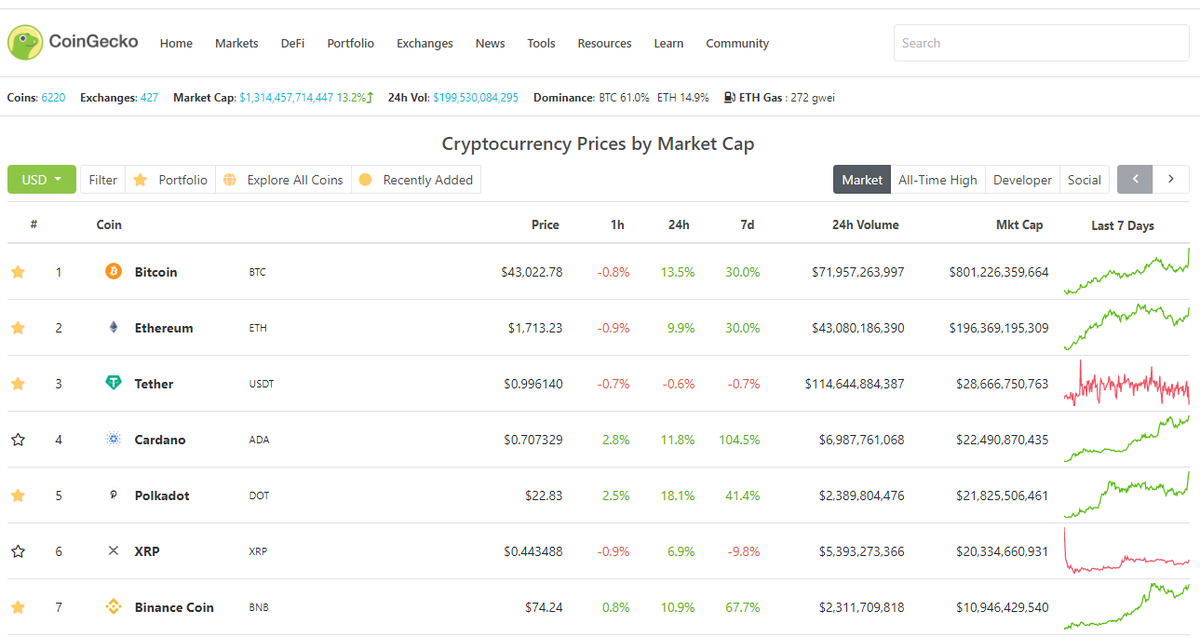
1/ Getting started with crypto and want to check prices/projects? https://t.co/LFnk4vukxj has info on just about every crypto you'll need :)
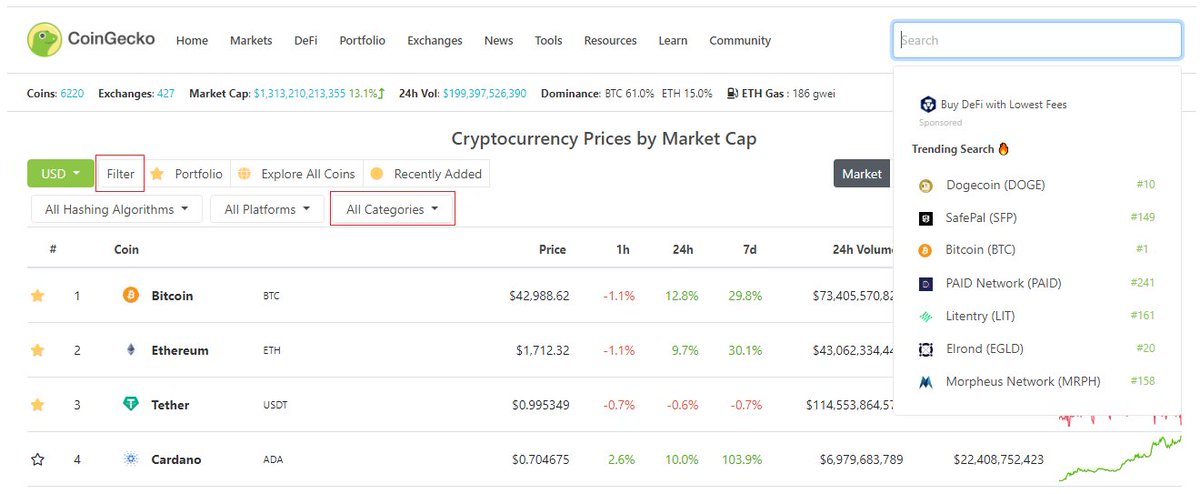
2/ Search over 6000+ cryptocurrencies available on the market. You can see what's trending in the space as well.
Researching by categories? Filter (left side) -> Select categories -> DeFi, DOT ecosystem, Exchange-based tokens, NFTs - anything!
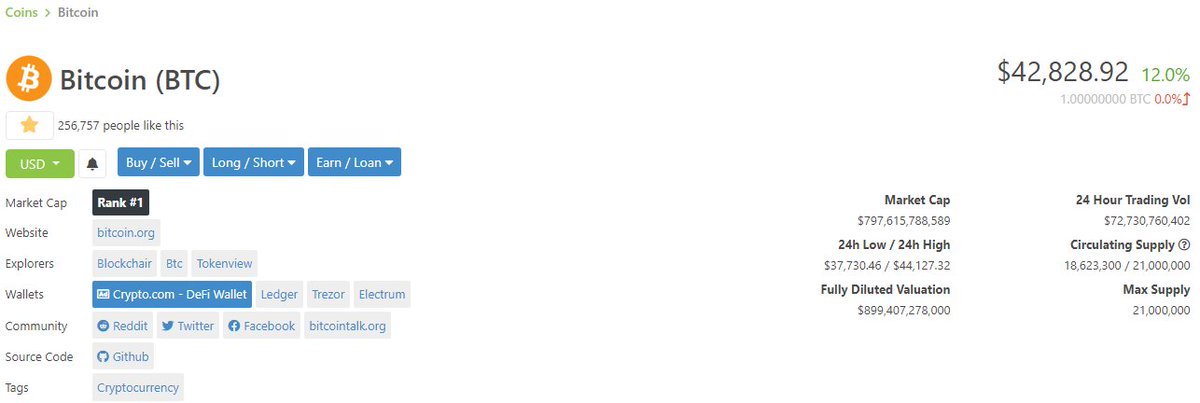
3/ Lets say you're looking at #Bitcoin https://t.co/g205lj03pG
At a glance you get:
- Price
- Mkt Capitalization (valuation)
- Circulating/Total supply
- 24h trading volume
- Links to websites, social media, block explorers
- Calculator
Next - check valuation?
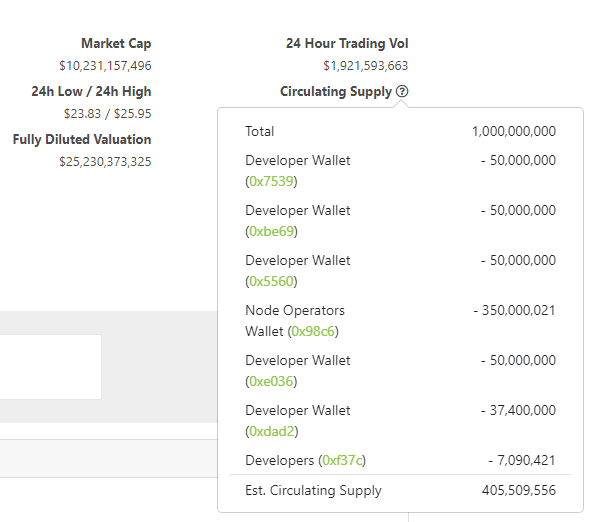
4/ Market cap is used to rank coins, and we'll show you how its calculated - Hover over Circulating Supply (?) for breakdown.
Note: used @chainlink as example here - https://t.co/Jc46fe79Ag
While MC is important also consider product fit, narrative, team, community etc.
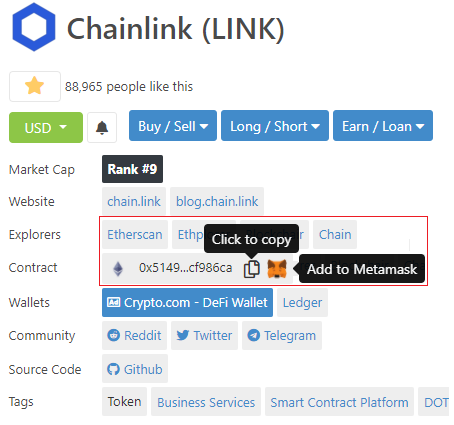
5/ If you're trading on AMMs like @Uniswap or @SushiSwap, you can copy the contract address directly to your clipboard.
Using @metamask_io? Add the token directly so it shows as one of the "Assets" that you own in the wallet.
See: https://t.co/94XihMf5oz
Share it with a friend who needs it!
1/ Getting started with crypto and want to check prices/projects? https://t.co/LFnk4vukxj has info on just about every crypto you'll need :)
2/ Search over 6000+ cryptocurrencies available on the market. You can see what's trending in the space as well.
Researching by categories? Filter (left side) -> Select categories -> DeFi, DOT ecosystem, Exchange-based tokens, NFTs - anything!
3/ Lets say you're looking at #Bitcoin https://t.co/g205lj03pG
At a glance you get:
- Price
- Mkt Capitalization (valuation)
- Circulating/Total supply
- 24h trading volume
- Links to websites, social media, block explorers
- Calculator
Next - check valuation?
4/ Market cap is used to rank coins, and we'll show you how its calculated - Hover over Circulating Supply (?) for breakdown.
Note: used @chainlink as example here - https://t.co/Jc46fe79Ag
While MC is important also consider product fit, narrative, team, community etc.
5/ If you're trading on AMMs like @Uniswap or @SushiSwap, you can copy the contract address directly to your clipboard.
Using @metamask_io? Add the token directly so it shows as one of the "Assets" that you own in the wallet.
See: https://t.co/94XihMf5oz
Introducing an effortless way to add tokens to your @metamask_io wallet \U0001f4e5
— CoinGecko (@coingecko) February 8, 2021
Skip the hassle of copying/pasting contract addresses to your wallet. Add an asset and it'll appear in your wallet with just a click - tap the \U0001f98a and try it out for yourself! pic.twitter.com/u26BA29ubs


You May Also Like

12 TRADING SETUPS which experts are using.
These setups I found from the following 4 accounts:
1. @Pathik_Trader
2. @sourabhsiso19
3. @ITRADE191
4. @DillikiBiili
Share for the benefit of everyone.
Here are the setups from @Pathik_Trader Sir first.
1. Open Drive (Intraday Setup explained)
Bactesting results of Open Drive
2. Two Price Action setups to get good long side trade for intraday.
1. PDC Acts as Support
2. PDH Acts as
Example of PDC/PDH Setup given
These setups I found from the following 4 accounts:
1. @Pathik_Trader
2. @sourabhsiso19
3. @ITRADE191
4. @DillikiBiili
Share for the benefit of everyone.
Here are the setups from @Pathik_Trader Sir first.
1. Open Drive (Intraday Setup explained)
#OpenDrive#intradaySetup
— Pathik (@Pathik_Trader) April 16, 2019
Sharing one high probability trending setup for intraday.
Few conditions needs to be met
1. Opening should be above/below previous day high/low for buy/sell setup.
2. Open=low (for buy)
Open=high (for sell)
(1/n)
Bactesting results of Open Drive
Already explained strategy of #opendrive
— Pathik (@Pathik_Trader) May 27, 2020
Backtested results in 30 stocks and nifty, banknifty.
Success ratio : approx 40-45%
RR average 1:2
Entry as per strategy
Stoploss = Open level
Exit 3:15 PM Or SL
39 months 14 months -ve, 25 +ve
Yearly all 4 years +ve performance. pic.twitter.com/nGqhzMKGVy
2. Two Price Action setups to get good long side trade for intraday.
1. PDC Acts as Support
2. PDH Acts as
So today we will discuss two more price action setups to get good long side trade for intraday.
— Pathik (@Pathik_Trader) June 20, 2020
1. PDC Acts as Support
2. PDH Acts as Support
Example of PDC/PDH Setup given
#nifty
— Pathik (@Pathik_Trader) June 23, 2020
This is how it created long setup by taking support at PDC.
hopefully shared setup on last weekend helped. pic.twitter.com/2mduSUpMn5