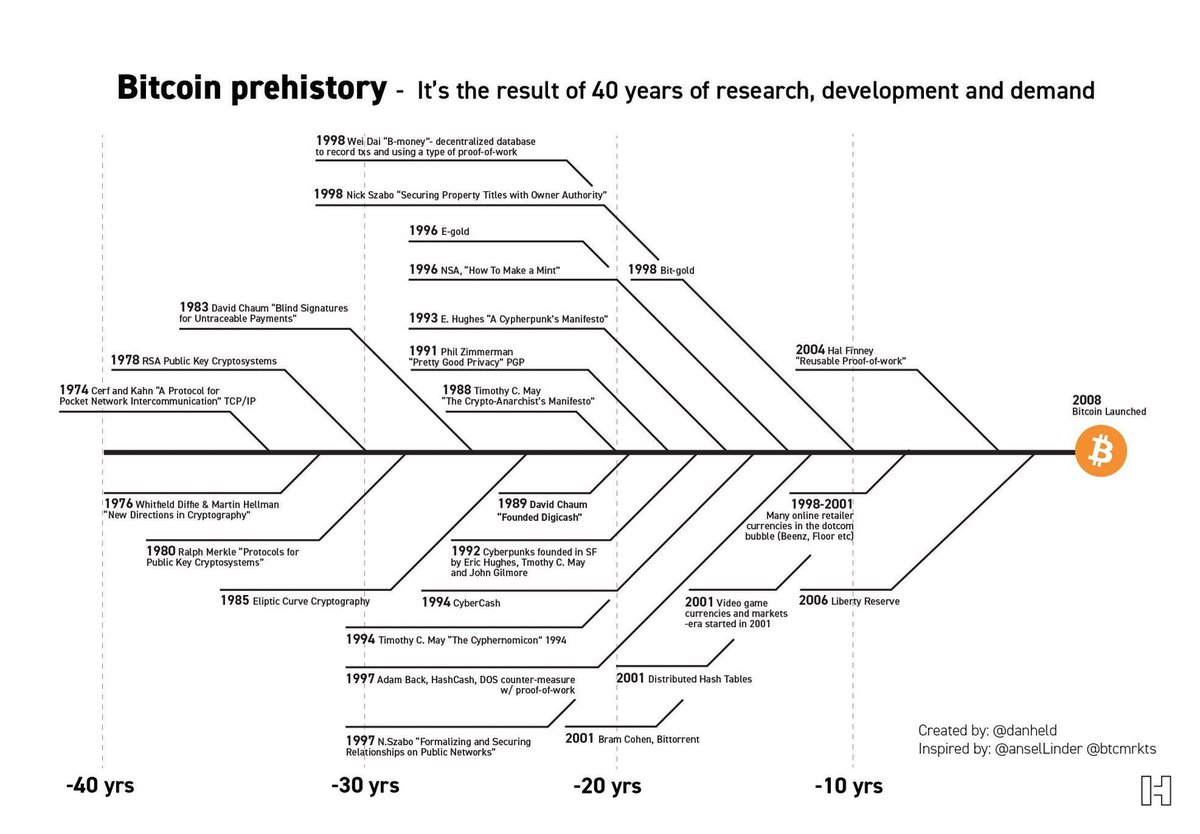
He had been working on Bitcoin for at least a year and a half before publishing the white paper.
1/ Bitcoin: a bold new world.
Satoshi published the white paper on 10/31/2008. Right at the moment of peak despair during the 2008 financial crisis. Trust had been lost in a world that ran on trust.
He had been working on Bitcoin for at least a year and a half before publishing the white paper.
Satoshi was ready and waiting to hit the send button throughout 2008. What was so special about October 31st?
The early Catholic church, in an attempt to gain believers, adopted Samhain, and created “All Saints Day” to coincide on 10/31. This is what we call “Halloween” or “All hallows’ eve"
Similarly, Satoshi was outraged at the massive breach of trust by existing financial institutions:
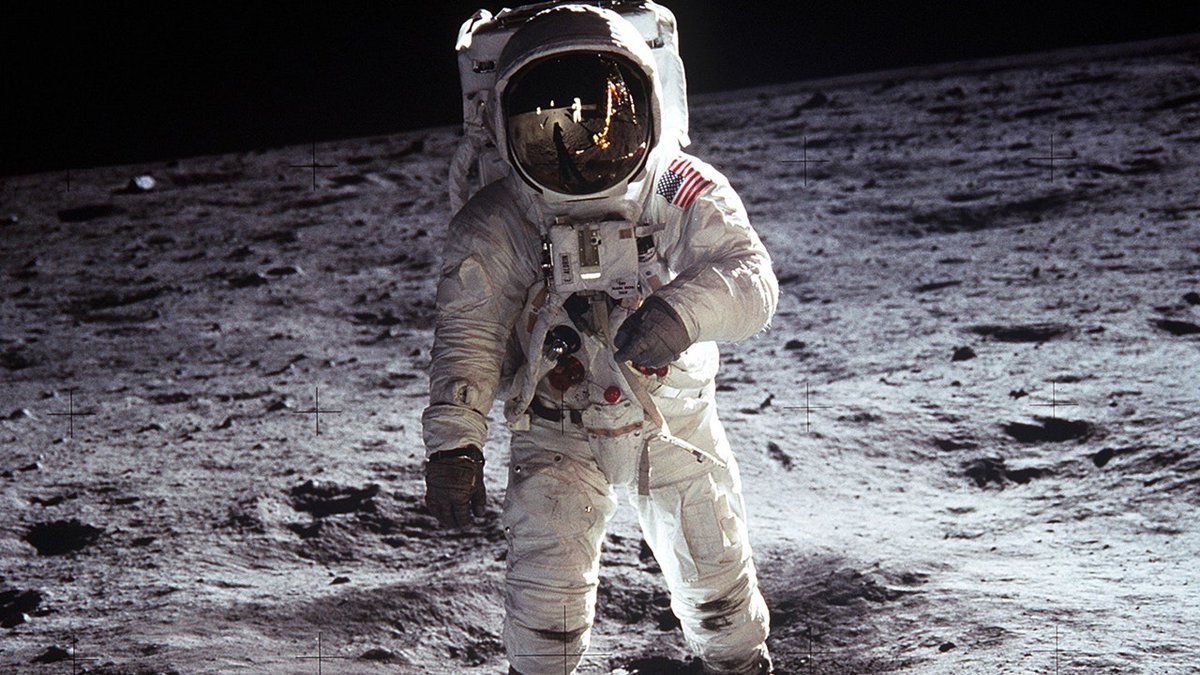
“The present is theirs; the future, for which I really worked, is mine.” - Nikola Tesla
Sign up here to receive it first👇
https://t.co/TYJDEruzvc
More from Dan Held
1/ [December Bitcoin yield update]
Over the last year and a half, I’ve earned ~1.2BTC with various yield generating services to earn an average of 5% on 30 BTC.
Here’s my journey and how to guide👇
2/ Here are the ways you can earn yield:
Lending (Easiest/most popular)
Yield: 3-6%
- Ledn: https://t.co/4x0YATuQ0v
- BlockFi: https://t.co/90Xtg2cNka
Covered calls (Harder)
Yield: 1-80%
- Deribit: https://t.co/2iQVkXlylP
- LedgerX:
3/ Earning a yield enables you to stack more sats (what I’m doing), or reduce the temptation to sell your coin through earning an income.
The yield you earn comes with RISK!
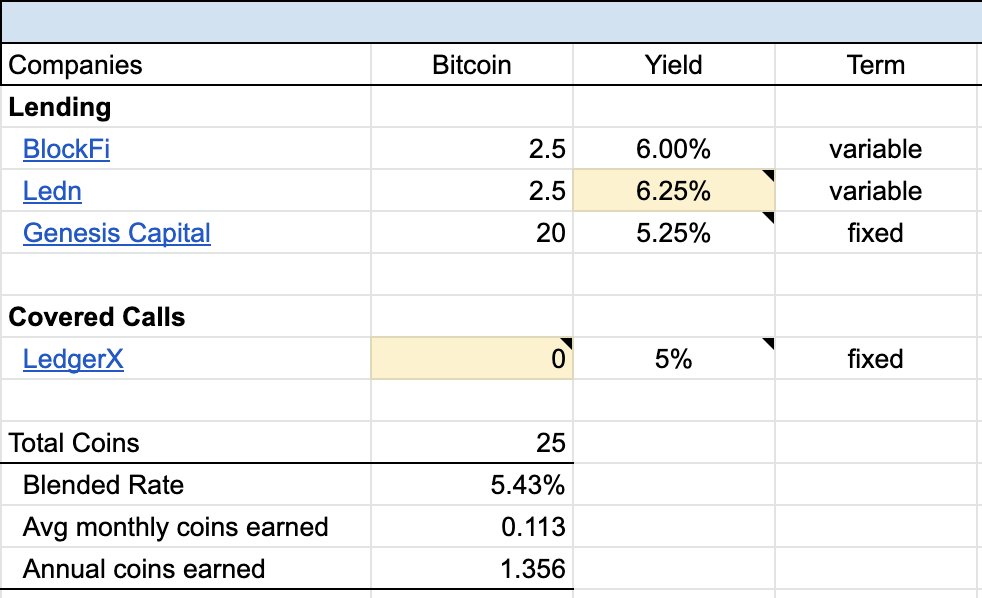
Below is my current allocation for Dec (will update MoM)
(yellow = changes)
https://t.co/PZwVYs8lFT
4a/ [Nov > Dec Changelog]
- Covered calls: approx. 4 BTC was in $40k 12/28/20 contracts. Those closed without them being exercised (a good outcome for me). However, I was nervous about my January 1/28 $50k contract so I decided to close out my position at a small loss.
4b/ [Nov > Dec Changelog]
- In process of reallocating the 5 BTC (probably will be a lending platform).
- I incorrectly had my Ledn rate at 6.5%, it's 6.25%
Over the last year and a half, I’ve earned ~1.2BTC with various yield generating services to earn an average of 5% on 30 BTC.
Here’s my journey and how to guide👇
2/ Here are the ways you can earn yield:
Lending (Easiest/most popular)
Yield: 3-6%
- Ledn: https://t.co/4x0YATuQ0v
- BlockFi: https://t.co/90Xtg2cNka
Covered calls (Harder)
Yield: 1-80%
- Deribit: https://t.co/2iQVkXlylP
- LedgerX:
3/ Earning a yield enables you to stack more sats (what I’m doing), or reduce the temptation to sell your coin through earning an income.
The yield you earn comes with RISK!
Below is my current allocation for Dec (will update MoM)
(yellow = changes)
https://t.co/PZwVYs8lFT
4a/ [Nov > Dec Changelog]
- Covered calls: approx. 4 BTC was in $40k 12/28/20 contracts. Those closed without them being exercised (a good outcome for me). However, I was nervous about my January 1/28 $50k contract so I decided to close out my position at a small loss.
4b/ [Nov > Dec Changelog]
- In process of reallocating the 5 BTC (probably will be a lending platform).
- I incorrectly had my Ledn rate at 6.5%, it's 6.25%
More from Crypto

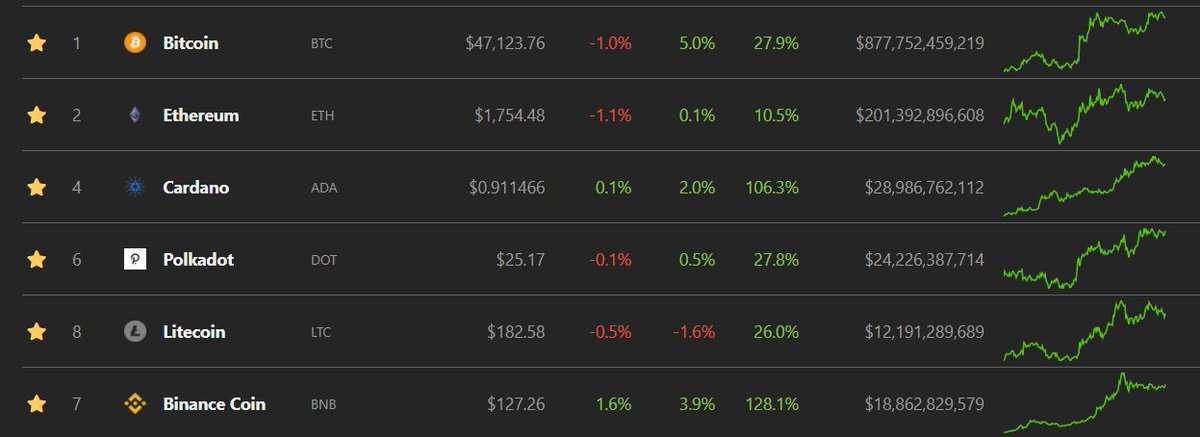


Excited to share our 2020 #Bitcoin review.
2020 will be remembered as the year the long fabled institutions finally arrived and #Bitcoin became a bonafide macroeconomic asset.
Below are the top highlights of each month for Bitcoin’s historic year.
1/
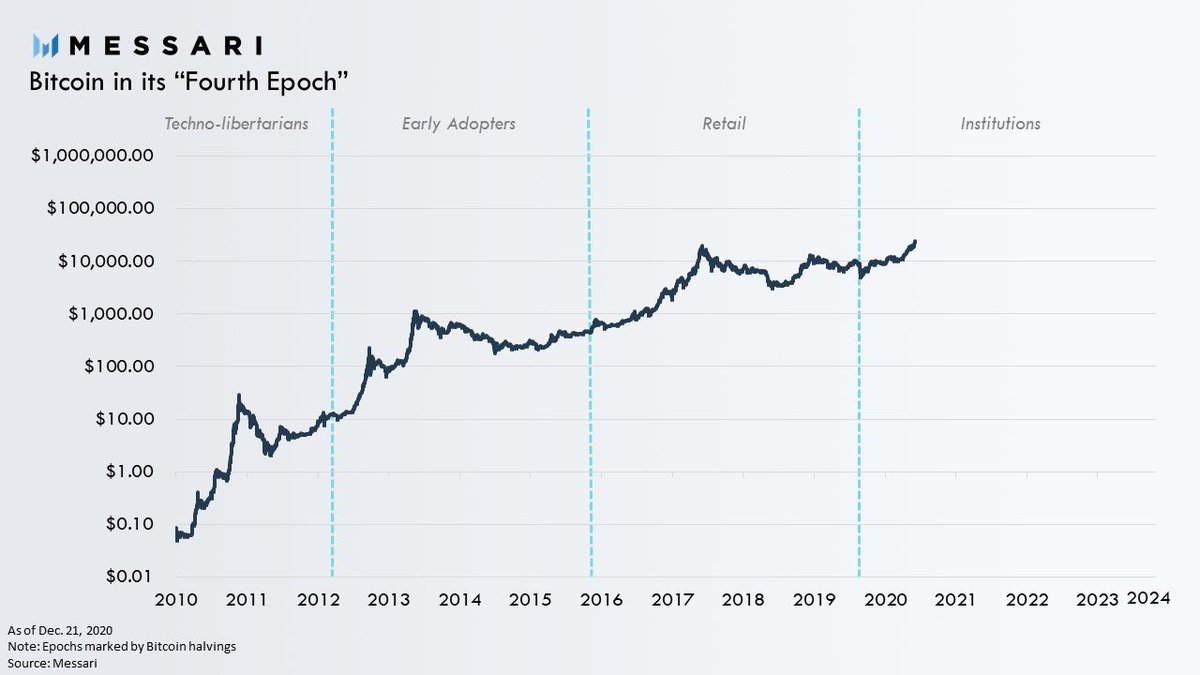
Bitcoin is now at all-time highs capping off an extremely successful year.
But it was by no means stable ride up.
2020 was a historically volatile year.
@YoungCryptoPM and I provided a detailed overview of every month of 2020 in all its
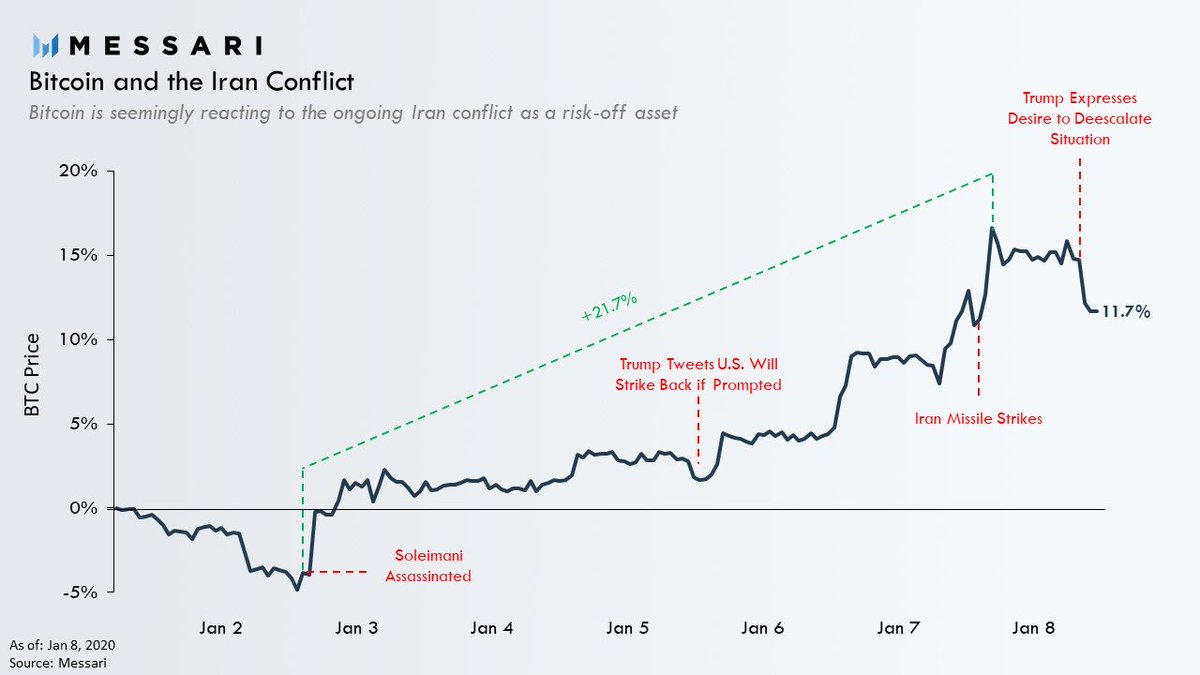
Jan.
3 days into the new year the US assassinated Iran’s top general Soleimani.
BTC surprisingly reacted to the events behaving like a safe haven as the risk of war increased.
The events provided the first hints of BTC potentially having graduated to a legitimate macro asset.
Feb.
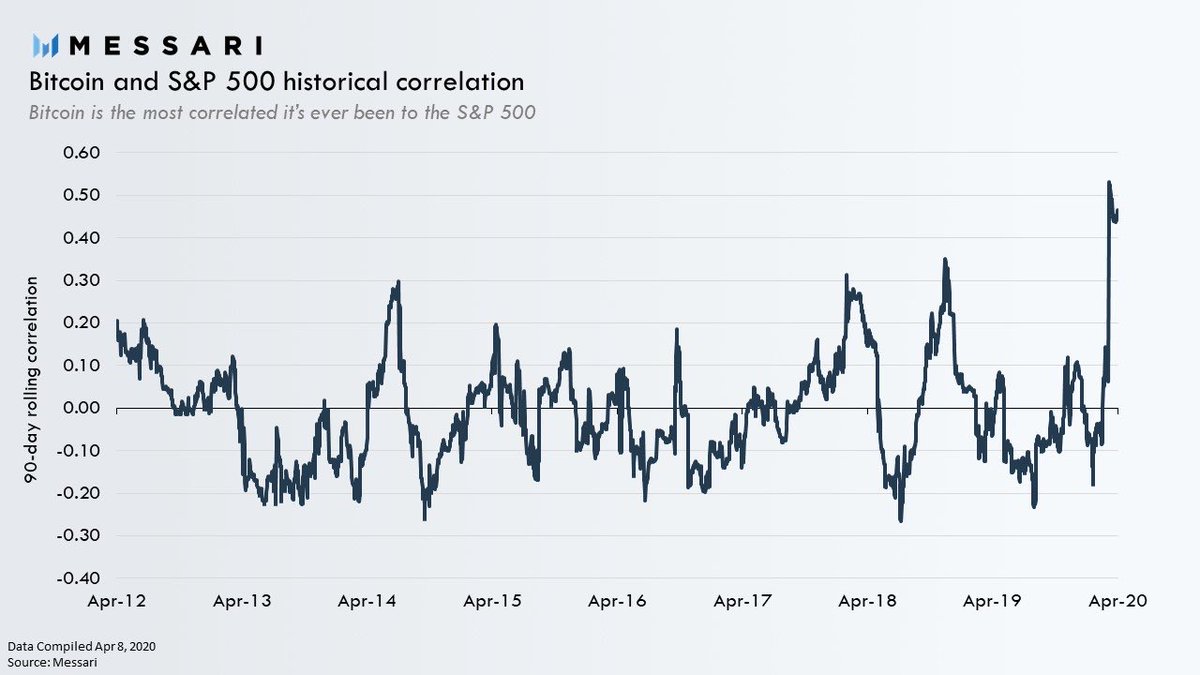
COVID-19 reached a tipping point causing markets to crash.
BTC’s correlation with the S&P 500 reached an ATH in the following weeks.
This is when everyone learned BTC was not a recession hedge, it was a hedge against inflation and loss of confidence in fiat currencies. https://t.co/JB7dJ3qp6M
Mar.
Financial markets in free fall.
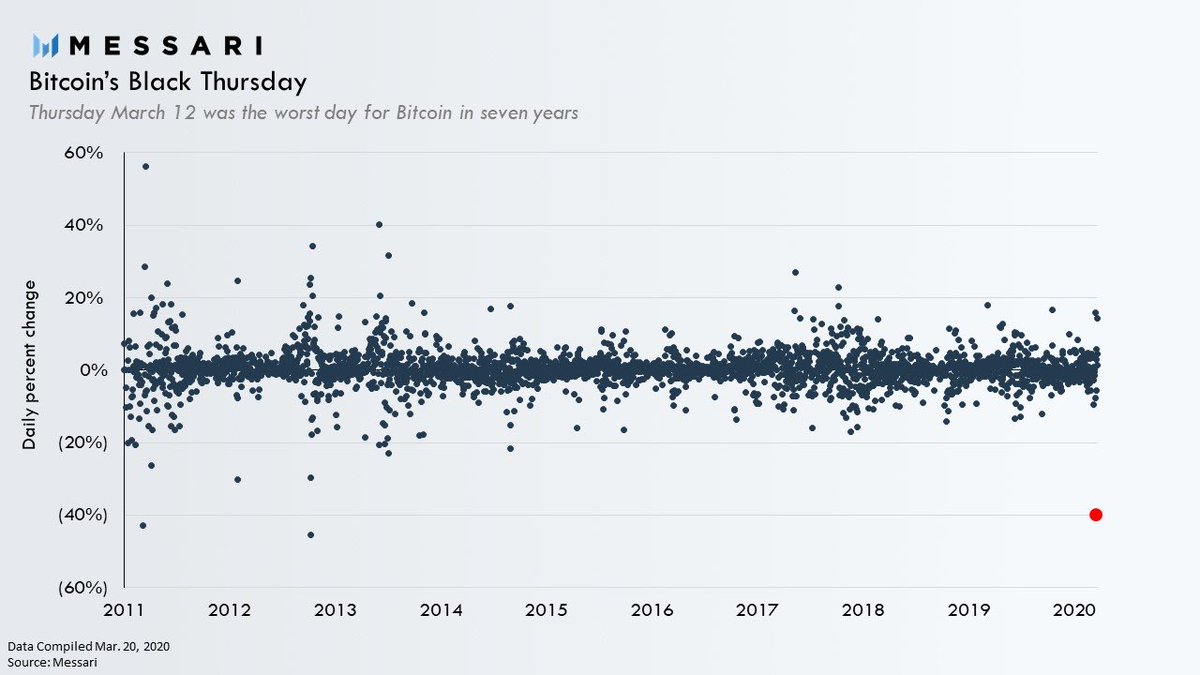
The liquidity crisis was so severe BTC experienced one of it’s worst days ever.
Now known as Black Thursday, on March 12, BTC plummeted as much as 50% to below $4,000 at its lowest point on the day.
BTC closed the day down 40%
2020 will be remembered as the year the long fabled institutions finally arrived and #Bitcoin became a bonafide macroeconomic asset.
Below are the top highlights of each month for Bitcoin’s historic year.
1/
Bitcoin is now at all-time highs capping off an extremely successful year.
But it was by no means stable ride up.
2020 was a historically volatile year.
@YoungCryptoPM and I provided a detailed overview of every month of 2020 in all its
Jan.
3 days into the new year the US assassinated Iran’s top general Soleimani.
BTC surprisingly reacted to the events behaving like a safe haven as the risk of war increased.
The events provided the first hints of BTC potentially having graduated to a legitimate macro asset.
Feb.
COVID-19 reached a tipping point causing markets to crash.
BTC’s correlation with the S&P 500 reached an ATH in the following weeks.
This is when everyone learned BTC was not a recession hedge, it was a hedge against inflation and loss of confidence in fiat currencies. https://t.co/JB7dJ3qp6M
1/ Figure I should get out ahead of this issue:
— Dan McArdle (@robustus) June 22, 2018
Bitcoin is a hedge against inflation & loss of confidence in fiat, NOT a hedge against a typical recession.
Mar.
Financial markets in free fall.
The liquidity crisis was so severe BTC experienced one of it’s worst days ever.
Now known as Black Thursday, on March 12, BTC plummeted as much as 50% to below $4,000 at its lowest point on the day.
BTC closed the day down 40%

1/ ERC-20 token standard approve() has caused an unnecessary cost of $53.8M for #Ethereum and #DeFi users
This is bad. Continue reading why and how to avoid this in the future.
👇👇👇

2/ Before you go all rage on the flaws of my analysis, please read the whole Twitter thread for disclaimers and caveats.
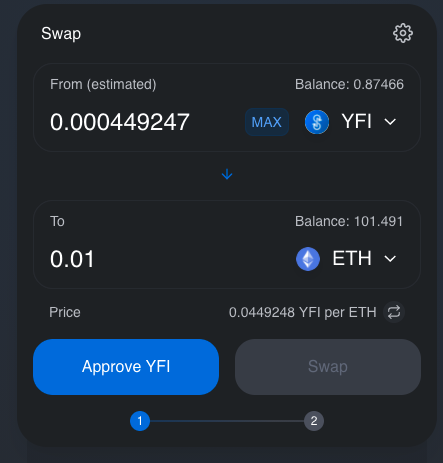
3/ approve() is an unnecessary step of ERC-20 tokens when they interact with smart contracts.
You know this because when you do a Uniswap trade you need press two transaction buttons instead of one.
4/ Why there is approve() - you can read the history in this Twitter
5/ I queried all approve() transactions on Google BigQuery public dataset and calculated their ETH cost and then converted this to the USD with the current ETH price.
This is bad. Continue reading why and how to avoid this in the future.
👇👇👇
2/ Before you go all rage on the flaws of my analysis, please read the whole Twitter thread for disclaimers and caveats.
3/ approve() is an unnecessary step of ERC-20 tokens when they interact with smart contracts.
You know this because when you do a Uniswap trade you need press two transaction buttons instead of one.
4/ Why there is approve() - you can read the history in this Twitter
1/ I just spend my Saturday morning on a call with a crypto fund explaining to them how #Ethereum ERC-20 token approve() function works
— \U0001f42e Mikko Ohtamaa (@moo9000) August 29, 2020
I am too old for this shit. pic.twitter.com/7EYfOaRP5L
5/ I queried all approve() transactions on Google BigQuery public dataset and calculated their ETH cost and then converted this to the USD with the current ETH price.


You May Also Like





"I really want to break into Product Management"
make products.
"If only someone would tell me how I can get a startup to notice me."
Make Products.
"I guess it's impossible and I'll never break into the industry."
MAKE PRODUCTS.
Courtesy of @edbrisson's wonderful thread on breaking into comics – https://t.co/TgNblNSCBj – here is why the same applies to Product Management, too.
There is no better way of learning the craft of product, or proving your potential to employers, than just doing it.
You do not need anybody's permission. We don't have diplomas, nor doctorates. We can barely agree on a single standard of what a Product Manager is supposed to do.
But – there is at least one blindingly obvious industry consensus – a Product Manager makes Products.
And they don't need to be kept at the exact right temperature, given endless resource, or carefully protected in order to do this.
They find their own way.
make products.
"If only someone would tell me how I can get a startup to notice me."
Make Products.
"I guess it's impossible and I'll never break into the industry."
MAKE PRODUCTS.
Courtesy of @edbrisson's wonderful thread on breaking into comics – https://t.co/TgNblNSCBj – here is why the same applies to Product Management, too.
"I really want to break into comics"
— Ed Brisson (@edbrisson) December 4, 2018
make comics.
"If only someone would tell me how I can get an editor to notice me."
Make Comics.
"I guess it's impossible and I'll never break into the industry."
MAKE COMICS.
There is no better way of learning the craft of product, or proving your potential to employers, than just doing it.
You do not need anybody's permission. We don't have diplomas, nor doctorates. We can barely agree on a single standard of what a Product Manager is supposed to do.
But – there is at least one blindingly obvious industry consensus – a Product Manager makes Products.
And they don't need to be kept at the exact right temperature, given endless resource, or carefully protected in order to do this.
They find their own way.