Michael Pettis @michaelxpettis argues that it is not always obvious who (China or the U.S.) adjusts best to "turbulent changes."
Bitcoin answers that question.
Thread:

World economies currently suffer four major redistribution challenges:
The most important is increasing government stealth use of the monetary system to confiscate assets from productive actors.
/2
That process is exacerbated by "Cantillon Effect" transfers to interest groups close to government ("the entitled class," public sector workers, the medical industrial complex, academia, etc....), which is destroying much of that wealth /3
The shadow nature (see Keynes) of government inflation makes the process unidentifiable, un-addressable and undemocratic.
The biggest victims (America's poorly educated young) are unequipped to counter generational confiscation tactics of today's wily senior beneficiaries. /4
Government control of the numéraire in key economic statistics (GDP, inflation, etc...) makes it impossible for economic actors to measure progress and liabilities. /5
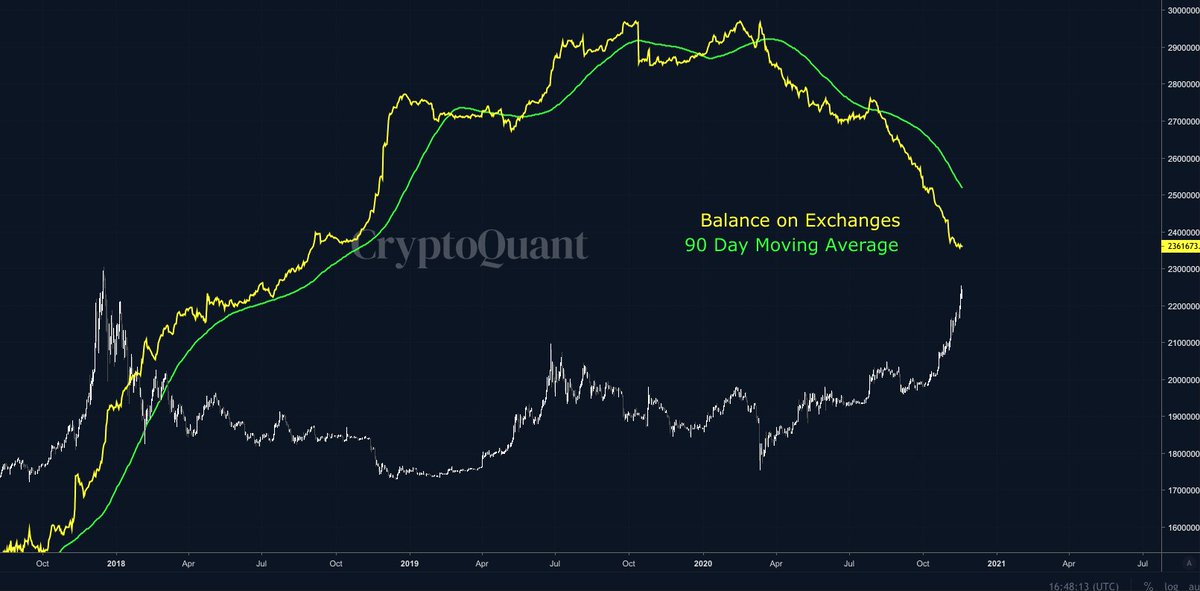
Bitcoin, with its easily measurable money supply, has the potential to provide an objective assessment of the value that economic actors attach to government statistics.

Bitcoin is currently flashing serious warning signals that something is very wrong.
/6
For Bitcoin to continue to function as a warning signal, there must be forces in place to counterbalance "fractional reserve Bitcoin" providers such as PayPal, Bitcoin ETFs, other rehypothecation tools.
/7
This implies the need for increased use by private sector actors of multi-currency tools.
These include the Lightning Network, store of value payment systems such as BCH and BSV, and privacy coins. /8
In short - if America allows free market currency features to thrive, it will adjust better than China.

But America clamps down and incorporates Bitcoin into its existing Surveillance Coin system, China (which has far more experience in totalitarianism) will dominate. /9

More from Crypto

1/ Welcome to #DeFi Wednesday.

Let's talk about how interest-bearing cash on a blockchain is going to revolutionise boring corporate treasury management that concerns every company is is a larger business than all crypto trading in the world.

Enter the thread

👇👇👇


2/ Blockchain community is often seen as toxic maxis and redditors who shill other their weekly favourite shitcoin in the hope of getting Lambo.

Sometimes we also do things that progress humanity towards the better future and interest-bearing cash is one of those things.


3/ Less chad and more things that actually matter:

My incomplete theory of interest-bearing cash is also available also as a blog post:

https://t.co/uiG0fZiVyu

It is 15 pages. Pick your slow poison or die fast by continue reading here.

4/ First time in the history we have an ability to create interest-bearing cash-like instruments.

Interest-bearing cash ticks up dollar (euro) balance real-time in your wallet.

Here is a demonstration using @aaveaave aDAI, based on @makerdao DAI, and @TrustWalletApp


5/ Interest-bearing cash is not like your bank's saving account. Your money in a bank is not yours, but bank's. There are some flaws in the current banking system causing a headache for Chief Financial Officers (CFOs)

You May Also Like

1/“What would need to be true for you to….X”

Why is this the most powerful question you can ask when attempting to reach an agreement with another human being or organization?

A thread, co-written by @deanmbrody:


2/ First, “X” could be lots of things. Examples: What would need to be true for you to

- “Feel it's in our best interest for me to be CMO"
- “Feel that we’re in a good place as a company”
- “Feel that we’re on the same page”
- “Feel that we both got what we wanted from this deal

3/ Normally, we aren’t that direct. Example from startup/VC land:

Founders leave VC meetings thinking that every VC will invest, but they rarely do.

Worse over, the founders don’t know what they need to do in order to be fundable.

4/ So why should you ask the magic Q?

To get clarity.

You want to know where you stand, and what it takes to get what you want in a way that also gets them what they want.

It also holds them (mentally) accountable once the thing they need becomes true.

5/ Staying in the context of soliciting investors, the question is “what would need to be true for you to want to invest (or partner with us on this journey, etc)?”

Multiple responses to this question are likely to deliver a positive result.