1/ Why Silicon Valley Doesn't Get Bitcoin
Over the last 12 years of it’s existence, Bitcoin has been misunderstood by Silicon Valley which has led to many cringe worthy moments as they’ve endorsed silly ideas and even worse, scams.
More from Dan Held
1/ Bitcoin: a bold new world.
Satoshi published the white paper on 10/31/2008. Right at the moment of peak despair during the 2008 financial crisis. Trust had been lost in a world that ran on trust.
2/ But why October 31st? It certainly wasn’t because Satoshi was a fan of halloween, it must have had a deeper meaning. With all of his actions, he demonstrated a careful precision.
He had been working on Bitcoin for at least a year and a half before publishing the white paper.
3/ “I believe I've worked through all those little details over the last year and a half while coding it, and there were a lot of them. The functional details are not covered in the paper, but the sourcecode is coming soon” - Satoshi Nakamoto
4/ On August 18, 2008 Satoshi registers registers https://t.co/rMWwiEwtxT through https://t.co/Uj8lMr10kB.
Satoshi was ready and waiting to hit the send button throughout 2008. What was so special about October 31st?
5/ I believe that Satoshi published the Bitcoin white paper on 10/31 as a hat tip to the ancient Gaelic festival of “Samhain” which was also the date in which Martin Luther nailed his 95 Theses to a church door. Both represent an end of the old and the beginning of the new.
Satoshi published the white paper on 10/31/2008. Right at the moment of peak despair during the 2008 financial crisis. Trust had been lost in a world that ran on trust.
2/ But why October 31st? It certainly wasn’t because Satoshi was a fan of halloween, it must have had a deeper meaning. With all of his actions, he demonstrated a careful precision.
He had been working on Bitcoin for at least a year and a half before publishing the white paper.
3/ “I believe I've worked through all those little details over the last year and a half while coding it, and there were a lot of them. The functional details are not covered in the paper, but the sourcecode is coming soon” - Satoshi Nakamoto
4/ On August 18, 2008 Satoshi registers registers https://t.co/rMWwiEwtxT through https://t.co/Uj8lMr10kB.
Satoshi was ready and waiting to hit the send button throughout 2008. What was so special about October 31st?
5/ I believe that Satoshi published the Bitcoin white paper on 10/31 as a hat tip to the ancient Gaelic festival of “Samhain” which was also the date in which Martin Luther nailed his 95 Theses to a church door. Both represent an end of the old and the beginning of the new.
1/ [December Bitcoin yield update]
Over the last year and a half, I’ve earned ~1.2BTC with various yield generating services to earn an average of 5% on 30 BTC.
Here’s my journey and how to guide👇
2/ Here are the ways you can earn yield:
Lending (Easiest/most popular)
Yield: 3-6%
- Ledn: https://t.co/4x0YATuQ0v
- BlockFi: https://t.co/90Xtg2cNka
Covered calls (Harder)
Yield: 1-80%
- Deribit: https://t.co/2iQVkXlylP
- LedgerX:
3/ Earning a yield enables you to stack more sats (what I’m doing), or reduce the temptation to sell your coin through earning an income.
The yield you earn comes with RISK!
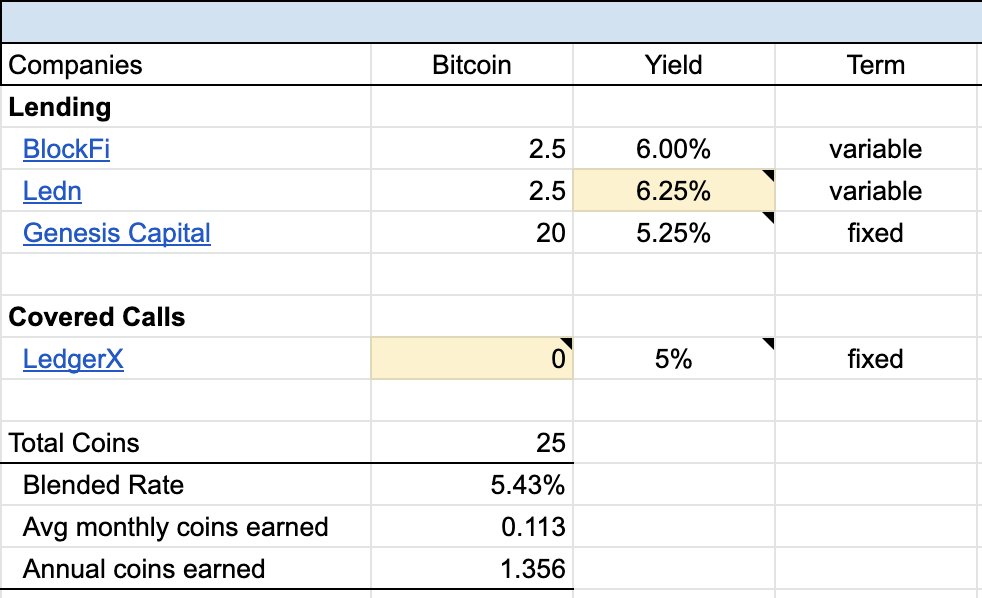
Below is my current allocation for Dec (will update MoM)
(yellow = changes)
https://t.co/PZwVYs8lFT
4a/ [Nov > Dec Changelog]
- Covered calls: approx. 4 BTC was in $40k 12/28/20 contracts. Those closed without them being exercised (a good outcome for me). However, I was nervous about my January 1/28 $50k contract so I decided to close out my position at a small loss.
4b/ [Nov > Dec Changelog]
- In process of reallocating the 5 BTC (probably will be a lending platform).
- I incorrectly had my Ledn rate at 6.5%, it's 6.25%
Over the last year and a half, I’ve earned ~1.2BTC with various yield generating services to earn an average of 5% on 30 BTC.
Here’s my journey and how to guide👇
2/ Here are the ways you can earn yield:
Lending (Easiest/most popular)
Yield: 3-6%
- Ledn: https://t.co/4x0YATuQ0v
- BlockFi: https://t.co/90Xtg2cNka
Covered calls (Harder)
Yield: 1-80%
- Deribit: https://t.co/2iQVkXlylP
- LedgerX:
3/ Earning a yield enables you to stack more sats (what I’m doing), or reduce the temptation to sell your coin through earning an income.
The yield you earn comes with RISK!
Below is my current allocation for Dec (will update MoM)
(yellow = changes)
https://t.co/PZwVYs8lFT
4a/ [Nov > Dec Changelog]
- Covered calls: approx. 4 BTC was in $40k 12/28/20 contracts. Those closed without them being exercised (a good outcome for me). However, I was nervous about my January 1/28 $50k contract so I decided to close out my position at a small loss.
4b/ [Nov > Dec Changelog]
- In process of reallocating the 5 BTC (probably will be a lending platform).
- I incorrectly had my Ledn rate at 6.5%, it's 6.25%
More from Bitcoin

The is no Devcoin Gold yet. But then again, we've never been one to "peg" to anything. I came across an interesting article about 'recreating' addresses with Bgold that @bitcoincoreorg cut out since 0.13.0 - perhaps one day we can do a similar thing in future Devcoin software :)

https://t.co/cv4UqsaVAK
That being said I hold some Doge @blockio in an "A-" address myself after 0. 1. "9-" versions :). Don't believe Bitcoin Core the Coin (Utility) is the only visible value on Core chain. Color me crazy. I believe in script. And FOSS that is used to export📜

And that's just a guy @MeniRosenfeld who put his identity and ideas out in the public to build a Web of Trust back when the web was much less of a safe place. His identity at stake and the implementation of a branch in source code by another unsung hero @killerstorm reveals value
Some of those who set up our bright future quietly implemented it in a branch on the main source code before it was officially the Bitcoin Core main repository, before a "Bitcoin Core" entity existed
Just because Bitcoin Core nodes dominate and do not read "smart" colored satoshis or display them, doesn't mean they do not exist on chain. The example of recreating P2WSH-over-P2SH address from BTC https://t.co/ZWSP2MO5bY wallets in Bitcoin Core Gold I shared proves -rescan's $
https://t.co/cv4UqsaVAK
That being said I hold some Doge @blockio in an "A-" address myself after 0. 1. "9-" versions :). Don't believe Bitcoin Core the Coin (Utility) is the only visible value on Core chain. Color me crazy. I believe in script. And FOSS that is used to export📜
And that's just a guy @MeniRosenfeld who put his identity and ideas out in the public to build a Web of Trust back when the web was much less of a safe place. His identity at stake and the implementation of a branch in source code by another unsung hero @killerstorm reveals value
Some of those who set up our bright future quietly implemented it in a branch on the main source code before it was officially the Bitcoin Core main repository, before a "Bitcoin Core" entity existed
Just because Bitcoin Core nodes dominate and do not read "smart" colored satoshis or display them, doesn't mean they do not exist on chain. The example of recreating P2WSH-over-P2SH address from BTC https://t.co/ZWSP2MO5bY wallets in Bitcoin Core Gold I shared proves -rescan's $



1/9 Bitcoin has performed remarkably these past few weeks despite:
-Most of DeFi falling 50-80%
-CFTC charging BitMEX
-POTUS contracting Covid
-Delayed stimulus talks
-FCA announcing a derivative ban for retail
Why? Let’s see what we can find on-chain
2/9 Bitcoin’s Realized Cap has been steadily increasing just as it did before the 2017 bull market took off. If it continues as it did in 2017, 2021 should be an interesting year.
https://t.co/nqgX7vTMDV

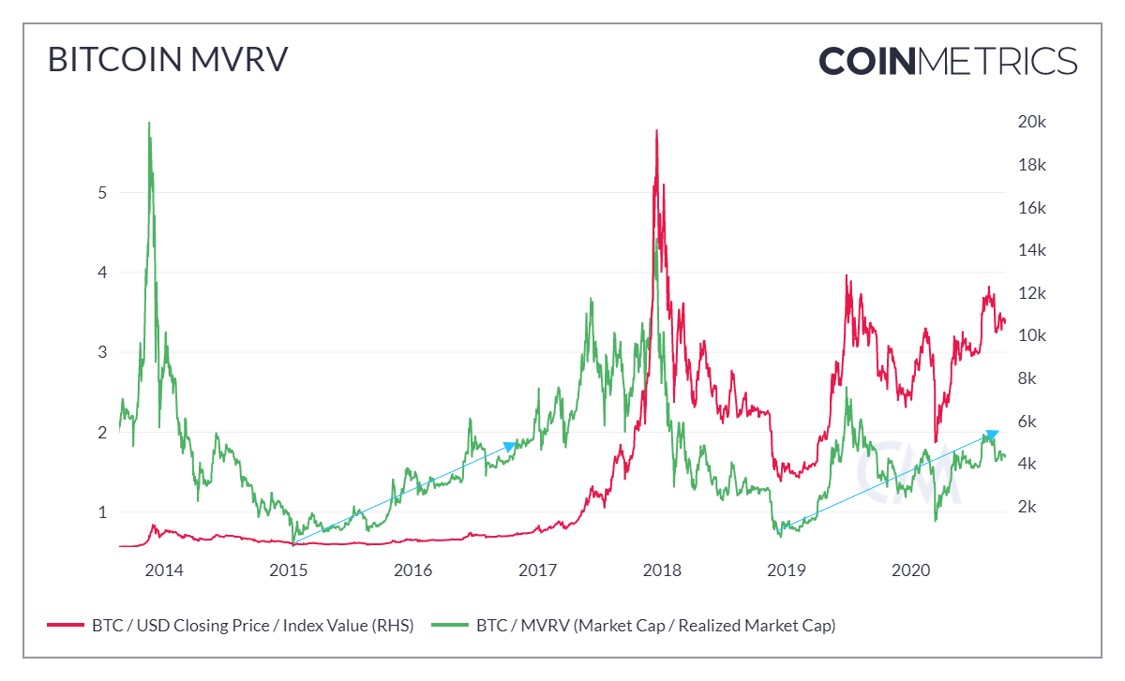
3/9 Bitcoin MVRV, whilst more volatile this market cycle, is also is holding the same trajectory it did during the 2016/17 bull market
https://t.co/jadbn6nCOB
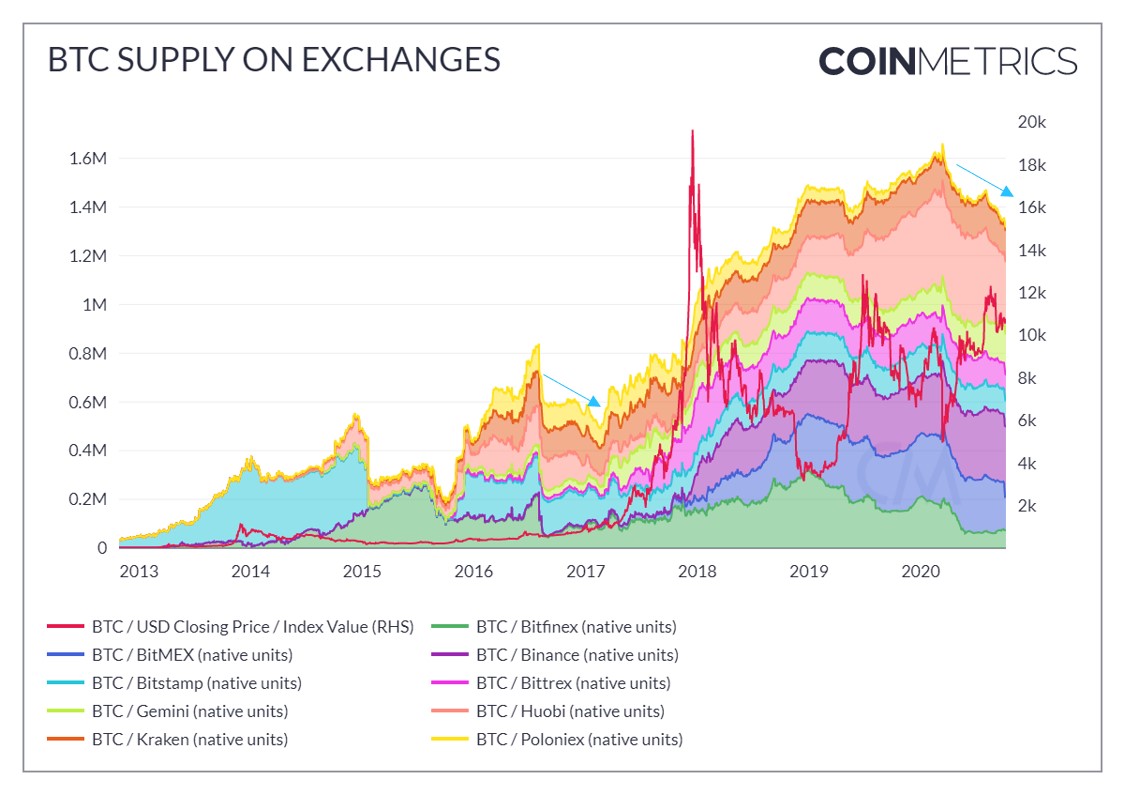
4/9 Looking at the supply of Bitcoin on exchanges is a good indication as to whether or not users are increasing trading activity, or increasing hodl activity. With supply reducing it looks like the tendency recently has been driven by hodlers
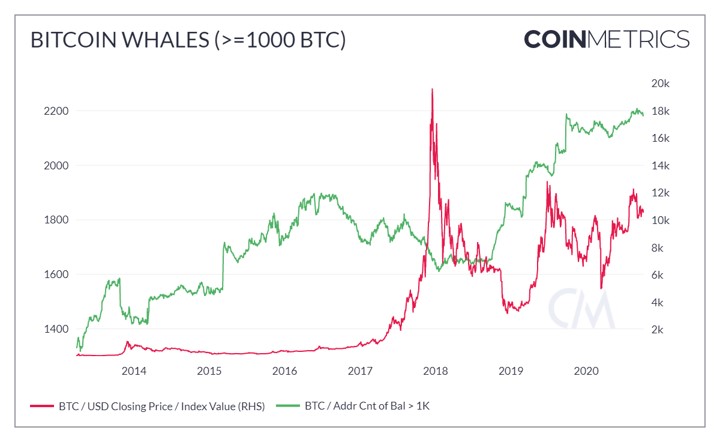
5/9 Despite the recent volatility, the number of Bitcoin whales continues to increase, indicating the growing number of large holders that have positive expectations for the future of Bitcoin
-Most of DeFi falling 50-80%
-CFTC charging BitMEX
-POTUS contracting Covid
-Delayed stimulus talks
-FCA announcing a derivative ban for retail
Why? Let’s see what we can find on-chain
2/9 Bitcoin’s Realized Cap has been steadily increasing just as it did before the 2017 bull market took off. If it continues as it did in 2017, 2021 should be an interesting year.
https://t.co/nqgX7vTMDV
3/9 Bitcoin MVRV, whilst more volatile this market cycle, is also is holding the same trajectory it did during the 2016/17 bull market
https://t.co/jadbn6nCOB
4/9 Looking at the supply of Bitcoin on exchanges is a good indication as to whether or not users are increasing trading activity, or increasing hodl activity. With supply reducing it looks like the tendency recently has been driven by hodlers
5/9 Despite the recent volatility, the number of Bitcoin whales continues to increase, indicating the growing number of large holders that have positive expectations for the future of Bitcoin