
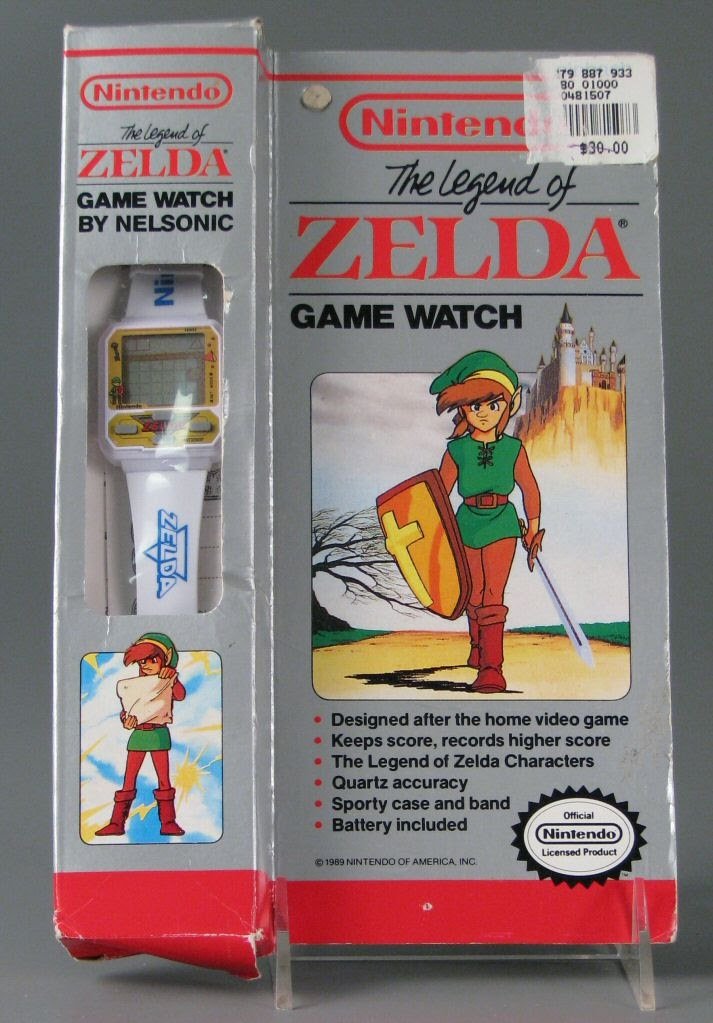
Time for a pulp countdown now, and today it's my top 10 digital watches of distinction!
After all, why wear a Rolex nowadays?











More from Pulp Librarian























More from Tech


The entire discussion around Facebook’s disclosures of what happened in 2016 is very frustrating. No exec stopped any investigations, but there were a lot of heated discussions about what to publish and when.
In the spring and summer of 2016, as reported by the Times, activity we traced to GRU was reported to the FBI. This was the standard model of interaction companies used for nation-state attacks against likely US targeted.
In the Spring of 2017, after a deep dive into the Fake News phenomena, the security team wanted to publish an update that covered what we had learned. At this point, we didn’t have any advertising content or the big IRA cluster, but we did know about the GRU model.
This report when through dozens of edits as different equities were represented. I did not have any meetings with Sheryl on the paper, but I can’t speak to whether she was in the loop with my higher-ups.
In the end, the difficult question of attribution was settled by us pointing to the DNI report instead of saying Russia or GRU directly. In my pre-briefs with members of Congress, I made it clear that we believed this action was GRU.
The story doesn\u2019t say you were told not to... it says you did so without approval and they tried to obfuscate what you found. Is that true?
— Sarah Frier (@sarahfrier) November 15, 2018
In the spring and summer of 2016, as reported by the Times, activity we traced to GRU was reported to the FBI. This was the standard model of interaction companies used for nation-state attacks against likely US targeted.
In the Spring of 2017, after a deep dive into the Fake News phenomena, the security team wanted to publish an update that covered what we had learned. At this point, we didn’t have any advertising content or the big IRA cluster, but we did know about the GRU model.
This report when through dozens of edits as different equities were represented. I did not have any meetings with Sheryl on the paper, but I can’t speak to whether she was in the loop with my higher-ups.
In the end, the difficult question of attribution was settled by us pointing to the DNI report instead of saying Russia or GRU directly. In my pre-briefs with members of Congress, I made it clear that we believed this action was GRU.


The 12 most important pieces of information and concepts I wish I knew about equity, as a software engineer.
A thread.
1. Equity is something Big Tech and high-growth companies award to software engineers at all levels. The more senior you are, the bigger the ratio can be:

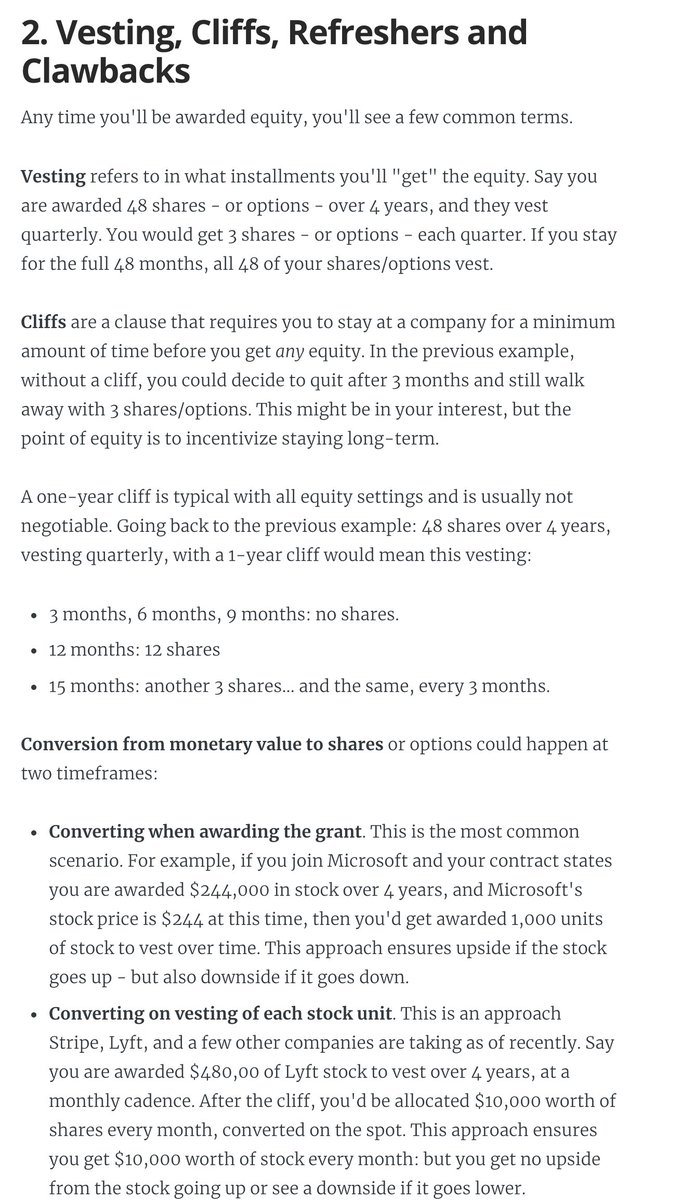
2. Vesting, cliffs, refreshers, and sign-on clawbacks.
If you get awarded equity, you'll want to understand vesting and cliffs. A 1-year cliff is pretty common in most places that award equity.
Read more in this blog post I wrote: https://t.co/WxQ9pQh2mY
3. Stock options / ESOPs.
The most common form of equity compensation at early-stage startups that are high-growth.
And there are *so* many pitfalls you'll want to be aware of. You need to do your research on this: I can't do justice in a tweet.
https://t.co/cudLn3ngqi
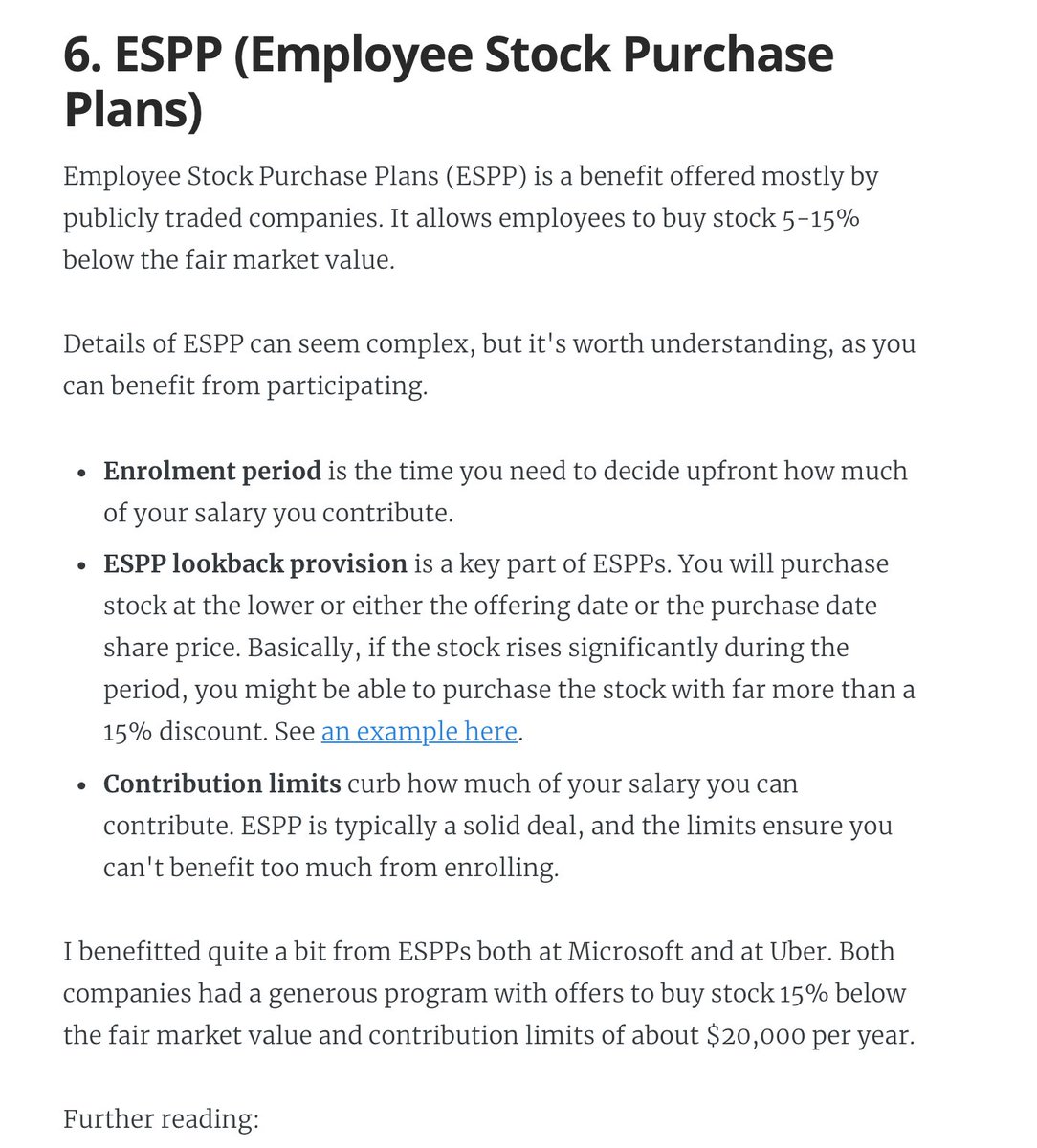
4. RSUs (Restricted Stock Units)
A common form of equity compensation for publicly traded companies and Big Tech. One of the easier types of equity to understand: https://t.co/a5xU1H9IHP
5. Double-trigger RSUs. Typically RSUs for pre-IPO companies. I got these at Uber.
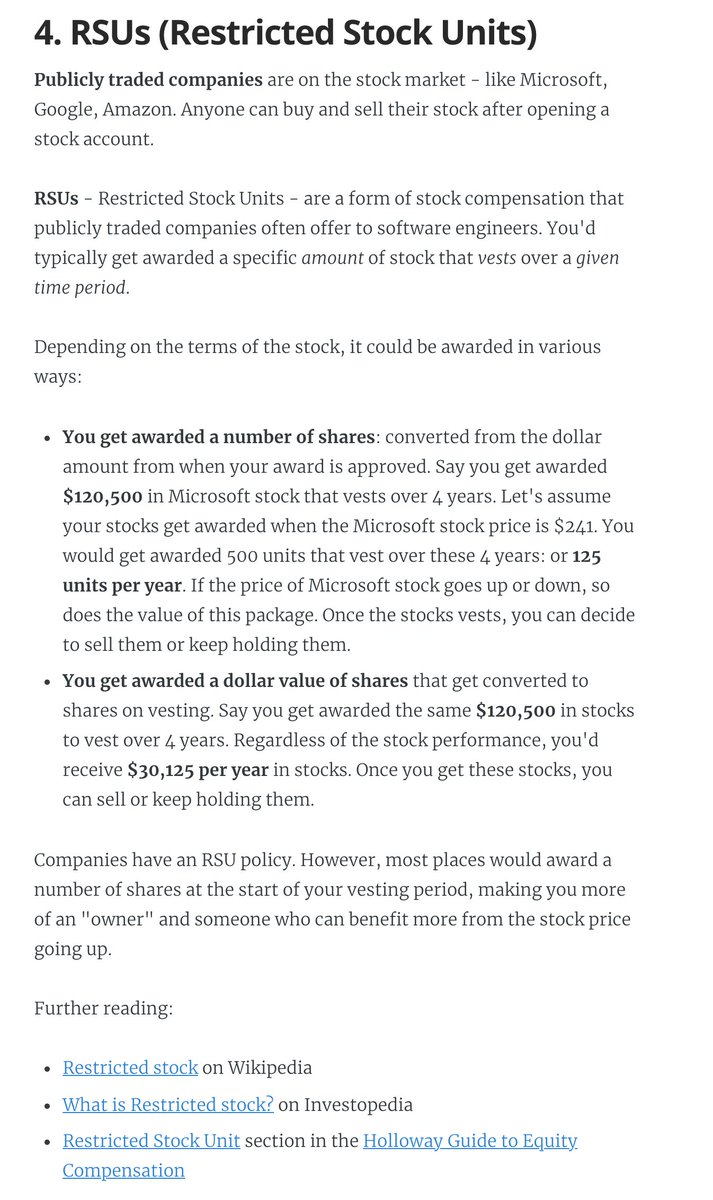
6. ESPP: a (typically) amazing employee perk at publicly traded companies. There's always risk, but this plan can typically offer good upsides.
7. Phantom shares. An interesting setup similar to RSUs... but you don't own stocks. Not frequent, but e.g. Adyen goes with this plan.
A thread.
1. Equity is something Big Tech and high-growth companies award to software engineers at all levels. The more senior you are, the bigger the ratio can be:
2. Vesting, cliffs, refreshers, and sign-on clawbacks.
If you get awarded equity, you'll want to understand vesting and cliffs. A 1-year cliff is pretty common in most places that award equity.
Read more in this blog post I wrote: https://t.co/WxQ9pQh2mY
3. Stock options / ESOPs.
The most common form of equity compensation at early-stage startups that are high-growth.
And there are *so* many pitfalls you'll want to be aware of. You need to do your research on this: I can't do justice in a tweet.
https://t.co/cudLn3ngqi
4. RSUs (Restricted Stock Units)
A common form of equity compensation for publicly traded companies and Big Tech. One of the easier types of equity to understand: https://t.co/a5xU1H9IHP
5. Double-trigger RSUs. Typically RSUs for pre-IPO companies. I got these at Uber.
6. ESPP: a (typically) amazing employee perk at publicly traded companies. There's always risk, but this plan can typically offer good upsides.
7. Phantom shares. An interesting setup similar to RSUs... but you don't own stocks. Not frequent, but e.g. Adyen goes with this plan.