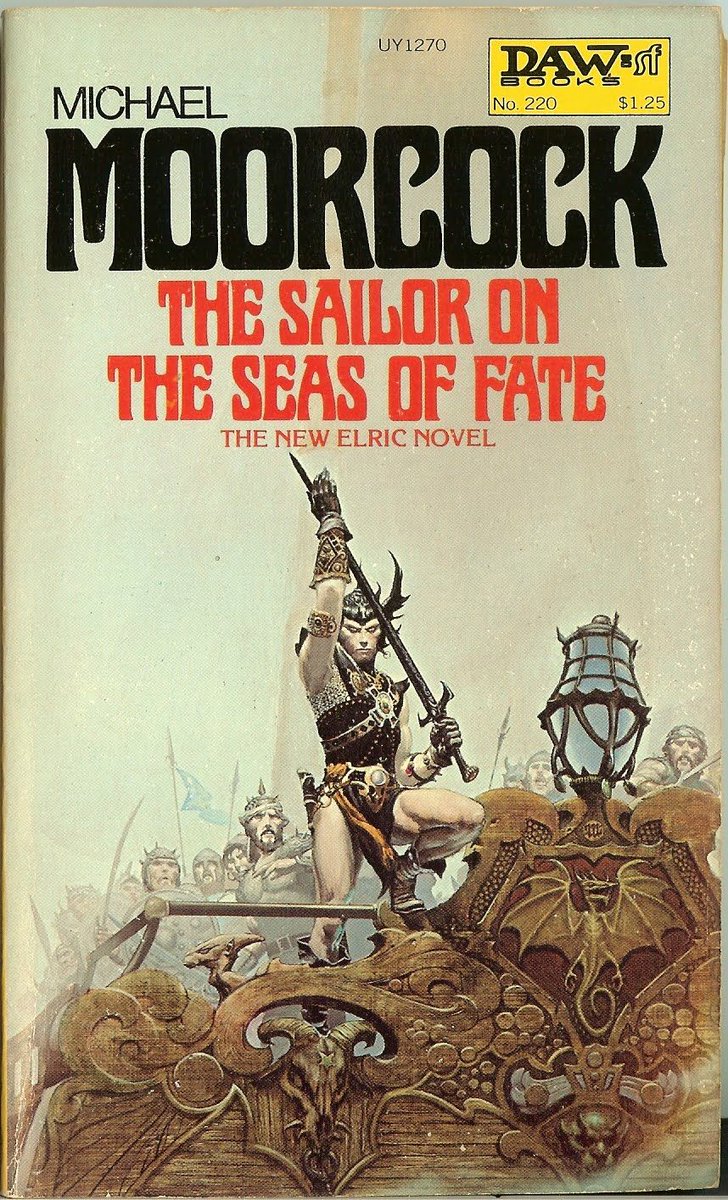
Many readers have asked me "why do so many pulp covers feature women in ripped red blouses standing in swamps while a man fights off an unusual animal attack?"
The answer is artist Will Hulsey...












Pulp salutes you Will...


More from Pulp Librarian















More from Culture


OK. Chapter 7 of Book 4 of #WealthOfNations is tough going. It's long. It's serious. It's all about colonies.
We can take comfort, though, in knowing that the chapter #AdamSmith says is about colonies is, in fact, about colonies. (IV.vii) #WealthOfTweets #SmithTweets

Colonies were a vexed subject when #AdamSmith was writing, and they’re even more complicated now. So, before we even get to the tweeting, here’s a link to that thread on Smith and “savage nations.” (IV.vii) #WealthOfTweets
The reason for the ancient Greeks and Romans to settle colonies was straightforward: they didn’t have enough space for their growing populations. Their colonies were treated as “emancipated children”—connected but independent. (IV.vii.a.2) #WealthOfTweets #SmithTweets
(Both these things are in contrast to the European colonies, as we'll see.) (IV.vii.a.2) #WealthOfTweets #SmithTweets
Ancient Greeks and Romans needed more space because the land was owned by an increasingly small number of citizens and farming and nearly all trades and arts were performed by slaves. It was hard for a poor freeman to improve his life. (IV.vii.a.3) #WealthOfTweets #SmithTweets
We can take comfort, though, in knowing that the chapter #AdamSmith says is about colonies is, in fact, about colonies. (IV.vii) #WealthOfTweets #SmithTweets
Colonies were a vexed subject when #AdamSmith was writing, and they’re even more complicated now. So, before we even get to the tweeting, here’s a link to that thread on Smith and “savage nations.” (IV.vii) #WealthOfTweets
We have to pause now, because we have to have a whole new tweet thread on #AdamSmith and \u201csavage nations,\u201d because he\u2019s going to keep using this kind of phrase, so we need to talk about it. #WealthOfTweets #SmithTweets
— @AdamSmithWorks (@adamsmithworks) January 4, 2021
The reason for the ancient Greeks and Romans to settle colonies was straightforward: they didn’t have enough space for their growing populations. Their colonies were treated as “emancipated children”—connected but independent. (IV.vii.a.2) #WealthOfTweets #SmithTweets
(Both these things are in contrast to the European colonies, as we'll see.) (IV.vii.a.2) #WealthOfTweets #SmithTweets
Ancient Greeks and Romans needed more space because the land was owned by an increasingly small number of citizens and farming and nearly all trades and arts were performed by slaves. It was hard for a poor freeman to improve his life. (IV.vii.a.3) #WealthOfTweets #SmithTweets

You May Also Like

THE MEANING, SIGNIFICANCE AND HISTORY OF SWASTIK
The Swastik is a geometrical figure and an ancient religious icon. Swastik has been Sanatan Dharma’s symbol of auspiciousness – mangalya since time immemorial.

The name swastika comes from Sanskrit (Devanagari: स्वस्तिक, pronounced: swastik) &denotes “conducive to wellbeing or auspicious”.
The word Swastik has a definite etymological origin in Sanskrit. It is derived from the roots su – meaning “well or auspicious” & as meaning “being”.

"सु अस्ति येन तत स्वस्तिकं"
Swastik is de symbol through which everything auspicios occurs
Scholars believe word’s origin in Vedas,known as Swasti mantra;
"🕉स्वस्ति ना इन्द्रो वृधश्रवाहा
स्वस्ति ना पूषा विश्ववेदाहा
स्वस्तिनास्तरक्ष्यो अरिश्तनेमिही
स्वस्तिनो बृहस्पतिर्दधातु"

It translates to," O famed Indra, redeem us. O Pusha, the beholder of all knowledge, redeem us. Redeem us O Garudji, of limitless speed and O Bruhaspati, redeem us".
SWASTIK’s COSMIC ORIGIN
The Swastika represents the living creation in the whole Cosmos.

Hindu astronomers divide the ecliptic circle of cosmos in 27 divisions called https://t.co/sLeuV1R2eQ this manner a cross forms in 4 directions in the celestial sky. At centre of this cross is Dhruva(Polestar). In a line from Dhruva, the stars known as Saptarishi can be observed.

The Swastik is a geometrical figure and an ancient religious icon. Swastik has been Sanatan Dharma’s symbol of auspiciousness – mangalya since time immemorial.
The name swastika comes from Sanskrit (Devanagari: स्वस्तिक, pronounced: swastik) &denotes “conducive to wellbeing or auspicious”.
The word Swastik has a definite etymological origin in Sanskrit. It is derived from the roots su – meaning “well or auspicious” & as meaning “being”.
"सु अस्ति येन तत स्वस्तिकं"
Swastik is de symbol through which everything auspicios occurs
Scholars believe word’s origin in Vedas,known as Swasti mantra;
"🕉स्वस्ति ना इन्द्रो वृधश्रवाहा
स्वस्ति ना पूषा विश्ववेदाहा
स्वस्तिनास्तरक्ष्यो अरिश्तनेमिही
स्वस्तिनो बृहस्पतिर्दधातु"
It translates to," O famed Indra, redeem us. O Pusha, the beholder of all knowledge, redeem us. Redeem us O Garudji, of limitless speed and O Bruhaspati, redeem us".
SWASTIK’s COSMIC ORIGIN
The Swastika represents the living creation in the whole Cosmos.
Hindu astronomers divide the ecliptic circle of cosmos in 27 divisions called https://t.co/sLeuV1R2eQ this manner a cross forms in 4 directions in the celestial sky. At centre of this cross is Dhruva(Polestar). In a line from Dhruva, the stars known as Saptarishi can be observed.

The first area to focus on is diversity. This has become a dogma in the tech world, and despite the fact that tech is one of the most meritocratic industries in the world, there are constant efforts to promote diversity at the expense of fairness, merit and competency. Examples:
USC's Interactive Media & Games Division cancels all-star panel that included top-tier game developers who were invited to share their experiences with students. Why? Because there were no women on the
ElectronConf is a conf which chooses presenters based on blind auditions; the identity, gender, and race of the speaker is not known to the selection team. The results of that merit-based approach was an all-male panel. So they cancelled the conference.
Apple's head of diversity (a black woman) got in trouble for promoting a vision of diversity that is at odds with contemporary progressive dogma. (She left the company shortly after this
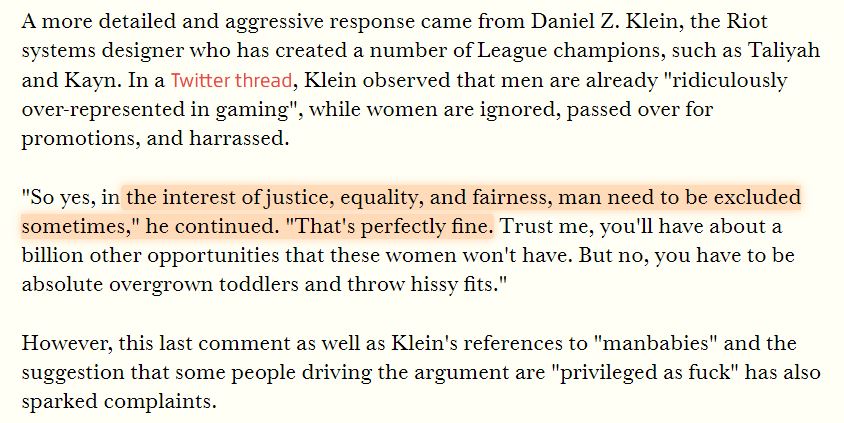
Also in the name of diversity, there is unabashed discrimination against men (especially white men) in tech, in both hiring policies and in other arenas. One such example is this, a developer workshop that specifically excluded men: https://t.co/N0SkH4hR35
USC's Interactive Media & Games Division cancels all-star panel that included top-tier game developers who were invited to share their experiences with students. Why? Because there were no women on the
ElectronConf is a conf which chooses presenters based on blind auditions; the identity, gender, and race of the speaker is not known to the selection team. The results of that merit-based approach was an all-male panel. So they cancelled the conference.
Apple's head of diversity (a black woman) got in trouble for promoting a vision of diversity that is at odds with contemporary progressive dogma. (She left the company shortly after this
Also in the name of diversity, there is unabashed discrimination against men (especially white men) in tech, in both hiring policies and in other arenas. One such example is this, a developer workshop that specifically excluded men: https://t.co/N0SkH4hR35