My husband’s family history is complicated (on both side), to say the least.
Recently, he grew curious and wanted to learn more about his maternal grandfather—which was quite a force of nature.
Here’s a pretty long thread ⬇️
She kept my husband’s grandfather with her, and remarried.
His grandfather received some good education, luckily, and studied at Meiji university.
They both were hardworking folks, who came from wealthy families who lost all their wealth in a fast changing world.
Fearing for his wife and kids—my mother in law and her brother, he fled to the north, to Sendai.
Grandfather switched jobs and... started an itinerant movie theater with a truck, a projector and a piece of white sheet. Grandmother was the driver!
But by early 70s the adoption of colored TV killed his business.
But he had quite the entrepreneur spirit and he quit to become a building manager.
He was supposed to study at Waseda, but the police caught him and beat him up so badly he got both his legs broken—he had to delay his studies and missed Waseda. All his life he had bad legs.
More from Society





1/OK, data mystery time.
This New York Times feature shows China with a Gini Index of less than 30, which would make it more equal than Canada, France, or the Netherlands. https://t.co/g3Sv6DZTDE
That's weird. Income inequality in China is legendary.
Let's check this number.
2/The New York Times cites the World Bank's recent report, "Fair Progress? Economic Mobility across Generations Around the World".
The report is available here:
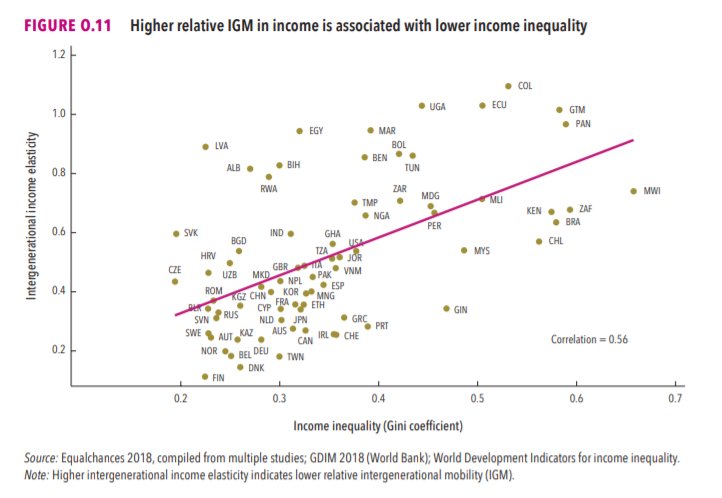
3/The World Bank report has a graph in which it appears to show the same value for China's Gini - under 0.3.
The graph cites the World Development Indicators as its source for the income inequality data.
4/The World Development Indicators are available at the World Bank's website.
Here's the Gini index: https://t.co/MvylQzpX6A
It looks as if the latest estimate for China's Gini is 42.2.
That estimate is from 2012.
5/A Gini of 42.2 would put China in the same neighborhood as the U.S., whose Gini was estimated at 41 in 2013.
I can't find the <30 number anywhere. The only other estimate in the tables for China is from 2008, when it was estimated at 42.8.
This New York Times feature shows China with a Gini Index of less than 30, which would make it more equal than Canada, France, or the Netherlands. https://t.co/g3Sv6DZTDE
That's weird. Income inequality in China is legendary.
Let's check this number.
2/The New York Times cites the World Bank's recent report, "Fair Progress? Economic Mobility across Generations Around the World".
The report is available here:
3/The World Bank report has a graph in which it appears to show the same value for China's Gini - under 0.3.
The graph cites the World Development Indicators as its source for the income inequality data.
4/The World Development Indicators are available at the World Bank's website.
Here's the Gini index: https://t.co/MvylQzpX6A
It looks as if the latest estimate for China's Gini is 42.2.
That estimate is from 2012.
5/A Gini of 42.2 would put China in the same neighborhood as the U.S., whose Gini was estimated at 41 in 2013.
I can't find the <30 number anywhere. The only other estimate in the tables for China is from 2008, when it was estimated at 42.8.