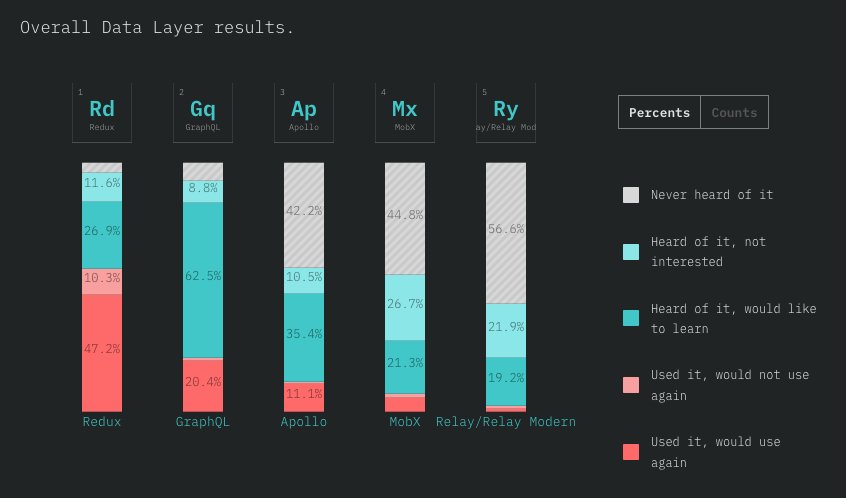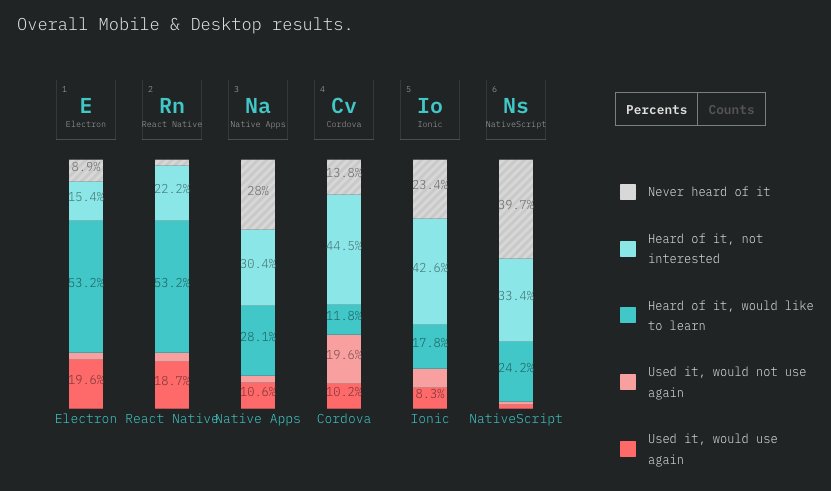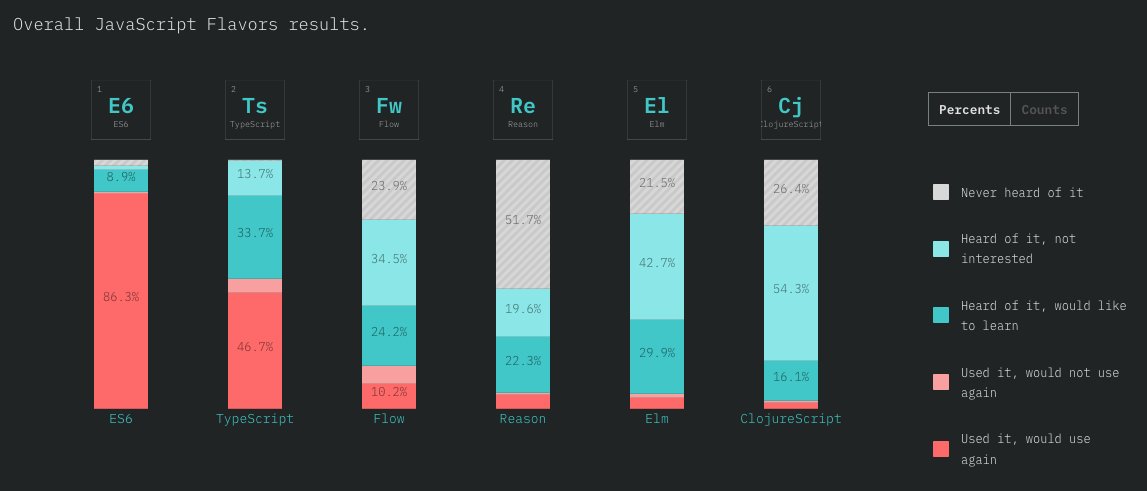
The 2018 State of JavaScript survey is out. They got 20,000 responses and have some delicious, delicious data. I'mma thread in some highlights:
React 65% (vs. 60%)
Vue 29% (vs. 24%)
Ember 5% (vs 4%, I was expecting a bigger rise)
But there's a shocker in here: Angular.
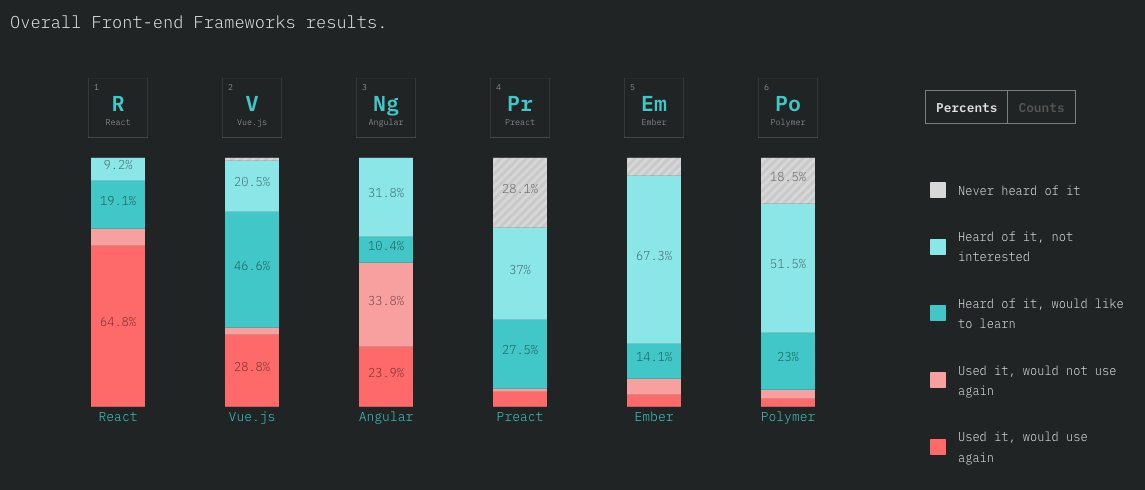
- 58% (if you include those who don't want to use it again)
- 24% (if you count only those who like it)
Since npm's question didn't ask if they intend to *continue* using it I think that might explain this.
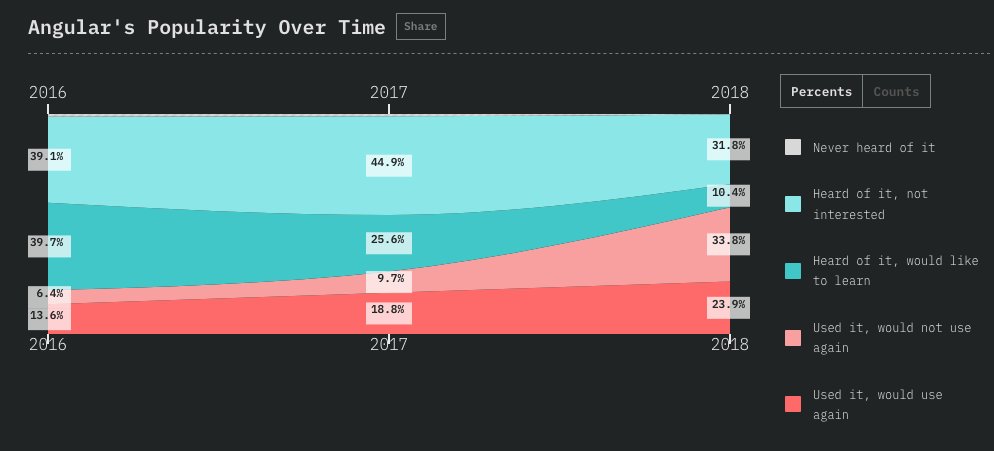
Maybe: lots of people in 2017 wanted to try Angular, tried it, and almost none of them liked it.
Or maybe: new users are still liking it but old users are churning out?
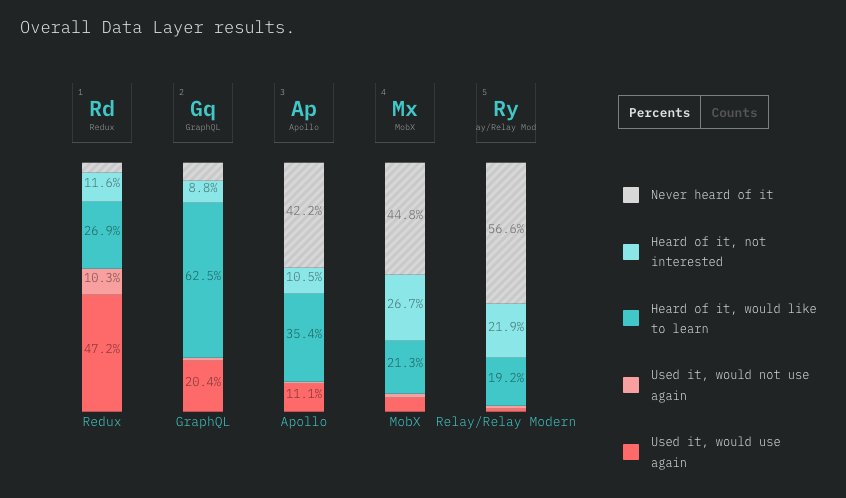
- Next.js has an enormous "want to learn" pool, great sign for them
- 62% of Meteor users and 72% of Sails users would not use them again, ouch
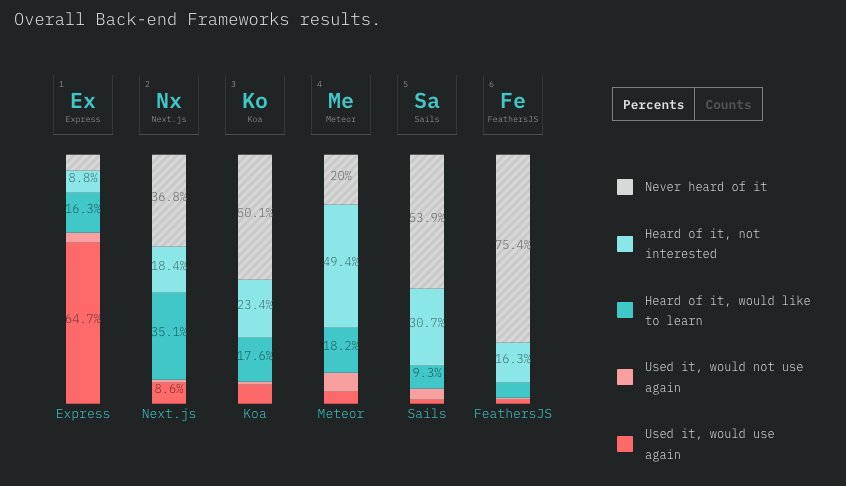
We need to stop calling Express a framework, it's too big. It's bedrock.
More from Tech
I could create an entire twitter feed of things Facebook has tried to cover up since 2015. Where do you want to start, Mark and Sheryl? https://t.co/1trgupQEH9
Ok, here. Just one of the 236 mentions of Facebook in the under read but incredibly important interim report from Parliament. ht @CommonsCMS https://t.co/gfhHCrOLeU
Let’s do another, this one to Senate Intel. Question: “Were you or CEO Mark Zuckerberg aware of the hiring of Joseph Chancellor?"
Answer "Facebook has over 30,000 employees. Senior management does not participate in day-today hiring decisions."
Or to @CommonsCMS: Question: "When did Mark Zuckerberg know about Cambridge Analytica?"
Answer: "He did not become aware of allegations CA may not have deleted data about FB users obtained through Dr. Kogan's app until March of 2018, when
these issues were raised in the media."
If you prefer visuals, watch this short clip after @IanCLucas rightly expresses concern about a Facebook exec failing to disclose info.
Ok, here. Just one of the 236 mentions of Facebook in the under read but incredibly important interim report from Parliament. ht @CommonsCMS https://t.co/gfhHCrOLeU
Let’s do another, this one to Senate Intel. Question: “Were you or CEO Mark Zuckerberg aware of the hiring of Joseph Chancellor?"
Answer "Facebook has over 30,000 employees. Senior management does not participate in day-today hiring decisions."
Or to @CommonsCMS: Question: "When did Mark Zuckerberg know about Cambridge Analytica?"
Answer: "He did not become aware of allegations CA may not have deleted data about FB users obtained through Dr. Kogan's app until March of 2018, when
these issues were raised in the media."
If you prefer visuals, watch this short clip after @IanCLucas rightly expresses concern about a Facebook exec failing to disclose info.
A company as powerful as @facebook should be subject to proper scrutiny. Mike Schroepfer, its CTO, told us that the buck stops with Mark Zuckerberg on the Cambridge Analytica scandal, which is why he should come and answer our questions @DamianCollins @IanCLucas pic.twitter.com/0H4VMhtIFu
— Digital, Culture, Media and Sport Committee (@CommonsCMS) May 23, 2018
What an amazing presentation! Loved how @ravidharamshi77 brilliantly started off with global macros & capital markets, and then gradually migrated to Indian equities, summing up his thesis for a bull market case!
@MadhusudanKela @VQIndia @sameervq
My key learnings: ⬇️⬇️⬇️
First, the BEAR case:
1. Bitcoin has surpassed all the bubbles of the last 45 years in extent that includes Gold, Nikkei, dotcom bubble.
2. Cyclically adjusted PE ratio for S&P 500 almost at 1929 (The Great Depression) peaks, at highest levels except the dotcom crisis in 2000.
3. World market cap to GDP ratio presently at 124% vs last 5 years average of 92% & last 10 years average of 85%.
US market cap to GDP nearing 200%.
4. Bitcoin (as an asset class) has moved to the 3rd place in terms of price gains in preceding 3 years before peak (900%); 1st was Tulip bubble in 17th century (rising 2200%).
@MadhusudanKela @VQIndia @sameervq
My key learnings: ⬇️⬇️⬇️
Bubble or Bull Market? Join us for a short presentation and candid one on one on 27th Jan, 4pm with Shri \u2066@MadhusudanKela\u2069. \u2066@VQIndia\u2069 \u2066@sameervq\u2069 #bubbleorbullmarket pic.twitter.com/LBvlBrz6mS
— Ravi Dharamshi (@ravidharamshi77) January 24, 2021
First, the BEAR case:
1. Bitcoin has surpassed all the bubbles of the last 45 years in extent that includes Gold, Nikkei, dotcom bubble.
2. Cyclically adjusted PE ratio for S&P 500 almost at 1929 (The Great Depression) peaks, at highest levels except the dotcom crisis in 2000.
3. World market cap to GDP ratio presently at 124% vs last 5 years average of 92% & last 10 years average of 85%.
US market cap to GDP nearing 200%.
4. Bitcoin (as an asset class) has moved to the 3rd place in terms of price gains in preceding 3 years before peak (900%); 1st was Tulip bubble in 17th century (rising 2200%).