Hundreds of miles away in Lisburn in Northern Ireland, the haulage firm’s operations team have had no luck in persuading the British supplier that the carrots that were ordered on 27 December are now, in the third week in January, classed as an export
"It is day eight in a depot in Lymm just outside Warrington, Cheshire and a lorry carrying frozen carrots and mixed herbs is still waiting for clearance to board a ferry from Birkenhead to Belfast".
"because the paperwork for a single pallet of carrots is missing key information"
Hundreds of miles away in Lisburn in Northern Ireland, the haulage firm’s operations team have had no luck in persuading the British supplier that the carrots that were ordered on 27 December are now, in the third week in January, classed as an export
Another supplier on the lorry had been struggling with the documentation requiring it to supply what is known as an “Incoterms”, which determines
Then there was also the supplier who had provided a commodity code that was two digits short. A simple key stroke mistake could be difference
“It took half a day yesterday for me to clear the supply chain. I’ve got one more issue to go,” says the visibly stressed operations man simultaneously dealing with a sheaf of about 30 documents for
“It’s absolutely criminal what has been allowed to happen between these two islands that have traded with each other for so long,” says Peter Summerton, managing director of McCulla Refrigerated Transport, one of Northern Ireland’s
THAT IS ENTIRELY BECAUSE Of UK DECIDING TO PULL ITSELF OUT OF THE SHARED CUSTOMS TERRITORY AND SHARED POLICED STANDARDS TERRITORY EU OF COURSE ...& JOHNSON'S "VICTORY"
Under the N. Ireland protocol, which was designed
Such is the dizzying array of new data that suppliers need
a Dutch driver rolls in with a delivery of frozen chicken.
“He’s allowed in just like that because he has come from the EU to the EU
YEP BECAUSE GB NOW *NON EU* CLOSER TO (OUT OF SM&CU) BELARUSSIA TRYING TO SHIP INTO EU
Overnight the company has been forced to turn itself into to “a data cleaning centre” as it cajoles and sometimes rows with customers
With a population of just 1.9 million, supplies are always going to be sent in mixed loads, or groupage, meaning entire lorry loads at risk if one supplier gets one item wrong. Summerton has two lorries
They were given the all clear after it was clarified that the drumsticks were not chicken but Swizzels sweets and the eggs were Cadbury’s Creme Eggs.
NO ..BUT THAT IS THE PRICE OF BREXIT.
BUT THANKS TO BREXIT/IRISH PROTOCOL
(JOHNSON'S "VICTORY")
SO TOO IS A SCOTTISH TO N.IRELAND MOVEMENT
N.Ireland to realise they will gradually lose out to EU suppliers/hauliers...
Full Guardian Report https://t.co/zktuLQKMbJ
More from Michael M. 🇨🇭🇳🇴🇮🇸🇱🇮🇬🇧
Brexit also brings UK pork sector to standstill. Surprise eh? @RichardAENorth 🙄
UK pork processors are experiencing significant issues in exporting products to the EU, which has already brought part of the industry to a complete standstill, risking knock-on impacts on farm.
The widely seen footage of overzealous Dutch (*my edit: "no they were not"*) inspection officials confiscating ham sandwiches transported by British hauliers is just the tip of the iceberg as far as the UK pig sector is concerned.
The NPA’s processor members have reported that
excessive (*my edit: only for non-EU members*) bureaucracy associated with paperwork requirements are causing delays at Dover, Calais and other ports. With pork being a perishable product, these delays are making UK shipments unattractive to buyers in the EU, forcing processors
to reject shipments and cancel future orders.
Despite the trade deal agreed between the EU & UK just before Christmas, the UK’s formal departure from the EU Customs Union and Single Market was always going to mean additional checks, new labelling and certification requirements
and delays at ports. While the full overall impact of the new rules is yet to be felt, as UK export volumes remain lower than normal for the time of year, the UK pig sector is already feeling the effect. Processors have reported a number of issues, including:
UK pork processors are experiencing significant issues in exporting products to the EU, which has already brought part of the industry to a complete standstill, risking knock-on impacts on farm.
Sector by sector falling overhttps://t.co/6HIXzf8qq8
— Morgan Leahy (@MorganLeahy) January 14, 2021
The widely seen footage of overzealous Dutch (*my edit: "no they were not"*) inspection officials confiscating ham sandwiches transported by British hauliers is just the tip of the iceberg as far as the UK pig sector is concerned.
The NPA’s processor members have reported that
excessive (*my edit: only for non-EU members*) bureaucracy associated with paperwork requirements are causing delays at Dover, Calais and other ports. With pork being a perishable product, these delays are making UK shipments unattractive to buyers in the EU, forcing processors
to reject shipments and cancel future orders.
Despite the trade deal agreed between the EU & UK just before Christmas, the UK’s formal departure from the EU Customs Union and Single Market was always going to mean additional checks, new labelling and certification requirements
and delays at ports. While the full overall impact of the new rules is yet to be felt, as UK export volumes remain lower than normal for the time of year, the UK pig sector is already feeling the effect. Processors have reported a number of issues, including:
Whatever the analyses, I'll never understand the efforts, taxpayers money & substantial pain to come to make the disunited or broken apart UK, face so many more difficulties in trading with its neighbours; even within its own territory & to be so much poorer & less secure
with fewer rights for Brits in their own country & across the EU/EEA.
And that there is not a lot more official opposition/media attention & anger about it
.
Even more so when I read the following from 2010 by the "Taxpayers Alliance"
@bakerstherald Thanks for bringing this to my attention when the MSM - for whatever reason - is so noticably reticent to expose these would be quickly evolving (sounds better/less sinister)
From 2010
"As long as anyone can remember, Britain's old industrial heartlands have been a disaster area. Once they'd lost their traditional industries like steel and shipbuilding, something very bad happened to them - they seemed to lose the will to live. And as we've blogged
many times (eg here), despite decades of political promises and billions of tax-funded support, they have never managed to leave the high dependency unit. For example, when last sighted - in 2007-08 at the height of the biggest economic boom the world has ever seen -
with fewer rights for Brits in their own country & across the EU/EEA.
And that there is not a lot more official opposition/media attention & anger about it
.
Even more so when I read the following from 2010 by the "Taxpayers Alliance"
@bakerstherald Thanks for bringing this to my attention when the MSM - for whatever reason - is so noticably reticent to expose these would be quickly evolving (sounds better/less sinister)
Fight it. Hard. Or you'll find yourself living in a totally deregulated 'zone' where the corruption and cronyism you see in government now will look like a toddlers fucking picnic! This is a brief glimpse of what will come: https://t.co/8ktTmElDmW
— Louise Crossley \U0001f577\U0001f41f3.5% #NotMovingOn (@CandidePeel) December 28, 2020
From 2010
"As long as anyone can remember, Britain's old industrial heartlands have been a disaster area. Once they'd lost their traditional industries like steel and shipbuilding, something very bad happened to them - they seemed to lose the will to live. And as we've blogged
many times (eg here), despite decades of political promises and billions of tax-funded support, they have never managed to leave the high dependency unit. For example, when last sighted - in 2007-08 at the height of the biggest economic boom the world has ever seen -
More from Society


The UN just voted to condemn Israel 9 times, and the rest of the world 0.
View the resolutions and voting results here:
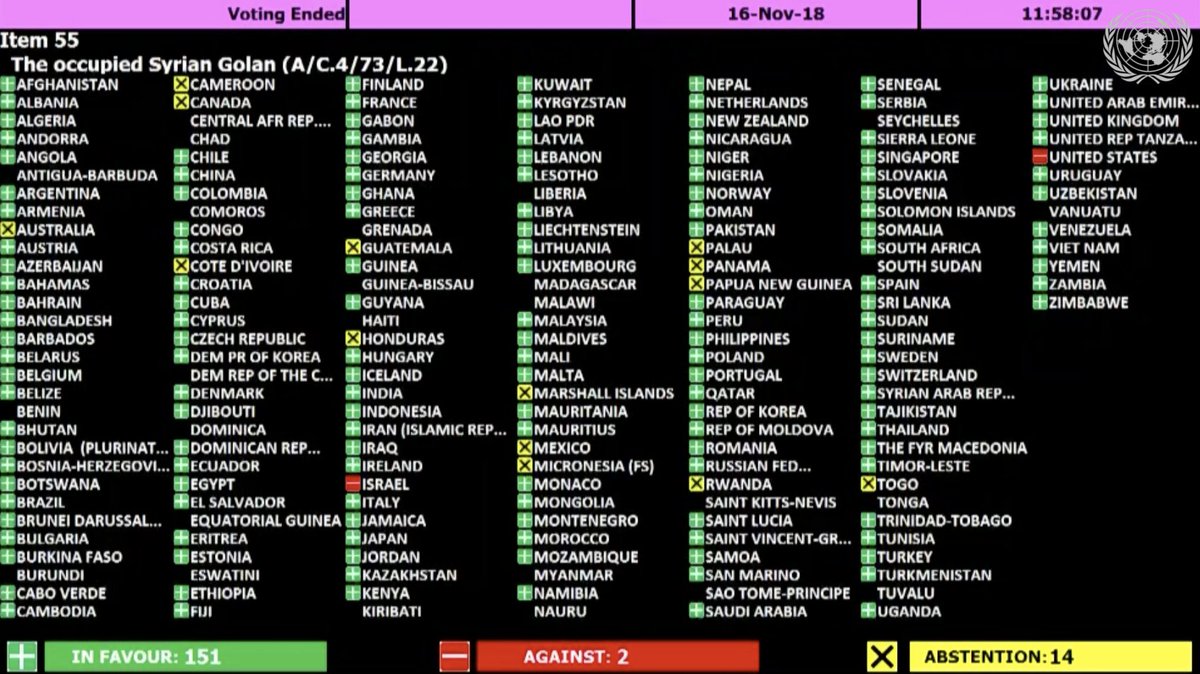
The resolution titled "The occupied Syrian Golan," which condemns Israel for "repressive measures" against Syrian citizens in the Golan Heights, was adopted by a vote of 151 - 2 - 14.
Israel and the U.S. voted 'No' https://t.co/HoO7oz0dwr
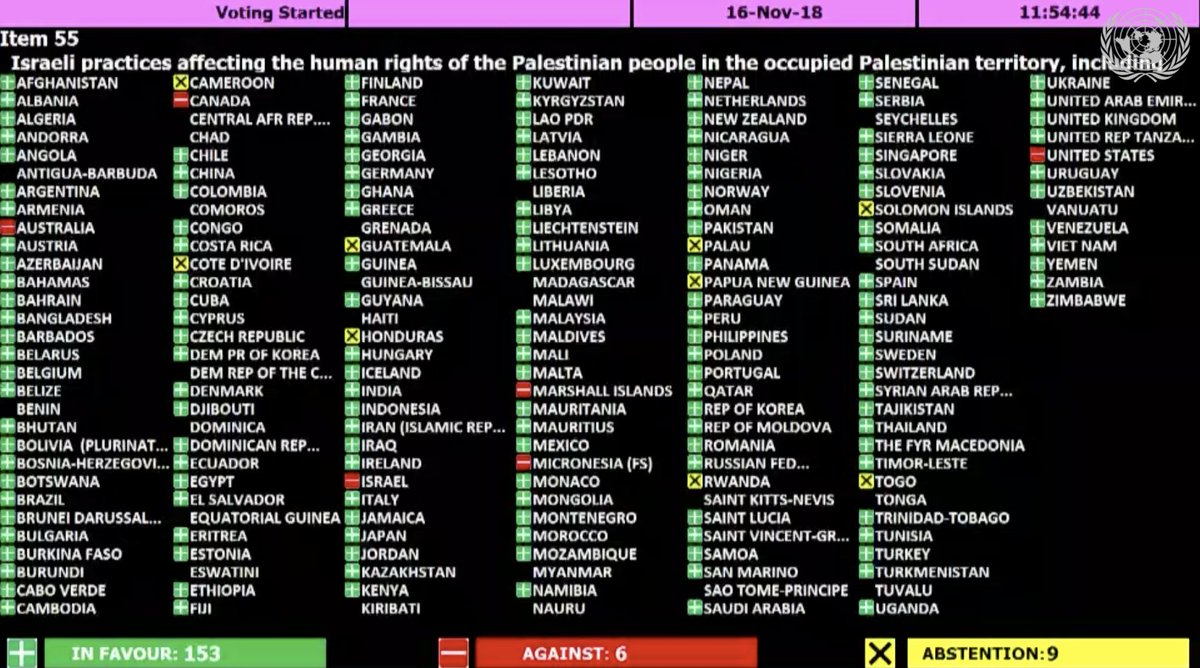
The resolution titled "Israeli practices affecting the human rights of the Palestinian people..." was adopted by a vote of 153 - 6 - 9.
Australia, Canada, Israel, Marshall Islands, Micronesia, and the U.S. voted 'No' https://t.co/1Ntpi7Vqab
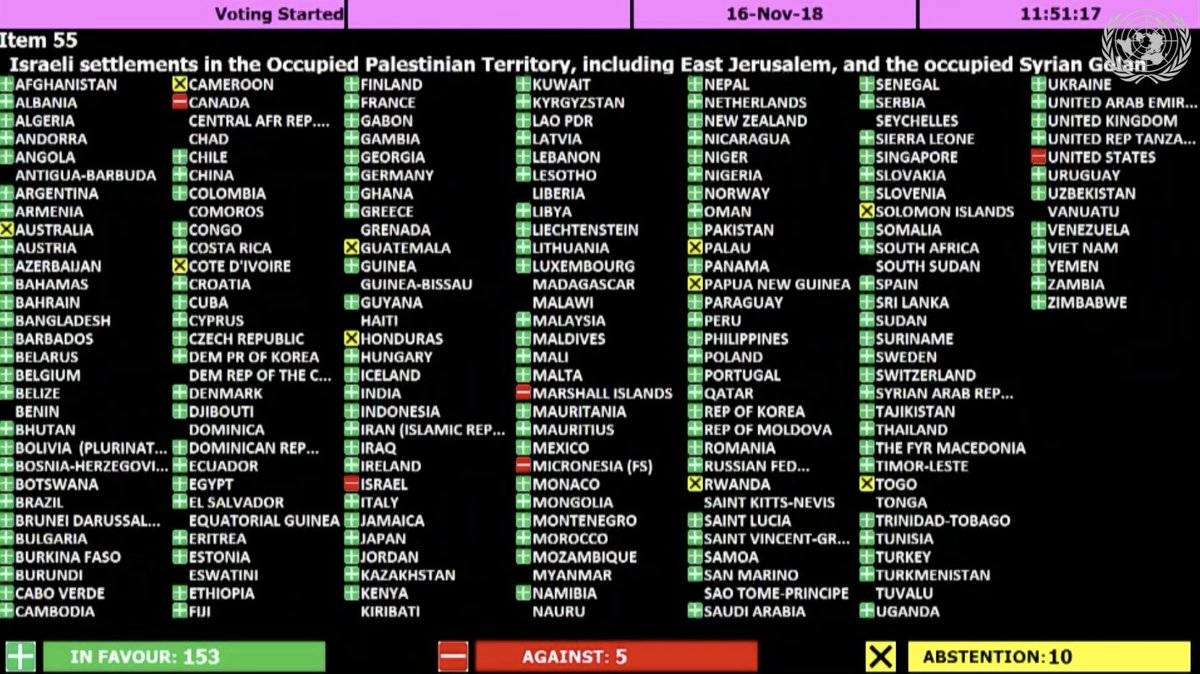
The resolution titled "Israeli settlements in the Occupied Palestinian Territory, including East Jerusalem, and the occupied Syrian Golan" was adopted by a vote of 153 – 5 – 10.
Canada, Israel, Marshall Islands, Micronesia, and the U.S. voted 'No'
https://t.co/REumYgyRuF
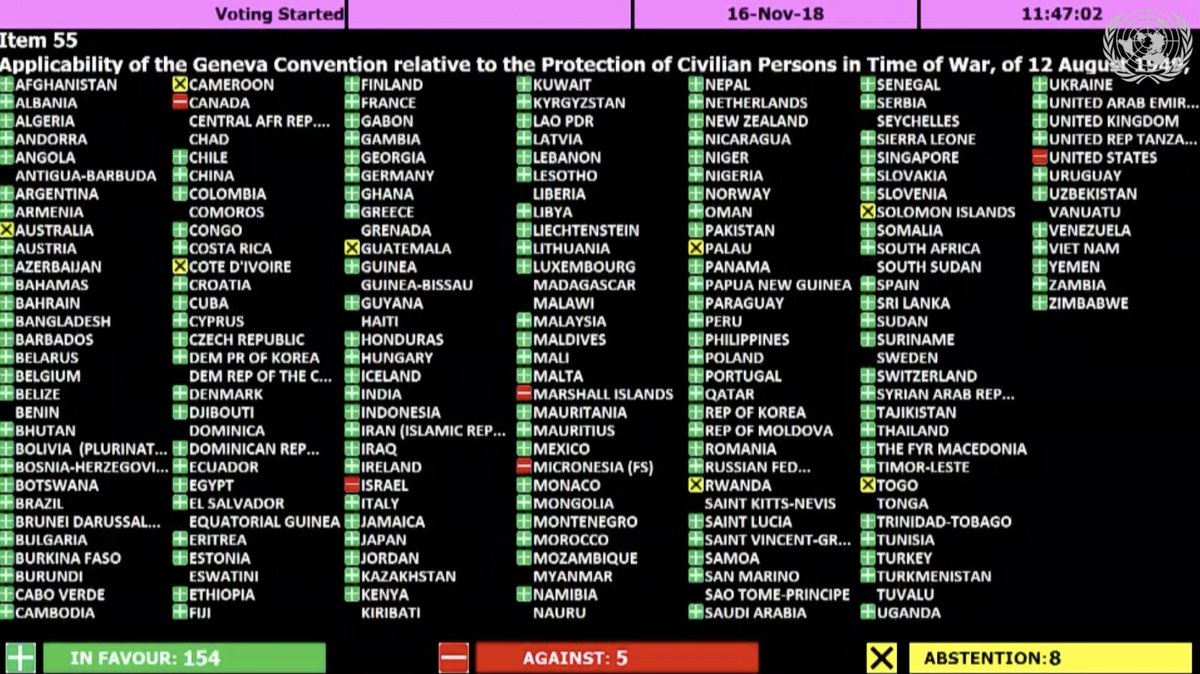
The resolution titled "Applicability of the Geneva Convention... to the
Occupied Palestinian Territory..." was adopted by a vote of 154 - 5 - 8.
Canada, Israel, Marshall Islands, Micronesia, and the U.S. voted 'No'
https://t.co/xDAeS9K1kW
View the resolutions and voting results here:
The resolution titled "The occupied Syrian Golan," which condemns Israel for "repressive measures" against Syrian citizens in the Golan Heights, was adopted by a vote of 151 - 2 - 14.
Israel and the U.S. voted 'No' https://t.co/HoO7oz0dwr
The resolution titled "Israeli practices affecting the human rights of the Palestinian people..." was adopted by a vote of 153 - 6 - 9.
Australia, Canada, Israel, Marshall Islands, Micronesia, and the U.S. voted 'No' https://t.co/1Ntpi7Vqab
The resolution titled "Israeli settlements in the Occupied Palestinian Territory, including East Jerusalem, and the occupied Syrian Golan" was adopted by a vote of 153 – 5 – 10.
Canada, Israel, Marshall Islands, Micronesia, and the U.S. voted 'No'
https://t.co/REumYgyRuF
The resolution titled "Applicability of the Geneva Convention... to the
Occupied Palestinian Territory..." was adopted by a vote of 154 - 5 - 8.
Canada, Israel, Marshall Islands, Micronesia, and the U.S. voted 'No'
https://t.co/xDAeS9K1kW

Brief thread to debunk the repeated claims we hear about transmission not happening 'within school walls', infection in school children being 'a reflection of infection from the community', and 'primary school children less likely to get infected and contribute to transmission'.
I've heard a lot of scientists claim these three - including most recently the chief advisor to the CDC, where the claim that most transmission doesn't happen within the walls of schools. There is strong evidence to rebut this claim. Let's look at
Let's look at the trends of infection in different age groups in England first- as reported by the ONS. Being a random survey of infection in the community, this doesn't suffer from the biases of symptom-based testing, particularly important in children who are often asymptomatic
A few things to note:
1. The infection rates among primary & secondary school children closely follow school openings, closures & levels of attendance. E.g. We see a dip in infections following Oct half-term, followed by a rise after school reopening.
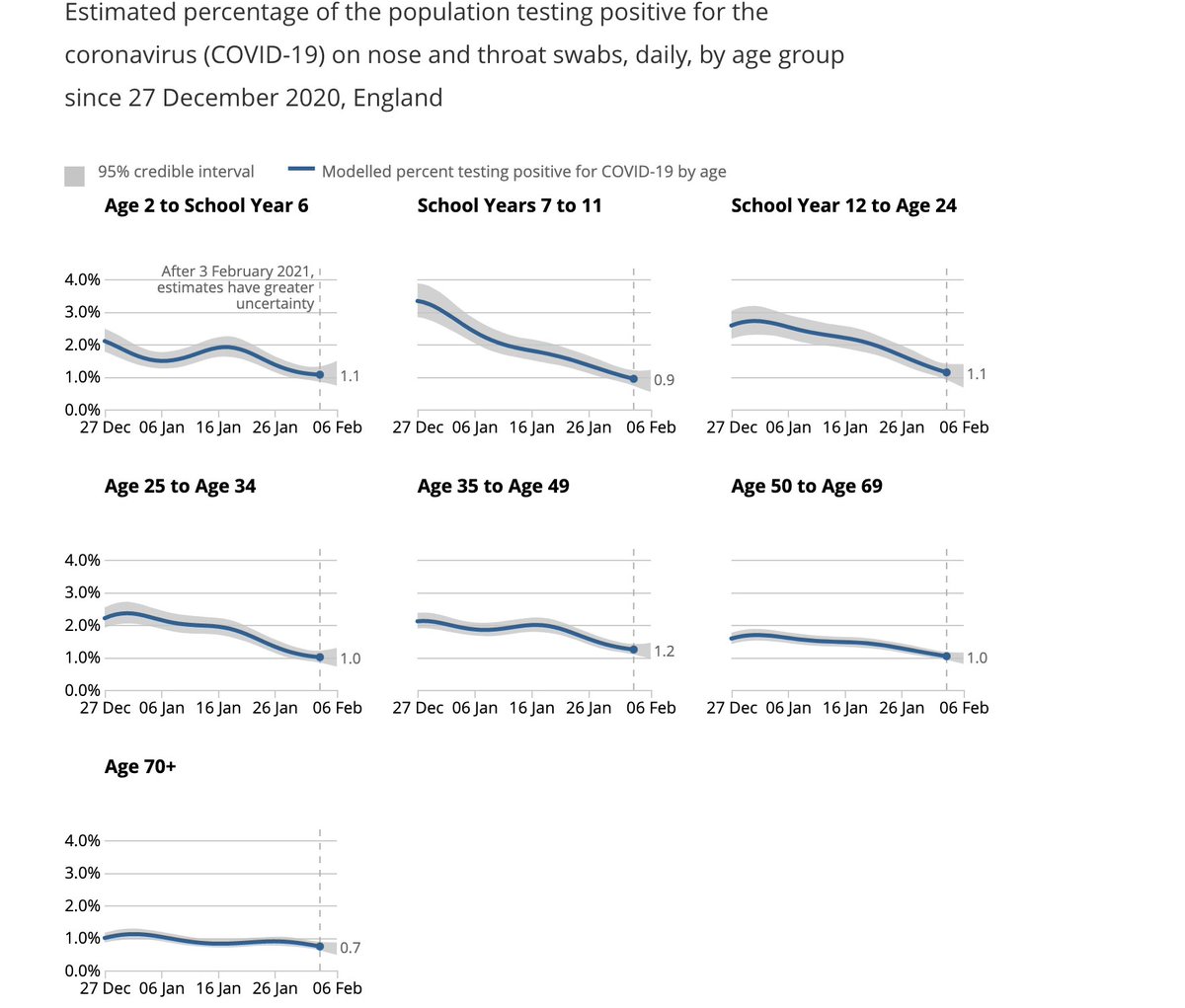
We see steep drops in both primary & secondary school groups after end of term (18th December), but these drops plateau out in primary school children, where attendance has been >20% after re-opening in January (by contrast with 2ndary schools where this is ~5%).
I've heard a lot of scientists claim these three - including most recently the chief advisor to the CDC, where the claim that most transmission doesn't happen within the walls of schools. There is strong evidence to rebut this claim. Let's look at
The science shows us that most disease transmission does not happen in the walls of the school, but it comes in from the community. So, CDC is advocating to get our K-5 students back in school at least in a hybrid mode with universal mask wearing and 6 ft of distancing. https://t.co/dfvJ2nl2s4
— Rochelle Walensky, MD, MPH (@CDCDirector) February 14, 2021
Let's look at the trends of infection in different age groups in England first- as reported by the ONS. Being a random survey of infection in the community, this doesn't suffer from the biases of symptom-based testing, particularly important in children who are often asymptomatic
A few things to note:
1. The infection rates among primary & secondary school children closely follow school openings, closures & levels of attendance. E.g. We see a dip in infections following Oct half-term, followed by a rise after school reopening.
We see steep drops in both primary & secondary school groups after end of term (18th December), but these drops plateau out in primary school children, where attendance has been >20% after re-opening in January (by contrast with 2ndary schools where this is ~5%).