With @franklowery our new study on attributes of T cells that contribute to successful cell therapy in cancer patients in @ScienceMagazine today w/ colleagues @slgoff_SB, @NCI_CCR_SB @theNCI a TL;DR thread on key findings with caveats :) 1/10
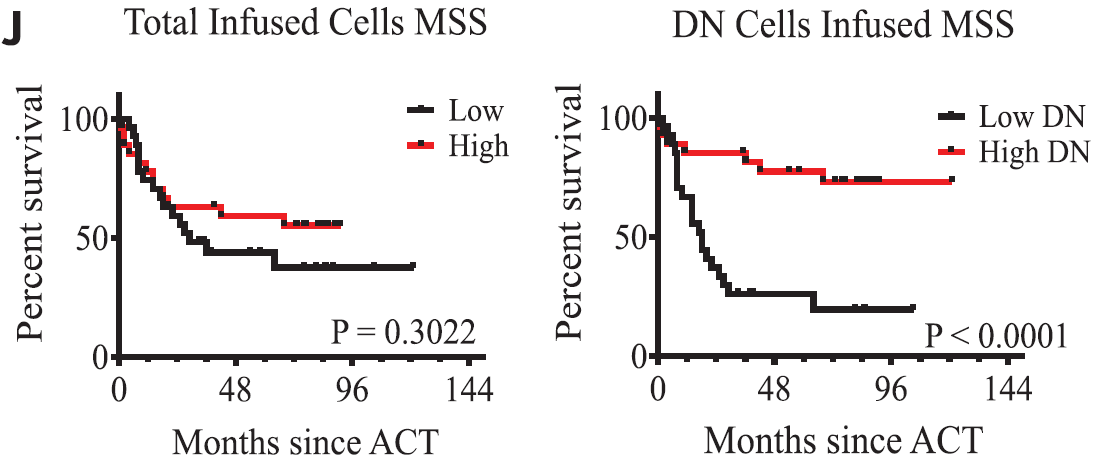
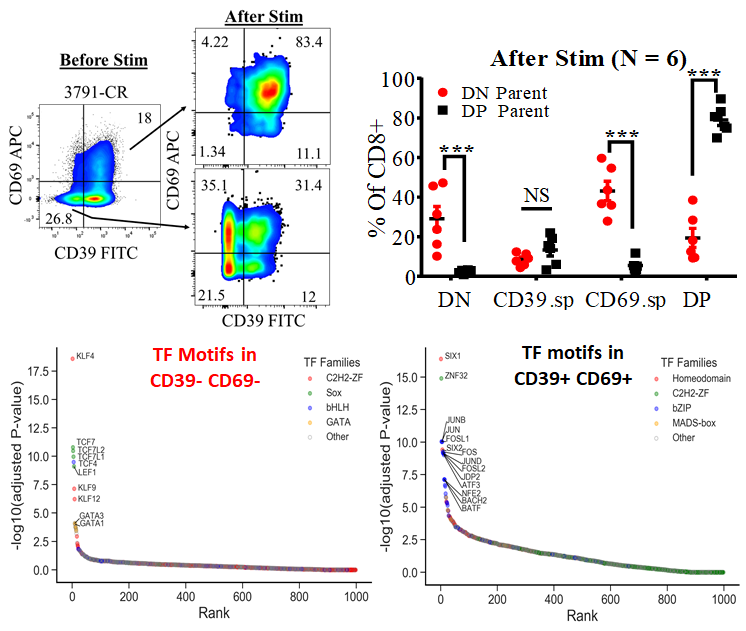
@NCI_CCR_SB has a long history of using tumor infiltrating T cells (TILs) to treat cancers since well.. before I was even born. We analyzed our most successful melanoma ACT trial for cell surface phenotypes in TIL infusion products of patients (aPD1/immunotherapy naive) /2
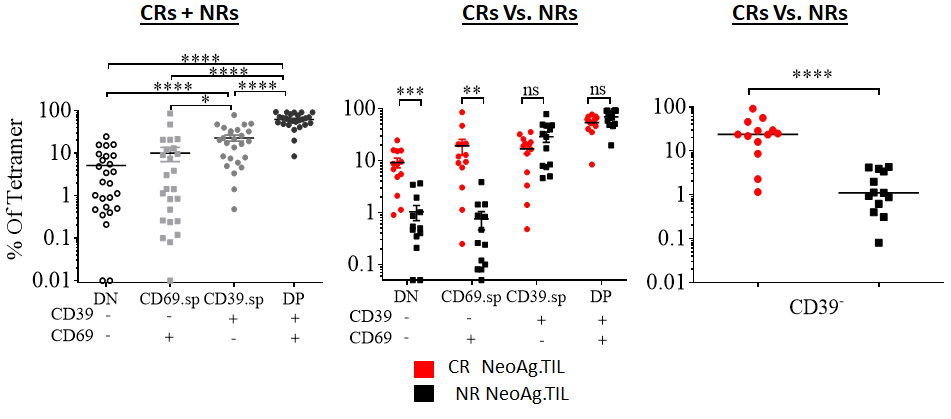
Surprisingly we found a CD39- TIL subset (CD39-CD69-, DN) associated with ACT-response. TBH we were expecting the opposite (CD39+). We only included CD39 bcz multiple groups (e.g. Simoni et al, 2018) had reported CD39+ as enriching for anti-tumor/neoantigen reactive T cells. /3
CD39- DN TILs RNA/epigenetics resemble stem-like memory progenitors, and in vitro were able to self-renew, and give rise to other CD39+ subsets. OTOH the most dominant subset of patient infusion products were CD39+ CD69+ (DP) and these guys were terminally differentiated.. /4
So, to clarify we specifically analyzed tumor-specific mutation-reactive Tcells. Turns out, ACT-responders had pool of neoantigen-reactive TILs in the CD39- phenotype, while non-responders did not (despite other irrelevant CD39- Tcells) -> not all CD39- T cells are bystanders /5
But previous studies aren’t wrong! Even in responders, we find most neoantigen-reactive TILs are CD39+CD69+ (DP). So, we find the same and agree: CD39 does enrich for mutation reactivity. The nuance is those T cells don’t seem to contribute to response at least in this cohort. /6
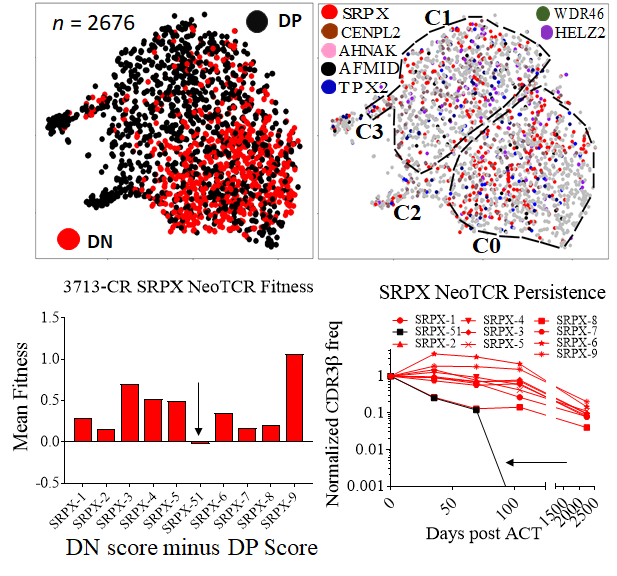
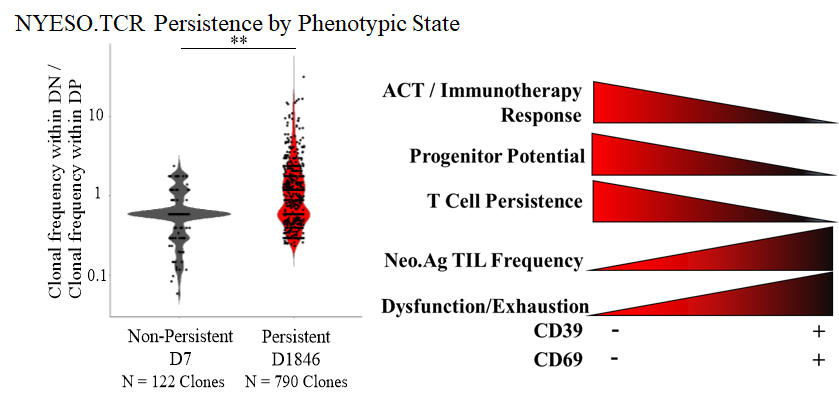
In this subgroup, we found no differences btwn resp. vs nonresp. in total # of neoag-specific TILs infused or CD39+ neoag TILs infused. By single cell tracking of mutation-reactive TCRs in patient blood, we found DN TCRs tended to persist longer than DP (they crash faster!). /7
We confirmed this in NYESO-TCR responder by tracking TCR clones over 5yrs! and in Pmel mouse model. In sum: we think stem-like T cells causing ACT response are different from TIL subsets enriched with tumor-reactivity. Recent ICB studies suggest this too (e.g. Kurtulus et al) /8
Caveats: Unsure if neog stem-like Tcells true in other tumor, immuno/cell therapy. We study TIL infusions -> probly diffnt from ex vivo TIL. We can’t comment on PRs/SDs (excluded). In 3 CRs, TIL-infusion was exclusively CD39+DP term diff. Tcells: so.. what’s happening there..? /9
These and many more questions to answer. This is the first in hopefully a series of studies we @NCI_CCR_SB have ongoing with respect to TIL phenotypes, so stay tuned :/ Finally, big thanks to my mentors Steve Rosenberg and Paul Robbins. ~fin

More from Science

Hard agree. And if this is useful, let me share something that often gets omitted (not by @kakape).

Variants always emerge, & are not good or bad, but expected. The challenge is figuring out which variants are bad, and that can't be done with sequence alone.


You can't just look at a sequence and say, "Aha! A mutation in spike. This must be more transmissible or can evade antibody neutralization." Sure, we can use computational models to try and predict the functional consequence of a given mutation, but models are often wrong.

The virus acquires mutations randomly every time it replicates. Many mutations don't change the virus at all. Others may change it in a way that have no consequences for human transmission or disease. But you can't tell just looking at sequence alone.

In order to determine the functional impact of a mutation, you need to actually do experiments. You can look at some effects in cell culture, but to address questions relating to transmission or disease, you have to use animal models.

The reason people were concerned initially about B.1.1.7 is because of epidemiological evidence showing that it rapidly became dominant in one area. More rapidly that could be explained unless it had some kind of advantage that allowed it to outcompete other circulating variants.

You May Also Like

#தினம்_ஒரு_திருவாசகம்
தொல்லை இரும்பிறவிச் சூழும் தளை நீக்கி
அல்லல் அறுத்து ஆனந்தம் ஆக்கியதே – எல்லை
மருவா நெறியளிக்கும் வாதவூர் எங்கோன்
திருவாசகம் என்னும் தேன்

பொருள்:
1.எப்போது ஆரம்பித்தது என அறியப்படமுடியாத தொலை காலமாக (தொல்லை)

2. இருந்து வரும் (இரும்)


3.பிறவிப் பயணத்திலே ஆழ்த்துகின்ற (பிறவி சூழும்)

4.அறியாமையாகிய இடரை (தளை)

5.அகற்றி (நீக்கி),

6.அதன் விளைவால் சுகதுக்கமெனும் துயரங்கள் விலக (அல்லல் அறுத்து),

7.முழுநிறைவாய்த் தன்னுளே இறைவனை உணர்த்துவதே (ஆனந்த மாக்கியதே),

8.பிறந்து இறக்கும் காலவெளிகளில் (எல்லை)

9.பிணைக்காமல் (மருவா)

10.காக்கும் மெய்யறிவினைத் தருகின்ற (நெறியளிக்கும்),

11.என் தலைவனான மாணிக்க வாசகரின் (வாதவூரெங்கோன்)

12.திருவாசகம் எனும் தேன் (திருவா சகமென்னுந் தேன்)

முதல்வரி: பிறவி என்பது முன்வினை விதையால் முளைப்பதோர் பெருமரம். அந்த ‘முன்வினை’ எங்கு ஆரம்பித்தது எனச் சொல்ல இயலாது. ஆனால் ‘அறியாமை’ ஒன்றே ஆசைக்கும்,, அச்சத்துக்கும் காரணம் என்பதால், அவையே வினைகளை விளைவிப்பன என்பதால், தொடர்ந்து வரும் பிறவிகளுக்கு, ‘அறியாமையே’ காரணம்

அறியாமைக்கு ஆரம்பம் கிடையாது. நமக்கு ஒரு பொருளைப் பற்றிய அறிவு எப்போதிருந்து இல்லை? அதைச் சொல்ல முடியாது. அதனாலேதான் முதலடியில், ஆரம்பமில்லாத அஞ்ஞானத்தை பிறவிகளுக்குக் காரணமாகச் சொல்லியது. ஆனால் அறியாமை, அறிவின் எழுச்சியால், அப்போதே முடிந்து விடும்.