EXPLANATION OF THE EXISTENCE OF DARK MATTER AND DARK ENERGY !
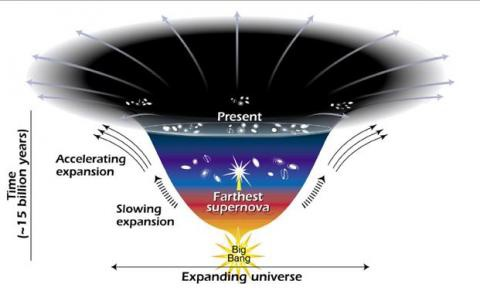
What Is Dark Energy ?
More is unknown than is known. We know how much dark energy there is because we know how it affects the universe's expansion. Other than that, it is a complete mystery.
WHAT OUR SANATAN DHARMA SAYS IN THIS CONTEXT LET’S TAKE A LOOK
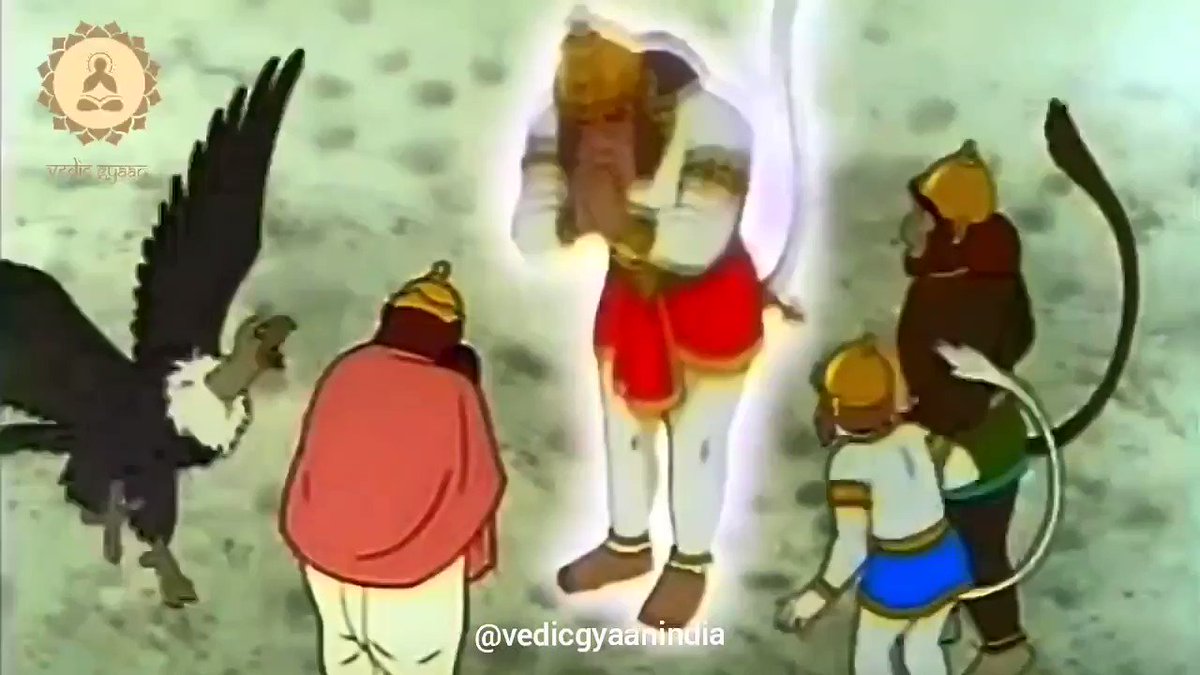
The verses of Taittiriya Aranyaka say that only one pada of the Lord
According to the observations and realizations of ancient seers, nearly eighty percent of this universe is yet of unknown nature which remains inactive during the process of creation (rather, evolution).
In Nasadiya sutra of Rigveda also there is a mention of this inactive matter as: ‘Nothing existed prior to creation of universe, neither shape nor size nor kind nor even the light.
‘Naavastuni vastu siddhi’
which means that only life and inert fluid (dark matter) existed before creation.
More from AKASH BHAT



LEO SZILARD - THE MAN WHO OWNED THE PATENT ON ATOMIC BOMB & CHANGED THE WORLD
Leo Szilard, an almost unknown scientist in today's times, made some surprising important contributions to science and society. Give in ur 10 mins to this thread bcoz ur mind is about to be blown.
1/
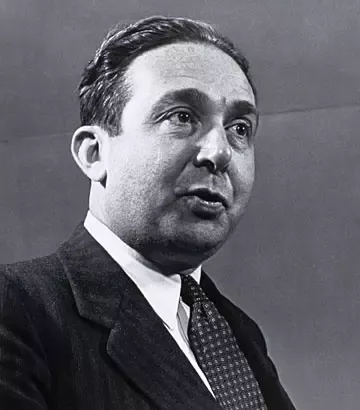
Szilard owned the patent on the atomic bomb - (https://t.co/MLq4JXPxVs). Pause for a minute and let that last statement sink in - there was a patent on the atomic bomb and this man owned it. The neutron was discovered in 1932 by James Chadwick and soon after, Szilard invented
2
and patented the idea of a neutron based nuclear chain reaction in 1933-34, which also describes the resulting explosion.
In his university days, Szilard took courses from Einstein, who also highly praised Szilard's doctoral thesis.
3/
In the late 1920s, they worked together to develop refrigerators with no moving parts and they shared a few patents on those. Yes - Einstein had patents on refrigerators. Unfortunately, these refrigerators never became a commercial success,
4/
though a form of such refrigerators are still used today in nuclear power plants. Einstein and Szilard were very good friends throughout their lives. After discovery of fission in 1938,
5/
Leo Szilard, an almost unknown scientist in today's times, made some surprising important contributions to science and society. Give in ur 10 mins to this thread bcoz ur mind is about to be blown.
1/
Szilard owned the patent on the atomic bomb - (https://t.co/MLq4JXPxVs). Pause for a minute and let that last statement sink in - there was a patent on the atomic bomb and this man owned it. The neutron was discovered in 1932 by James Chadwick and soon after, Szilard invented
2
and patented the idea of a neutron based nuclear chain reaction in 1933-34, which also describes the resulting explosion.
In his university days, Szilard took courses from Einstein, who also highly praised Szilard's doctoral thesis.
3/
In the late 1920s, they worked together to develop refrigerators with no moving parts and they shared a few patents on those. Yes - Einstein had patents on refrigerators. Unfortunately, these refrigerators never became a commercial success,
4/
though a form of such refrigerators are still used today in nuclear power plants. Einstein and Szilard were very good friends throughout their lives. After discovery of fission in 1938,
5/
More from Science

Recently I learned something about DNA that blew my mind, and in this thread, I'll attempt to blow your mind as well. Behold: Chargaff's 2nd Parity Rule for DNA N-Grams.
If you are into cryptography or reverse engineering, you should love this.
Thread:

DNA consists of four different 'bases', A, C, G and T. These bases have specific meaning within our biology. Specifically, within the 'coding part' of a gene, a triplet of bases encodes for an amino acid

Most DNA is stored redundantly, in two connected strands. Wherever there is an A on one strand, you'll find a T on the other one. And similarly for C and G:
T G T C A G T
A C A G T C A
(note how the other strand is upside down - this matters!)

If you take all the DNA of an organism (both strands), you will find equal numbers of A's and T's, as well as equal numbers of C's and G's. This is true by definition.
This is called Chargaff's 1st parity rule.
https://t.co/jD4cMt0PJ0

Strangely enough, this rule also holds per strand! So even if you take away the redundancy, there are 99% equal numbers of A/T and C/G * on each strand *. And we don't really know why.
This is called Chargaff's 2nd parity rule.

If you are into cryptography or reverse engineering, you should love this.
Thread:
DNA consists of four different 'bases', A, C, G and T. These bases have specific meaning within our biology. Specifically, within the 'coding part' of a gene, a triplet of bases encodes for an amino acid
Most DNA is stored redundantly, in two connected strands. Wherever there is an A on one strand, you'll find a T on the other one. And similarly for C and G:
T G T C A G T
A C A G T C A
(note how the other strand is upside down - this matters!)
If you take all the DNA of an organism (both strands), you will find equal numbers of A's and T's, as well as equal numbers of C's and G's. This is true by definition.
This is called Chargaff's 1st parity rule.
https://t.co/jD4cMt0PJ0
Strangely enough, this rule also holds per strand! So even if you take away the redundancy, there are 99% equal numbers of A/T and C/G * on each strand *. And we don't really know why.
This is called Chargaff's 2nd parity rule.



Read this thread from @lilithsaintcrow. I really mean it. Just read it. Because if what she is saying is true (and I happen to think it is) it explains *so much*
An example using the Flat Earthers: A thread of many parts:
I'm firmly convinced that the flat Earth thing was started by some adolescent trolls with nothing more productive to do. They didn't believe it, but they thought it was entertaining to keep pretending that they did.
You can't engage with them, because they *are playing a game*. They think it's fun to see if they can get anybody to engage with something completely stupid as though it's true.
If you challenge them, the rules of the game state that they have to argue as hard and a spuriously as they like, but *never* to admit that the Earth is not in fact flat. I suppose you have to make up your own entertainment on 4chan or whatever hole this was conceived in.
It's annoying as hell, but I suppose it doesn't do much harm.. except to folks like this:
An example using the Flat Earthers: A thread of many parts:
Let me explain something to those of you who didn't grow up around violently abusive white supremacists.
— Lili Saintcrow (@lilithsaintcrow) January 7, 2021
*They absolutely do not believe their own bullshit*, but it's useful for them to pretend they do.
I'm firmly convinced that the flat Earth thing was started by some adolescent trolls with nothing more productive to do. They didn't believe it, but they thought it was entertaining to keep pretending that they did.
You can't engage with them, because they *are playing a game*. They think it's fun to see if they can get anybody to engage with something completely stupid as though it's true.
If you challenge them, the rules of the game state that they have to argue as hard and a spuriously as they like, but *never* to admit that the Earth is not in fact flat. I suppose you have to make up your own entertainment on 4chan or whatever hole this was conceived in.
It's annoying as hell, but I suppose it doesn't do much harm.. except to folks like this: