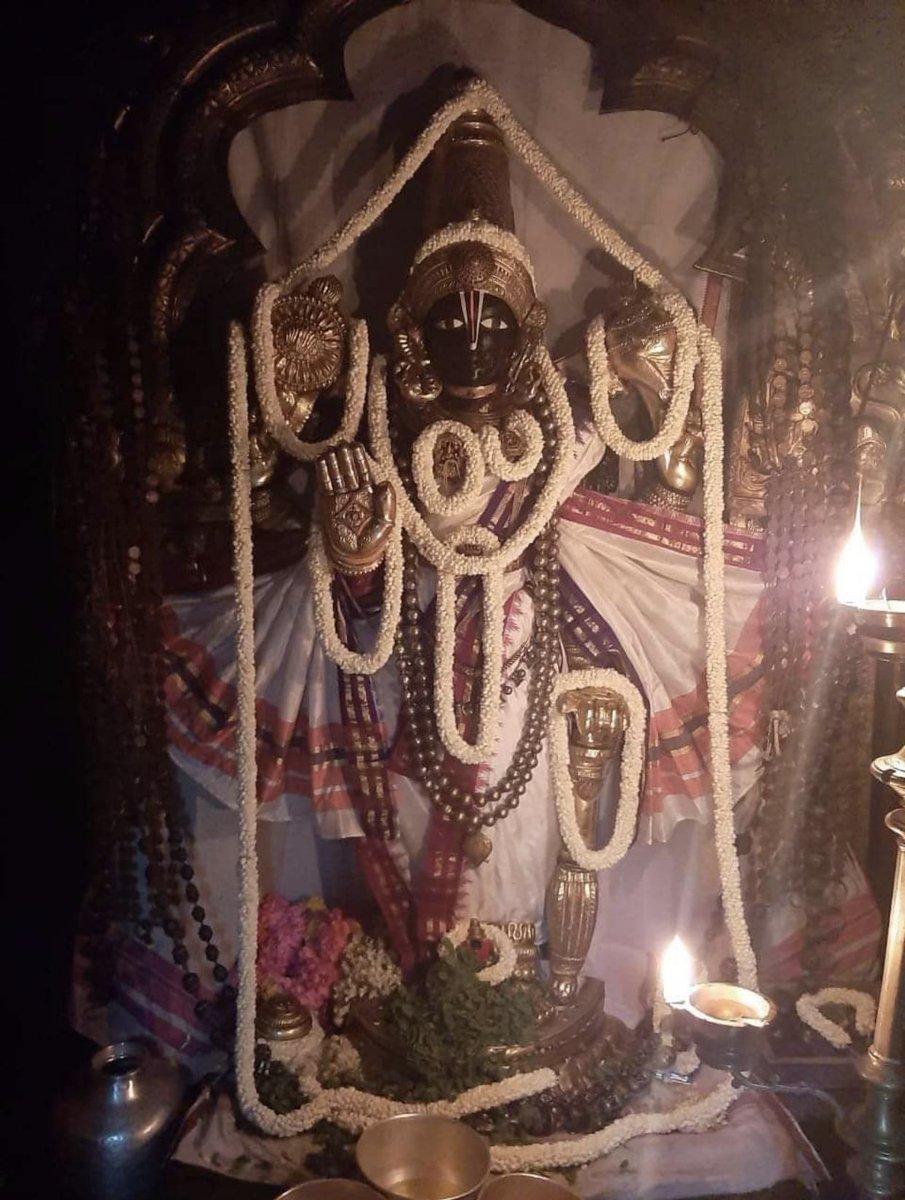
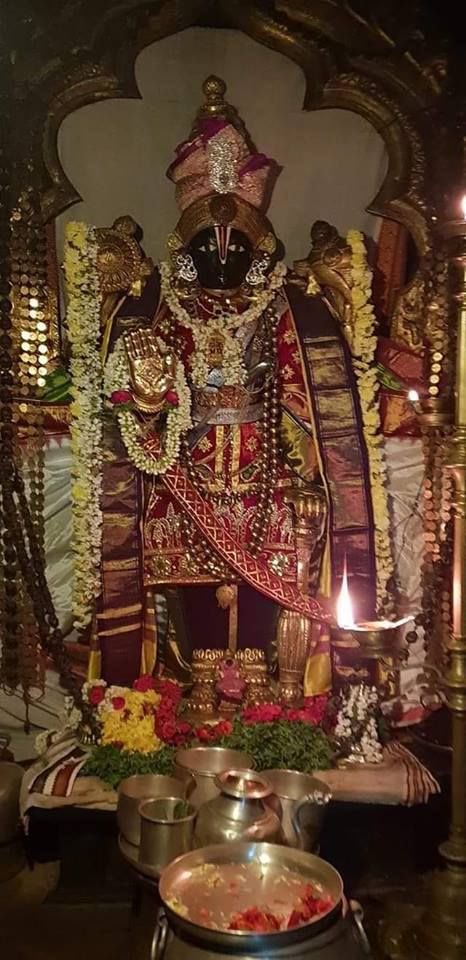
Guru Sitaram Goel explains away the mindset & psyche of the "beef eating Hindu" types in his own unique & distinctive style in his book "Hindu Society Under Siege". No one puts it across with such piercing clarity as guru SRG does. I'll just quote him in the next few tweets (1)
Hinos will side with cow murdering barbarians just to spite the traditional Hindu. What lowlives!
https://t.co/YwwuxKcHQl
... He also cannot help being indulgent towards those who are hostile to the traditional Hindu and who heap contempt and ridicule on him, no matter to what community or faith they belong, though he may not share their own variety of religious or ideological fanaticism." (7)
— Ugra (@_ugra_) January 3, 2021
More from Ugra
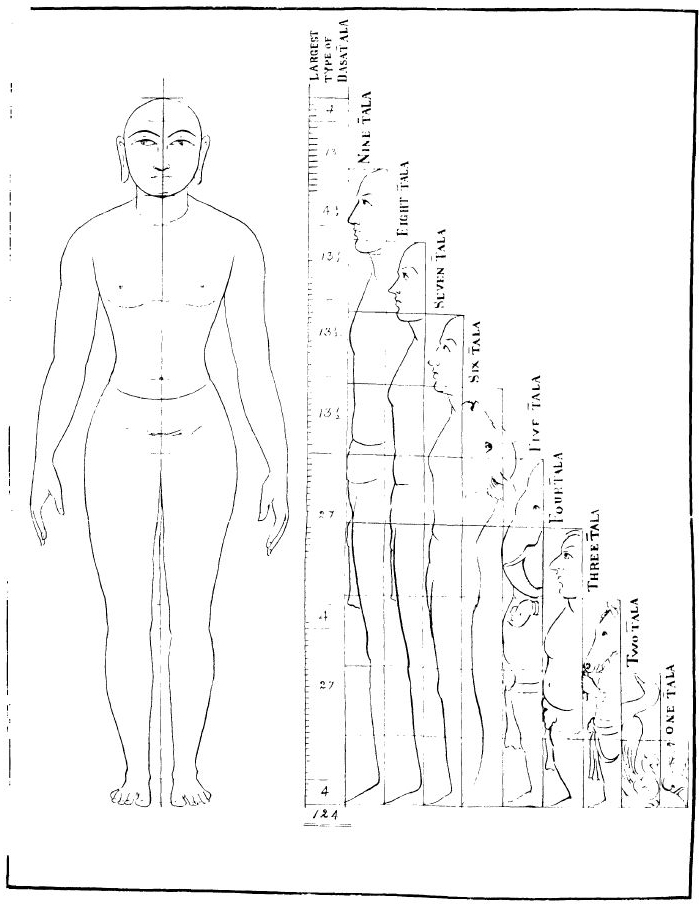
A THREAD on the principles of Hindu iconography & iconometry. In order to fully be able to appreciate our ancient art,one must have a rudimentary knowledge of the various terminologies & methodologies employed by ancient artisans & builders. We'll dwell on that in this thread (1)
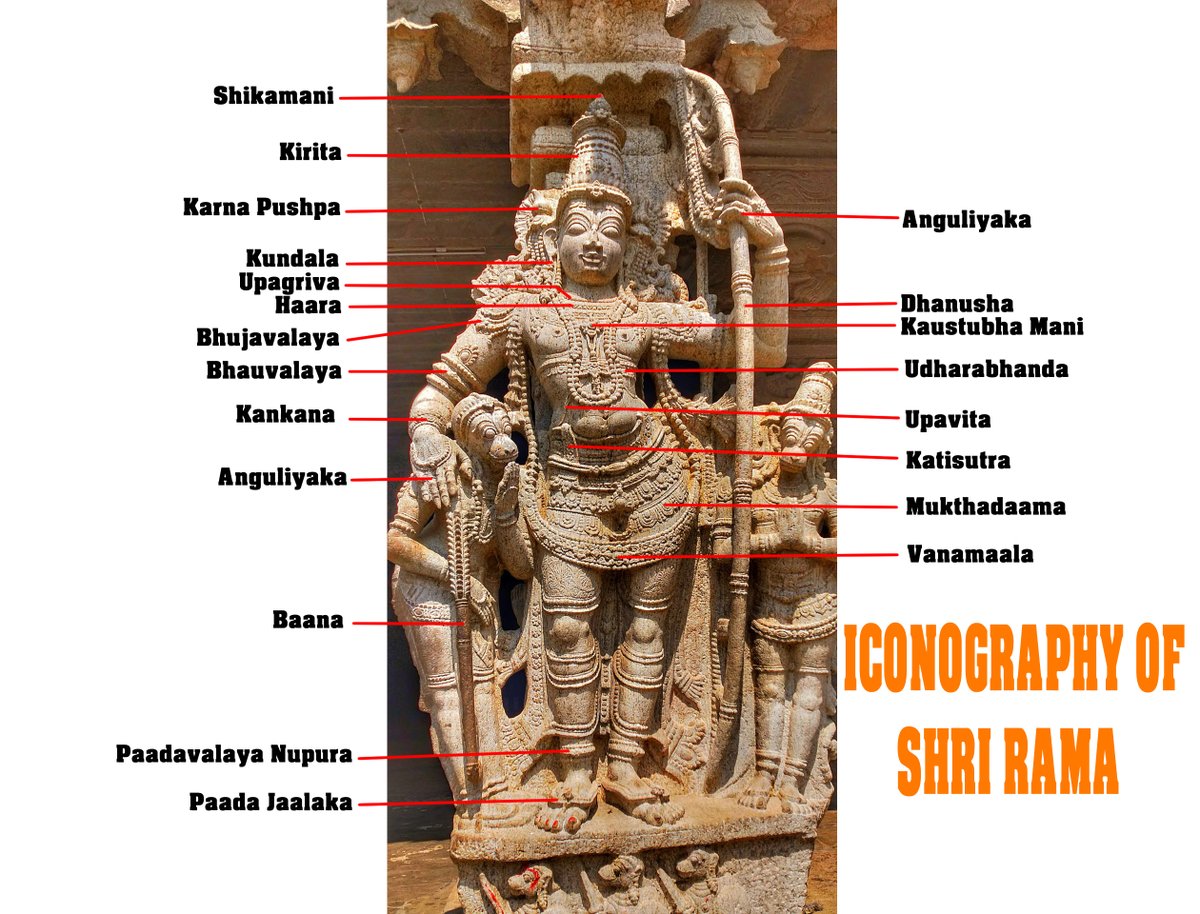
Before we proceed any further, I'd like you to have a look at the below THREAD on the ancient Hindu system of measurement. A lot of terminologies from there will be used here too. Get yourself acquainted with the different units of Hindu measurement
The ancient Temple builders i.e. the Sthapatis, have consulted various Shastras in order to execute all their wondrous workmanship. The Shastras are many, yet there is much commonality than differences in them. (3)
This vast ocean of knowledge revealed by the Devas to the ancient Rishis has resulted in the various different styles of Temple building, image making, rock sculpturing etc (4)
Some of the important Shastras consulted by the Sthapatis:
1) Vishnudharmotthara purana
2) Agni Purana
3) Matsya Purana
4) Brihat Samhita
Above texts contain a vast ocean of info on Temple building. Ancient Temples of Northern Bharat were built according to this tradition (5)
Before we proceed any further, I'd like you to have a look at the below THREAD on the ancient Hindu system of measurement. A lot of terminologies from there will be used here too. Get yourself acquainted with the different units of Hindu measurement
THREAD on ancient Hindu system of measurement(\u092e\u093e\u0928\u093e\u092a\u0915\u0930\u0923\u0935\u093f\u0927\u093e\u0928\u092e\u094d)
— Ugra (@_ugra_) December 23, 2020
The Shilpa shastras give much insight into how dimensions such as length,width,height etc were measured. It is using this system that the smallest of murthis to the biggest of buildings were planned & constructed (1) pic.twitter.com/SWEHym3KWj
The ancient Temple builders i.e. the Sthapatis, have consulted various Shastras in order to execute all their wondrous workmanship. The Shastras are many, yet there is much commonality than differences in them. (3)
This vast ocean of knowledge revealed by the Devas to the ancient Rishis has resulted in the various different styles of Temple building, image making, rock sculpturing etc (4)
Some of the important Shastras consulted by the Sthapatis:
1) Vishnudharmotthara purana
2) Agni Purana
3) Matsya Purana
4) Brihat Samhita
Above texts contain a vast ocean of info on Temple building. Ancient Temples of Northern Bharat were built according to this tradition (5)


More from Religion





As the Fall of man was a consequence of the pursuit of our own good, this quest intrinsically contains the possibility of our return to The Good. The route back to The Good was only revealed by The Way [Jn. 14:6], so we might say that Christ incarnates to complete the Circle.

Each thing is moved by, implicitly converted or turned back to, its own good by its cause of procession - which is principally God.
"Via est nobis tendendi in Deum." - St. Thomas Aquinas, which is to say that:
Christ, who as a man, is the way of our tending (back) into God.

Ezekiel 10:6 | When the LORD commanded the man in linen, “Take fire from among the wheels, from among the cherubim,” the man went in and stood beside a wheel.
"So I saw the glorious wheel move." - Dante, Paradiso 10.145

As Scripture and Dante see God's providence in circles, so did Boethius and Platonists more
Aquinas with, "Eadem est via qua descenditur et ascenditur." [SCG 4.1.3], brings back Heraclitus to the medievals, "The way up and the way down is the same." [Diels, B60]
The way up and the way down are the same.
Each thing is moved by, implicitly converted or turned back to, its own good by its cause of procession - which is principally God.
"Via est nobis tendendi in Deum." - St. Thomas Aquinas, which is to say that:
Christ, who as a man, is the way of our tending (back) into God.
Ezekiel 10:6 | When the LORD commanded the man in linen, “Take fire from among the wheels, from among the cherubim,” the man went in and stood beside a wheel.
"So I saw the glorious wheel move." - Dante, Paradiso 10.145
As Scripture and Dante see God's providence in circles, so did Boethius and Platonists more
Imagine a set of concentric circles. The inmost one comes closest to the simplicity of the centre, while forming itself a kind of centre around which revolve those which are set outside it. The circle furthest out rotates through a wider orbit.
— \u300e\U0001d622\U0001d633\U0001d633\U0001d636\U0001d634\u300f (@arrus_kacchi) December 26, 2020
Aquinas with, "Eadem est via qua descenditur et ascenditur." [SCG 4.1.3], brings back Heraclitus to the medievals, "The way up and the way down is the same." [Diels, B60]
The way up and the way down are the same.

A TINY THREAD ON NON-ACCEPTANCE OF ATHEISTS IN SOME HINDU HOLY BOOKS.
Many RW Hindus with confused identity think that Hinduism accepts Atheists.
What do some of the Hindu sacred texts say on this topic? Let's see.

Shri Krishna was 100% clear on importance of Shaastras as we already know.

Shri Rama was also clear on what should be done to atheists.
Ayodhya Kanda of Valmiki Ramayana.
https://t.co/lbCkEkPobA

Maharaaj Manu on Atheists.

Bhagvan Ved Vyas Ji in Shanti Parva of Mahabharata said this to his son Shukadeva regarding Atheists.

Many RW Hindus with confused identity think that Hinduism accepts Atheists.
What do some of the Hindu sacred texts say on this topic? Let's see.
Shri Krishna was 100% clear on importance of Shaastras as we already know.
Shri Rama was also clear on what should be done to atheists.
Ayodhya Kanda of Valmiki Ramayana.
https://t.co/lbCkEkPobA
Maharaaj Manu on Atheists.
Bhagvan Ved Vyas Ji in Shanti Parva of Mahabharata said this to his son Shukadeva regarding Atheists.