You gotta think about this one carefully!

Imagine you go to the doctor and get tested for a rare disease (only 1 in 10,000 people get it.)

The test is 99% effective in detecting both sick and healthy people.

Your test comes back positive.

Are you really sick? Explain below 👇

The most complete answer from every reply so far is from Dr. Lena. Thanks for taking the time and going through it!

https://t.co/jGt006Vlh5
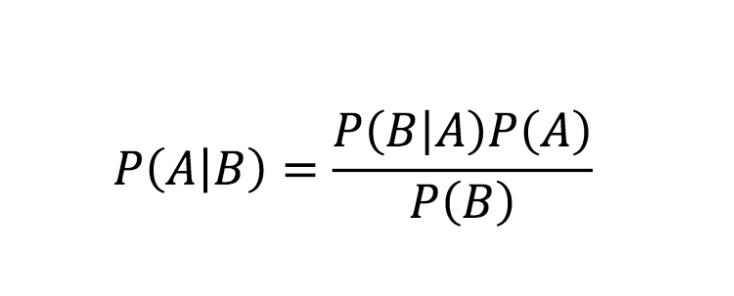
You can get the answer using Bayes' theorem, but let's try to come up with it in a different —maybe more intuitive— way.

👇
Here is what we know:

- Out of 10,000 people, 1 is sick
- Out of 100 sick people, 99 test positive
- Out of 100 healthy people, 99 test negative

Assuming 1 million people take the test (including you):

- 100 of them are sick
- 999,900 of them are healthy

👇
Let's now test both groups, starting with the 100 people sick:

▫️ 99 of them will be diagnosed (correctly) as sick (99%)

▫️ 1 of them is going to be diagnosed (incorrectly) as healthy (1%)

👇
Let's now test the group of 999,900 healthy individuals:

▫️ 989,901 of them will be diagnosed (correctly) as healthy (99%)

▫️ 9,999 of them will be diagnosed (incorrectly) as sick (1%)

👇
Since your test came back positive, it means that you belong to either one of the groups that had a positive result:

1. 99 people that are truly sick, or
2. 9,999 people that are actually healthy (but were diagnosed as sick.)

👇
Basically, out of 10,098, only 99 are truly sick.

That'll give you a 0.98% chance of being sick!

So no, most likely, you are fine!

👇
Here is something important: this is true as long as our only priors are that 1 in 10,000 people have the disease.

For example, if you were showing symptoms, then your chance of being sick after receiving a positive test will be higher.

More from Santiago

More from Health

Public Health Scholarships

This may help for those considering MS/PhD in Public Health

1. The Erasmus Mundus Joint Master Degree in Public Health in Disasters
https://t.co/1Z5qpstsSu

2. Afya Bora Global Health

3. Carl Duisberg Scholarships

https://t.co/HnNXdbWBxy

4. Commonwealth Scholarships for Developing Countries

https://t.co/3fWGf5b2OH

5. Fellowships in Public Health & Tropical

6. Fellowships to Promote Mental Health Journalism

https://t.co/MVV9PFsBJ1

7. 2021-22 Jeroen Ensink Memorial Fund

8. Paul S. Lietman Global Travel Grant for Residents & Fellows

https://t.co/qK76R495QT

9. Global Health Internships and Funding

https://t.co/FD9Gh2wXvO

10. Kofi Annan Global Health Leadership

11. MA in European Public Health

https://t.co/5x0Vr7b1j8

12. MSc in Public Health Scholarships - Maastricht University,
this simple, counter narrative fact keeps cropping up all over the world.

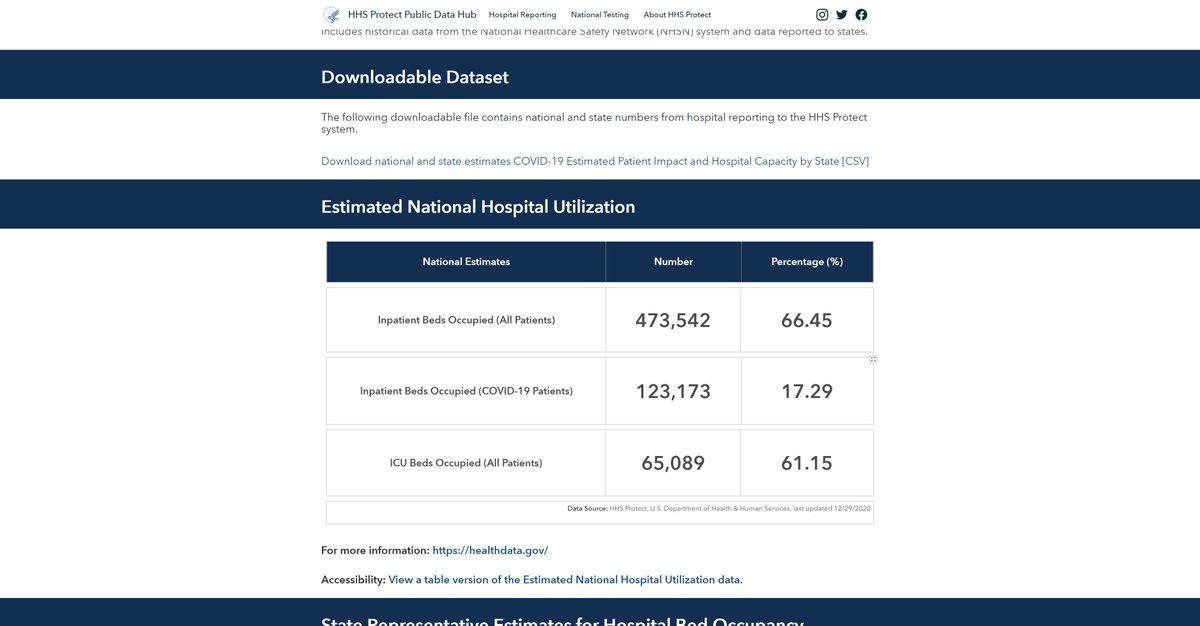
hospital and ICU utilization has been and remains low this year.

it's terribly curious that so few of these monitoring tools provide historical baselines.

getting them is like pulling teeth.


we might think of this as an oversight until you see stuff like this:

this woman was arrested for filming and sharing the fact that their are empty hospitals in the UK.

that's full blown soviet. what possible honest purpose does that

this is the action of a police state and a propaganda ministry, not a well intentioned government and a public heath agency.

"we cannot let people see the truth for fear they might base their actions on real facts" is not much of a mantra for just governance.


90% full ICU sounds scary until you realize that 90-100% full is normal in flu season.

staffed ICU beds are expensive to leave empty. it's like flying with 15% of the plane empty. hospitals don't do that.

and all US hospitals are mandated to be able to flex to 120% ICU.

the US is currently at historically low ICU utilization for this time of year.

61% is "you're all going to go out of business" territory as is 66% full hospital use.

can you blame them for mining CARES act money? they'll die without it.

You May Also Like