The 8-step quick-start guide to learn Machine Learning.

🧵👇

1⃣ Start with Python 🐍

Yes, you can do other languages, but Python is by far the most straightforward option.

👇
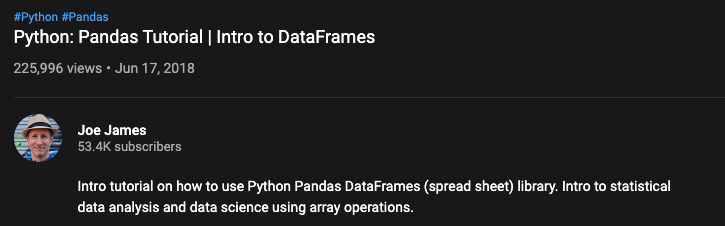
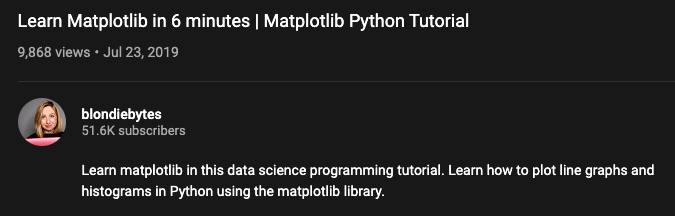
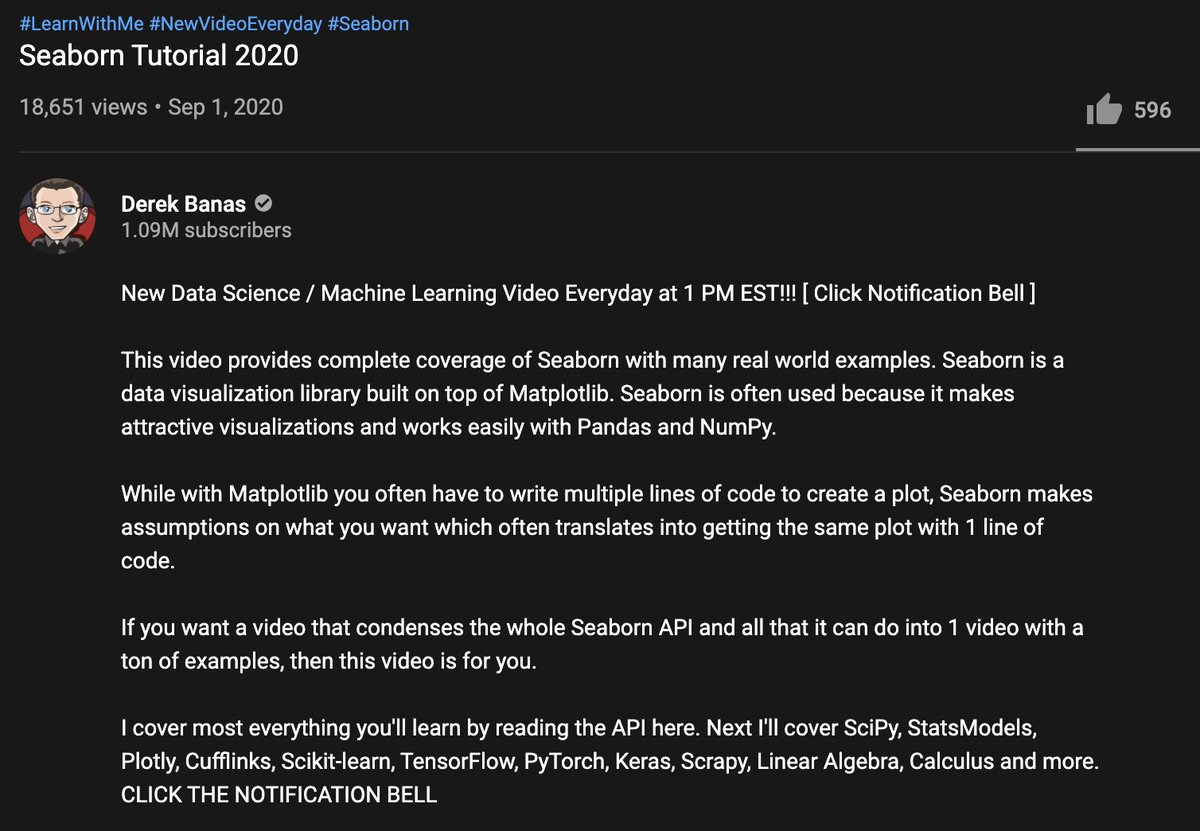
2⃣ Get familiar with numpy, pandas, and matplotlib

These three libraries are probably the most common Python libraries you'll have to use every day.

(Even if you don't end up doing machine learning, these libraries are awesome and useful.)

👇
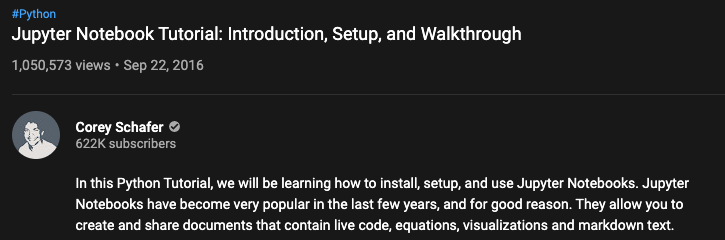
3⃣ Start using notebooks

Look into Jupyter or Google Colab.

Notebooks are essential for data scientists and machine learning practitioners. Most of the code you'll read and write will be in notebooks.

👇
4⃣ Find a problem (already solved)

In my opinion, the best way to start is by working through a problem —especially when you can learn from its solution.

Start with something simple. I usually recommend "Titanic" from Kaggle.

👇
5⃣ Focus on the analysis and not the code

In the beginning, spend your time and energy analyzing the problem and its solution.

Code is not important at this stage. Code can come later.

👇
6⃣ Start incorporating new algorithms

As you work through problems, start incorporating new algorithms into your toolset.

Here are a few great options to start:

1. Decision Trees
2. Linear regression
3. Logistic regression
4. Neural Networks
5. KNN

👇
7⃣ Get familiar with a general process to approach problems

Here is a good start:

1. Define the problem
2. Prepare the data
3. Spot-ccheck algorithms
4. Improve the results
5. Present the results

👇
8⃣ Pick a new problem and repeat

It shouldn't be surprising that the best way to improve is to practice and solve new problems.

If you don't have access to real-life problems, get familiar with Kaggle: everything you need will be there.
In the next coming weeks, I'll be posting a whole series of machine learning advice for people wanting to start.

Stay tuned!

More from Santiago

Free machine learning education.

Many top universities are making their Machine Learning and Deep Learning programs publicly available. All of this information is now online and free for everyone!

Here are 6 of these programs. Pick one and get started!


Introduction to Deep Learning
MIT Course 6.S191
Alexander Amini and Ava Soleimany

Introductory course on deep learning methods and practical experience using TensorFlow. Covers applications to computer vision, natural language processing, and more.

https://t.co/Uxx97WPCfR


Deep Learning
NYU DS-GA 1008
Yann LeCun and Alfredo Canziani

This course covers the latest techniques in deep learning and representation learning with applications to computer vision, natural language understanding, and speech recognition.

https://t.co/cKzpDOBVl1


Designing, Visualizing, and Understanding Deep Neural Networks
UC Berkeley CS L182
John Canny

A theoretical course focusing on design principles and best practices to design deep neural networks.

https://t.co/1TFUAIrAKb


Applied Machine Learning
Cornell Tech CS 5787
Volodymyr Kuleshov

A machine learning introductory course that starts from the very basics, covering all of the most important machine learning algorithms and how to apply them in practice.

https://t.co/hD5no8Pdfa

More from Machine learning

Thanks for this incredibly helpful analysis @dgurdasani1

Two questions. 1/ Does this summarise the AZ published data :
The plan is to extend the time interval for all age groups despite it being largely untested on the over 55yrs, although the full data is not yet published


Do we have the actual numbers of over 55yr olds given a 2nd dose at c12 weeks and the accompanying efficacy data?

Not to mention the efficacy data of the full first dose over that same period?

I’d quite like to know whether I am to be a guinea pig & the ongoing risks to manage

You attached photos of excerpts from a paper. Could you attach the link?

Re Pfizer. As I understand it the most efficacious interval for dosing was investigated at the start of the trial.


Here’s the link to the

I’ve got to say that this way of making and announcing decisions is not inspiring confidence in me and I am very pro vaccination as a matter of principle, not least because my brother caught polio before vaccinations available.
With hard work and determination, anyone can learn to code.

Here’s a list of my favorites resources if you’re learning to code in 2021.

👇

1. freeCodeCamp.

I’d suggest picking one of the projects in the curriculum to tackle and then completing the lessons on syntax when you get stuck. This way you know *why* you’re learning what you’re learning, and you're building things

2.
https://t.co/7XC50GlIaa is a hidden gem. Things I love about it:

1) You can see the most upvoted solutions so you can read really good code

2) You can ask questions in the discussion section if you're stuck, and people often answer. Free

3. https://t.co/V9gcXqqLN6 and https://t.co/KbEYGL21iE

On stackoverflow you can find answers to almost every problem you encounter. On GitHub you can read so much great code. You can build so much just from using these two resources and a blank text editor.

4. https://t.co/xX2J00fSrT @eggheadio specifically for frontend dev.

Their tutorials are designed to maximize your time, so you never feel overwhelmed by a 14-hour course. Also, the amount of prep they put into making great courses is unlike any other online course I've seen.
This is a Twitter series on #FoundationsOfML.

❓ Today, I want to start discussing the different types of Machine Learning flavors we can find.

This is a very high-level overview. In later threads, we'll dive deeper into each paradigm... 👇🧵

Last time we talked about how Machine Learning works.

Basically, it's about having some source of experience E for solving a given task T, that allows us to find a program P which is (hopefully) optimal w.r.t. some metric


According to the nature of that experience, we can define different formulations, or flavors, of the learning process.

A useful distinction is whether we have an explicit goal or desired output, which gives rise to the definitions of 1️⃣ Supervised and 2️⃣ Unsupervised Learning 👇

1️⃣ Supervised Learning

In this formulation, the experience E is a collection of input/output pairs, and the task T is defined as a function that produces the right output for any given input.

👉 The underlying assumption is that there is some correlation (or, in general, a computable relation) between the structure of an input and its corresponding output and that it is possible to infer that function or mapping from a sufficiently large number of examples.

You May Also Like

The first ever world map was sketched thousands of years ago by Indian saint
“Ramanujacharya” who simply translated the following verse from Mahabharat and gave the world its real face

In Mahabharat,it is described how 'Maharishi Ved Vyasa' gave away his divine vision to Sanjay


Dhritarashtra's charioteer so that he could describe him the events of the upcoming war.

But, even before questions of war could begin, Dhritarashtra asked him to describe how the world looks like from space.

This is how he described the face of the world:

सुदर्शनं प्रवक्ष्यामि द्वीपं तु कुरुनन्दन। परिमण्डलो महाराज द्वीपोऽसौ चक्रसंस्थितः॥
यथा हि पुरुषः पश्येदादर्शे मुखमात्मनः। एवं सुदर्शनद्वीपो दृश्यते चन्द्रमण्डले॥ द्विरंशे पिप्पलस्तत्र द्विरंशे च शशो महान्।

—वेद व्यास, भीष्म पर्व, महाभारत


Meaning:-

हे कुरुनन्दन ! सुदर्शन नामक यह द्वीप चक्र की भाँति गोलाकार स्थित है, जैसे पुरुष दर्पण में अपना मुख देखता है, उसी प्रकार यह द्वीप चन्द्रमण्डल में दिखायी देता है। इसके दो अंशो मे पीपल और दो अंशो मे विशाल शश (खरगोश) दिखायी देता है।


Meaning: "Just like a man sees his face in the mirror, so does the Earth appears in the Universe. In the first part you see leaves of the Peepal Tree, and in the next part you see a Rabbit."

Based on this shloka, Saint Ramanujacharya sketched out the map, but the world laughed