One of the most popular activation functions used in deep learning models is ReLU.

I asked: "Is ReLU continuous and differentiable?"

Surprisingly, a lot of people were confused about this.

Let's break this down step by step: ↓

Let's start by defining ReLU:

f(x) = max(0, x)

In English: if x <= 0, the function will return 0. Otherwise, the function will return x.
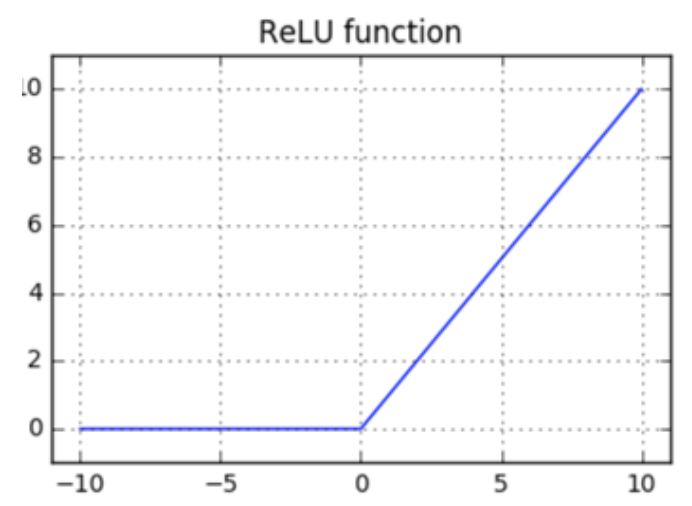
If you draw this function, you'll get the attached chart.

Notice there are no discontinuities in the function.

This should be enough to answer half of the original question: the ReLU function is continuous.

Let's now think about the differentiable part.
A necessary condition for a function to be differentiable: it must be continuous.

ReLU is continuous. That's good, but not enough.

Its derivative should also exist for every individual point.

Here is where things get interesting.
We can compute the derivative of a function using the attached formula.

(I'm not going to explain where this is coming from; you can trust me on this one.)

We can use this formula to see whether ReLU is differentiable.
Looking at ReLU's chart again, the interesting point is when x = 0.

That's where the function changes abruptly.

If there's going to be an issue with the function's derivative, it's going to be there!
Here is the deal:

For ReLU to be differentiable, its derivative should exist at x = 0 (our problematic point.)

To see whether the derivate exists, we need to check that the left-hand and right-hand limits exist and are equal at x = 0.

That shouldn't be hard to do.
Going back to our formula:

The first step is to replace f(x) with ReLU's actual function.

It should now look like this:
So let's find out the left-hand limit.

In English: we want to compute the derivative using our formula when h approaches zero from the left.

At x = 0 and h < 0, we end up with the derivative being 0.
We can now do the same to compute the right-hand limit.

In this case, we want h to approach 0 from the right.

At x = 0, and h > 0, we will end up with the derivative being 1.
Awesome! This is what we have:

1. The left-hand limit is 0.
2. The right-hand limit is 1.

For the function's derivative to exist at x = 0, both the left-hand and right-hand limits should be the same.

This is not the case. The derivative of ReLU doesn't exist at x = 0.
We now have the complete answer:

• ReLU is continuous
• ReLU is differentiable

But here was the central confusion point:

How come ReLU is not differentiable, but we can use it as an activation function when using Gradient Descent?
This was the reason many people thought ReLU was differentiable.

What happens is that we don't care that the derivative of ReLU is not defined when x = 0. When this happens, we set the derivative to 0 (or any arbitrary value) and move on with our lives.

A nice hack.
In deep learning, it's rare for x to be precisely zero. We can get away with our hack and not worry too much about it.

This is the reason we can still use ReLU together with Gradient Descent.

Isn't math beautiful?

More from Santiago

Free machine learning education.

Many top universities are making their Machine Learning and Deep Learning programs publicly available. All of this information is now online and free for everyone!

Here are 6 of these programs. Pick one and get started!

↓


Introduction to Deep Learning
MIT Course 6.S191
Alexander Amini and Ava Soleimany

Introductory course on deep learning methods and practical experience using TensorFlow. Covers applications to computer vision, natural language processing, and more.

https://t.co/Uxx97WPCfR


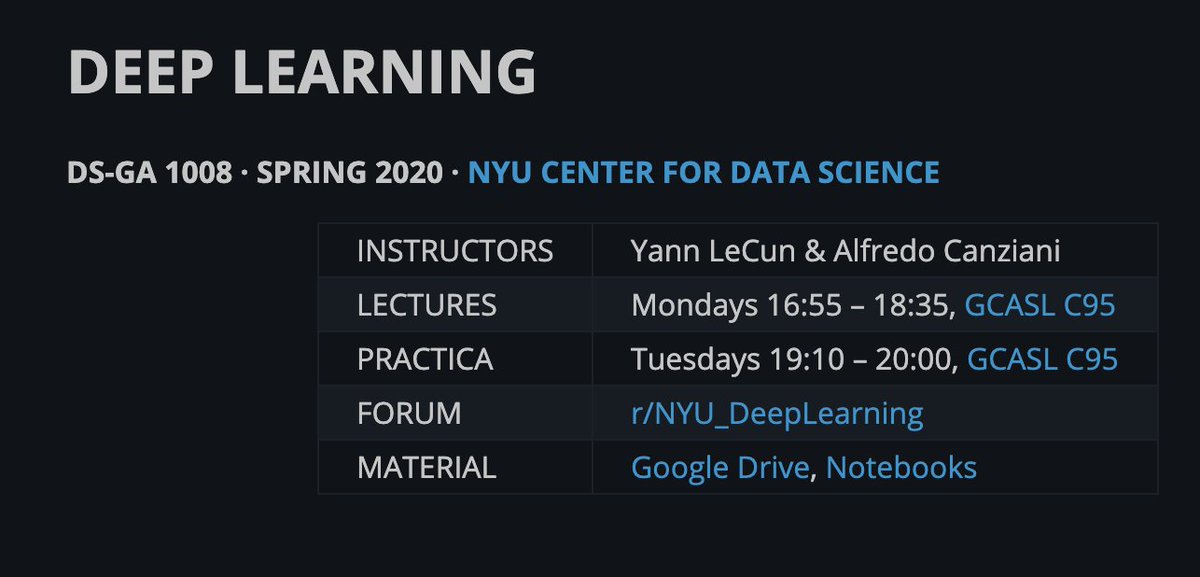
Deep Learning
NYU DS-GA 1008
Yann LeCun and Alfredo Canziani

This course covers the latest techniques in deep learning and representation learning with applications to computer vision, natural language understanding, and speech recognition.

https://t.co/cKzpDOBVl1


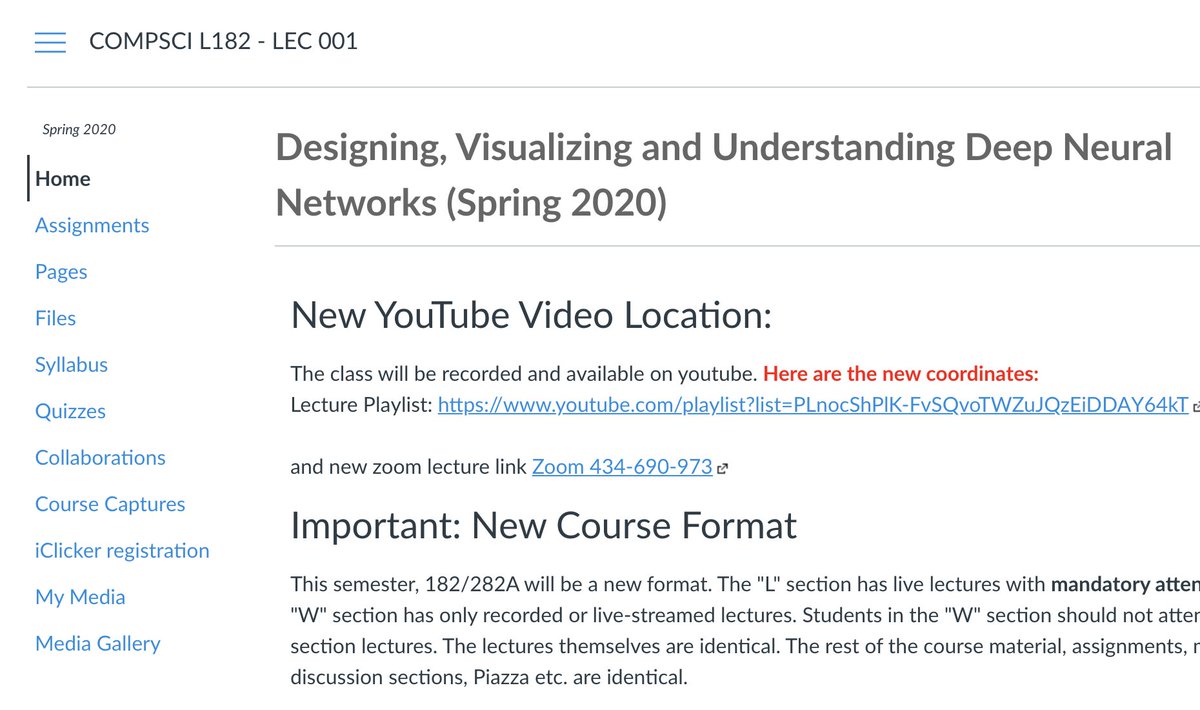
Designing, Visualizing, and Understanding Deep Neural Networks
UC Berkeley CS L182
John Canny

A theoretical course focusing on design principles and best practices to design deep neural networks.

https://t.co/1TFUAIrAKb


Applied Machine Learning
Cornell Tech CS 5787
Volodymyr Kuleshov

A machine learning introductory course that starts from the very basics, covering all of the most important machine learning algorithms and how to apply them in practice.

https://t.co/hD5no8Pdfa

More from All

You May Also Like

हिमालय पर्वत की एक बड़ी पवित्र गुफा थी।उस गुफा के निकट ही गंगा जी बहती थी।एक बार देवर्षि नारद विचरण करते हुए वहां आ पहुंचे।वह परम पवित्र गुफा नारद जी को अत्यंत सुहावनी लगी।वहां का मनोरम प्राकृतिक दृश्य,पर्वत,नदी और वन देख उनके हृदय में श्रीहरि विष्णु की भक्ति अत्यंत बलवती हो उठी।


और देवर्षि नारद वहीं बैठकर तपस्या में लीन हो गए।इन्द्र नारद की तपस्या से घबरा गए।उन्हें हमेशा की तरह अपना सिंहासन व स्वर्ग खोने का डर सताने लगा।इसलिए इन्द्र ने नारद की तपस्या भंग करने के लिए कामदेव को उनके पास भेज दिया।वहां पहुंच कामदेव ने अपनी माया से वसंतऋतु को उत्पन्न कर दिया।


पेड़ और पौधों पर रंग बिरंगे फूल खिल गए और कोयलें कूकने लगी,पक्षी चहकने लगे।शीतल,मंद,सुगंधित और सुहावनी हवा चलने लगी।रंभा आदि अप्सराएं नाचने लगीं ।किन्तु कामदेव की किसी भी माया का नारद पे कोई प्रभाव नहीं पड़ा।तब कामदेव को डर सताने लगा कि कहीं नारद क्रोध में आकर मुझे श्राप न देदें।

जैसे ही नारद ने अपनी आंखें खोली, उसी क्षण कामदेव ने उनसे क्षमा मांगी।नारद मुनि को तनिक भी क्रोध नहीं आया और उन्होने शीघ्र ही कामदेव को क्षमा कर दिया।कामदेव प्रसन्न होकर वहां से चले गए।कामदेव के चले जाने पर देवर्षि के मन में अहंकार आ गया कि मैने कामदेव को हरा दिया।

नारद फिर कैलाश जा पहुंचे और शिवजी को अपनी विजयगाथा सुनाई।शिव समझ गए कि नारद अहंकारी हो गए हैं और अगर ये बात विष्णु जी जान गए तो नारद के लिए अच्छा नहीं होगा।ये सोचकर शिवजी ने नारद को भगवन विष्णु को ये बात बताने के लीए मना किया। परंतु नारद जी को ये बात उचित नहीं लगी।