What if you could avoid competition forever?

How to Build a Personal Monopoly with @david_perell + @jackbutcher

THREAD👇

1/ What is a personal monopoly?

The intersection of...

• Curiosity: What do you care about?

• Competence: What are you good at?

• Character: Who are you?

These combinations SHRINK the area of competition.

"Competition is for losers."
@peterthiel
2/ Where to Start

"You can't connect the dots looking forward: you can only connect them looking backwards."
-- Steve Jobs

Trust your curiosity and intuition.

Only curiosity creates uniqueness.
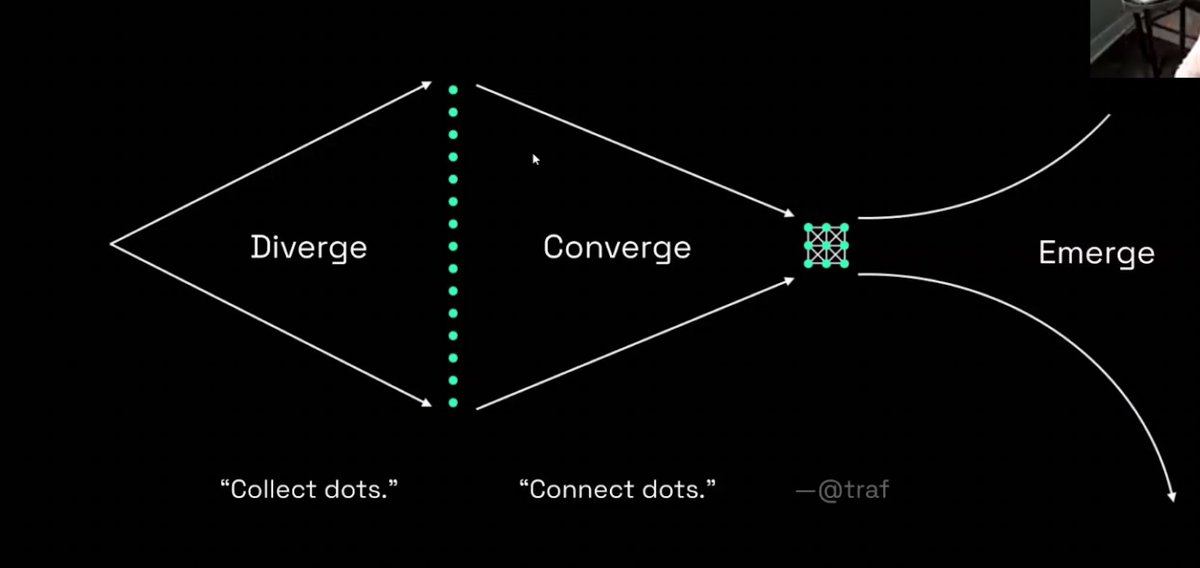
3/ BUTCHER'S FRAMEWORK

DICE = Diverge, Converge, Emerge

DIVERGE (Collect Dots): Pursue things you're interested in

CONVERGE (Connect Dots): Find the connections among interesting things

EMERGE: You've found where to start. Now attack it everyday.
4/ "Make a single decision to eliminate 1,000 decisions."
-- @tferriss

For @visualizevalue + @jackbutcher: How do you visualize something to make it simpler?

Eliminate anything that doesn't compound towards achieving that goal.
5/ PERELL'S PERSONAL MONOPOLY FRAMEWORK

CREATE
• Write + publish every day
CONVERSE
• Talk with interesting people
CONSUME
• Read/Listen/Watch
CLARIFY
• Crystallize your monopoly
6/ PERELL'S NICHE FRAMEWORK

"Don't find a niche. Create one."
-- @david_perell

The Process:
• Have a conversation.
• Share on Twitter.
• Get FEEDBACK.
• Create an Essay.
• Get FEEDBACK.
• Distribute via Book/Course

Iterate to make the original idea completely new.
7/ "Whenever you have an idea, ask yourself, what changed about the world?"
@david_perell

What led to the rise of Personal Monopolies?

1) Globalization
2) Computers and Robotics
3) Everybody is internet connected
8/ "An army of robots is freely available - it's just packed in data centers for heat and space efficiency."
@naval

Whenever you...
• Tweet
• Blog
• Podcast

You use that army.
9/ The Personal Monopoly Path

"The world is very efficient, so the people that succeed are the ones irrationally passionate and patient."
-- @naval

This isn't a short-term journey.

Dedicate 10+ yrs to it and winning is inevitable.

More from Chris Hladczuk

More from Education

Time for some thoughts on schools given the revised SickKids document and the fact that ON decided to leave most schools closed. ON is not the only jurisdiction to do so, but important to note that many jurisdictions would not have done so -even with higher incidence rates.


As outlined in the tweet by @NishaOttawa yesterday, the situation is complex, and not a simple right or wrong https://t.co/DO0v3j9wzr. And no one needs to list all the potential risks and downsides of prolonged school closures.


On the other hand: while school closures do not directly protect our most vulnerable in long-term care at all, one cannot deny that any factor potentially increasing community transmission may have an indirect effect on the risk to these institutions, and on healthcare.

The question is: to what extend do schools contribute to transmission, and how to balance this against the risk of prolonged school closures. The leaked data from yesterday shows a mixed picture -schools are neither unicorns (ie COVID free) nor infernos.

Assuming this data is largely correct -while waiting for an official publication of the data, it shows first and foremost the known high case numbers at Thorncliff, while other schools had been doing very well -are safe- reiterating the impact of socioeconomics on the COVID risk.
When the university starts sending out teaching evaluation reminders, I tell all my classes about bias in teaching evals, with links to the evidence. Here's a version of the email I send, in case anyone else wants to poach from it.

1/16


When I say "anyone": needless to say, the people who are benefitting from the bias (like me) are the ones who should helping to correct it. Men in math, this is your job! Of course, it should also be dealt with at the institutional level, not just ad hoc.
OK, on to my email:
2/16

"You may have received automated reminders about course evals this fall. I encourage you to fill the evals out. I'd be particularly grateful for written feedback about what worked for you in the class, what was difficult, & how you ultimately spent your time for this class.

3/16

However, I don't feel comfortable just sending you an email saying: "please take the time to evaluate me". I do think student evaluations of teachers can be valuable: I have made changes to my teaching style as a direct result of comments from student teaching evaluations.
4/16

But teaching evaluations have a weakness: they are not an unbiased estimator of teaching quality. There is strong evidence that teaching evals tend to favour men over women, and that teaching evals tend to favour white instructors over non-white instructors.
5/16

You May Also Like

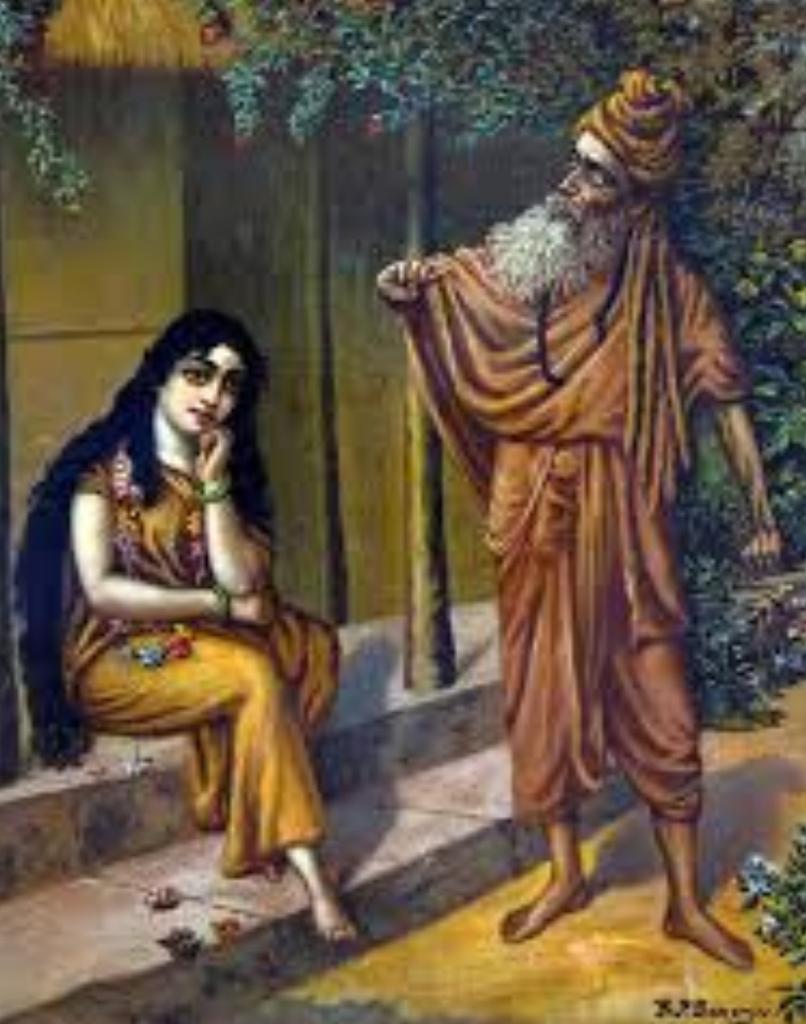
प्राचीन काल में गाधि नामक एक राजा थे।उनकी सत्यवती नाम की एक पुत्री थी।राजा गाधि ने अपनी पुत्री का विवाह महर्षि भृगु के पुत्र से करवा दिया।महर्षि भृगु इस विवाह से बहुत प्रसन्न हुए और उन्होने अपनी पुत्रवधु को आशीर्वाद देकर उसे कोई भी वर मांगने को कहा।


सत्यवती ने महर्षि भृगु से अपने तथा अपनी माता के लिए पुत्र का वरदान मांगा।ये जानकर महर्षि भृगु ने यज्ञ किया और तत्पश्चात सत्यवती और उसकी माता को अलग-अलग प्रकार के दो चरू (यज्ञ के लिए पकाया हुआ अन्न) दिए और कहा कि ऋतु स्नान के बाद तुम्हारी माता पुत्र की इच्छा लेकर पीपल का आलिंगन...

...करें और तुम भी पुत्र की इच्छा लेकर गूलर वृक्ष का आलिंगन करना। आलिंगन करने के बाद चरू का सेवन करना, इससे तुम दोनो को पुत्र प्राप्ति होगी।परंतु मां बेटी के चरू आपस में बदल जाते हैं और ये महर्षि भृगु अपनी दिव्य दृष्टि से देख लेते हैं।

भृगु ऋषि सत्यवती से कहते हैं,"पुत्री तुम्हारा और तुम्हारी माता ने एक दुसरे के चरू खा लिए हैं।इस कारण तुम्हारा पुत्र ब्राह्मण होते हुए भी क्षत्रिय सा आचरण करेगा और तुम्हारी माता का पुत्र क्षत्रिय होकर भी ब्राह्मण सा आचरण करेगा।"
इस पर सत्यवती ने भृगु ऋषि से बड़ी विनती की।


सत्यवती ने कहा,"मुझे आशीर्वाद दें कि मेरा पुत्र ब्राह्मण सा ही आचरण करे।"तब महर्षि ने उसे ये आशीर्वाद दे दिया कि उसका पुत्र ब्राह्मण सा ही आचरण करेगा किन्तु उसका पौत्र क्षत्रियों सा व्यवहार करेगा। सत्यवती का एक पुत्र हुआ जिसका नाम जम्दाग्नि था जो सप्त ऋषियों में से एक हैं।
I’m torn on how to approach the idea of luck. I’m the first to admit that I am one of the luckiest people on the planet. To be born into a prosperous American family in 1960 with smart parents is to start life on third base. The odds against my very existence are astronomical.


I’ve always felt that the luckiest people I know had a talent for recognizing circumstances, not of their own making, that were conducive to a favorable outcome and their ability to quickly take advantage of them.

In other words, dumb luck was just that, it required no awareness on the person’s part, whereas “smart” luck involved awareness followed by action before the circumstances changed.

So, was I “lucky” to be born when I was—nothing I had any control over—and that I came of age just as huge databases and computers were advancing to the point where I could use those tools to write “What Works on Wall Street?” Absolutely.

Was I lucky to start my stock market investments near the peak of interest rates which allowed me to spend the majority of my adult life in a falling rate environment? Yup.