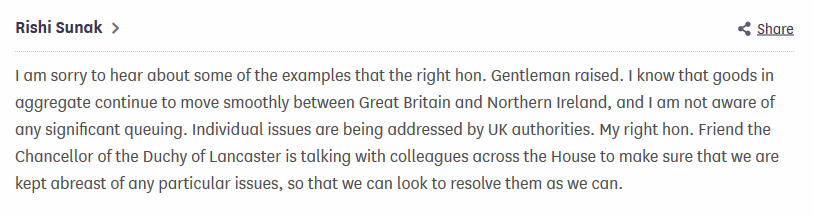
Ten days in and it seems the government's post-Brexit economic policy is to ignore reality, priority and choice, and just claim with no evidence that everything is going to be great. This, needless to say, is dangerous territory. Exhibit 1... 1/
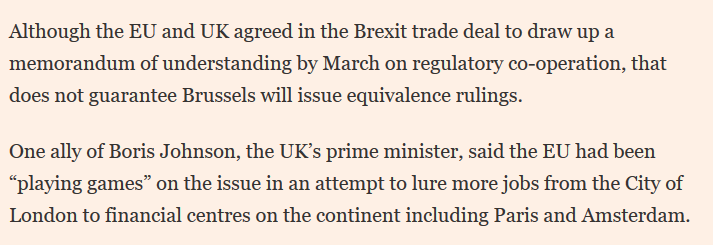
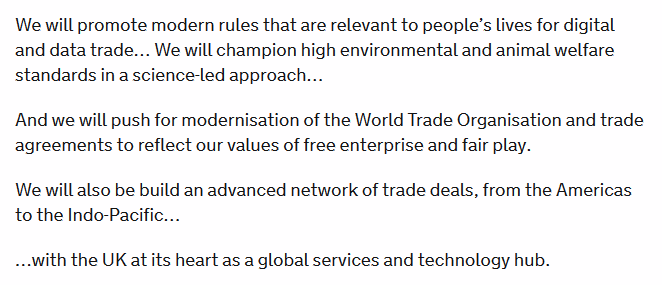
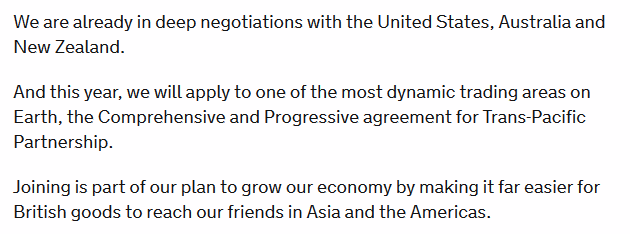
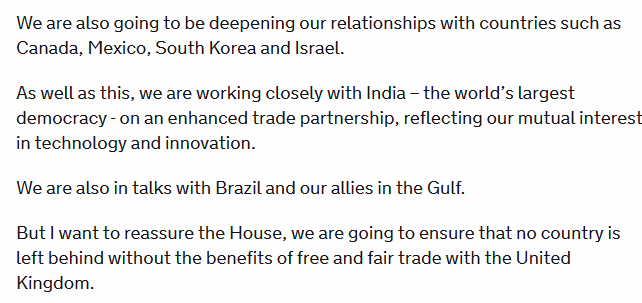
Right now they don't. Big talk, little reality. Tough world. 12/ end
No US deal yet, instead we have the usual warm words about being deep in talks, and the CPTPP. But for what? If we get deals with Australia and NZ we'll have deals with 10 of 12 CPTPP countries. How will joining then help goods trade? And why goods, not services? 7/ pic.twitter.com/NaiUXr1y4f
— David Henig (@DavidHenigUK) January 12, 2021
More from David Henig
This potential benefit list from CPTPP is not the longest and is still misleading. Those Malaysian whisky tariffs - emilimated over 15 years (if they don't seek any specific exemption for UK). Those rules of origin benefits? Only apply to import / export to CPTPP countries. https://t.co/9TbheOVhsR
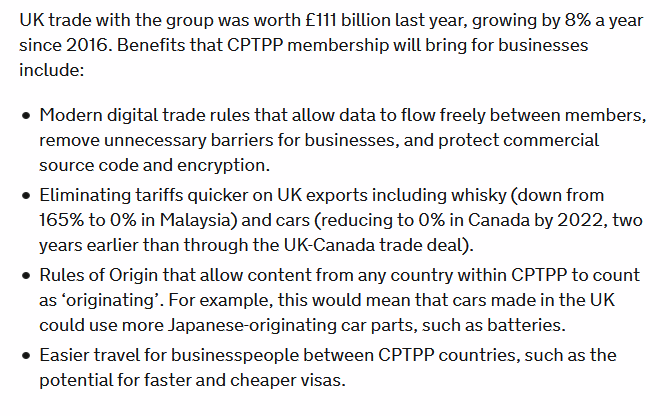
Here's my more realistic take on CPTPP. Economic gains limited, but politically in terms of trade this makes some sort of sense, these are likely allies. DIT doesn't say this, presumably the idea of Australia or Canada as our equal upsets them.
As previously noted agriculture interests in Australia and New Zealand expect us to reach generous agreements in WTO talks and bilaterals before acceding to CPTPP. So this isn't a definite. Oh and Australia wants to know if we'll allow hormone treated beef
Ultimately trade deals are political, and the UK really wants CPTPP as part of the pivot to indo-pacific, and some adherents also hope it forces us to change food laws without having to do it in a US deal (isn't certain if this is the case or not).
If we can accede to CPTPP without having to make changes to domestic laws it is fine. Just shouldn't be our priority, as it does little for services, is geographically remote, and hardly cutting edge on issues like climate change or animal welfare.
Tomorrow we will formally apply to join #CPTPP \U0001f1ec\U0001f1e7
— Liz Truss (@trussliz) January 31, 2021
Membership will help drive an export- led, jobs-led recovery across \U0001f1ec\U0001f1e7 bringing more opportunities to trade with fast growing Pacific nations. \U0001f30e
Read more here\U0001f447https://t.co/5sQhgW4vCM
Here's my more realistic take on CPTPP. Economic gains limited, but politically in terms of trade this makes some sort of sense, these are likely allies. DIT doesn't say this, presumably the idea of Australia or Canada as our equal upsets them.
Gather UK application to join CPTPP is finally about to be announced, not that it was exactly a secret. Economic value limited given distance and existing UK deals, not a particularly strong or modern agreement in areas of UK strength like services, but...
— David Henig (@DavidHenigUK) January 30, 2021
As previously noted agriculture interests in Australia and New Zealand expect us to reach generous agreements in WTO talks and bilaterals before acceding to CPTPP. So this isn't a definite. Oh and Australia wants to know if we'll allow hormone treated beef
Ultimately trade deals are political, and the UK really wants CPTPP as part of the pivot to indo-pacific, and some adherents also hope it forces us to change food laws without having to do it in a US deal (isn't certain if this is the case or not).
If we can accede to CPTPP without having to make changes to domestic laws it is fine. Just shouldn't be our priority, as it does little for services, is geographically remote, and hardly cutting edge on issues like climate change or animal welfare.
So many stories of new barriers to trade between UK and EU, but you might be thinking at some point these will run out. The government is certainly hoping so. Well they may slow down, but trade relations and regulations are not static, and changes will lead to further problems.
The likelihood of continued trade problems for a £650 bn trade relationship is why there should be a huge cross-government effort led by the Foreign Office and Department for International Trade to put in place the necessary resources to seek best results.
There isn't.
So the UK's relationship with the EU currently consists of two not particularly good deals and no consistent effort to manage current problems or prevent future ones. Joint committees are a second order problem to putting in place the right internal structures.
But that's been the consistent UK problem in relations with the EU since 2016. Lack of focus on getting the right internal structures, people, asks, strategy, too much attention on being tough and a single leader.
News just in. This doesn't necessarily mean the right structure being put into UK-EU relations. I suspect Frost's main role is to ensure no renegotiations with the EU.
Also, wonder what this says about the PM's trust in Michael Gove?
The likelihood of continued trade problems for a £650 bn trade relationship is why there should be a huge cross-government effort led by the Foreign Office and Department for International Trade to put in place the necessary resources to seek best results.
There isn't.
So the UK's relationship with the EU currently consists of two not particularly good deals and no consistent effort to manage current problems or prevent future ones. Joint committees are a second order problem to putting in place the right internal structures.
But that's been the consistent UK problem in relations with the EU since 2016. Lack of focus on getting the right internal structures, people, asks, strategy, too much attention on being tough and a single leader.
News just in. This doesn't necessarily mean the right structure being put into UK-EU relations. I suspect Frost's main role is to ensure no renegotiations with the EU.
Also, wonder what this says about the PM's trust in Michael Gove?
NEW: David Frost is joining Boris Johnson\u2019s Cabinet! The peer has been appointed a minister at the Cabinet Office, effective March 1.
— Sebastian Payne (@SebastianEPayne) February 17, 2021
Frost will also chair the partnership council overseeing the UK-EU trade deal and oversee reform to "maximise on the opportunities of Brexit"
Not the easiest to follow, but for those interested in the big picture of trade relations between US, EU and China this exchange between @alanbeattie and @IanaDreyer is an essential read. Real debate on key issues, and good points on both sides.
Also reading this from @gideonrachman on EU-China. My view (cynically?) - that EU-China is a deal that makes a lot of sense given a probably unresolvable trade policy superpower triangle with the US, and best for the EU to move while China will.
The US and EU roughly agree on China that it should do some things differently, but not really the details of what those are. Meanwhile the EU and US have long standing trade policy differences, which neither (or their key stakeholders) prioritise resolving.
For the EU, the China deal has sent a message to the new US administration, you can't just tell us what to do. And delivered some (probably marginal in reality) benefits to business. For China, this is the 3rd deal with EU or US in 12 months. Pretty clear strategy there.
The key assumption that lies at the heart of too much writing on EU-US relations is that the two should cooperate on trade. After 25 years of largely failing to do so, I'd suggest we might want to question that a bit more deeply.
V good points but overall I stick with the conclusion that this is a v risky deal.
— Alan Beattie (@alanbeattie) January 5, 2021
1. It\u2019s overstating it to say that COM now has final say over investment. FDI screening remains a MS competency. COM has had to take a v secondary supporting role over Huawei and 5G.
1/n https://t.co/RVg2jnoFgK
Also reading this from @gideonrachman on EU-China. My view (cynically?) - that EU-China is a deal that makes a lot of sense given a probably unresolvable trade policy superpower triangle with the US, and best for the EU to move while China will.
The US and EU roughly agree on China that it should do some things differently, but not really the details of what those are. Meanwhile the EU and US have long standing trade policy differences, which neither (or their key stakeholders) prioritise resolving.
For the EU, the China deal has sent a message to the new US administration, you can't just tell us what to do. And delivered some (probably marginal in reality) benefits to business. For China, this is the 3rd deal with EU or US in 12 months. Pretty clear strategy there.
The key assumption that lies at the heart of too much writing on EU-US relations is that the two should cooperate on trade. After 25 years of largely failing to do so, I'd suggest we might want to question that a bit more deeply.
More from Brexit

#Brexitadventcalendar
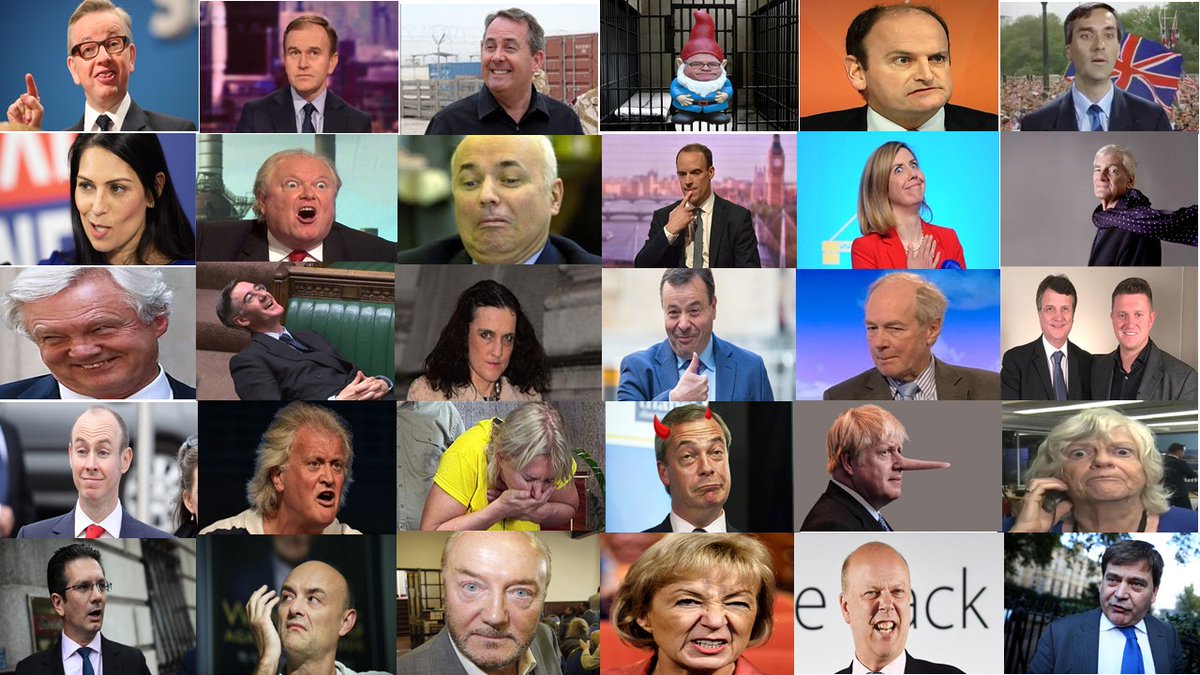
31 liars & hypocrites who facilitated brexit
Some are mad, some are bad
All are millionaires, some are billionaires
They’ll profit from UK companies failing, keep their money abroad to avoid UK tax and travel freely with their EU passports
#RejoinEU
https://t.co/mZRr9u1RPb
https://t.co/BY6hKloR9d
https://t.co/NdC0ltLeSM
https://t.co/BLnRLotso7
31 liars & hypocrites who facilitated brexit
Some are mad, some are bad
All are millionaires, some are billionaires
They’ll profit from UK companies failing, keep their money abroad to avoid UK tax and travel freely with their EU passports
#RejoinEU
https://t.co/mZRr9u1RPb
A brexit advent calendar to count down to loss of our EU rights
— European Unity #FBPE \U0001f1ea\U0001f1fa\U0001f4b6\u2b50\ufe0f (@EuropeanUnity1) December 31, 2020
Box 31: Boris Johnson told us:
\u201cI\u2019m in favour of the single market\u201d
\u201cThe cost of getting out will be virtually nil\u201d
\u201cWe have an oven ready deal\u201d
\u201cThere is no threat to the Erasmus scheme\u201d
\u201cF**k business\u201d pic.twitter.com/w8KxDJYV4x
https://t.co/BY6hKloR9d
A brexit advent calendar to count down to loss of our EU rights
— European Unity #FBPE \U0001f1ea\U0001f1fa\U0001f4b6\u2b50\ufe0f (@EuropeanUnity1) December 30, 2020
Box 30: Nigel Farage told us:
\u201cIn a 52-48 referendum this would be unfinished business by a long way\u201d
\u201cI never promised brexit would be a huge success\u201d
\u201cIf brexit is a disaster, I will go and live abroad\u201d pic.twitter.com/UfO9gzoUPD
https://t.co/NdC0ltLeSM
A brexit advent calendar to count down to loss of our EU rights
— European Unity #FBPE \U0001f1ea\U0001f1fa\U0001f4b6\u2b50\ufe0f (@EuropeanUnity1) December 29, 2020
Box 29: Andrea Leadsom told us:
\u201cI don\u2019t think the UK should leave the EU. It would be a disaster for our economy & lead to a decade of uncertainty\u201d
\u201cMy expectation is that there will not be an economic impact\u201d pic.twitter.com/SMSQ6ruG2h
https://t.co/BLnRLotso7
A brexit advent calendar to count down to loss of our EU rights
— European Unity #FBPE \U0001f1ea\U0001f1fa\U0001f4b6\u2b50\ufe0f (@EuropeanUnity1) December 28, 2020
Box 28: Andrew Bridgen told us:
\u201cAs an English person I have the right to go to Ireland, I believe I can ask for a passport can\u2019t I?\u201d
\u201cWe won\u2019t be crashing out, we\u2019ll be cashing in\u201d pic.twitter.com/jFINFu8xNe


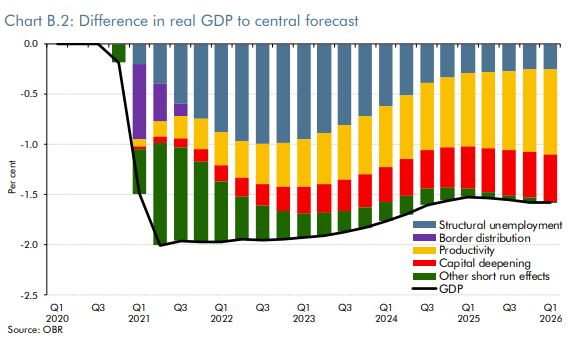
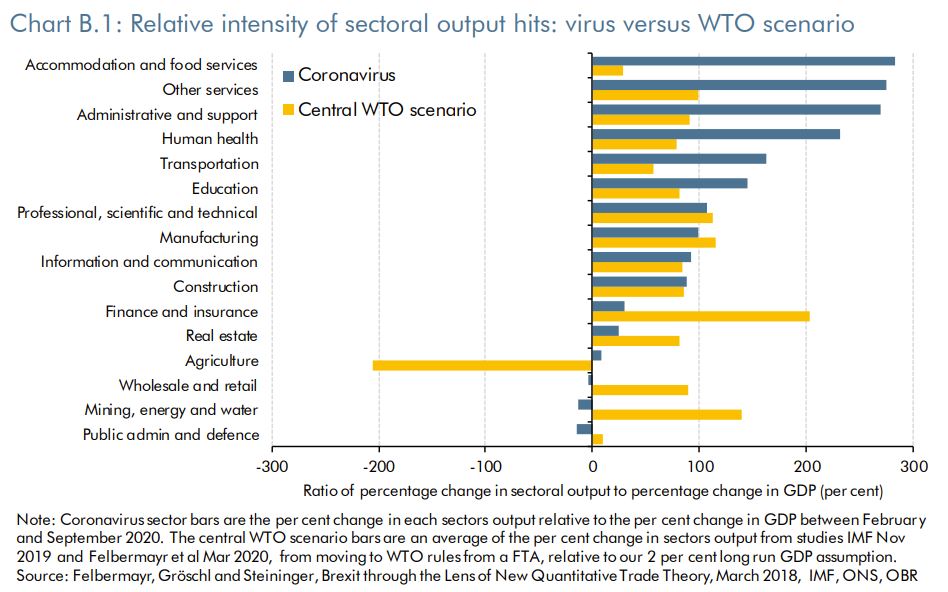

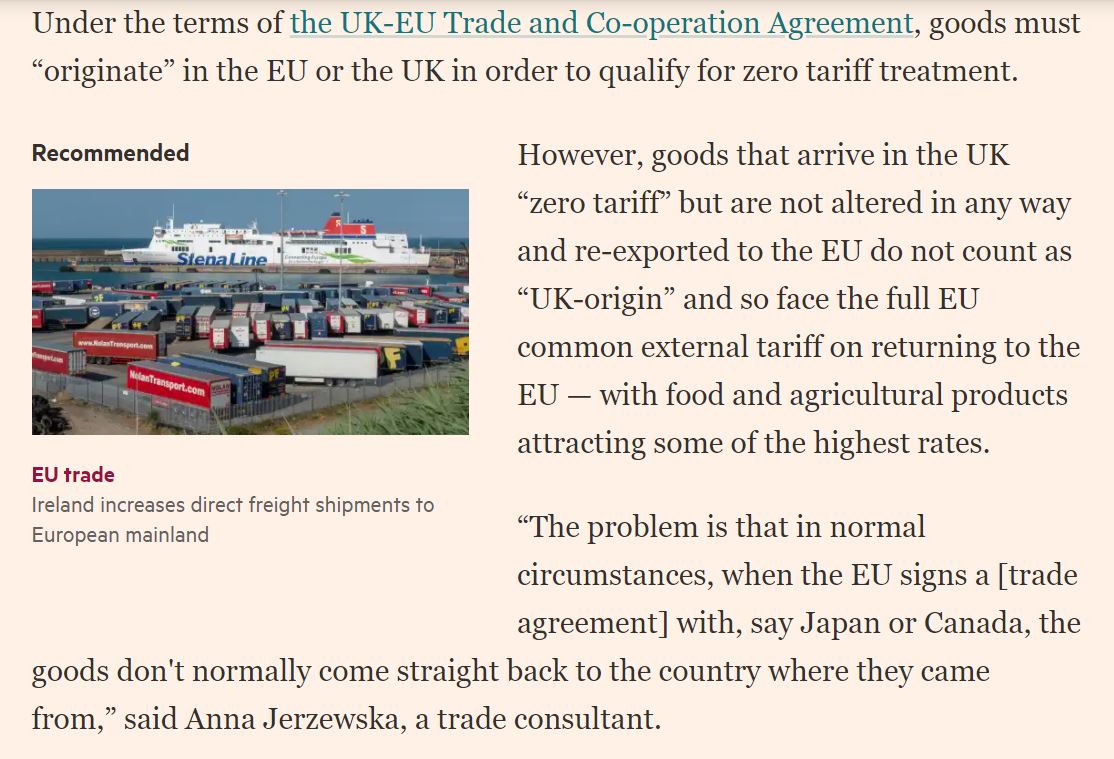
So many stories of new barriers to trade between UK and EU, but you might be thinking at some point these will run out. The government is certainly hoping so. Well they may slow down, but trade relations and regulations are not static, and changes will lead to further problems.
The likelihood of continued trade problems for a £650 bn trade relationship is why there should be a huge cross-government effort led by the Foreign Office and Department for International Trade to put in place the necessary resources to seek best results.
There isn't.
So the UK's relationship with the EU currently consists of two not particularly good deals and no consistent effort to manage current problems or prevent future ones. Joint committees are a second order problem to putting in place the right internal structures.
But that's been the consistent UK problem in relations with the EU since 2016. Lack of focus on getting the right internal structures, people, asks, strategy, too much attention on being tough and a single leader.
News just in. This doesn't necessarily mean the right structure being put into UK-EU relations. I suspect Frost's main role is to ensure no renegotiations with the EU.
Also, wonder what this says about the PM's trust in Michael Gove?
The likelihood of continued trade problems for a £650 bn trade relationship is why there should be a huge cross-government effort led by the Foreign Office and Department for International Trade to put in place the necessary resources to seek best results.
There isn't.
So the UK's relationship with the EU currently consists of two not particularly good deals and no consistent effort to manage current problems or prevent future ones. Joint committees are a second order problem to putting in place the right internal structures.
But that's been the consistent UK problem in relations with the EU since 2016. Lack of focus on getting the right internal structures, people, asks, strategy, too much attention on being tough and a single leader.
News just in. This doesn't necessarily mean the right structure being put into UK-EU relations. I suspect Frost's main role is to ensure no renegotiations with the EU.
Also, wonder what this says about the PM's trust in Michael Gove?
NEW: David Frost is joining Boris Johnson\u2019s Cabinet! The peer has been appointed a minister at the Cabinet Office, effective March 1.
— Sebastian Payne (@SebastianEPayne) February 17, 2021
Frost will also chair the partnership council overseeing the UK-EU trade deal and oversee reform to "maximise on the opportunities of Brexit"
You May Also Like











Recently, the @CNIL issued a decision regarding the GDPR compliance of an unknown French adtech company named "Vectaury". It may seem like small fry, but the decision has potential wide-ranging impacts for Google, the IAB framework, and today's adtech. It's thread time! 👇
It's all in French, but if you're up for it you can read:
• Their blog post (lacks the most interesting details): https://t.co/PHkDcOT1hy
• Their high-level legal decision: https://t.co/hwpiEvjodt
• The full notification: https://t.co/QQB7rfynha
I've read it so you needn't!
Vectaury was collecting geolocation data in order to create profiles (eg. people who often go to this or that type of shop) so as to power ad targeting. They operate through embedded SDKs and ad bidding, making them invisible to users.
The @CNIL notes that profiling based off of geolocation presents particular risks since it reveals people's movements and habits. As risky, the processing requires consent — this will be the heart of their assessment.
Interesting point: they justify the decision in part because of how many people COULD be targeted in this way (rather than how many have — though they note that too). Because it's on a phone, and many have phones, it is considered large-scale processing no matter what.
It's all in French, but if you're up for it you can read:
• Their blog post (lacks the most interesting details): https://t.co/PHkDcOT1hy
• Their high-level legal decision: https://t.co/hwpiEvjodt
• The full notification: https://t.co/QQB7rfynha
I've read it so you needn't!
Vectaury was collecting geolocation data in order to create profiles (eg. people who often go to this or that type of shop) so as to power ad targeting. They operate through embedded SDKs and ad bidding, making them invisible to users.
The @CNIL notes that profiling based off of geolocation presents particular risks since it reveals people's movements and habits. As risky, the processing requires consent — this will be the heart of their assessment.
Interesting point: they justify the decision in part because of how many people COULD be targeted in this way (rather than how many have — though they note that too). Because it's on a phone, and many have phones, it is considered large-scale processing no matter what.