✨ Today, I started my 8TH YEAR working full-time in #Bitcoin.
I've been a journalist, I've worked at a global exchange and I've spent thousands of hours down the rabbit hole.
If you're just starting out, here are the lessons I'd pass along 🧵
More from Bitcoin


$BTC: Two Bitcoin FUDs to address this Thanksgiving weekend:
1. China PlusToken FUD: Old news. Please see linked thread.
2. U.S. Treasury FUD: Read thread below...
1/ These news are much more relevant, as they imply severe trade-offs for people who want to keep their bitcoins undoxxed, with the cost and risks of doing so. I would not disqualify the tweet as mere FUD in the sense that what he posted is false. It should be taken seriously.
2/ For all we know, his decision of making it public before TG weekend may come out of the urgency of informing CT of a poignant anti-Bitcoin move by a Trump administration trying to cut lose ends before leaving office—not just "price manipulation" as I've seen suggested around.
3/ It implies the acceleration of a process already planned for for months in advance, not something he just came up with to "crash the market."
4/ In practicality, assuming this passes, it will have two major consencuences:
a. Armstrong's analysis is correct. And I would go further in saying, this regulation would leave the U.S. severely handicapped to continue to be the leader in the cryptocurrency industry worldwide.
1. China PlusToken FUD: Old news. Please see linked thread.
2. U.S. Treasury FUD: Read thread below...
$BTC:
— David Puell (@kenoshaking) November 27, 2020
1/ So here's the deal with all the PlusToken news we've been seeing recently in the crypto media. Thing is, tho it's just being reported now after the Chinese government put out official balances, @ErgoBTC blew this story open for the on-chain community over a year ago... https://t.co/epNjZaNcJ1
1/ These news are much more relevant, as they imply severe trade-offs for people who want to keep their bitcoins undoxxed, with the cost and risks of doing so. I would not disqualify the tweet as mere FUD in the sense that what he posted is false. It should be taken seriously.
2/ For all we know, his decision of making it public before TG weekend may come out of the urgency of informing CT of a poignant anti-Bitcoin move by a Trump administration trying to cut lose ends before leaving office—not just "price manipulation" as I've seen suggested around.
3/ It implies the acceleration of a process already planned for for months in advance, not something he just came up with to "crash the market."
4/ In practicality, assuming this passes, it will have two major consencuences:
a. Armstrong's analysis is correct. And I would go further in saying, this regulation would leave the U.S. severely handicapped to continue to be the leader in the cryptocurrency industry worldwide.

The #Bitcoin fundamentals of four generations of inflation, entitlements, and regulations are separate and apart from #Bitcoin the technological innovation. If we had sound money there would be little demand for Bitcoin. (1/13)
The notion that gold futures hold down the physical gold price or subjects the gold price to long-term manipulation is a canard. CME gold futures deliveries are settled with warrants meeting exact specifications met by approved refineries, carriers, and warehouses which (2/13)
ensures the integrity of delivery apart from the exchange. https://t.co/CpV1OBSsAT One need look no further than the 1980 Hunt Silver fiasco which illustrates how deliverable futures contracts provide for the discovery of an untapped silver supply resting in people's homes.(3/13)
Not so for Bitcoin. The CME Bakkt Bitcoin contract is for Bakkt Bitcoin. It is not Bitcoin. Bakkt Bitcoin is a cash-settled monthly futures contract. While the Bakkt Bitcoin has geographically storage of private keys, they are not your private keys. (4/13)
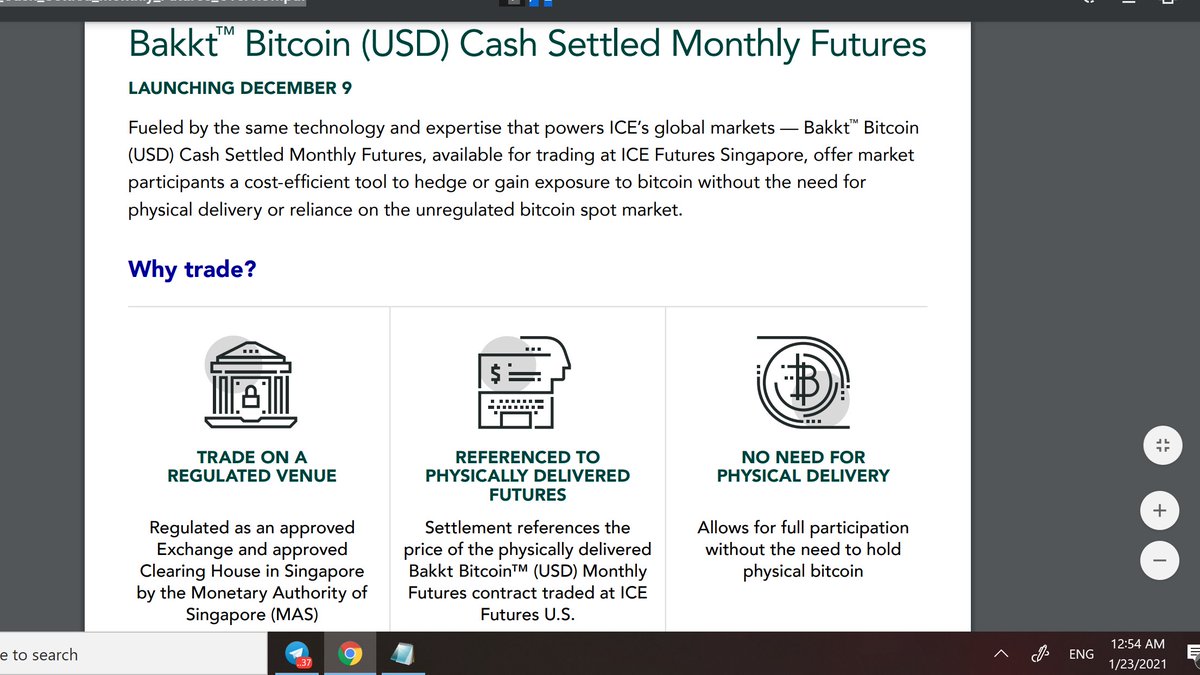
Not your keys, not your bitcoin. The Bitcoin Warehouse is an internal ledger The internal ledger operates separate and apart from the Bitcoin blockchain. The only interaction with the public blockchain is during the deposit of bitcoin into the Bakkt Warehouse and the (5/13)
@woonomic @realmaxkeiser @stacyherbert @ToneVaysBTC @UglyOldGoat1
— Abolition (@kalsangdolmanz) January 22, 2021
What do you guys think? https://t.co/mF1z9QL1My
The notion that gold futures hold down the physical gold price or subjects the gold price to long-term manipulation is a canard. CME gold futures deliveries are settled with warrants meeting exact specifications met by approved refineries, carriers, and warehouses which (2/13)
ensures the integrity of delivery apart from the exchange. https://t.co/CpV1OBSsAT One need look no further than the 1980 Hunt Silver fiasco which illustrates how deliverable futures contracts provide for the discovery of an untapped silver supply resting in people's homes.(3/13)
Not so for Bitcoin. The CME Bakkt Bitcoin contract is for Bakkt Bitcoin. It is not Bitcoin. Bakkt Bitcoin is a cash-settled monthly futures contract. While the Bakkt Bitcoin has geographically storage of private keys, they are not your private keys. (4/13)
Not your keys, not your bitcoin. The Bitcoin Warehouse is an internal ledger The internal ledger operates separate and apart from the Bitcoin blockchain. The only interaction with the public blockchain is during the deposit of bitcoin into the Bakkt Warehouse and the (5/13)