Daily Charts
Most Popular on 15th of January, 2021





Most Popular on 14th of January, 2021








Most Popular on 13th of January, 2021






I just finished Eric Adler's The Battle of the Classics, and wanted to say something about Joel Christiansen's review linked below. I am not sure what motivates the review (I speculate a bit below), but it gives a very misleading impression of the book. 1/x
The meat of the criticism is that the history Adler gives is insufficiently critical. Adler describes a few figures who had a great influence on how the modern US university was formed. It's certainly critical: it focuses on the social Darwinism of these figures. 2/x
Other insinuations and suggestions in the review seem wildly off the mark, distorted, or inappropriate-- for example, that the book is clickbaity (it is scholarly) or conservative (hardly) or connected to the events at the Capitol (give me a break). 3/x
The core question: in what sense is classics inherently racist? Classics is old. On Adler's account, it begins in ancient Rome and is revived in the Renaissance. Slavery (Christiansen's primary concern) is also very old. Let's say classics is an education for slaveowners. 4/x
It's worth remembering that literacy itself is elite throughout most of this history. Literacy is, then, also the education of slaveowners. We can honor oral and musical traditions without denying that literacy is, generally, good. 5/x
As someone\u2019s who\u2019s read the book, this review strikes me as tremendously unfair. It mostly faults Adler for not writing the book the reviewer wishes he had! https://t.co/pqpt5Ziivj
— Teresa M. Bejan (@tmbejan) January 12, 2021
The meat of the criticism is that the history Adler gives is insufficiently critical. Adler describes a few figures who had a great influence on how the modern US university was formed. It's certainly critical: it focuses on the social Darwinism of these figures. 2/x
Other insinuations and suggestions in the review seem wildly off the mark, distorted, or inappropriate-- for example, that the book is clickbaity (it is scholarly) or conservative (hardly) or connected to the events at the Capitol (give me a break). 3/x
The core question: in what sense is classics inherently racist? Classics is old. On Adler's account, it begins in ancient Rome and is revived in the Renaissance. Slavery (Christiansen's primary concern) is also very old. Let's say classics is an education for slaveowners. 4/x
It's worth remembering that literacy itself is elite throughout most of this history. Literacy is, then, also the education of slaveowners. We can honor oral and musical traditions without denying that literacy is, generally, good. 5/x
Most Popular on 12th of January, 2021



I want to talk about the key textual elements you might find in an Islamic manuscript. I'll focus on this manuscript, roughly 18th century, of an Arabic history of the rulers of Egypt called Nuzhat al-nāẓirīn, by Marʻī al-Karmī (d. 1623/4).
Budeiry Library (Jerusalem) MS 593 -jm
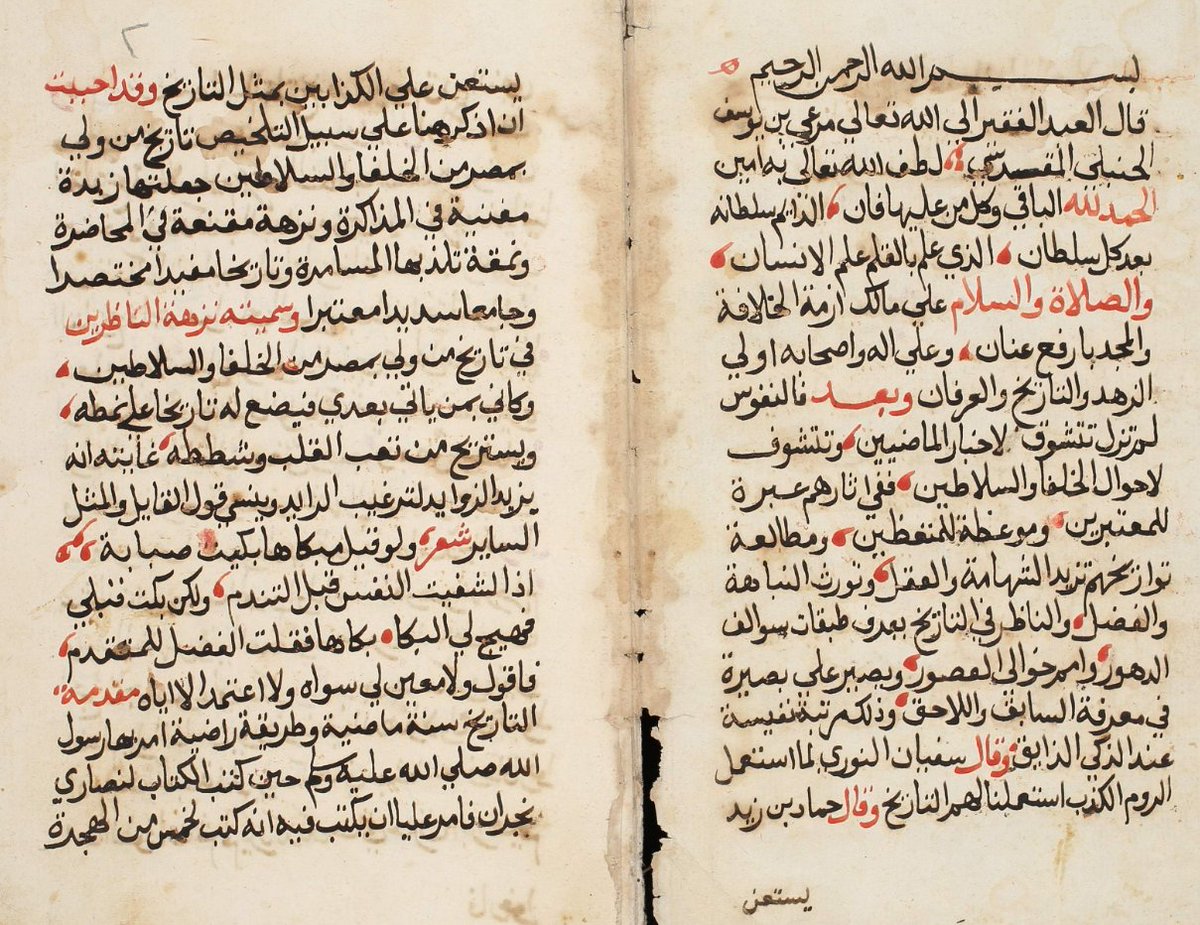
These texts have many elements designed to help the reader understand what they're saying, and choices by the scribe who copied the manuscript often help as well. Let's see what's here. -jm
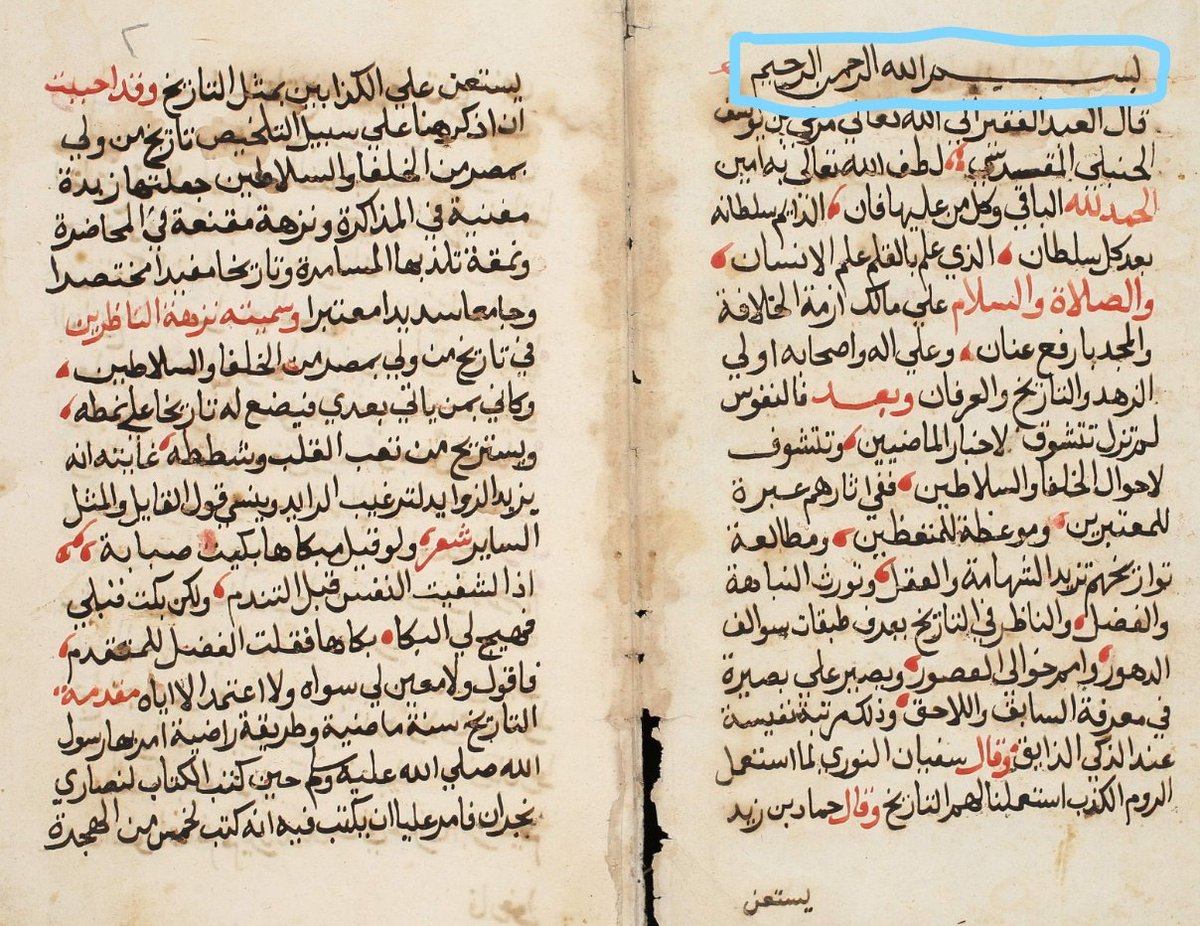
First, almost every Islamic text begins with the invocation "in the name of God, the compassionate, the merciful." The wording is never changed, and it's always in Arabic, no matter what language the text is, although you might add phrases like "and we ask God for help." -jm
Christians were able to do more experimentation with their invocations, as you can see from the examples here. https://t.co/wEPWRitCWA -jm
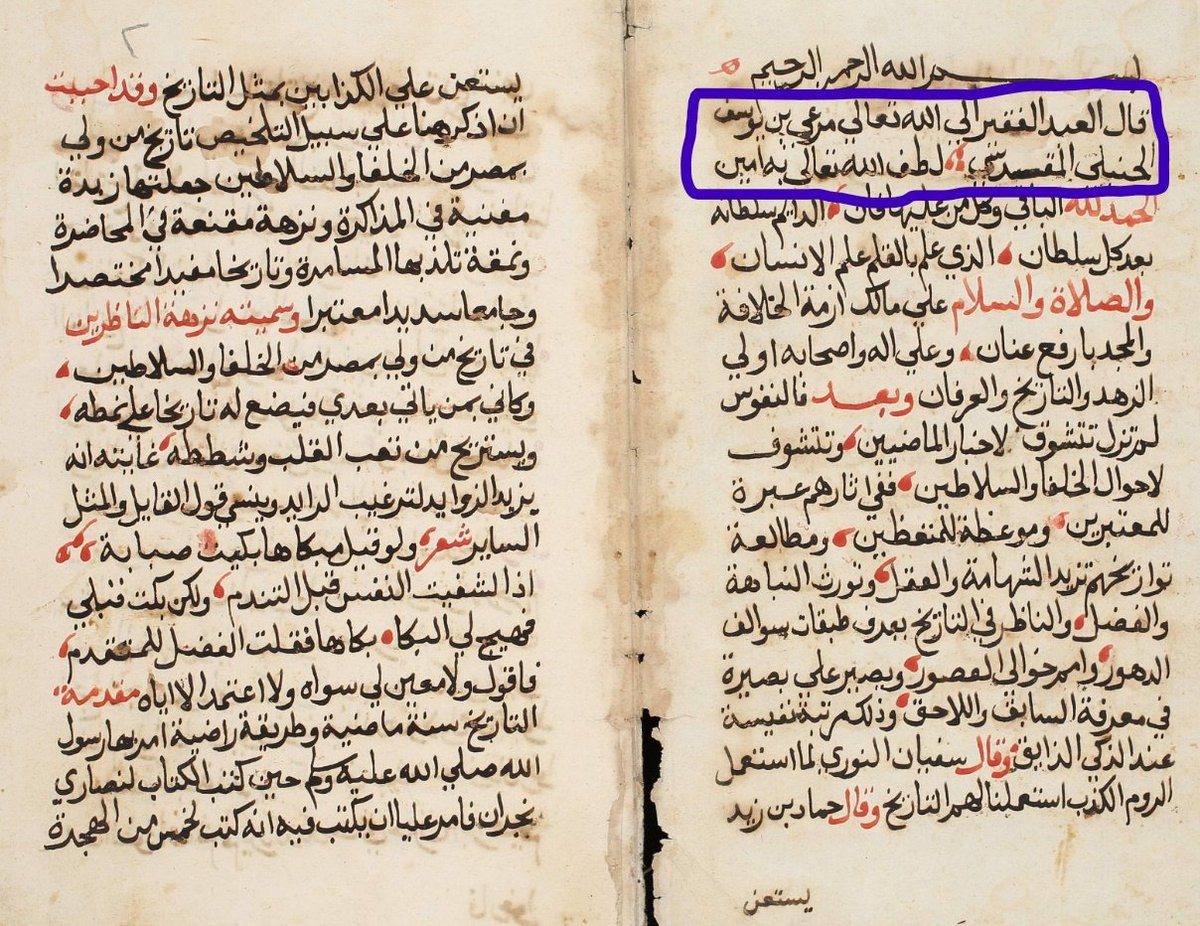
After the invocation (basmalah), you might have what this text has, which is an introduction of the author in the form "the poor slave of God [so-and-so] said..." often followed by a quick prayer for the author. -jm
Budeiry Library (Jerusalem) MS 593 -jm
These texts have many elements designed to help the reader understand what they're saying, and choices by the scribe who copied the manuscript often help as well. Let's see what's here. -jm
First, almost every Islamic text begins with the invocation "in the name of God, the compassionate, the merciful." The wording is never changed, and it's always in Arabic, no matter what language the text is, although you might add phrases like "and we ask God for help." -jm
Christians were able to do more experimentation with their invocations, as you can see from the examples here. https://t.co/wEPWRitCWA -jm
These little prayers are fun pic.twitter.com/hJYk2M01bO
— Josh Mugler (@J_mugs) February 16, 2019
After the invocation (basmalah), you might have what this text has, which is an introduction of the author in the form "the poor slave of God [so-and-so] said..." often followed by a quick prayer for the author. -jm
Most Popular on 11th of January, 2021


Most Popular on 10th of January, 2021






By corrupting global institutions, promoting hysterical data, publishing fraudulent science, and deploying propaganda on an unprecedented scale, Beijing transformed the snake oil of lockdowns into “science,” the greatest crime of the 21st century to
2/ The purpose of this letter is to request an expedited federal investigation into the scientific debate on major policy decisions during the COVID-19 crisis.
Downloadable PDF: https://t.co/gOX6sTSFbT
Archived Medium article:
3/ In early 2020, the public turned to the advice of scientific authorities when confronted with an apparent viral outbreak. Soon after, most nations followed the advice of prominent scientists and implemented restrictions commonly referred to as “lockdowns.”
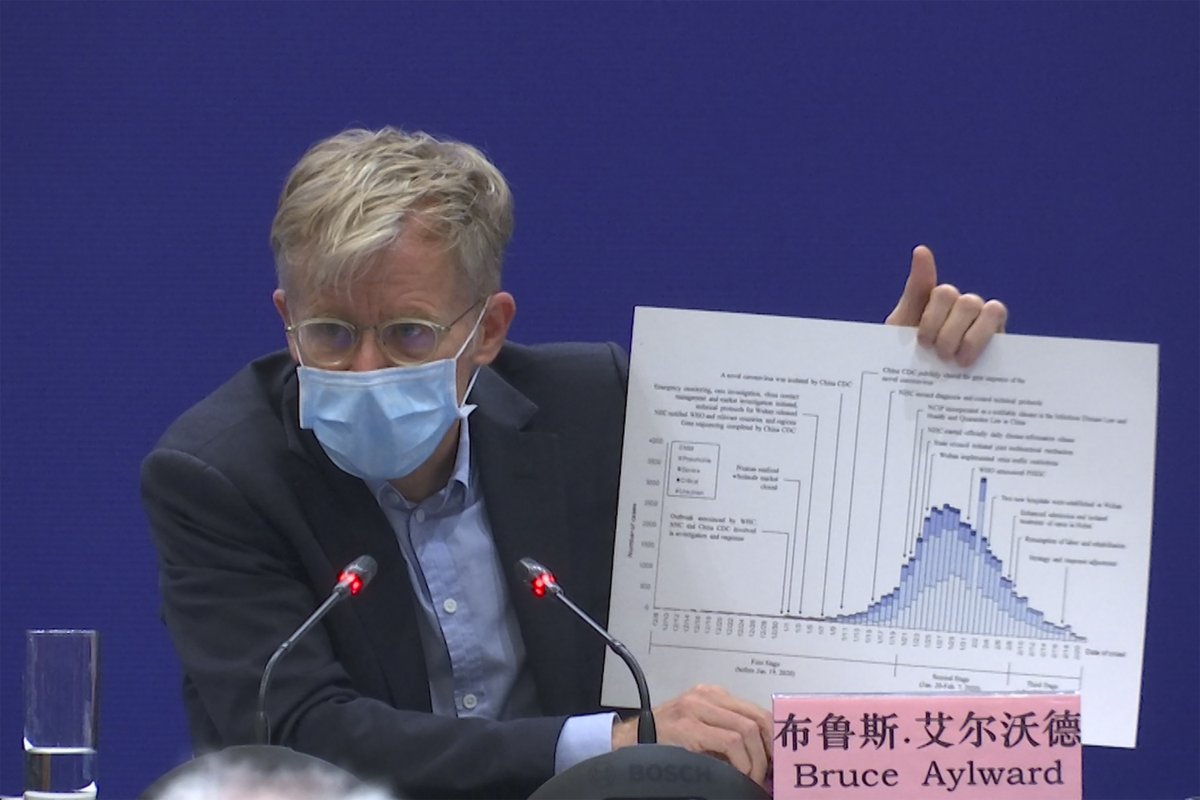
4/ While the policies varied by jurisdiction, in general they involved restrictions on gatherings and movements and the closure of schools, businesses, and public places, inspired by those imposed by the Chinese Communist Party (CCP) in Hubei Province.
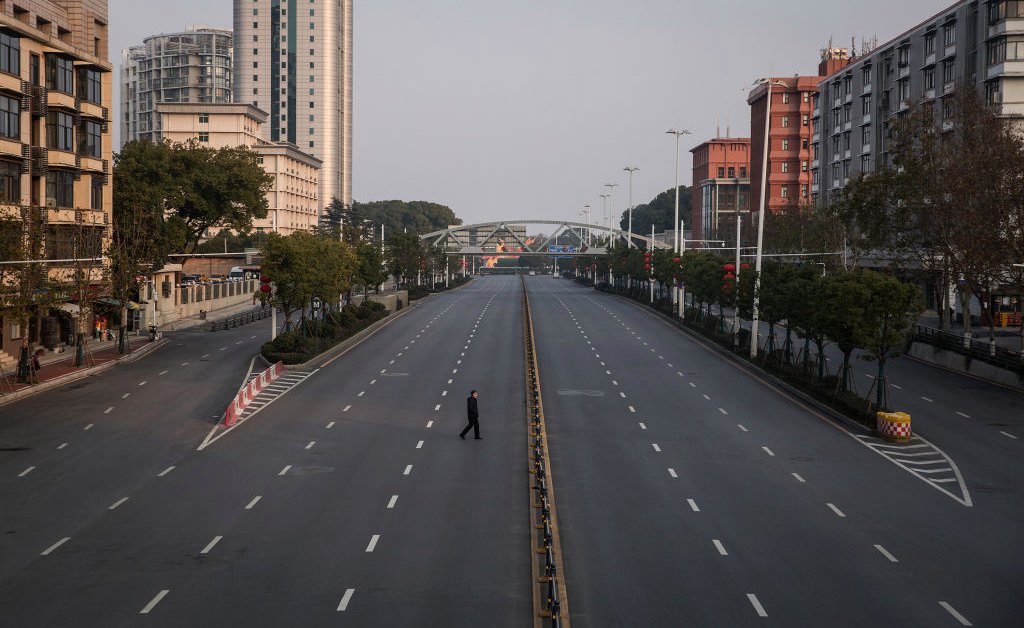
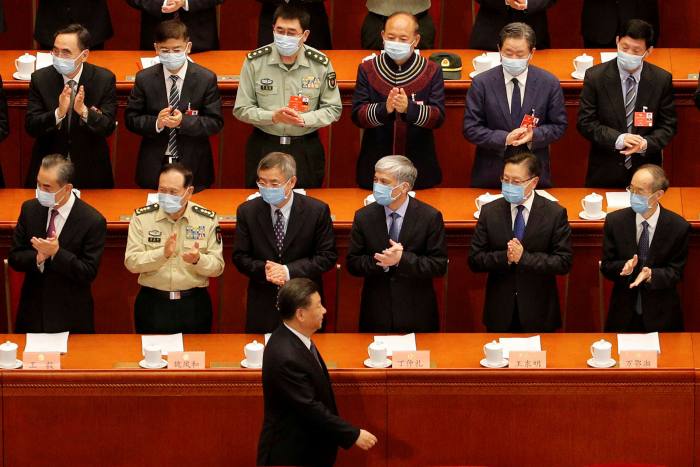
5/ SECTION 1 - LOCKDOWNS ORIGINATED ON THE ORDER OF XI JINPING, GENERAL SECRETARY OF THE CHINESE COMMUNIST PARTY, AND WERE PROPAGATED INTO GLOBAL POLICY BY THE WORLD HEALTH ORGANIZATION WITH LITTLE ANALYSIS OR LOGIC
2/ The purpose of this letter is to request an expedited federal investigation into the scientific debate on major policy decisions during the COVID-19 crisis.
Downloadable PDF: https://t.co/gOX6sTSFbT
Archived Medium article:
3/ In early 2020, the public turned to the advice of scientific authorities when confronted with an apparent viral outbreak. Soon after, most nations followed the advice of prominent scientists and implemented restrictions commonly referred to as “lockdowns.”
4/ While the policies varied by jurisdiction, in general they involved restrictions on gatherings and movements and the closure of schools, businesses, and public places, inspired by those imposed by the Chinese Communist Party (CCP) in Hubei Province.
5/ SECTION 1 - LOCKDOWNS ORIGINATED ON THE ORDER OF XI JINPING, GENERAL SECRETARY OF THE CHINESE COMMUNIST PARTY, AND WERE PROPAGATED INTO GLOBAL POLICY BY THE WORLD HEALTH ORGANIZATION WITH LITTLE ANALYSIS OR LOGIC