The first principles of selling online:
1. Increase the number of people who see your product.
2. Increase the percentage of people who see your product that buy it.
3. Increase the percentage of people who buy your product that rave about it.
Writing increases all three.
More from Dickie Bush 🚢


To master the creative process, give yourself permission to create junk.
This is one of the many things I learned diving into everything @jamesclear has published on creativity and building a writing habit.
Here's a thread of his best articles, tweets, and podcast appearances:
1/ Reasons @JamesClear writes
• Write for yourself
• Write to learn more
• Write to build a business
• Write to clarify your thoughts
But most importantly, writing is leadership at scale.
And it will carry your ideas further than
2/ Five steps to mastering the creative process
1) Give yourself permission to create junk
2) Create on a schedule
3) Finishing something
4) Stop judging your own work
5) Hold yourself accountable
I can't overstate the value of this resource 👇🏼
3/ How to overcome others (and yourself) judging your writing
• The first obstacle: overcoming your own judgment
• But once you start publishing, you will meet external judgment.
His advice comes from Mario Andretti:
Focus on the road, not the
4/ Three tips for getting started as a writer:
1) Publish on a schedule
2) Share your writing publicly
3) Write about what fascinates
This is one of the many things I learned diving into everything @jamesclear has published on creativity and building a writing habit.
Here's a thread of his best articles, tweets, and podcast appearances:
1/ Reasons @JamesClear writes
• Write for yourself
• Write to learn more
• Write to build a business
• Write to clarify your thoughts
But most importantly, writing is leadership at scale.
And it will carry your ideas further than
2/ Five steps to mastering the creative process
1) Give yourself permission to create junk
2) Create on a schedule
3) Finishing something
4) Stop judging your own work
5) Hold yourself accountable
I can't overstate the value of this resource 👇🏼
3/ How to overcome others (and yourself) judging your writing
• The first obstacle: overcoming your own judgment
• But once you start publishing, you will meet external judgment.
His advice comes from Mario Andretti:
Focus on the road, not the
4/ Three tips for getting started as a writer:
1) Publish on a schedule
2) Share your writing publicly
3) Write about what fascinates
3 tips for getting started as a writer
— James Clear (@JamesClear) March 20, 2019
1. Publish on a schedule. Consistency develops ability.
2. Share your writing publicly. Writing is a magnet. It attracts like-minded people.
3. Write about what fascinates you. You don't need to be an expert. Curiosity leads to expertise.
More from Writing


SHORT THREAD!
Simple Writing Trick to Avoid Plagiarism when using Templates
This may be useful for anyone but the examples here are more relevant to scholarship applicants
In other words, how to avoid the copy & paste syndrome.
Kindly RT to help others.
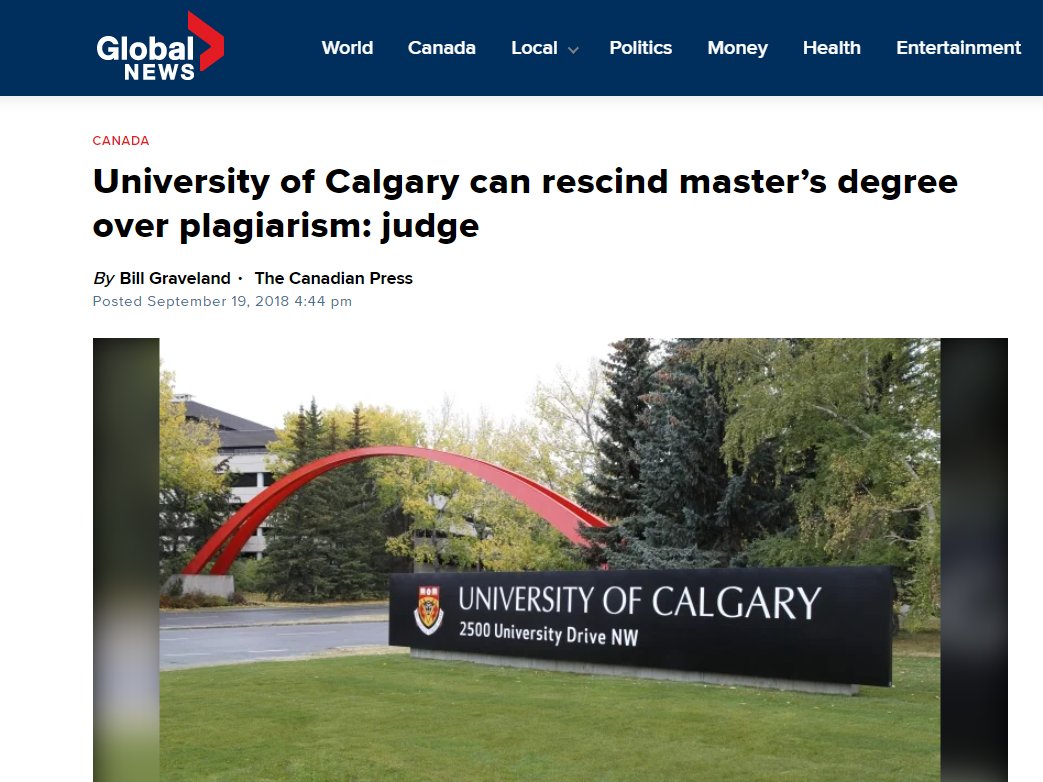
The past week brought some concerns about plagiarism in scholarship documents. For example:
Plagiarism is unacceptable at any level in academia and may lead to several undesirable outcomes, including revocation of admission offers or conferred degrees. So here is how you can prevent or rid yourself of the copy&paste syndrome
1. Don't use any template at all.
Just follow the darn instructions, or use helpful tips scattered all over the internet. Worry less about perfection.
I understand this may be hard for less experienced scholars. So if you must use a template, continue with the thread.
2. If possible, find more than one template.
This helps you identify the flow of ideas and the commonalities in the template. You can then develop your own unique document from this knowledge.
If you are still confused and must use a template, continue with the thread
Simple Writing Trick to Avoid Plagiarism when using Templates
This may be useful for anyone but the examples here are more relevant to scholarship applicants
In other words, how to avoid the copy & paste syndrome.
Kindly RT to help others.
The past week brought some concerns about plagiarism in scholarship documents. For example:
I got a call from the recruitment office at a Canadian university today and the issue was most of the Nigerians who applied there have almost the same Statement of Purpose letters. Please show originality in your applications, use your own words......1/3
— Tosin AJ (@ajibz_tosin) January 20, 2021
Plagiarism is unacceptable at any level in academia and may lead to several undesirable outcomes, including revocation of admission offers or conferred degrees. So here is how you can prevent or rid yourself of the copy&paste syndrome
1. Don't use any template at all.
Just follow the darn instructions, or use helpful tips scattered all over the internet. Worry less about perfection.
I understand this may be hard for less experienced scholars. So if you must use a template, continue with the thread.
2. If possible, find more than one template.
This helps you identify the flow of ideas and the commonalities in the template. You can then develop your own unique document from this knowledge.
If you are still confused and must use a template, continue with the thread


You May Also Like


The first area to focus on is diversity. This has become a dogma in the tech world, and despite the fact that tech is one of the most meritocratic industries in the world, there are constant efforts to promote diversity at the expense of fairness, merit and competency. Examples:
USC's Interactive Media & Games Division cancels all-star panel that included top-tier game developers who were invited to share their experiences with students. Why? Because there were no women on the
ElectronConf is a conf which chooses presenters based on blind auditions; the identity, gender, and race of the speaker is not known to the selection team. The results of that merit-based approach was an all-male panel. So they cancelled the conference.
Apple's head of diversity (a black woman) got in trouble for promoting a vision of diversity that is at odds with contemporary progressive dogma. (She left the company shortly after this
Also in the name of diversity, there is unabashed discrimination against men (especially white men) in tech, in both hiring policies and in other arenas. One such example is this, a developer workshop that specifically excluded men: https://t.co/N0SkH4hR35
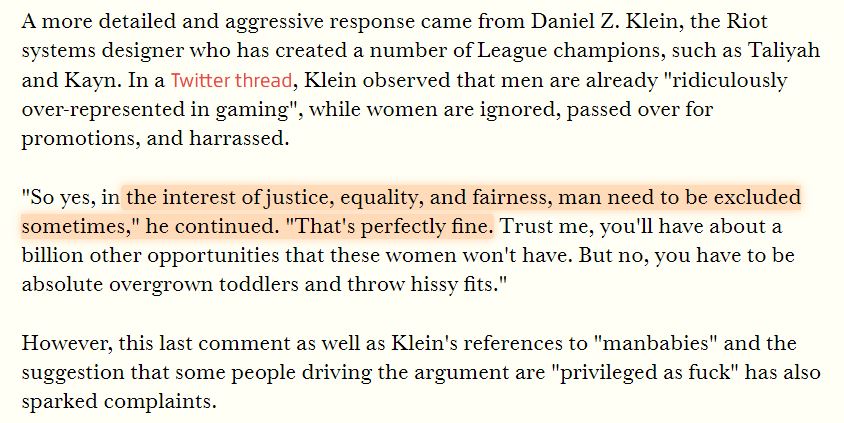
USC's Interactive Media & Games Division cancels all-star panel that included top-tier game developers who were invited to share their experiences with students. Why? Because there were no women on the
ElectronConf is a conf which chooses presenters based on blind auditions; the identity, gender, and race of the speaker is not known to the selection team. The results of that merit-based approach was an all-male panel. So they cancelled the conference.
Apple's head of diversity (a black woman) got in trouble for promoting a vision of diversity that is at odds with contemporary progressive dogma. (She left the company shortly after this
Also in the name of diversity, there is unabashed discrimination against men (especially white men) in tech, in both hiring policies and in other arenas. One such example is this, a developer workshop that specifically excluded men: https://t.co/N0SkH4hR35