Lately there have been various rumours in the media about myself and Jumbo in relation to Williams. To clarify things, Jumbo is not and will not invest any money in my career. 1/2
More from Sport

Watching this play sent me down a memory hole that gave me goosebumps as well as a pang of guilt. Let me explain. A THREAD!
In 2011, I was hosting the ESPYs. Marshawn’s run was nominated for Best Play, an award that was voted on by fans online. It was considered a front runner if not a lock.
Two days before the show, we're all watching the US/Brazil game in the Women’s World Cup. In the 122 minute Abby Wambach scored a header from a brilliant cross via Megan Rapinoe. I asked ESPN’s estimable producer, the late, great Maura Mandt if we could add it to the nominees.
The best thing about the ESPYs is, unlike other award shows that take themselves too seriously, there is a “fuck it, why not” attitude so Maura just made it happen. Maura was great at making things happen. Want another example?
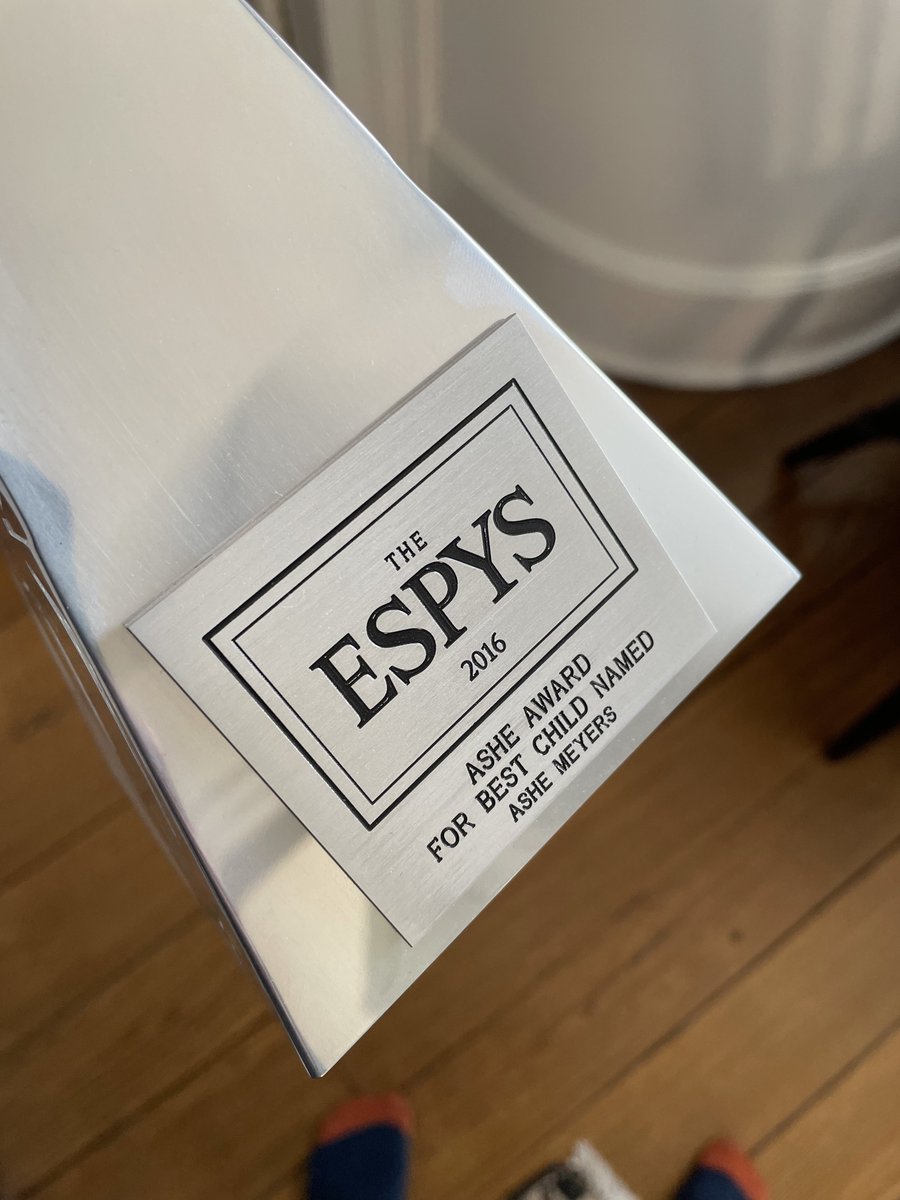
One of the highlights of the ESPYs is the Arthur Ashe Courage Award. When my son Ashe was born Maura gifted him this fake ESPY for BEST CHILD NAMED ASHE. I am confident this is the only ESPY anyone related to me will ever win.
Exactly a decade ago today, Marshawn Lynch caused a Beast Quake.
— Field Yates (@FieldYates) January 8, 2021
One of the most memorable runs in NFL history. pic.twitter.com/VBb8Lc0yGW
In 2011, I was hosting the ESPYs. Marshawn’s run was nominated for Best Play, an award that was voted on by fans online. It was considered a front runner if not a lock.
Two days before the show, we're all watching the US/Brazil game in the Women’s World Cup. In the 122 minute Abby Wambach scored a header from a brilliant cross via Megan Rapinoe. I asked ESPN’s estimable producer, the late, great Maura Mandt if we could add it to the nominees.
The best thing about the ESPYs is, unlike other award shows that take themselves too seriously, there is a “fuck it, why not” attitude so Maura just made it happen. Maura was great at making things happen. Want another example?
One of the highlights of the ESPYs is the Arthur Ashe Courage Award. When my son Ashe was born Maura gifted him this fake ESPY for BEST CHILD NAMED ASHE. I am confident this is the only ESPY anyone related to me will ever win.







You May Also Like



IMPORTANCE, ADVANTAGES AND CHARACTERISTICS OF BHAGWAT PURAN
It was Ved Vyas who edited the eighteen thousand shlokas of Bhagwat. This book destroys all your sins. It has twelve parts which are like kalpvraksh.
In the first skandh, the importance of Vedvyas
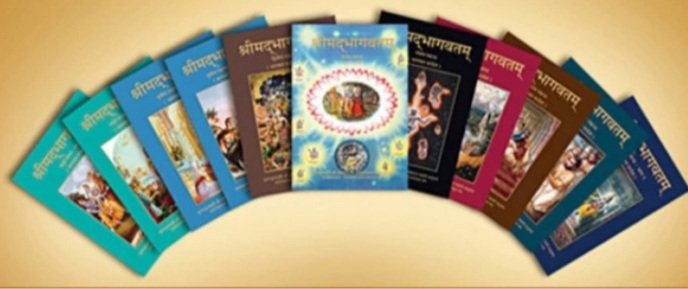
and characters of Pandavas are described by the dialogues between Suutji and Shaunakji. Then there is the story of Parikshit.
Next there is a Brahm Narad dialogue describing the avtaar of Bhagwan. Then the characteristics of Puraan are mentioned.
It also discusses the evolution of universe.( https://t.co/2aK1AZSC79 )
Next is the portrayal of Vidur and his dialogue with Maitreyji. Then there is a mention of Creation of universe by Brahma and the preachings of Sankhya by Kapil Muni.
In the next section we find the portrayal of Sati, Dhruv, Pruthu, and the story of ancient King, Bahirshi.
In the next section we find the character of King Priyavrat and his sons, different types of loks in this universe, and description of Narak. ( https://t.co/gmDTkLktKS )
In the sixth part we find the portrayal of Ajaamil ( https://t.co/LdVSSNspa2 ), Daksh and the birth of Marudgans( https://t.co/tecNidVckj )
In the seventh section we find the story of Prahlad and the description of Varnashram dharma. This section is based on karma vaasna.
It was Ved Vyas who edited the eighteen thousand shlokas of Bhagwat. This book destroys all your sins. It has twelve parts which are like kalpvraksh.
In the first skandh, the importance of Vedvyas
and characters of Pandavas are described by the dialogues between Suutji and Shaunakji. Then there is the story of Parikshit.
Next there is a Brahm Narad dialogue describing the avtaar of Bhagwan. Then the characteristics of Puraan are mentioned.
It also discusses the evolution of universe.( https://t.co/2aK1AZSC79 )
Next is the portrayal of Vidur and his dialogue with Maitreyji. Then there is a mention of Creation of universe by Brahma and the preachings of Sankhya by Kapil Muni.
HOW LIFE EVOLVED IN THIS UNIVERSE AS PER OUR SCRIPTURES.
— Anshul Pandey (@Anshulspiritual) August 29, 2020
Well maximum of Living being are the Vansaj of Rishi Kashyap. I have tried to give stories from different-different Puran. So lets start.... pic.twitter.com/MrrTS4xORk
In the next section we find the portrayal of Sati, Dhruv, Pruthu, and the story of ancient King, Bahirshi.
In the next section we find the character of King Priyavrat and his sons, different types of loks in this universe, and description of Narak. ( https://t.co/gmDTkLktKS )
Thread on NARK(HELL) / \u0928\u0930\u094d\u0915
— Anshul Pandey (@Anshulspiritual) August 11, 2020
Well today i will take you to a journey where nobody wants to go i.e Nark. Hence beware of doing Adharma/Evil things. There are various mentions in Puranas about Nark, But my Thread is only as per Bhagwat puran(SS attached in below Thread)
1/8 pic.twitter.com/raHYWtB53Q
In the sixth part we find the portrayal of Ajaamil ( https://t.co/LdVSSNspa2 ), Daksh and the birth of Marudgans( https://t.co/tecNidVckj )
In the seventh section we find the story of Prahlad and the description of Varnashram dharma. This section is based on karma vaasna.
#THREAD
— Anshul Pandey (@Anshulspiritual) August 12, 2020
WHY PARENTS CHOOSE RELIGIOUS OR PARAMATMA'S NAMES FOR THEIR CHILDREN AND WHICH ARE THE EASIEST WAY TO WASH AWAY YOUR SINS.
Yesterday I had described the types of Naraka's and the Sin or Adharma for a person to be there.
1/8 pic.twitter.com/XjPB2hfnUC