SHORT THREAD!

Simple Writing Trick to Avoid Plagiarism when using Templates

This may be useful for anyone but the examples here are more relevant to scholarship applicants

In other words, how to avoid the copy & paste syndrome.

Kindly RT to help others.

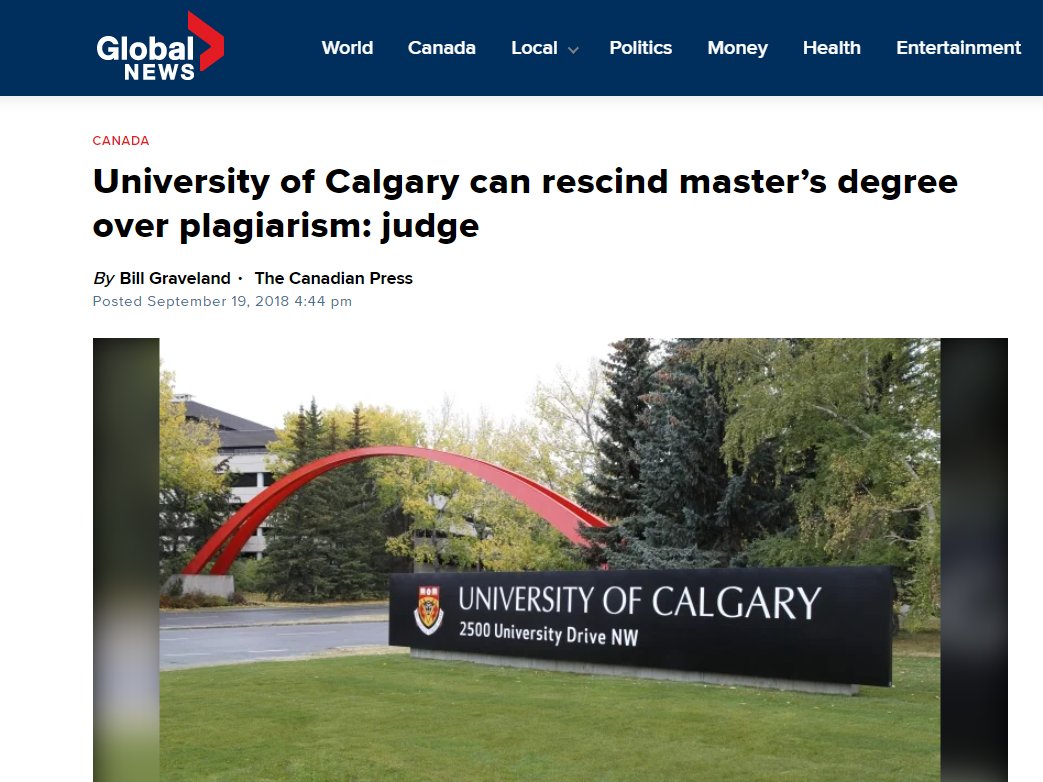
The past week brought some concerns about plagiarism in scholarship documents. For example:
https://t.co/cNgBC3NYyq
Plagiarism is unacceptable at any level in academia and may lead to several undesirable outcomes, including revocation of admission offers or conferred degrees. So here is how you can prevent or rid yourself of the copy&paste syndrome
1. Don't use any template at all.
Just follow the darn instructions, or use helpful tips scattered all over the internet. Worry less about perfection.

I understand this may be hard for less experienced scholars. So if you must use a template, continue with the thread.
2. If possible, find more than one template.

This helps you identify the flow of ideas and the commonalities in the template. You can then develop your own unique document from this knowledge.

If you are still confused and must use a template, continue with the thread
3. Now you are hell-bent on using a template.

Cool.

Here is what you can do.

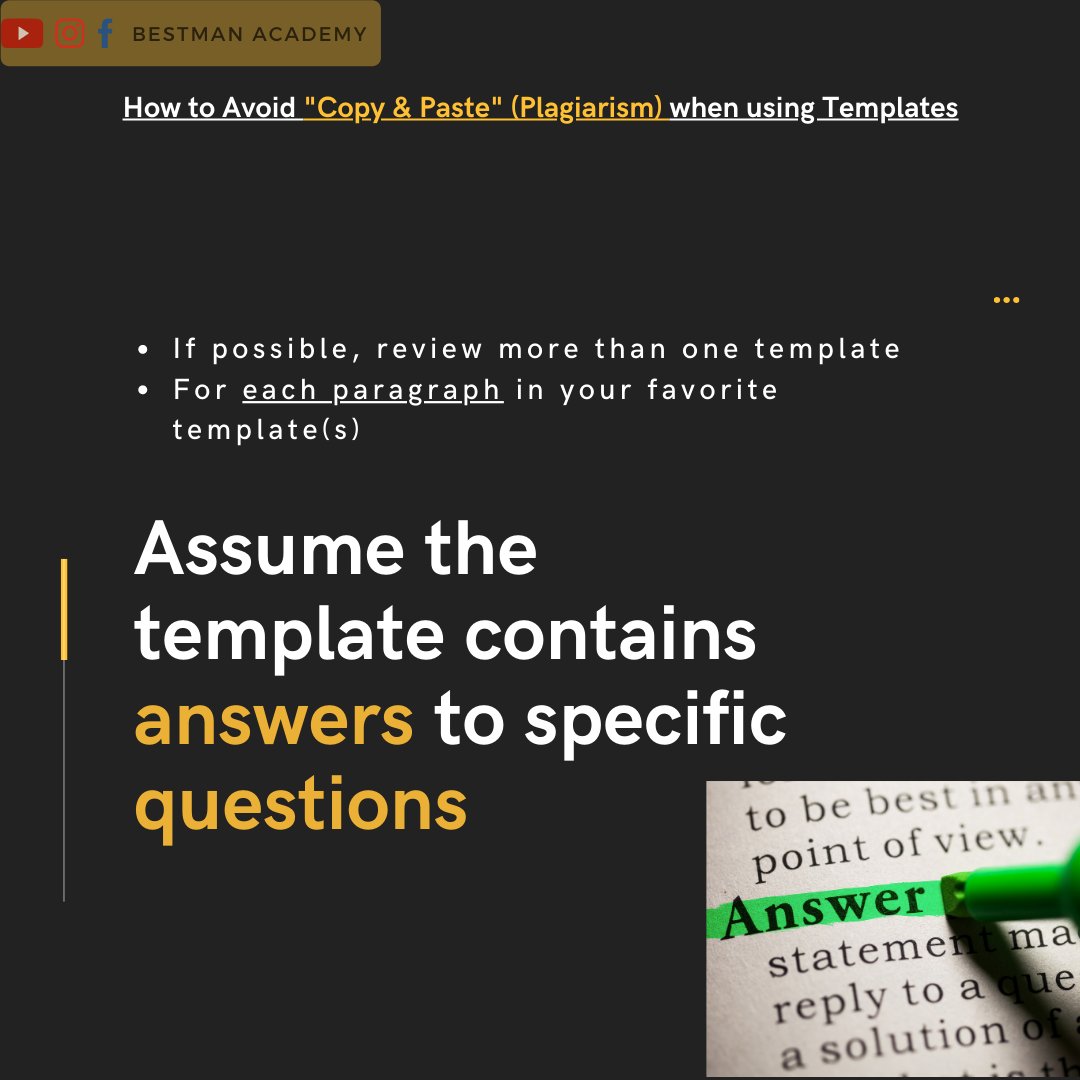
Assume that your chosen template provides answers to specific questions. 👇
4. Now that you have the answer (template), try to figure out and write out the questions. 👇
For example, check out this paragraph from a statement of purpose 👇
So what are the questions answered by this template? IMO, some key questions would include 👇
5. Now that you have the questions, WALK AWAY from the template for a while (for days if possible). This helps to clear your brain of sticky phrases or sentences in the template.

If you can't trust yourself not to copy the template, THRASH IT!
6. When your brain is back to default and ready to write, use the QUESTIONS you have developed (for each paragraph) from the template to draft your own unique document without revisiting the template.

In complete sentences, just answer the questions you have written down.
7. Keep editing till you are satisfied.

Importantly, use a second pair of eyes to help review your unique document.

In the end, you'd surely be proud.
If still in doubt, you may check out this article containing another example of this "question and answer" method. This used a sample paragraph from an email to a professor.
https://t.co/zW5Co6jd31
For scholarship opportunities, tips, and motivation, here are some priceless accounts to follow
@Oludeewon @olumuyiwaayo @matajson @Okpala_IU @AaronAkpuPhilip @drhammed @NoahAluko @particular6 @Iam_MrPackagin @arawu_samuel @oulawal @adejimiadeniji @oguntuyakitimi @SamdGreat01
@Ijesha_canadian @MICHAELSEGZY @Okafor_SC @zainab__tiamiyu @james_omoboye
The end.
Happy to learn other useful methods in dealing with this issue.

More from Writing

Things we don’t learn in this article: that the author wrote David Cameron’s speeches during the period when they were intentionally underfunding the NHS and other services, directly creating the problem the author is concerned about now.


We also don’t learn that the paper it’s written in stridently supported those measures and attacked junior doctors threatening strike action over NHS cuts and long working hours, accusing them of holding the country to ransom.

We aren’t reminded that NHS funding and the future of health provision was a central part of previous election campaigns, and that attempts to highlight these problems were swiftly stomped on or diverted and then ignored by most of the press, including the Times.

I’d underline here that “corruption” doesn’t just mean money in brown envelopes: it describes a situation where much of an organisation is personally motivated to ignore, downplay or divert from malfeasance for personal reasons - because highlighting them would be bad for careers

Foges was Cameron’s speechwriter at the height of austerity; Forsyth is married to the PM’s spokesman; Danny F is a Tory peer; Parris is a former MP; Gove used to write for them regularly, and that’s before we get to professional mates-with-ministers like Shipman or Montgomerie.
I want to talk about how western editors and readers often mistake protags written by BIPOC as "inactive protagonists." It's too common an issue that's happened to every BIPOC author I know.


Often, our protags are just trying to survive overwhelming odds. Survival is an active choice, you know. Survival is a story. Choosing to be strong in the face of the world ending, even if you can't blast a wall down to do it, is a choice.

It's how we live these days.

Western editors, readers, and writers are too married to the three-act structure, to the type of storytelling that is driven by conflict, to that go-getter individualism. Please read more widely out of your comfort zone. A lot of great non-western stories do not hinge on these.

Sometimes I wonder if you're all so hopped up on the conflict-driven story because that's exactly how your colonizer ancestors dealt with people different from them. Oops, I said it, sorry not sorry. Yes, even this mindset has roots in colonialism, deal with it.

If you want examples of non-conflict-driven storytelling google the following: kishoutenketsu, johakyu, daisy chain storytelling/wheel spoke storytelling. There was another one whose name I forgot but I will tweet it when I recall it.

You May Also Like

One of the most successful stock trader with special focus on cash stocks and who has a very creative mind to look out for opportunities in dark times

Covering one of the most unique set ups: Extended moves & Reversal plays

Time for a 🧵 to learn the above from @iManasArora

What qualifies for an extended move?

30-40% move in just 5-6 days is one example of extended move

How Manas used this info to book


Post that the plight of the


Example 2: Booking profits when the stock is extended from 10WMA

10WMA =


Another hack to identify extended move in a stock:

Too many green days!

Read
Department List of UCAS-China PROFESSORs for ANSO, CSC and UCAS (fully or partial) Scholarship Acceptance
1) UCAS School of physical sciences Professor
https://t.co/9X8OheIvRw
2) UCAS School of mathematical sciences Professor

3) UCAS School of nuclear sciences and technology
https://t.co/nQH8JnewcJ
4) UCAS School of astronomy and space sciences
https://t.co/7Ikc6CuKHZ
5) UCAS School of engineering

6) Geotechnical Engineering Teaching and Research Office
https://t.co/jBCJW7UKlQ
7) Multi-scale Mechanics Teaching and Research Section
https://t.co/eqfQnX1LEQ
😎 Microgravity Science Teaching and Research

9) High temperature gas dynamics teaching and research section
https://t.co/tVIdKgTPl3
10) Department of Biomechanics and Medical Engineering
https://t.co/ubW4xhZY2R
11) Ocean Engineering Teaching and Research

12) Department of Dynamics and Advanced Manufacturing
https://t.co/42BKXEugGv
13) Refrigeration and Cryogenic Engineering Teaching and Research Office
https://t.co/pZdUXFTvw3
14) Power Machinery and Engineering Teaching and Research