Categories World


It’s worth exploring Iran’s experience with u-metal, a key material that can also be used to produce nuclear weapon cores. We know that Tehran has quite a bit of experience thanks to the Nuclear Archive documents, seized by Israel in 2018. 2/
The Nuclear Archive contained info about Iran’s plans to build a pilot uranium metal production facility, called Shahid Mahallati. There, Iran would become adept at u-metal and nuke weapon component fabrication: https://t.co/kAA334GW54 3/
In 2002, Iran was also building a production-scale uranium metal & nuclear weapon components facility, Shahid Boroujerdi, in an underground tunnel complex at Parchin, the military site famous for Iran's early nuclear weapon-related high explosive work: https://t.co/0ffAKmQEAV 4/
In late-2003, under increasing international pressure, Iran halted its crash nuclear weapons program, the Amad Plan, and stopped construction on Shahid Boroujerdi & likely halted work at Shahid Mahallati. Current statuses are unknown because the IAEA has never visited. 5/

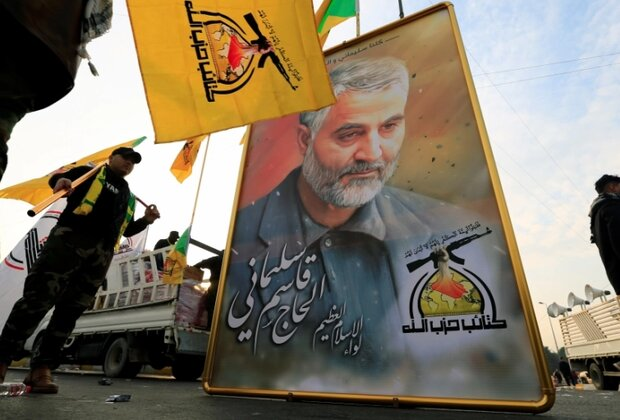
The true face of the @WEF Green Revolution - think they really care about Black Lives ?
This is the human cost of your electric car.
Protest this BLM, I\u2019m all ears. pic.twitter.com/8MEGG0Z3dY
— markmaycott (@markmaycot) October 16, 2020
This is what they are doing to indigenous people in name of protection of biodiversity through false science they fund as @StephenCorrySvl of @Survival organization to protect indigenous peoples rights explains.
You can see how media inc BBC involved in this racist
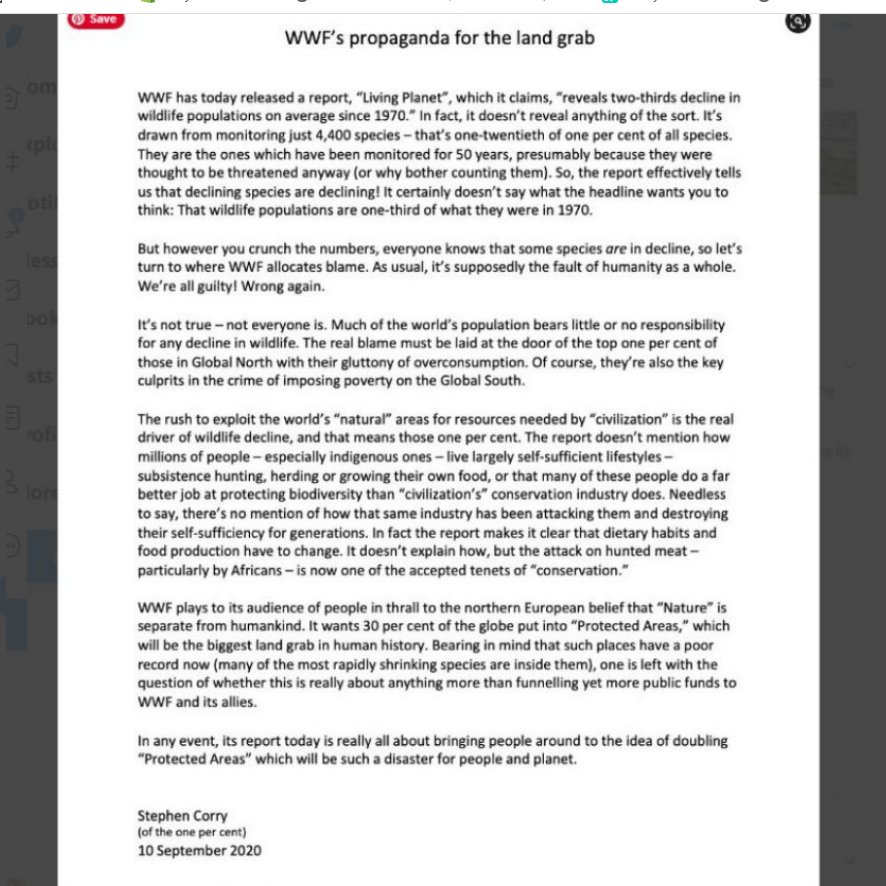
imperialist elitist agenda , linked to notion uber rich white urban people, (often representing Multinational corporations whose profits result from unprecendeted eco damage) better guardians of nature than those who have stewarded the land well re biodiversity for centuries
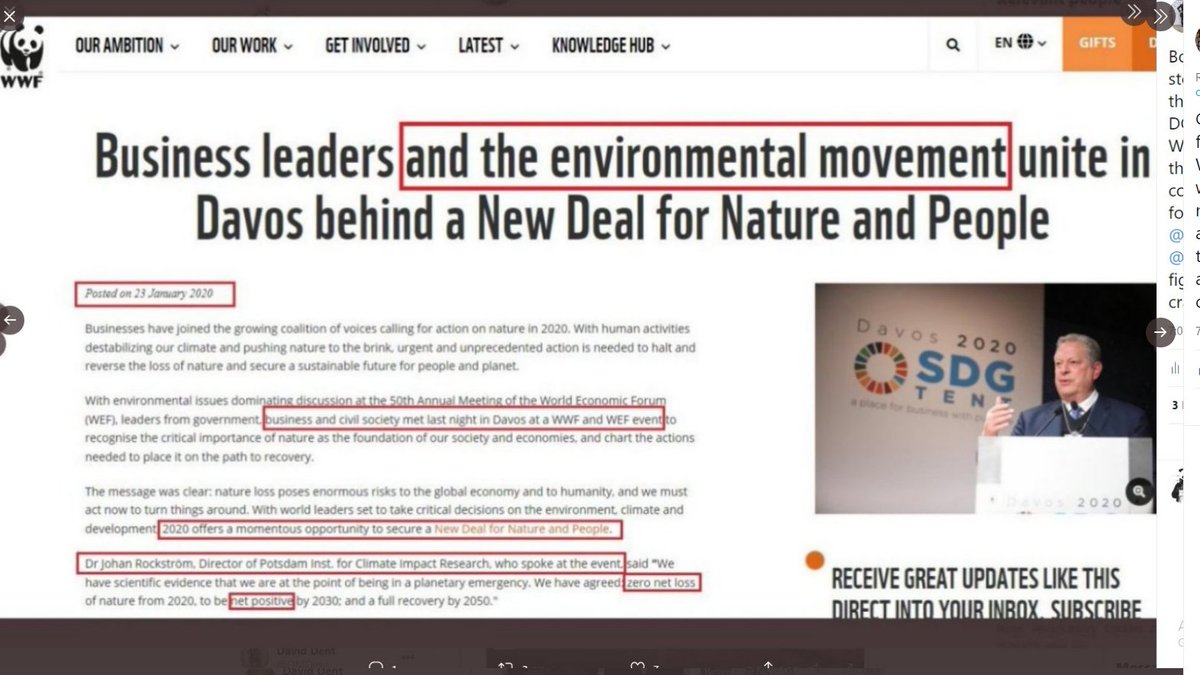
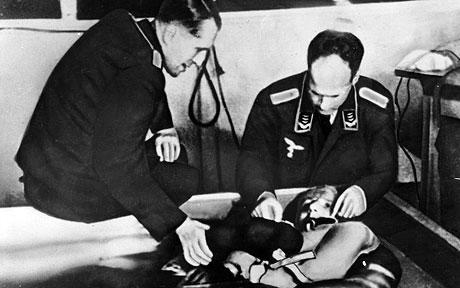
Idea of unelected elites- Corporations 'experts' & State, planning economy, land, resources & human 'wellbeing' (Swastika means just that) has another name it has been tried before, and had that 'GREEN' saviour complex at heart of it: was called
#Ecofascist INTER-Nazis
— David Dent (@DMDent) January 11, 2021
We've heard it all before when Corporatist elitists use fear & virtue to enact land & resources grab from indigenous stewards and duff humanity up with plant based diets, even had their own Attenboroughs in the Hecks.
EVIL. https://t.co/zrl9Tx0Oca pic.twitter.com/P9nKFBu8CQ
Despite obsession moral sanctimony, obsession altrusitic notions 'enlightenment' of Eastern mysticism, animal rights, ideas 'transhumanist' future of human race, concern about 'population', manifested as most evil period of human history, & corrupt science & doctors helped it


Mehr als 50 Oppositionelle wurden in #HongKong festgenommen. Grundlage ist das neue #Sicherheitsgesetz, das #China als Waffe gegen die Demokratie dient. Wenn \U0001f1ea\U0001f1fa ein Abkommen mit \U0001f1e8\U0001f1f3 schlie\xdft, dann darf es dessen Methoden, inklusive Vertragsbruch & Unterdr\xfcckung, nicht ignorieren. https://t.co/VEXeVm1w2Z
— Norbert R\xf6ttgen (@n_roettgen) January 6, 2021
A prominent critic of the deal in the European Parliament asked: “Democracy in HK is dying before our eyes, and the priority of our dear European leaders is to sell us their investment agreement with Beijing. How can we be so out of time?”
Des dizaines d\u2019opposants arr\xeat\xe9s \xe0 Hong Kong. La d\xe9mocratie HK meurt sous nos yeux. Et la priorit\xe9 de nos chers dirigeants europ\xe9ens est de nous vendre leur accord d\u2019investissement avec P\xe9kin... Comment peut-on \xeatre \xe0 ce point \xe0 contre-temps? https://t.co/zy1xaqIYdB
— Raphael Glucksmann (@rglucks1) January 6, 2021
Interesting take
2) Also shows that BJ doesn't have a clue about how EU works or simply doesn't care if the CAI-deal really goes through. What BJ is doing in HK will make it even less probable that the EU parliament will ratify CAI.
— Dana Heide (@Dana_Heide) January 6, 2021
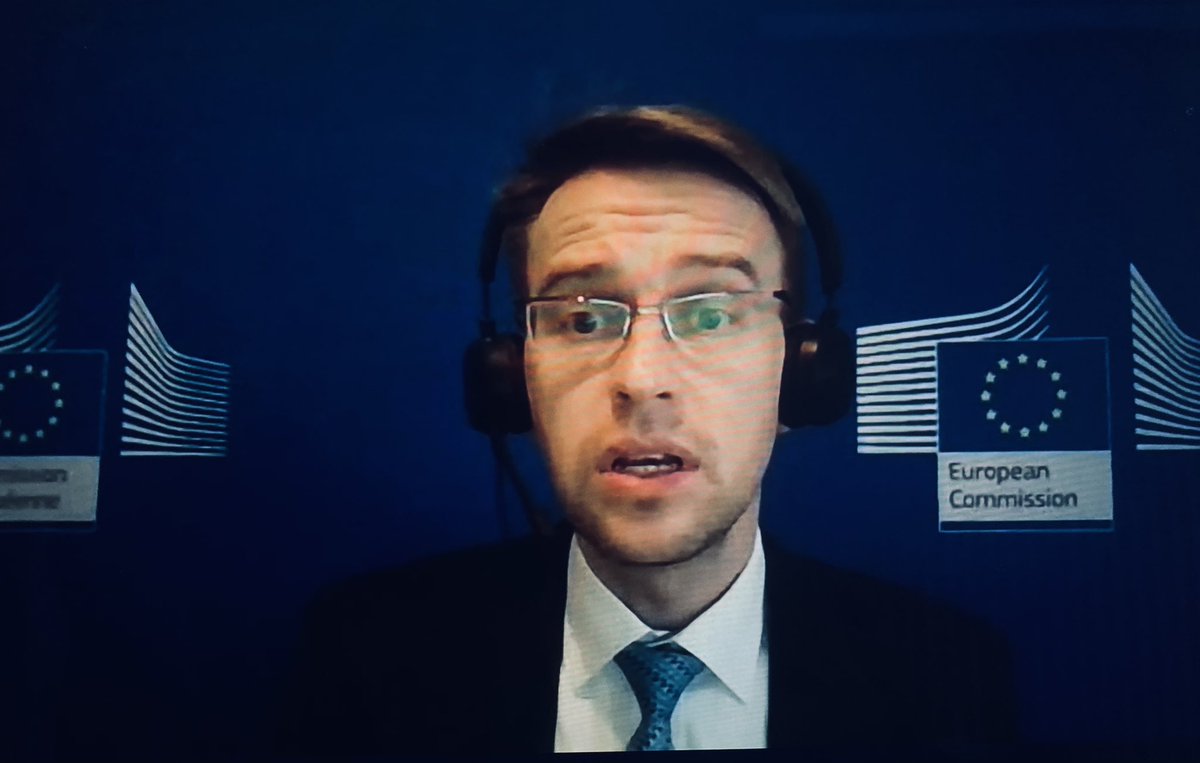
EU Commission spokesman @MamerEric defended the bloc’s decision to reach an investment deal, and added the need to engage China on issues like climate change, when asked about the impact of the human rights situation in Hong Kong on EU-China relations.
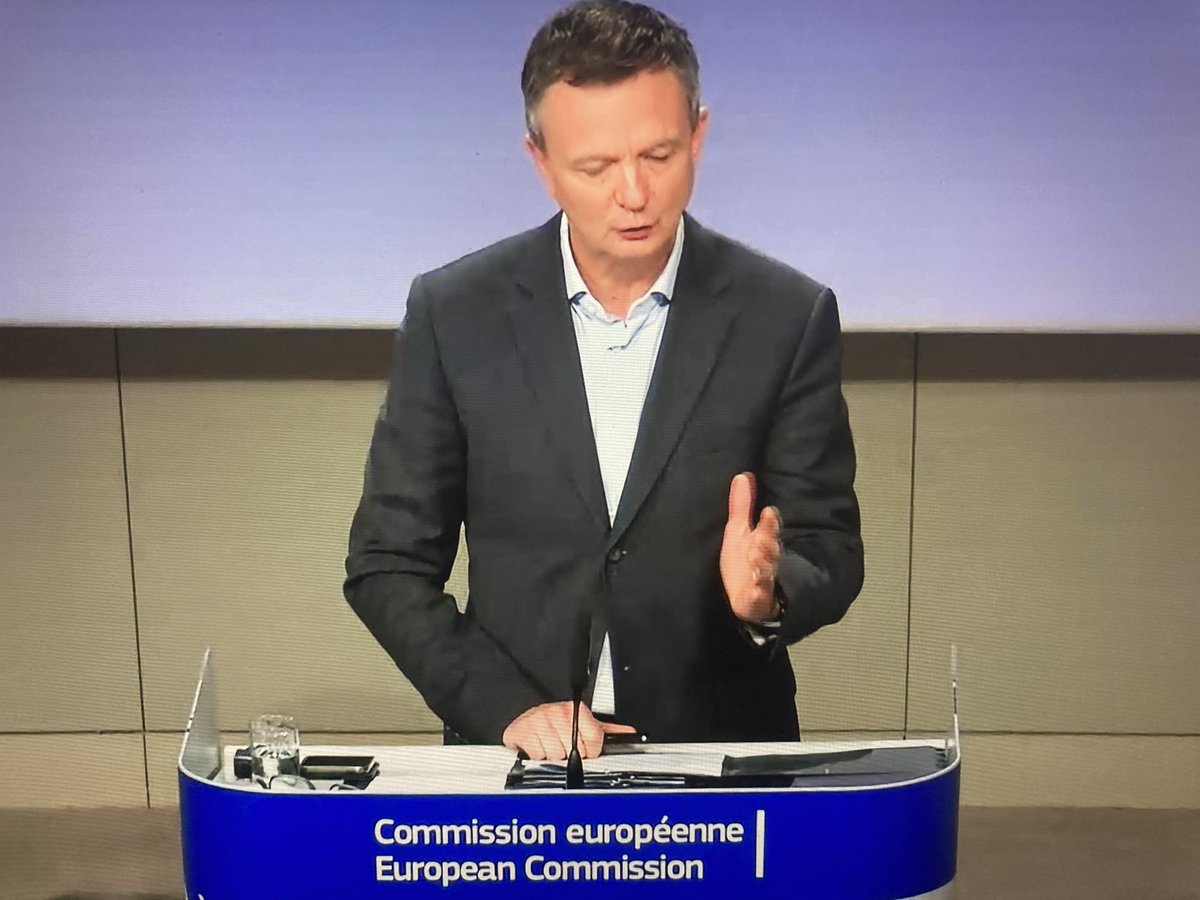
“The coordinated arrest of over 50 pro-democracy activists on accusations of subversion under the National Security Law sends a signal that political pluralism is no longer tolerated in Hong Kong. The EU calls for the immediate release of those arrested,” @ExtSpoxEU says.






The Mother and Baby Homes report looks right to say Irish society at large was to blame, and it\u2019s clear from the summary that Ireland\u2019s civic and political institutions, which demanded the homes, were fully clued in on how harsh and even lethal the homes were. But... 1/3
— Greg Daly (@GregDalyIC) January 13, 2021
The Republican movement piggybacked on the Church to win mass support for independence, say, while both Cosgrave and de Valera deliberately courted Catholic votes; in the privacy of their polling booths, Irish voters, overwhelmingly voted for socially conservative parties. /2
The Oireachtas and county councils etc were elected and staffed by ordinary Irish people, not people who landed from outer space or England or Rome, with ordinary Irish families and neighbours, and it was these who mandated, owned, funded, supervised, and supplied the homes. /3
As for clergy and religious, the country was full of seminaries and religious houses of formation; Ireland was basically a factory for priests, brothers, and nuns, all of whom were members of ordinary Irish families, and formed by the Irish values of the time. /4
Given how many homes had clergy and religious in the family, could anyone really hold that these were somehow separate? Yes, maybe your aunt was a 'good nun', or your uncle was a 'nice priest', but either way the point stands that they were ordinary Irish people. /5


First off, it's revolting to see any mainstream politician spread what appear to be conspiracy theories about atrocities committed by the Assad regime in the Syrian war. In fact, to *volunteer* them. Unprompted. /1
I have a genuine question for people who support Laschet: Are you not bothered by his foreign policy views? Even Syria conspiracy theories aside, his views on Russia are deeply worrying to me. Do you happen to agree with him or do you just think other things are more important? https://t.co/22Xke53jgv
— Marcel Dirsus (@marceldirsus) January 14, 2021
I stopped counting the dozens of friends, colleagues, officials from around the world, but in particular, the Middle East, who have sent me his tweets over the past week. The common response from Berlin appears to be an uncomfortable "well, he's not a foreign policy guy..." /2
But he is! I think it's easy to underestimate the man and his jovial, slightly pudgy and self-deprecating persona. There's also a tendency in Berlin and outside to confuse regional politics (and accents!) for provincialism. But Laschet is from Aachen - in the heart of Europe. /3
His first job in politics was with Hans Stercken, then-chairman of the Bundestag's foreign affairs committee, in the tumultuous mid-late 80s. As a new member of Bundestag in 1994, he joined the committees for int development, EU affairs, and foreign affairs (as an alternate). /4
Some headlines refer to him as a "Merkel-loyalist". At least when I flipped thru his record from the 90s, I got a sense of a man with profound convictions: A passionate European. But also an early proponent of CDU-Greens rapprochement based on a shared moralistic worldview. /5


