
I'd like to offer a few words about why Parler's "Russian IP" is nothing of note to me.
First, the IP belongs to ddos-guard, a CDN (Content Delivery Network). First, a CDN is a service gets content to your site visitors faster through methods which aren't important right now. /1
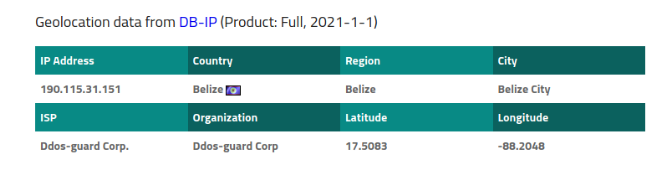
Basically, all we know is that Parler has not committed to using ddos-guard yet, in the sense that they...

My point is that the choice of CDN is the least interesting part about this. Focus on things like whether Rebeccah Mercer is still throwing money at Parler: https://t.co/BwcOUgU7Bh
More from Tech



Machine translation can be a wonderful translation tool, but its uses are widely misunderstood.
Let's talk about Google Translate, its current state in the professional translation industry, and why robots are terrible at interpreting culture and context.
Straight to the point: machine translation (MT) is an incredibly helpful tool for translation! But just like any tool, there are specific times and places for it.
You wouldn't use a jackhammer to nail a painting to the wall.
Two factors are at play when determining how useful MT is: language pair and context.
Certain language pairs are better suited for MT. Typically, the more similar the grammar structure, the better the MT will be. Think Spanish <> Portuguese vs. Spanish <> Japanese.
No two MT engines are the same, though! Check out how human professionals ranked their choice of MT engine in a Phrase survey:
https://t.co/yiVPmHnjKv

When it comes to context, the first thing to look at is the type of text you want to translate. Typically, the more technical and straightforward the text, the better a machine will be at working on it.
Let's talk about Google Translate, its current state in the professional translation industry, and why robots are terrible at interpreting culture and context.
Straight to the point: machine translation (MT) is an incredibly helpful tool for translation! But just like any tool, there are specific times and places for it.
You wouldn't use a jackhammer to nail a painting to the wall.
Two factors are at play when determining how useful MT is: language pair and context.
Certain language pairs are better suited for MT. Typically, the more similar the grammar structure, the better the MT will be. Think Spanish <> Portuguese vs. Spanish <> Japanese.
No two MT engines are the same, though! Check out how human professionals ranked their choice of MT engine in a Phrase survey:
https://t.co/yiVPmHnjKv
When it comes to context, the first thing to look at is the type of text you want to translate. Typically, the more technical and straightforward the text, the better a machine will be at working on it.

(1) Some haters of #Cardano are not only bag holders but also imperative developers.
If you are an imperative programmers you know that Plutus is not the most intuitive -> (https://t.co/m3fzq7rJYb)
It is, however, intuitive for people with IT financial background, e.g. banks
(2)
IELE + k framework will be a real game changer because there will be DSLs (Domain Specific Languages) in any programming language supported by K framework. The only issue is that we need to wait for all this
(3) Good news is that the moment we get IELE integrated into Cardano, we get some popular langs. To my knowledge we should get from day one: Solidity and Rust, maybe others as well?
List of langs: https://t.co/0uj1eBfrYj, some commits from many years ago..
@rv_inc ?
#Cardano
(a) Last but not least, marketing to people with Haskell, functional programming with experience and decision makers in banks is a tricky one, how do you market but not tell them you want to replace them. In the end one strategy is to pitch new markets, e.g. developing world
(b) As banks realize what is happening they maybe more inclined to join - not because they would like to but because they will have to - in such cases some development talent maybe re-routed to Plutus / Cardano / Algorand / Tezos
If you are an imperative programmers you know that Plutus is not the most intuitive -> (https://t.co/m3fzq7rJYb)
It is, however, intuitive for people with IT financial background, e.g. banks
(2)
IELE + k framework will be a real game changer because there will be DSLs (Domain Specific Languages) in any programming language supported by K framework. The only issue is that we need to wait for all this
(3) Good news is that the moment we get IELE integrated into Cardano, we get some popular langs. To my knowledge we should get from day one: Solidity and Rust, maybe others as well?
List of langs: https://t.co/0uj1eBfrYj, some commits from many years ago..
@rv_inc ?
#Cardano
(a) Last but not least, marketing to people with Haskell, functional programming with experience and decision makers in banks is a tricky one, how do you market but not tell them you want to replace them. In the end one strategy is to pitch new markets, e.g. developing world
(b) As banks realize what is happening they maybe more inclined to join - not because they would like to but because they will have to - in such cases some development talent maybe re-routed to Plutus / Cardano / Algorand / Tezos
You May Also Like









H was always unseen in S2NL :)
Those who exited at 1500 needed money. They can always come back near 969. Those who exited at 230 also needed money. They can come back near 95.
Those who sold L @ 660 can always come back at 360. Those who sold S last week can be back @ 301
Those who exited at 1500 needed money. They can always come back near 969. Those who exited at 230 also needed money. They can come back near 95.
Those who sold L @ 660 can always come back at 360. Those who sold S last week can be back @ 301
Sir, Log yahan.. 13 days patience nhi rakh sakte aur aap 2013 ki baat kar rahe ho. Even Aap Ready made portfolio banakar bhi de do to bhi wo 1 month me hi EXIT kar denge \U0001f602
— BhavinKhengarSuratGujarat (@IntradayWithBRK) September 19, 2021
Neuland 2700 se 1500 & Sequent 330 to 230 kya huwa.. 99% retailers/investors twitter par charcha n EXIT\U0001f602