Marvels of Medical Science in Ancient India
ACHARYA SUSHRUTA and SUSHRUTA SAMHITA

Ancient Indians were pioneers in diverse fields of study and their genius was centuries ahead of their times. Feel the glory, basking in pride of their unparalleled achievements.

(Thread)

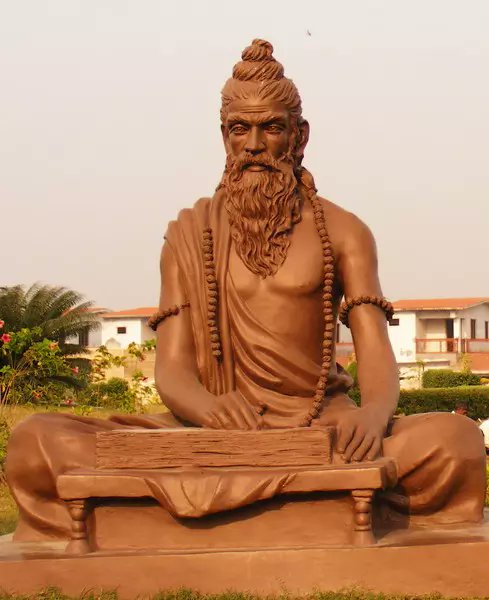
Sushruta (circa 7th or 6th century BC) was a surgeon who in present times is known as the “father of Indian medicine” and “father of plastic surgery” for inventing and developing surgical procedures. He lived in Kashi on the banks of river Ganga.(1)
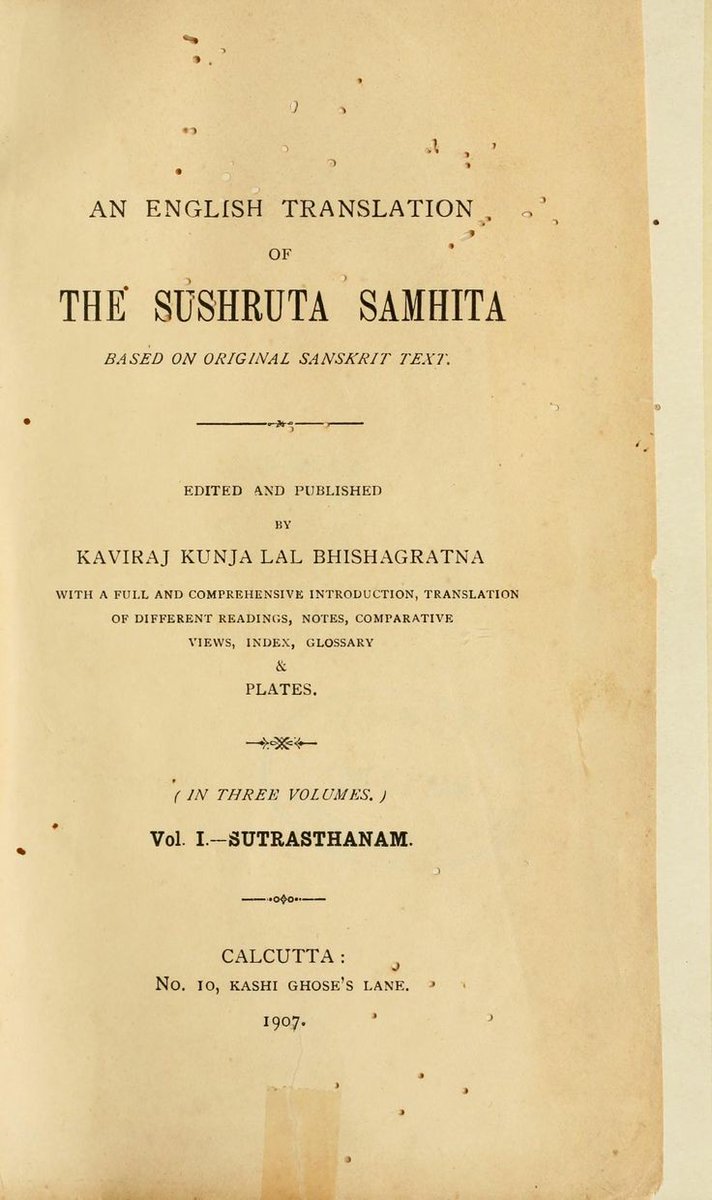
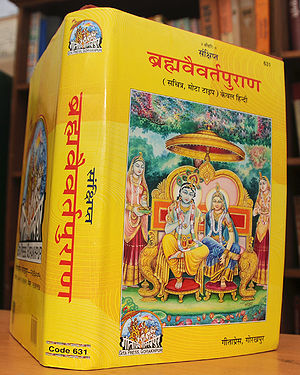
His work documented in the Sushruta Samhita (compendium) is one of the oldest texts in the world on plastic surgery and regarded as one of the trilogies of Ayurveda. The other 2 being the Charaka Samhita and Astanga Hridaya.(2)
Sushruta compiled the Sushruta Samhita as an instruction manual for physicians to treat patients.(3)
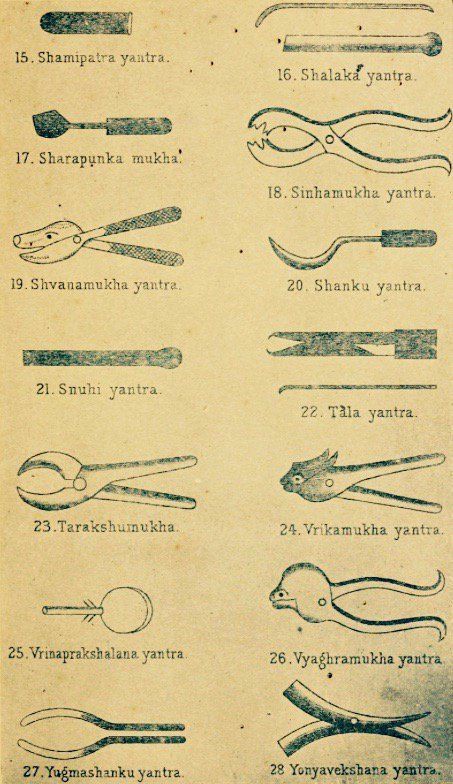
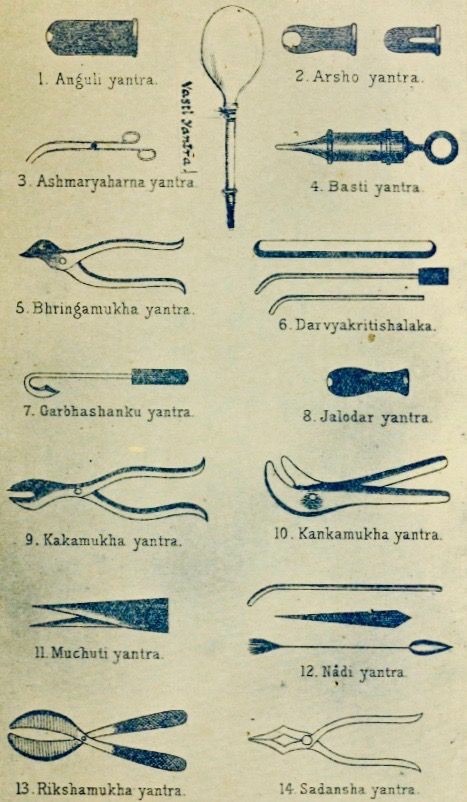
The Samhita caters to surgical techniques listing over 300 surgical procedures and 120 surgical instruments. Additionally to 1,120 diseases, injuries and their treatments with over 700 medicinal herbs and their application.(4)
The present form of the compendium is believed to be the work of several physicians which succeeded Sushruta. Chapters were added on over a period of time. The original had 5 books and 120 chapters, which over time grew into 6 books and 186 chapters.(5)
In a number of chapters throughout the book, medical conditions are described and treatments suggested which include details regarding how a surgeon should perform surgeries from start to finish.(6)
These techniques imply on a variety of conditions ranging from reconstruction of nose and cheek to treatment of wounds amongst many others.(7)
Sushruta developed advanced knowledge of the human body through dissection thereby understanding of human anatomy.(8)
Sushruta’s view on healing is "an emphasis on the patient" and not just on the symptoms. A familiar concept in modern day.(9)
Physicians in current times construct medical history of a patient in addition to establishing trust and developing a belief on the success of treatment.(10)
These practices and policies are considered innovations in patient care in present times but Sushruta had already implemented them over 2,000 years ago.(11)
Sushruta attracted a number of disciples from far and wide. He would instruct them on surgical procedures by making them practice cutting on vegetables or dead animals to perfect surgical techniques.(12)
Although the practice of surgery was established since long in India by the time of Sushruta but in a less advanced form than what he practiced.(13)
Sushruta developed novel surgical techniques and most importantly invented the practice of cosmetic surgery especially rhinoplasty (reconstruction of the nose).(14)

More from Suhas S. Hardutt

More from Religion

Tripundra Dhaaran - Paapa Vimukti

Our generations are fascinated about Tripundram being just a religious symbol. There are in depth meanings of such a Tilak on a Seeker's Forehead


The very first mistake is the way it is applied.

Tripund isn't applied with dry Bhasm, it should be made wet and then applied in a prescribed manner with proper use of fingers and direction of application. Bhasm is collected from various sources


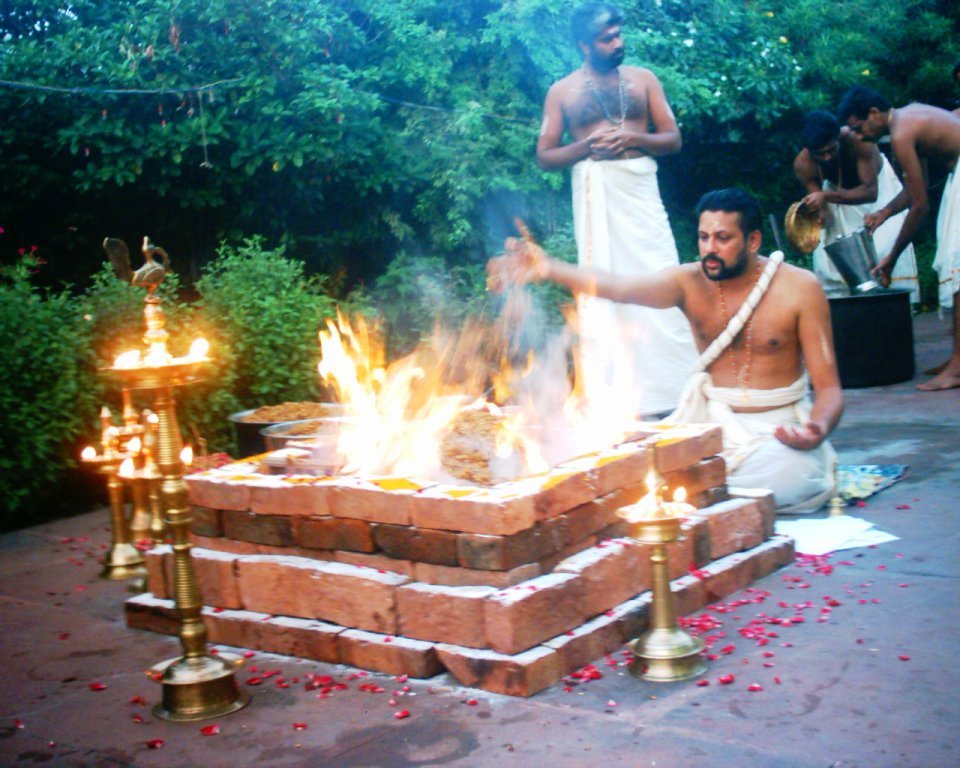
The most important ones mentioned in upanishats are 1. Yagnya Kund Bhasm 2. Bhasm made from Cow's Dung alone. A special agnihotram was perform to save the Bhasma after that for Dhaarana. A major mantra while applying bhasm is Mrutyunjaya Mantra


Dwijas have a very long process of applying the Tripundram along with their Sandhyavandanam. For commoners there are some basic rules people have to follow while applying Bhasm


Bhasm Applied in Morning - Should be mixed with water and applied
Bhasm Applied during Afternoon - Should be mixed with Chandan and Applied
Bhasm Applied during and after Pradosh - Should be applied Dry as such

You May Also Like