
Back when this mistake was made, There was only one Phone Company, because they hadn't been broken up yet. Ted Bundy was still on the loose. Babe Ruth's home run record was about to fall.
It is 2018 and this error message is a mistake from 1974.
This limitation, which is still found in the very latest Windows 10, dates back to BEFORE STAR WARS. This bug is as old as Watergate.

Back when this mistake was made, There was only one Phone Company, because they hadn't been broken up yet. Ted Bundy was still on the loose. Babe Ruth's home run record was about to fall.
You could do neat things with it like copy data off the serial port into a text file, or print a textfile right from the command line!
You can get infinite zeros from /dev/zero, random bytes from /dev/random, etc!
So directories? you don't need 'em. Instead of directories, you just use different disks.
So they're just "everywhere", effectively.
So if you have FOO.TXT and need to print it, you can do "PIP LST:=FOO.TXT" which copies foo.txt to the "file" LST, which is the printer.
but what about extensions? Here's the problem: programs like to name their files with the right extension.
but the program might try to put .TXT on the end of your filename! LST.TXT isn't the printer, right?
Eh. It's a hack, but it works, and this is just on some little microcomputers with 4k of ram, who cares?
But it was big, so naturally IBM wanted it for some "PC" project they were doing in early 1980
MS purchased Tim Paterson's project and developed it into PC-DOS (which later became MS-DOS, if you're not aware)
It was definitely inspired by CP/M, in a lot of ways.
So QDOS and PC-DOS 1.0 have AUX, PRN, CON, LPT, etc, too!
You need them to keep your massive 10mb hard drive organized, obviously!
with directories, Microsoft could now make a C:\DEV folder... but they didn't.
Special files are in EVERY DIRECTORY with EVERY EXTENSION.
So your "DIR > LPT" trick to print the directory listing doesn't break because you're in C:\DOS instead of A:\
And when Windows 95 was released, it was built on top of DOS. So it naturally inherited this behavior. (Windows 1/2/3 similarly did, but Win95 was much more an OS than they were)
But Windows NT wanted compatibility with DOS/Windows programs. And XP merged the two lines.
So these special files still work, FORTY FOUR FUCKING YEARS LATER
aux.txt
prn.txt
it'll tell you NOPE

CON, PRN, AUX, NUL, COM1, COM2, COM3, COM4, COM5, COM6, COM7, COM8, COM9, LPT1, LPT2, LPT3, LPT4, LPT5, LPT6, LPT7, LPT8, and LPT9
https://t.co/1eYQVBKO65


These special-device names are implemented at the OS level, rather than the filesystem level. So they're perfectly valid NTFS filenames, and I was using an NTFS drive in linux.

A couple follow ups:
1. The CP/M inventor's name is "Gary Kildall", not "Gary Kiddal".
Sorry, I posted this at 5am after being in the hospital for like... 8 hours?
It actually required them to be followed by a colon, as if they were a drive name.
So PRN: is the printer, PRN is not.
I didn't mean to imply CP/M did, just DOS, but I don't think I made this clear
PC DOS 1 did support copying to/from special files though, so my general point was correct, even if my example was confusing
It's like you're living on a space station and get trampled by a horse.

More from foone
A fun fact on the wikipedia page for the metal–oxide–semiconductor field-effect transistor:
it is the most frequently manufactured device in history, and the total number manufactured from 1960-2018 is 13 sextillion.
That's 13,000,000,000,000,000,000,000.
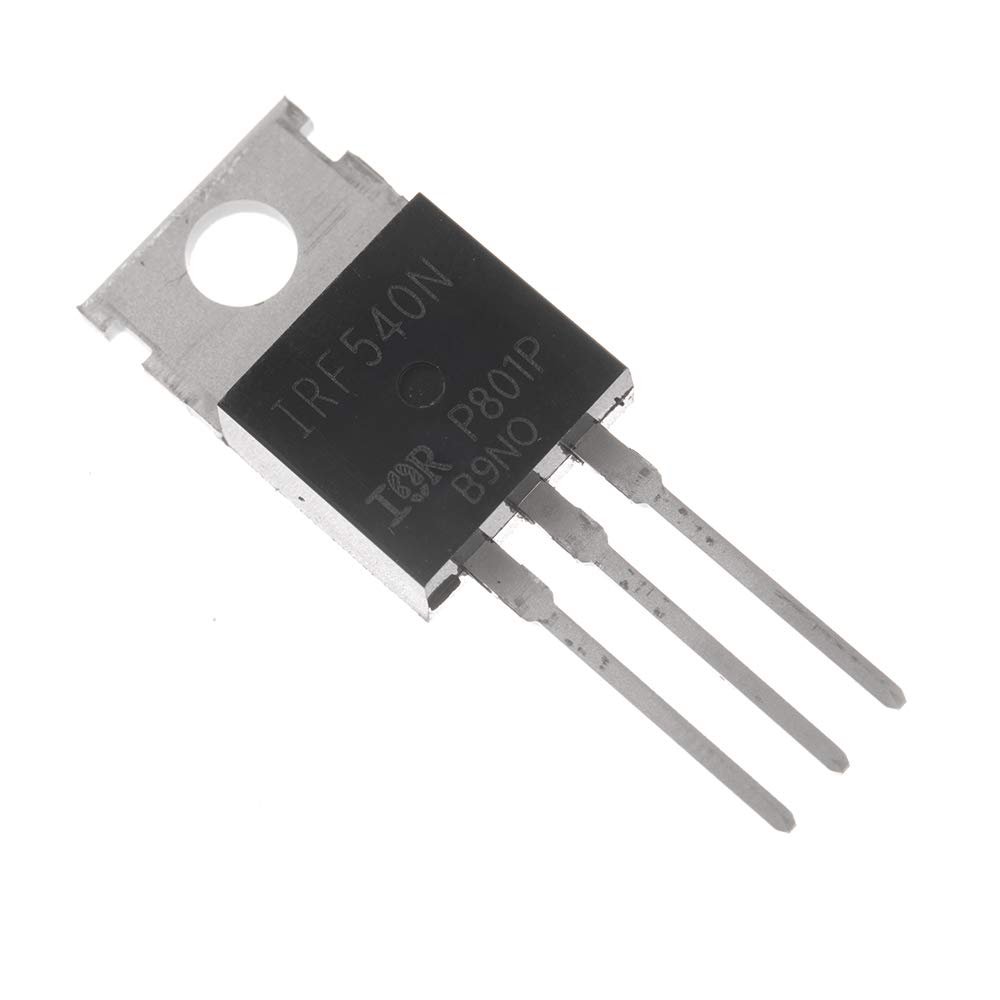
Though this picture is a bit misleading.
Even with devices this small, we couldn't make 13 sextillion of them in 60 years.
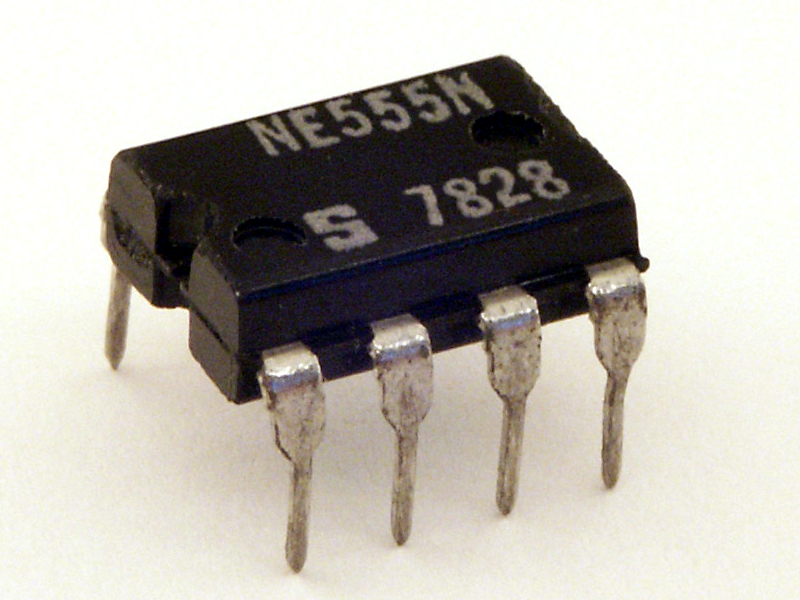
So imagine a chip like this. It's the 555 timer, which is one of the most popular integrated circuits ever made.
In 2017, it was estimated a billion are made every year.
And at the heart of it is the die, which looks like this:
(from Ken Shirriff's blog)
https://t.co/mz5PQDjYqF
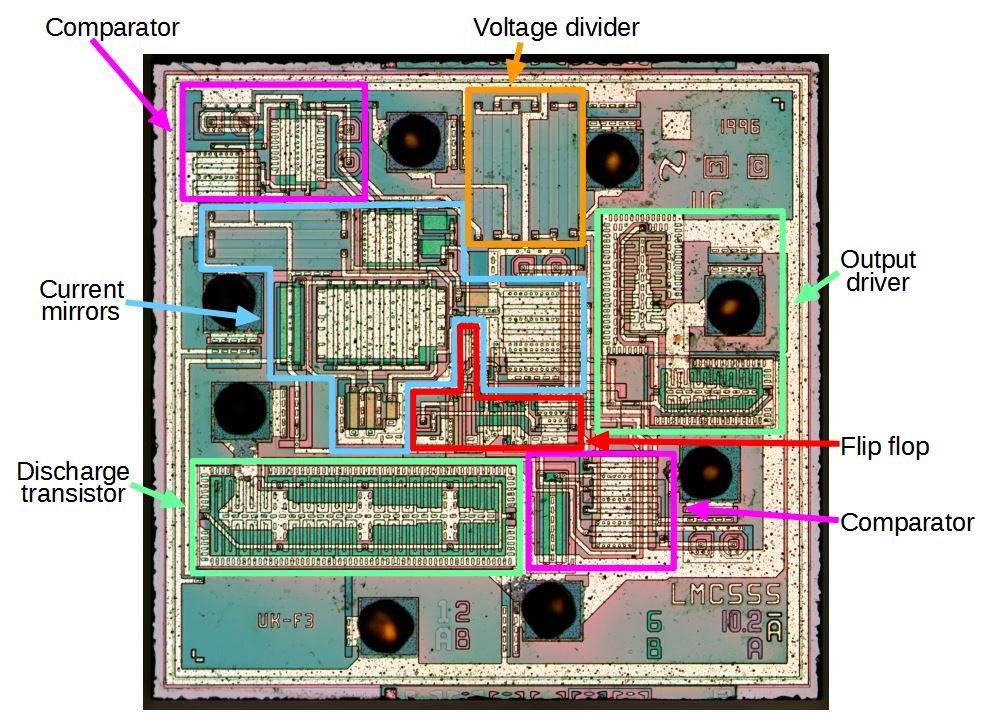
And that's fundamentally a bunch of CMOS transistors (along with some diodes and resistors), which are a type of MOSFET. How many of them are on a 555?
about 25. Not many, but it's a very simple chip.
it is the most frequently manufactured device in history, and the total number manufactured from 1960-2018 is 13 sextillion.
That's 13,000,000,000,000,000,000,000.
Though this picture is a bit misleading.
Even with devices this small, we couldn't make 13 sextillion of them in 60 years.
So imagine a chip like this. It's the 555 timer, which is one of the most popular integrated circuits ever made.
In 2017, it was estimated a billion are made every year.
And at the heart of it is the die, which looks like this:
(from Ken Shirriff's blog)
https://t.co/mz5PQDjYqF
And that's fundamentally a bunch of CMOS transistors (along with some diodes and resistors), which are a type of MOSFET. How many of them are on a 555?
about 25. Not many, but it's a very simple chip.




More from Tech


"I really want to break into Product Management"
make products.
"If only someone would tell me how I can get a startup to notice me."
Make Products.
"I guess it's impossible and I'll never break into the industry."
MAKE PRODUCTS.
Courtesy of @edbrisson's wonderful thread on breaking into comics – https://t.co/TgNblNSCBj – here is why the same applies to Product Management, too.
There is no better way of learning the craft of product, or proving your potential to employers, than just doing it.
You do not need anybody's permission. We don't have diplomas, nor doctorates. We can barely agree on a single standard of what a Product Manager is supposed to do.
But – there is at least one blindingly obvious industry consensus – a Product Manager makes Products.
And they don't need to be kept at the exact right temperature, given endless resource, or carefully protected in order to do this.
They find their own way.
make products.
"If only someone would tell me how I can get a startup to notice me."
Make Products.
"I guess it's impossible and I'll never break into the industry."
MAKE PRODUCTS.
Courtesy of @edbrisson's wonderful thread on breaking into comics – https://t.co/TgNblNSCBj – here is why the same applies to Product Management, too.
"I really want to break into comics"
— Ed Brisson (@edbrisson) December 4, 2018
make comics.
"If only someone would tell me how I can get an editor to notice me."
Make Comics.
"I guess it's impossible and I'll never break into the industry."
MAKE COMICS.
There is no better way of learning the craft of product, or proving your potential to employers, than just doing it.
You do not need anybody's permission. We don't have diplomas, nor doctorates. We can barely agree on a single standard of what a Product Manager is supposed to do.
But – there is at least one blindingly obvious industry consensus – a Product Manager makes Products.
And they don't need to be kept at the exact right temperature, given endless resource, or carefully protected in order to do this.
They find their own way.


You May Also Like









I think a plausible explanation is that whatever Corbyn says or does, his critics will denounce - no matter how much hypocrisy it necessitates.
Corbyn opposes the exploitation of foreign sweatshop-workers - Labour MPs complain he's like Nigel
He speaks up in defence of migrants - Labour MPs whinge that he's not listening to the public's very real concerns about immigration:
He's wrong to prioritise Labour Party members over the public:
He's wrong to prioritise the public over Labour Party
One of the oddest features of the Labour tax row is how raising allowances, which the media allowed the LDs to describe as progressive (in spite of evidence to contrary) through the coalition years, is now seen by everyone as very right wing
— Tom Clark (@prospect_clark) November 2, 2018
Corbyn opposes the exploitation of foreign sweatshop-workers - Labour MPs complain he's like Nigel
He speaks up in defence of migrants - Labour MPs whinge that he's not listening to the public's very real concerns about immigration:
He's wrong to prioritise Labour Party members over the public:
He's wrong to prioritise the public over Labour Party