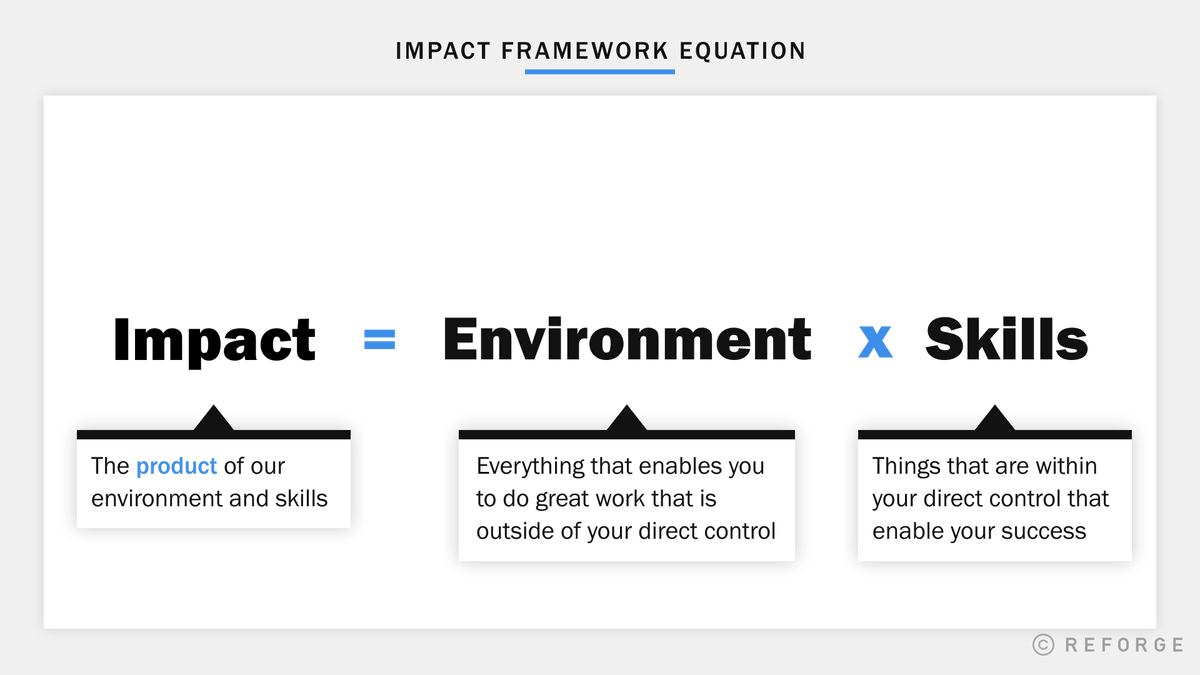
⚡️🧠Impact = Environment x Skill
A framework for making big career decisions by @iambangaly (Reforge Partner, Former Instacart, Instagram)
Full post -> https://t.co/dU0l7e0BWR
🧵 Thread...
As a result, Bangaly got a lot of reps guiding this type of decision and created a framework to help with it...
The goal is not to try and boil this type of decision down to a spreadsheet of inputs that spits out the answer, but rather it helps with 4 things...
- Identify individual variables that are inputs into the decision.
- Evaluate each individual variable in a structured way.
- Understand the relationship between each variable.
- Narrow the decision down to the most important variable
...
- Choosing to work on the shiny object
- Thinking you just need to improve your skills to progress
- Short-term thinking
- Solving only for brand
- Mixing perception and truth
a. Impact fuels career progression. It is the thing you need to solve for.
b. Impact is the product of Environment and Skills
c. If our skills are great, but the environment is wrong (or vice versa), then we aren't set up for success.
a. Your manager
b. Resources
c. Scope
d. Team
e. Compensation
f. Company culture
a. Communication
b. Influence/Leadership
c. Strategic Thinking
d. Execution
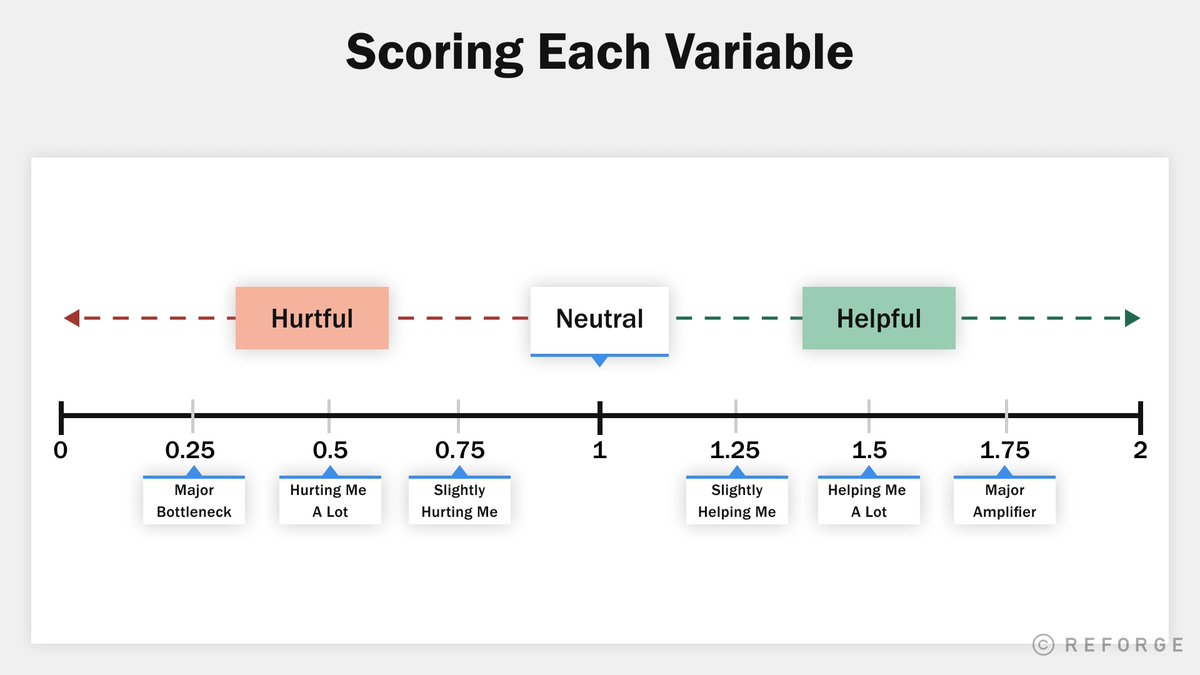
0 = Major Bottleneck
1 = Neutral
2 = Major Amplifier
...


a. Identify the variable that matters most
b. Evaluate your ability to change each variable
c. Understand the time horizon it will take to change each variable.
https://t.co/iN0M6eCjPI
Or learn more from Bangaly as a Reforge Member -> https://t.co/uzfVcrSzOy
More from Tech


These past few days I've been experimenting with something new that I want to use by myself.
Interestingly, this thread below has been written by that.
Let me show you how it looks like. 👇🏻
When you see localhost up there, you should know that it's truly an experiment! 😀
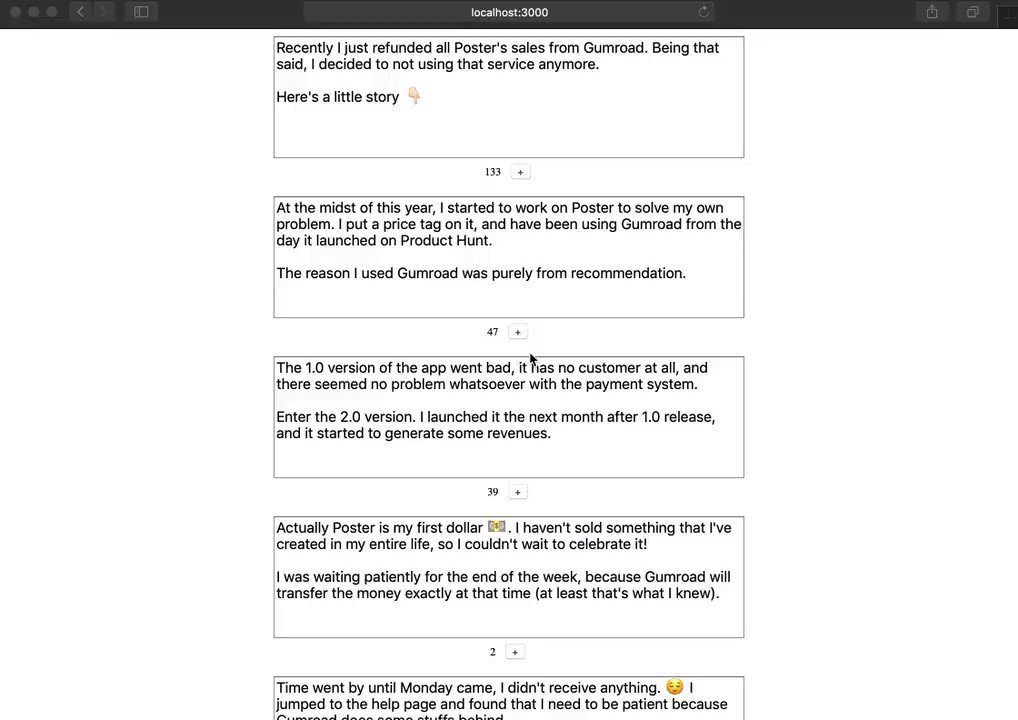
It's a dead-simple thread writer that will post a series of tweets a.k.a tweetstorm. ⚡️
I've been personally wanting it myself since few months ago, but neglected it intentionally to make sure it's something that I genuinely need.
So why is that important for me? 🙂
I've been a believer of a story. I tell stories all the time, whether it's in the real world or online like this. Our society has moved by that.
If you're interested by stories that move us, read Sapiens!
One of the stories that I've told was from the launch of Poster.
It's been launched multiple times this year, and Twitter has been my go-to place to tell the world about that.
Here comes my frustration.. 😤
Interestingly, this thread below has been written by that.
Let me show you how it looks like. 👇🏻
Recently I just refunded all Poster's sales from Gumroad. Being that said, I decided to not using that service anymore.
— Wilbert Liu \U0001f468\U0001f3fb\u200d\U0001f3a8 (@wilbertliu) November 19, 2018
Here's a little story \U0001f447\U0001f3fb
When you see localhost up there, you should know that it's truly an experiment! 😀
It's a dead-simple thread writer that will post a series of tweets a.k.a tweetstorm. ⚡️
I've been personally wanting it myself since few months ago, but neglected it intentionally to make sure it's something that I genuinely need.
So why is that important for me? 🙂
I've been a believer of a story. I tell stories all the time, whether it's in the real world or online like this. Our society has moved by that.
If you're interested by stories that move us, read Sapiens!
One of the stories that I've told was from the launch of Poster.
It's been launched multiple times this year, and Twitter has been my go-to place to tell the world about that.
Here comes my frustration.. 😤



You May Also Like

1/OK, data mystery time.
This New York Times feature shows China with a Gini Index of less than 30, which would make it more equal than Canada, France, or the Netherlands. https://t.co/g3Sv6DZTDE
That's weird. Income inequality in China is legendary.
Let's check this number.
2/The New York Times cites the World Bank's recent report, "Fair Progress? Economic Mobility across Generations Around the World".
The report is available here:
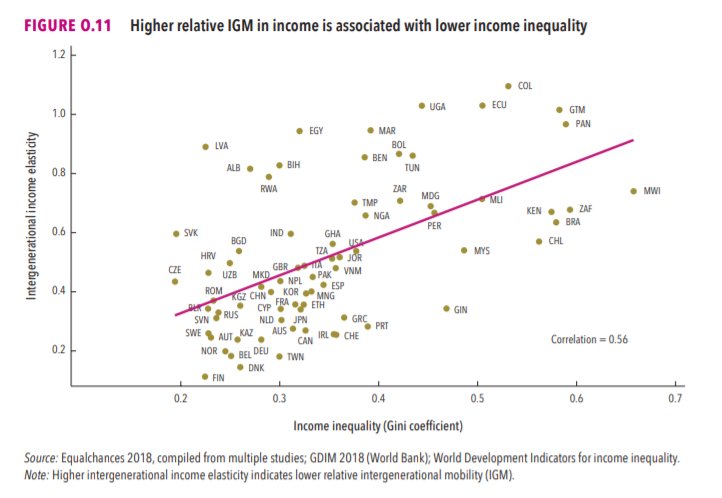
3/The World Bank report has a graph in which it appears to show the same value for China's Gini - under 0.3.
The graph cites the World Development Indicators as its source for the income inequality data.
4/The World Development Indicators are available at the World Bank's website.
Here's the Gini index: https://t.co/MvylQzpX6A
It looks as if the latest estimate for China's Gini is 42.2.
That estimate is from 2012.
5/A Gini of 42.2 would put China in the same neighborhood as the U.S., whose Gini was estimated at 41 in 2013.
I can't find the <30 number anywhere. The only other estimate in the tables for China is from 2008, when it was estimated at 42.8.
This New York Times feature shows China with a Gini Index of less than 30, which would make it more equal than Canada, France, or the Netherlands. https://t.co/g3Sv6DZTDE
That's weird. Income inequality in China is legendary.
Let's check this number.
2/The New York Times cites the World Bank's recent report, "Fair Progress? Economic Mobility across Generations Around the World".
The report is available here:
3/The World Bank report has a graph in which it appears to show the same value for China's Gini - under 0.3.
The graph cites the World Development Indicators as its source for the income inequality data.
4/The World Development Indicators are available at the World Bank's website.
Here's the Gini index: https://t.co/MvylQzpX6A
It looks as if the latest estimate for China's Gini is 42.2.
That estimate is from 2012.
5/A Gini of 42.2 would put China in the same neighborhood as the U.S., whose Gini was estimated at 41 in 2013.
I can't find the <30 number anywhere. The only other estimate in the tables for China is from 2008, when it was estimated at 42.8.