
https://t.co/24HOcHIEDl
Here are some resources you need as a designer/developer to work on your level of productivity.👨💻🍀
(Thread) 🧵👇
https://t.co/24HOcHIEDl
https://t.co/KNBH3i21vD
https://t.co/gPmFoPUtxq
https://t.co/UWTXzVYUaB
https://t.co/ETww1mxBOY
https://t.co/MUEyNSFa9r
https://t.co/RH5aHAIN15
https://t.co/S8Hsy9BVlK
https://t.co/fqrUCrSeAW
https://t.co/1FaUonu8XV
More from Software

@JuliaLMarcus @Iplaywithgerms This paper gives documentation on software (with causal reasoning, assumptions reviewed in appendix) for a parametric approach to estimating either "total effects" or "controlled direct effects" with competing events and time-varying
@Iplaywithgerms Total effects capture paths by which treatment affects competing event (e.g. protective total effect of lifesaving treatment on dementia may be wholly/partially due to effect on survival). Controlled direct effects do not capture these paths
@Iplaywithgerms More detailed reasoning on the difference and tradeoffs between total and controlled direct effects and causal reasoning in the point treatment context provided here along with description of some estimators and
@Iplaywithgerms If you are familiar with more robust approaches like IPW or even better TMLE for time-varying treatment, these are trivially adapted to go after the controlled direct effect by simply treating competing events like loss to follow-up (censoring). e.g.
@Iplaywithgerms Examples of IPW estimation of the total effect of a time-varying treatment described in Appendix D of this paper:
https://t.co/RNhcgTBMkb
And here
https://t.co/rMWmwFBWwV
Others in reference lists of above papers.
@Iplaywithgerms Total effects capture paths by which treatment affects competing event (e.g. protective total effect of lifesaving treatment on dementia may be wholly/partially due to effect on survival). Controlled direct effects do not capture these paths
@Iplaywithgerms More detailed reasoning on the difference and tradeoffs between total and controlled direct effects and causal reasoning in the point treatment context provided here along with description of some estimators and
@Iplaywithgerms If you are familiar with more robust approaches like IPW or even better TMLE for time-varying treatment, these are trivially adapted to go after the controlled direct effect by simply treating competing events like loss to follow-up (censoring). e.g.
@Iplaywithgerms Examples of IPW estimation of the total effect of a time-varying treatment described in Appendix D of this paper:
https://t.co/RNhcgTBMkb
And here
https://t.co/rMWmwFBWwV
Others in reference lists of above papers.








forgive my indulgence but 2020's been a big year for @shmuplations, so here's a look back at everything that went up over the last twelve months—there's a lot of stuff I'm sure you all read & other things you'd be forgiven for missing, so let's recap (thread)
the year kicked off with shmuplations' first big video project: a subtitled translation of a 2016 NHK documentary on the 30th anniversary of Dragon Quest which features interviews with Yuji Horii, Koichi Nakamura, Akira Toriyama, and Koichi Sugiyama https://t.co/JCWA15RTlx

following DQ30 was one of the most popular articles of the year: an assortment of interviews with composers Yuzo Koshiro and Motohiro Kawashima concerning the music of Streets of Rage 1, 2 & 3 https://t.co/QUtyC9W12Z their comments on SoR3 in particular were full of gems

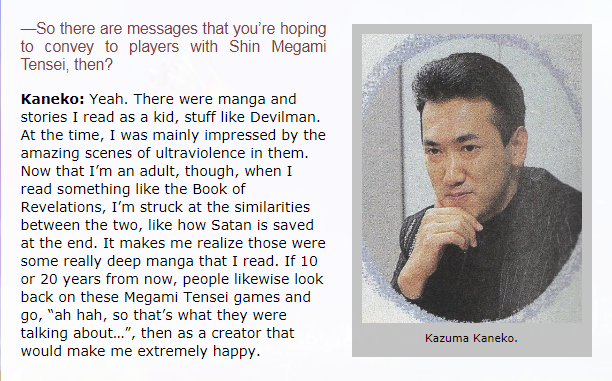
Game Designers: The Next Generation profiled six potential successors to the likes of Shigeru Miyamoto & Hironobu Sakaguchi, some of who you may recognise: Kazuma Kaneko, Takeshi Miyaji (1966-2011), Noboru Harada, Kan Naitou, Takashi Tokita & Ryoji Amano https://t.co/lWZU3PLvwX
from the 2010 Akumajou Dracula Best Music Collections Box, a subbed video feature on long-time Castlevania composer Michiru Yamane https://t.co/NMJe4ROozR sadly, Chiruru has since passed; Yamane wrote these albums in his honor
https://t.co/orlgPTDsKK
https://t.co/QnQl8KI9IX

the year kicked off with shmuplations' first big video project: a subtitled translation of a 2016 NHK documentary on the 30th anniversary of Dragon Quest which features interviews with Yuji Horii, Koichi Nakamura, Akira Toriyama, and Koichi Sugiyama https://t.co/JCWA15RTlx
following DQ30 was one of the most popular articles of the year: an assortment of interviews with composers Yuzo Koshiro and Motohiro Kawashima concerning the music of Streets of Rage 1, 2 & 3 https://t.co/QUtyC9W12Z their comments on SoR3 in particular were full of gems
Game Designers: The Next Generation profiled six potential successors to the likes of Shigeru Miyamoto & Hironobu Sakaguchi, some of who you may recognise: Kazuma Kaneko, Takeshi Miyaji (1966-2011), Noboru Harada, Kan Naitou, Takashi Tokita & Ryoji Amano https://t.co/lWZU3PLvwX
from the 2010 Akumajou Dracula Best Music Collections Box, a subbed video feature on long-time Castlevania composer Michiru Yamane https://t.co/NMJe4ROozR sadly, Chiruru has since passed; Yamane wrote these albums in his honor
https://t.co/orlgPTDsKK
https://t.co/QnQl8KI9IX

You May Also Like

1/ Here’s a list of conversational frameworks I’ve picked up that have been helpful.
Please add your own.
2/ The Magic Question: "What would need to be true for you
3/ On evaluating where someone’s head is at regarding a topic they are being wishy-washy about or delaying.
“Gun to the head—what would you decide now?”
“Fast forward 6 months after your sabbatical--how would you decide: what criteria is most important to you?”
4/ Other Q’s re: decisions:
“Putting aside a list of pros/cons, what’s the *one* reason you’re doing this?” “Why is that the most important reason?”
“What’s end-game here?”
“What does success look like in a world where you pick that path?”
5/ When listening, after empathizing, and wanting to help them make their own decisions without imposing your world view:
“What would the best version of yourself do”?
Please add your own.
2/ The Magic Question: "What would need to be true for you
1/\u201cWhat would need to be true for you to\u2026.X\u201d
— Erik Torenberg (@eriktorenberg) December 4, 2018
Why is this the most powerful question you can ask when attempting to reach an agreement with another human being or organization?
A thread, co-written by @deanmbrody: https://t.co/Yo6jHbSit9
3/ On evaluating where someone’s head is at regarding a topic they are being wishy-washy about or delaying.
“Gun to the head—what would you decide now?”
“Fast forward 6 months after your sabbatical--how would you decide: what criteria is most important to you?”
4/ Other Q’s re: decisions:
“Putting aside a list of pros/cons, what’s the *one* reason you’re doing this?” “Why is that the most important reason?”
“What’s end-game here?”
“What does success look like in a world where you pick that path?”
5/ When listening, after empathizing, and wanting to help them make their own decisions without imposing your world view:
“What would the best version of yourself do”?




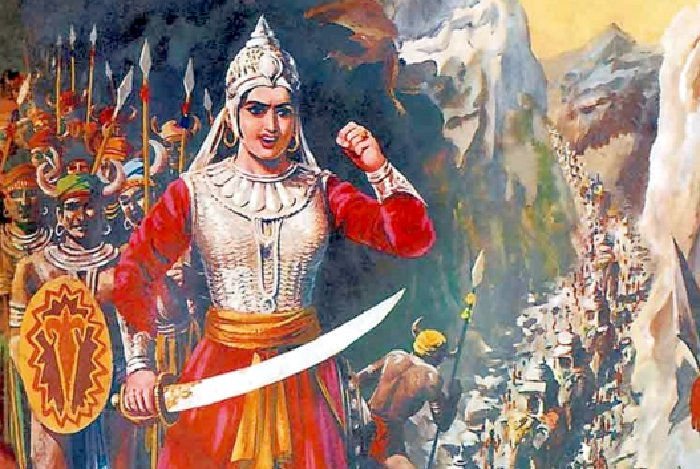

🌿𝑻𝒉𝒆 𝒔𝒕𝒐𝒓𝒚 𝒐𝒇 𝒂 𝑺𝒕𝒂𝒓 : 𝑫𝒉𝒓𝒖𝒗𝒂 & 𝑽𝒊𝒔𝒉𝒏𝒖
Once upon a time there was a Raja named Uttānapāda born of Svayambhuva Manu,1st man on earth.He had 2 beautiful wives - Suniti & Suruchi & two sons were born of them Dhruva & Uttama respectively.
#talesofkrishna https://t.co/E85MTPkF9W
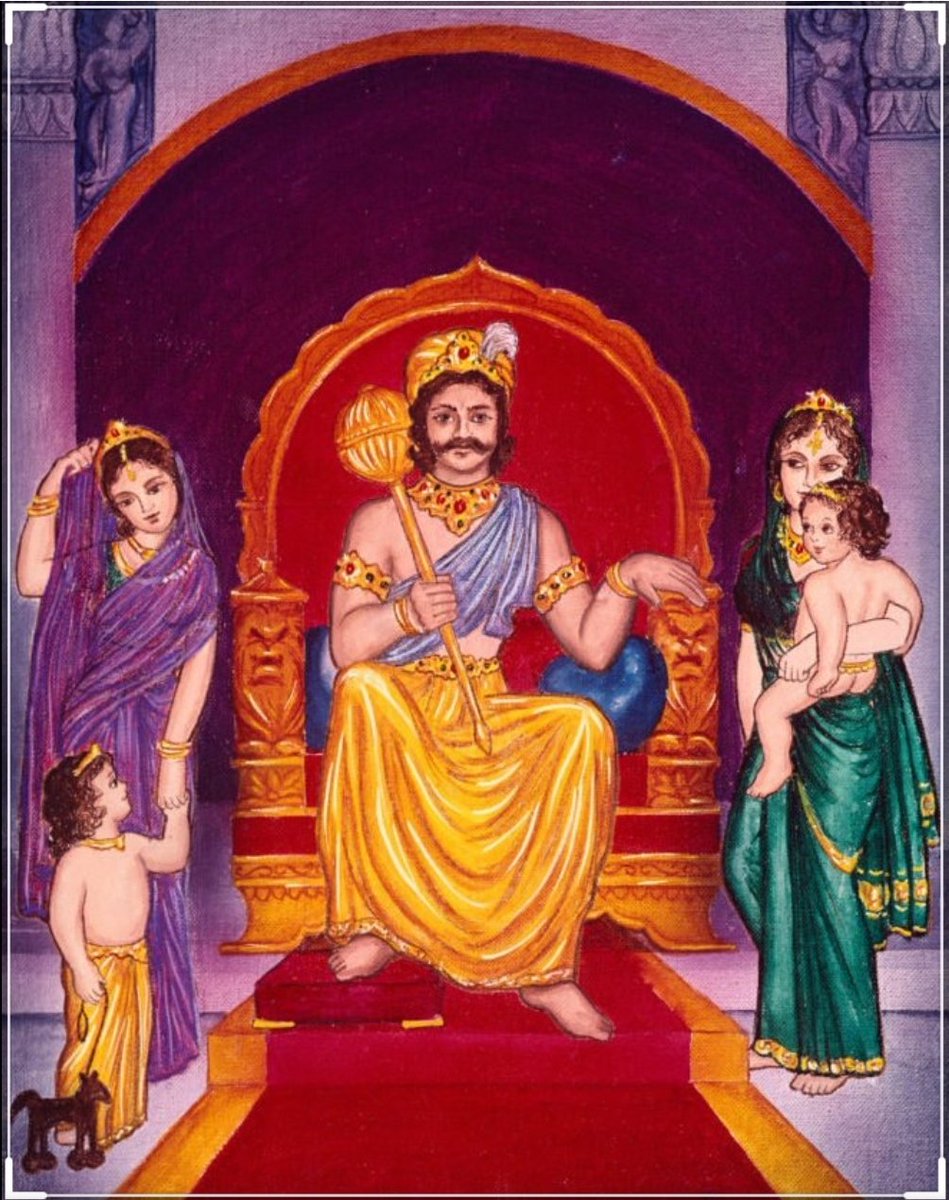
Now Suniti was the daughter of a tribal chief while Suruchi was the daughter of a rich king. Hence Suruchi was always favored the most by Raja while Suniti was ignored. But while Suniti was gentle & kind hearted by nature Suruchi was venomous inside.
#KrishnaLeela
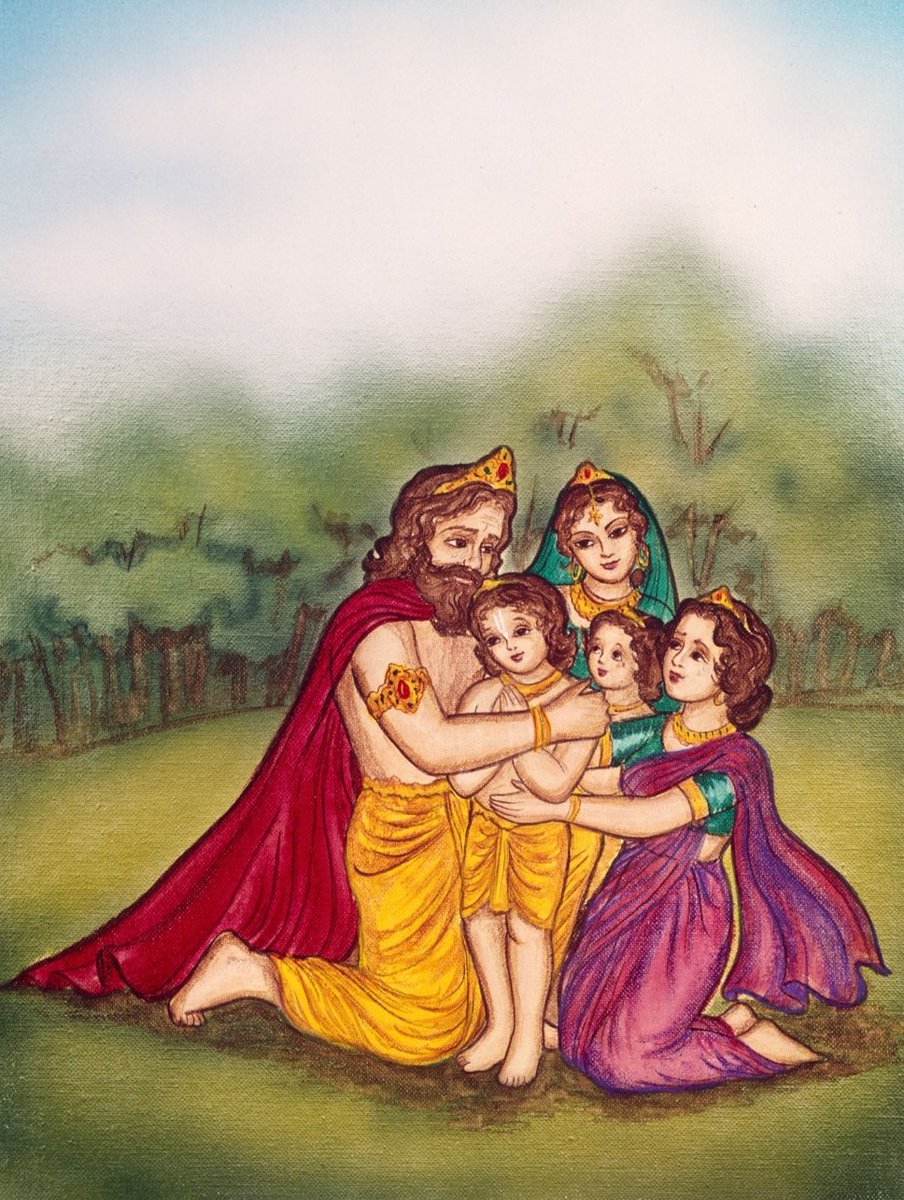
The story is of a time when ideally the eldest son of the king becomes the heir to the throne. Hence the sinhasan of the Raja belonged to Dhruva.This is why Suruchi who was the 2nd wife nourished poison in her heart for Dhruva as she knew her son will never get the throne.
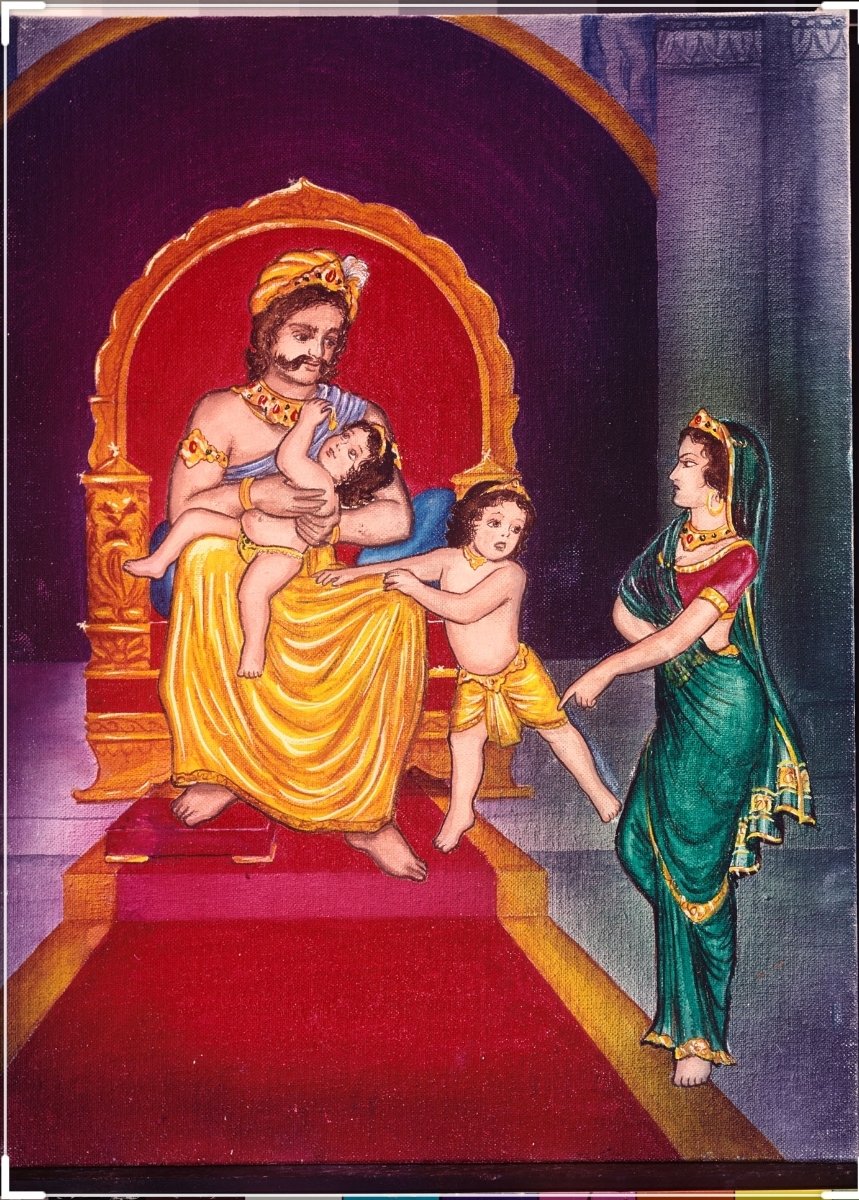
One day when Dhruva was just 5 years old he went on to sit on his father's lap. Suruchi, the jealous queen, got enraged and shoved him away from Raja as she never wanted Raja to shower Dhruva with his fatherly affection.
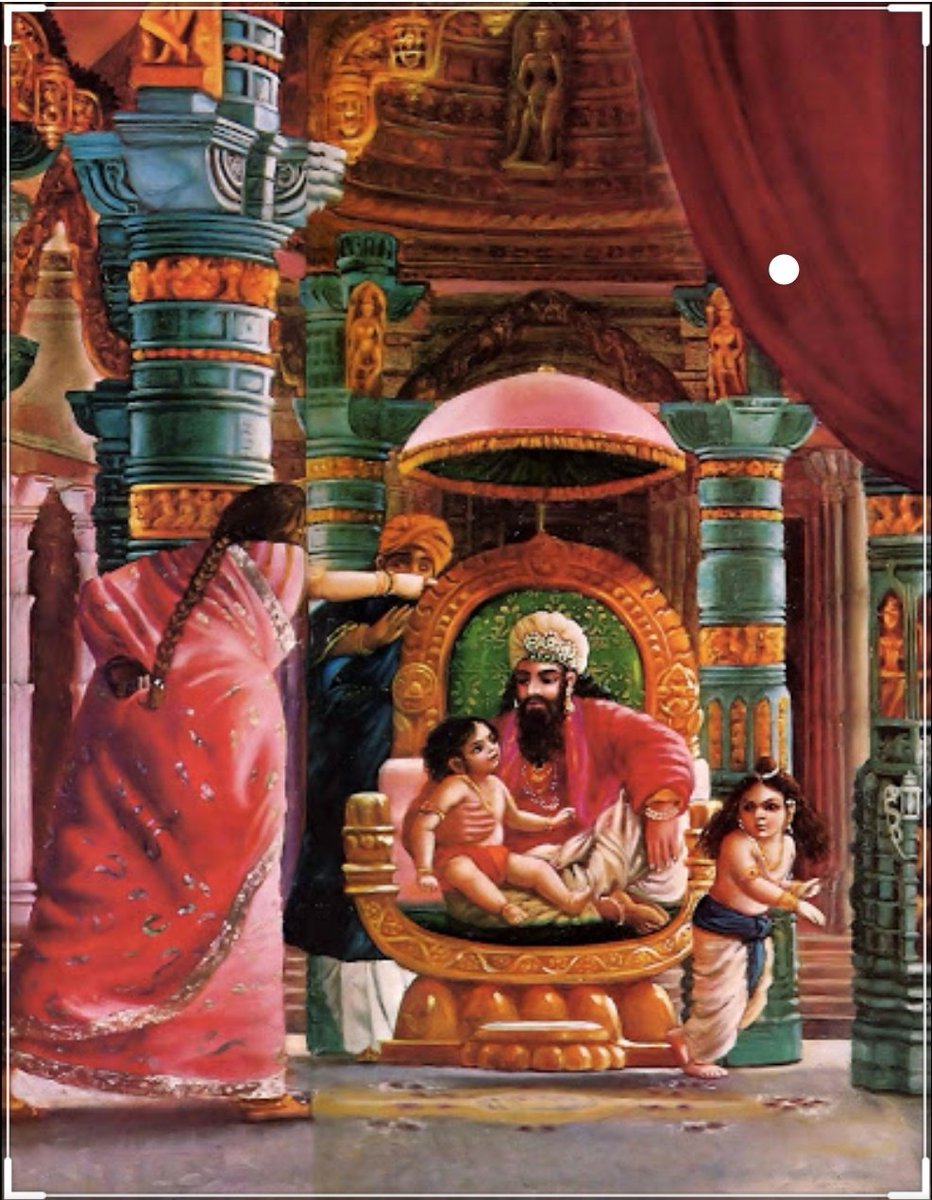
Dhruva protested questioning his step mother "why can't i sit on my own father's lap?" A furious Suruchi berated him saying "only God can allow him that privilege. Go ask him"
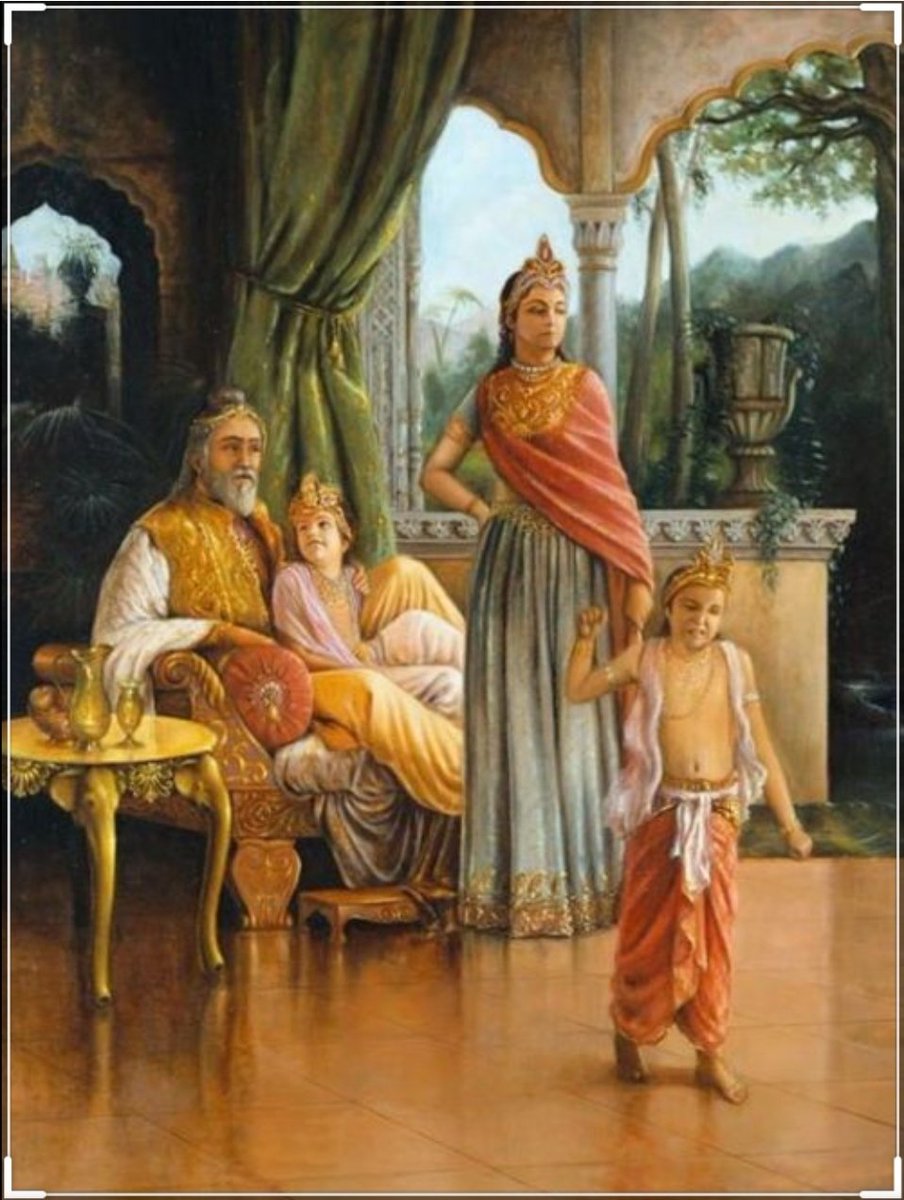
Once upon a time there was a Raja named Uttānapāda born of Svayambhuva Manu,1st man on earth.He had 2 beautiful wives - Suniti & Suruchi & two sons were born of them Dhruva & Uttama respectively.
#talesofkrishna https://t.co/E85MTPkF9W
Prabhu says i reside in the heart of my bhakt.
— Right Singh (@rightwingchora) December 21, 2020
Guess the event. pic.twitter.com/yFUmbfe5KL
Now Suniti was the daughter of a tribal chief while Suruchi was the daughter of a rich king. Hence Suruchi was always favored the most by Raja while Suniti was ignored. But while Suniti was gentle & kind hearted by nature Suruchi was venomous inside.
#KrishnaLeela
The story is of a time when ideally the eldest son of the king becomes the heir to the throne. Hence the sinhasan of the Raja belonged to Dhruva.This is why Suruchi who was the 2nd wife nourished poison in her heart for Dhruva as she knew her son will never get the throne.
One day when Dhruva was just 5 years old he went on to sit on his father's lap. Suruchi, the jealous queen, got enraged and shoved him away from Raja as she never wanted Raja to shower Dhruva with his fatherly affection.
Dhruva protested questioning his step mother "why can't i sit on my own father's lap?" A furious Suruchi berated him saying "only God can allow him that privilege. Go ask him"