the year kicked off with shmuplations' first big video project: a subtitled translation of a 2016 NHK documentary on the 30th anniversary of Dragon Quest which features interviews with Yuji Horii, Koichi Nakamura, Akira Toriyama, and Koichi Sugiyama
https://t.co/JCWA15RTlx
following DQ30 was one of the most popular articles of the year: an assortment of interviews with composers Yuzo Koshiro and Motohiro Kawashima concerning the music of Streets of Rage 1, 2 & 3
https://t.co/QUtyC9W12Z their comments on SoR3 in particular were full of gems
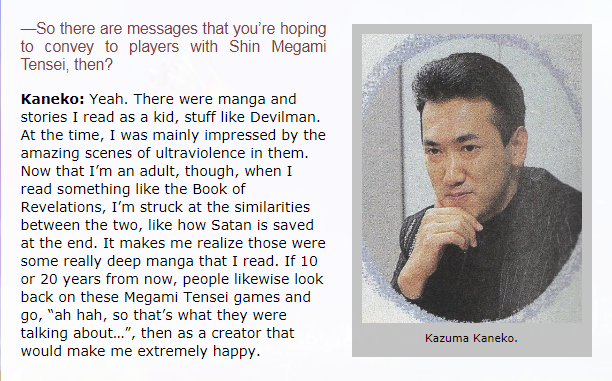
Game Designers: The Next Generation profiled six potential successors to the likes of Shigeru Miyamoto & Hironobu Sakaguchi, some of who you may recognise: Kazuma Kaneko, Takeshi Miyaji (1966-2011), Noboru Harada, Kan Naitou, Takashi Tokita & Ryoji Amano
https://t.co/lWZU3PLvwX
from the 2010 Akumajou Dracula Best Music Collections Box, a subbed video feature on long-time Castlevania composer Michiru Yamane
https://t.co/NMJe4ROozR sadly, Chiruru has since passed; Yamane wrote these albums in his honor
https://t.co/orlgPTDsKK https://t.co/QnQl8KI9IX
one of the more unique translations of the year: a Japanese interview with director Lorne Lanning & producer Sherry McKenna about Oddworld: Abe's Odyssey
https://t.co/lvuZdZ52w2 I'm no Oddworld expert but I suspect the interviewer's predictions may not have come true
another fairly popular article was this collection of interviews concerning the making of Sonic CD
https://t.co/euDG3fhbdV of particular note was the symbiosis between Sonic CD's musical aesthetic and Sonic's unlikely adoption as a '90s UK club music mascot
(this one also ended up being a little contentious due to an offhand comment one of the devs made about Sonic CD's place in the timeline, something I can't believe people still care enough to argue about)
these interviews, one with with Nintendo's Takaya Imamura & Sega's Hiroyuki Sakamoto and another with Sega's Toshihiro Nagoshi, cover the collaborative development of F-Zero AX/GX for arcade & Gamecube
https://t.co/Mz1PgPWMWr Nagoshi's ideas for the memory card were…interesting
from the Valkyrie Profile 2 Ultimania book, this lengthy interview with several of the tri-Ace devs covered all manner of topics concerning the development of the game: the game design, the many technical challenges & very specific character preferences:
https://t.co/wGx0sEdreU
this collection of interviews with the developers of the original Front Mission for Super Famicom cover a bunch of topics, but I think G-Craft designer Masanori Hara offers a fairly succinct summary of the essence of Front Mission
https://t.co/fqw0O8EUOH
another very popular translation was this Dengeki PlayStation interview, conducted after the release of the original Persona
https://t.co/D0suijadmO Kazuma Kaneko and Kouji Okada discussed differentiating the game from SMT, the game's themes, character inspirations & much more
this Gamest translation covers the making of the original Darkstalkers and features a lot of seldom-seen art and images from the All About Vampire mook
https://t.co/AINiBP5QcC it also goes over some misheard character quips, including this dev-specific Morrigan mondegreen
this "I Made That!" feature from 1991 offers some fairly brief developer discussions from thirteen different studios, including this very stirring message from the Megami Tensei team
https://t.co/1aBDblhwGA
here's a rather recent translation of a dialogue between the creators of two versus STG, the 1996'Twinkle Star Sprites & 2018's game Rival Megagun
https://t.co/IL8X62TnU9 unfortunately, I don't think either party has yet committed to a competitive axe-swinging buff dude game
another well-received interview was this long discussion from the Legend of Mana Ultimania book, in which many of the developers discussed the game's conception, monster and character design, crossover with the SaGa team & the endless ambition of director Koichi Ishii
this 2011 interview with composer Harumi Fujita covers her origins at SNK, her work at Capcom and many of her freelance compositions including Pulstar and Blazing Star
https://t.co/yTPG3mIVxl unfortunately, she can't recall every one of her works, for understandable reasons
in this interview about Capcom's original dinosaur-themed horror game Dino Crisis, director/producer Shinji Mikami reflects on the primal allure of the dinosaur, how the game differentiates itself from Resident Evil & his evolving ideas on game design
https://t.co/PH9JX3JGiH
in this 2014 interview, Game Freak founders Ken Sugimori and Junichi Masuda reflect on the unlicensed, guerrilla-style development of their first game, Quinty / Mendel Palace for Famicom/NES, and how it connects to the indie spirit of today
https://t.co/XbqGrpmyWF
this collection of interviews with Capcom & Takumi on the Giga Wing series is fascinating, not just for the insights it offers on the game itself but for showing just how serious Capcom was about fighting against the decline of arcades
https://t.co/xXY8wVasKF
taken from the Gunpei Yokoi's Game Museum book, this essay shares the late designer's own words on the origins of the Game & Watch and many of its signature titles, including this interesting observation about the two-screen G&W conversion of Donkey Kong
https://t.co/frmL32Ahip
this collection of pre- and post-release interviews covers the conception, intention, production and reception to Game Arts & Studio Alex's Mega CD RPG Lunar: The Silver Star
https://t.co/jaaNEONJIw here's a little insight into the real-world origins of the various characters
here's a pair of interviews with Arc System Works' Hideyuke Anbe & Daisuke Ishiwatari about the original Guilty Gear
https://t.co/GTZtFNnj8L there isn't a ton of pre-X GG media out there (especially pre-headbanger Daisuke photos), so I was happy to see this post pick up some buzz
easily the most popular article of the year was this (quite self-deprecating) composer commentary from Final Fantasy Tactics's Japanese sound test, which was cut from the international version and never fully re-implemented in subsequent ports
https://t.co/crsXmeLTdM
another very popular article was this collection of Klonoa interviews, which also includes comments from almost every original dev and a smattering of little-seen concept art
https://t.co/ClFxxBqj8n here's one quote on their desire to make something accessible but not childish
this interview with Intelligent Systems director Ryota Kawade & Nintendo's Hiroyasu Sasano covers the creation of the original Paper Mario for N64
https://t.co/bib3UFN0gW this quote in particular seemed relevant to some of the arguments concerning the series' recent direction
sadly, one of the least-read articles of the year was this massive Star Ocean 4 interview from the official guidebook
https://t.co/cbHZuHofP1 for a time, tri-Ace really could be considered the most ambitious mainstream JRPG studio—or, as they put it...
this collection of Shining Force II pre-release interviews is interesting not only for the background info it gives on the game itself, but as an active glimpse at some of the ways it changed during development
https://t.co/hpjmojVxrM
Aquanaut's Holiday creator Kazutoshi Iida discusses the response to his first game, his relationship with Artdink, his goals with the then-upcoming Tail of the Sun and his mixed feelings about "fascist" Nintendo
https://t.co/KR8lUJWHHp
this 1992 Famitsu interview with the Final Fantasy V team covers, among many other things, how they knew from the beginning that Gilgamesh was destined for greater things
https://t.co/E8HYLxgwzW
Hudson's director on Bloody Roar 3 outlines the choices behind the new game systems, the character revisions & his hopes for a future game (most of which were realised via Bloody Roar Extreme), as well as the results for their online "beastorizer" poll
https://t.co/mIWRjClqba
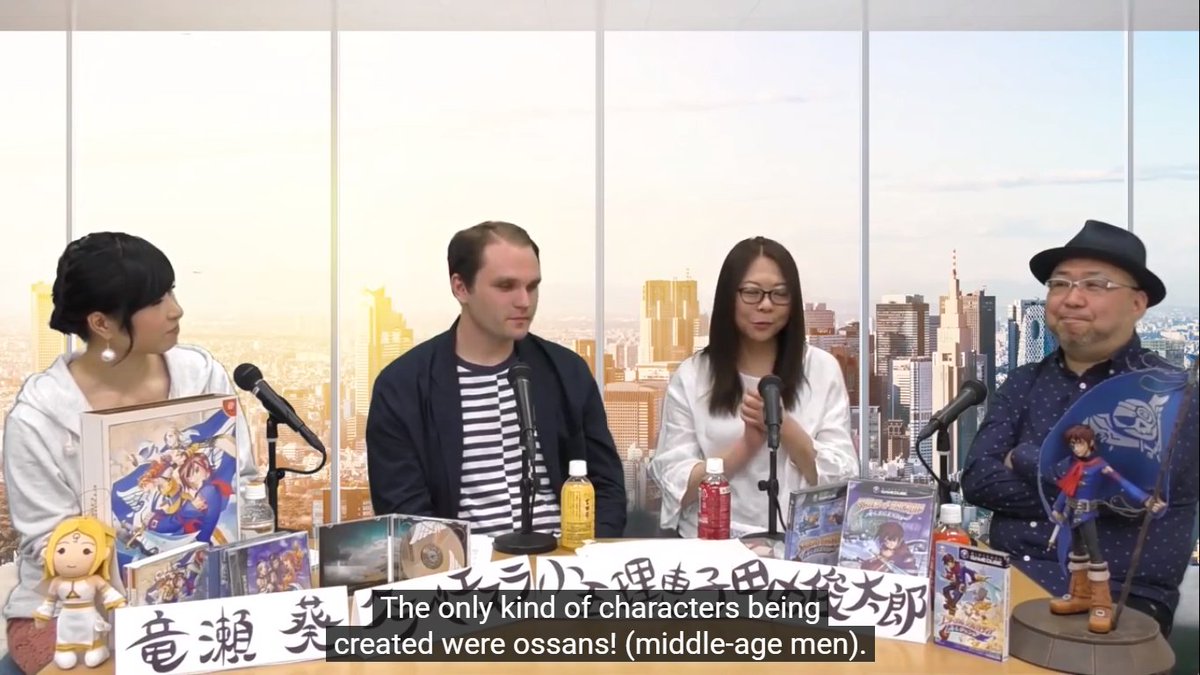
the third subbed video feature for this year was a gargantuan Skies of Arcadia interview with Rieko Kodama and Shuntaro Tanaka, conducted by IGN Japan just last year
https://t.co/RDlhUVMQdr the two-hour video reveals all sorts of details, with this being perhaps the most crucial
this Darius Gaiden interview from Gamest covers the game's broad concepts & the devs' efforts to maximise the 2D capabilities of the F3 hardware, as well as a lot of game-specific questions
https://t.co/90CwyiHJm8 anyone who knows the game will know how nutty this would've been
in this 1999 interview, Hideo Kojima gives an overview of his body of work up to and including Metal Gear Solid and expounds upon the artisanal nature of game creator
https://t.co/zcvkg4C7V4 he also promised his next work would be a "crowd-pleaser", maybe he meant ZOE...
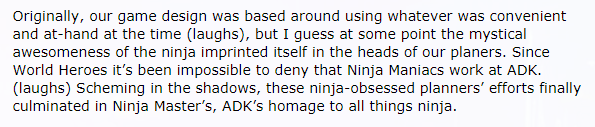
this grab-bag of interviews goes into brief detail on a variety of games and topics related to Alpha Denshi/ADK, the SNK-affiliated studio most remembered for their work on Neogeo, with the through-line being their conspicuous infatuation with ninjas
https://t.co/EaTuG4tqgk
these interviews & comments from the creators of Capcom/Nude Maker's ultra-immersive mech combat game Steel Battalion barely touch on the game's famously elaborate controller, but there's plenty said about the "vertical tank" design & the game's aesthetic
https://t.co/oEifZDBjkW
these interviews delve into the background of Wonder Project J2, a cult "communication adventure" game released for N64 exclusively in Japan
https://t.co/rpFssGJRnv among other topics,the interview covers the nature of the game's more interpretive & less deterministic game system
this 2000 Nice Games interview with composer Yasunori Mitsuda goes into his origins as a musician, his entry into the game industry (via a push from his mentor, Norihiko Yamanuki) & his work on Chrono Trigger, Radical Dreamers, Xenogears & Chrono Cross
https://t.co/lzBGNkYp2g
this article offers another huge helping of Skies of Arcadia info: 13(!) interviews with a variety of different staff members, plus interviews for external media like the manga & drama CD (with more to come!)
https://t.co/4paVyXrJTh here's a point of focus for director Seimiya
lastly for 2020, this feature covers the origins & design ethos behind several classic & cult puzzle games: Puyo Puyo, Puzzle Bobble/Bust-A-Move, Panel de Pon, Columns, Magical Drop, Uo Poko & Babel no Tou
https://t.co/BuhfMeGHlH Cave's original concepts were more, uh, Cave-like
on top of everything else, blackoak's lent his skills to a variety of professional game & game-adjacent translation work, some public and some less public—one such project you'll definitely have seen is Matt Leone's Street Fighter oral history series
https://t.co/Hoat3mUm3t
...so with all that said, if you enjoy or appreciate the work done by shmuplations, plz consider becoming a patron!
https://t.co/X8bKjIm7LI with your support, more (& more complex) material could potentially be translated more often, & patrons get to vote on what gets translated