So, here’s a way of reframing this question: which societies enabled coexistence and collaboration between people with divergent social styles, rather than imposing a dominant social style? Such social pluralism is very important indeed.
Which human societies, past or present, come closest to your ideal of how we should live together?
— Keith Frankish (@keithfrankish) January 15, 2021
More from pete wolfendale
This is what happens when you train neural networks largely on tone and its stylistic relics. They pick up formal features of arguments (not so much fallacies as tics) that have almost nothing to do with semantic content (focus on connotation over implication).
This is a secular problem in the discipline. It's got nothing to do with the Analytic/Continental split in the anglophone world. They've both got the same ramifying signal/noise problem, it's just that the styles (tics and connotations) are different in each pedagogical context.
And this is before we start talking about tone policing and topic policing, which are both rife and essentially make the peer review journal system completely unfit for purpose, populated as it is by a random sampling of pedants selecting for syntactic noise over semantic signal.
We've allowed a system of self-reinforcing and ratcheting filters to evolve that effectively *fuzzes* our contribution to the growth of human knowledge (https://t.co/VmW15pGt7J), because it selects for properties only loosely related to those we claim to want. Let that sink in.
This is literally the opposite of what a filter is supposed to do: extract signal from noise, syntactic compression that preserves semantic content. Instead we are awash in syntactic artifacts optimised for minimal criticisable content and maximal pedantic posturing.
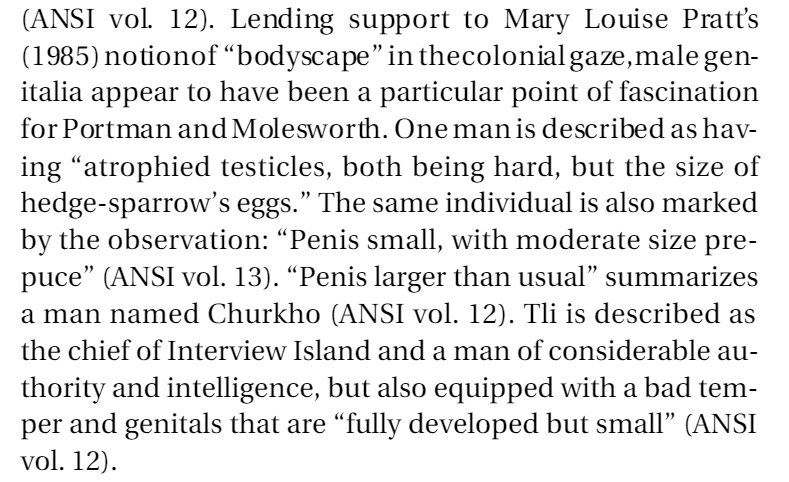
This is what happens when you let philosophers try to write about real life. This ridiculous, game-playing, feigned innocence. Journals have been full of this for years, this elaborate performance of *doing philosophy* and saying nothing. I cannot adequately express my contempt pic.twitter.com/ciDeWuEkET
— Jack (@jackeselbst) January 14, 2021
This is a secular problem in the discipline. It's got nothing to do with the Analytic/Continental split in the anglophone world. They've both got the same ramifying signal/noise problem, it's just that the styles (tics and connotations) are different in each pedagogical context.
And this is before we start talking about tone policing and topic policing, which are both rife and essentially make the peer review journal system completely unfit for purpose, populated as it is by a random sampling of pedants selecting for syntactic noise over semantic signal.
We've allowed a system of self-reinforcing and ratcheting filters to evolve that effectively *fuzzes* our contribution to the growth of human knowledge (https://t.co/VmW15pGt7J), because it selects for properties only loosely related to those we claim to want. Let that sink in.
This is literally the opposite of what a filter is supposed to do: extract signal from noise, syntactic compression that preserves semantic content. Instead we are awash in syntactic artifacts optimised for minimal criticisable content and maximal pedantic posturing.
More from Society





Two things can be true at once:
1. There is an issue with hostility some academics have faced on some issues
2. Another academic who himself uses threats of legal action to bully colleagues into silence is not a good faith champion of the free speech cause
I have kept quiet about Matthew's recent outpourings on here but as my estwhile co-author has now seen fit to portray me as an enabler of oppression I think I have a right to reply. So I will.
I consider Matthew to be a colleague and a friend, and we had a longstanding agreement not to engage in disputes on twitter. I disagree with much in the article @UOzkirimli wrote on his research in @openDemocracy but I strongly support his right to express such critical views
I therefore find it outrageous that Matthew saw fit to bully @openDemocracy with legal threats, seeking it seems to stifle criticism of his own work. Such behaviour is simply wrong, and completely inconsistent with an academic commitment to free speech.
I am not embroiling myself in the various other cases Matt lists because, unlike him, I think attention to the detail matters and I don't have time to research each of these cases in detail.
1. There is an issue with hostility some academics have faced on some issues
2. Another academic who himself uses threats of legal action to bully colleagues into silence is not a good faith champion of the free speech cause
How about Selina Todd, Kathleen Stock, Jo Phoenix, Rachel Ara, Sarah Honeychurch, Michele Moore, Nina Power, Joanna Williams, Jenny Murray, Julia Gasper ...
— Matt Goodwin (@GoodwinMJ) February 17, 2021
Or is it only Eric you pop at?
Are they all making it up too Rob?
Are they "beyond parody"? https://t.co/drQssTD0OL
I have kept quiet about Matthew's recent outpourings on here but as my estwhile co-author has now seen fit to portray me as an enabler of oppression I think I have a right to reply. So I will.
I consider Matthew to be a colleague and a friend, and we had a longstanding agreement not to engage in disputes on twitter. I disagree with much in the article @UOzkirimli wrote on his research in @openDemocracy but I strongly support his right to express such critical views
I therefore find it outrageous that Matthew saw fit to bully @openDemocracy with legal threats, seeking it seems to stifle criticism of his own work. Such behaviour is simply wrong, and completely inconsistent with an academic commitment to free speech.
I am not embroiling myself in the various other cases Matt lists because, unlike him, I think attention to the detail matters and I don't have time to research each of these cases in detail.