I have just received information about a family that has locked up their child at home in isolation because she complained of some aches in her body. They suspected the child as having C19. She was tested and after a couple of days, the test came out negative. 1/n
The stupid fear and the stupid policies are driving parents to abuse their children. 3/n
https://t.co/nlkWq6YIs6
https://t.co/0pkCNBhLaX
https://t.co/ggf6PYeLus

More from Abir Ballan 😊
A brief tutorial in health education to show you how sound health education models have been used for manipulation instead of creating health awareness during the COVID 19 pandemic. We'll uses masks as an example of a health behavior.
Are you ready to explore? 1/n
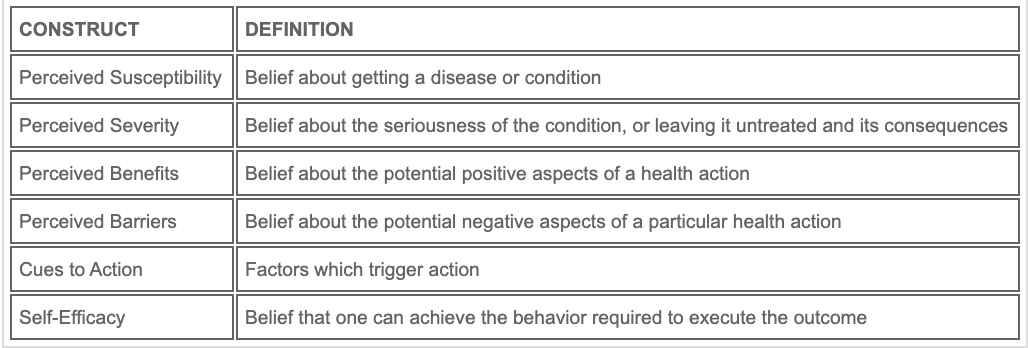
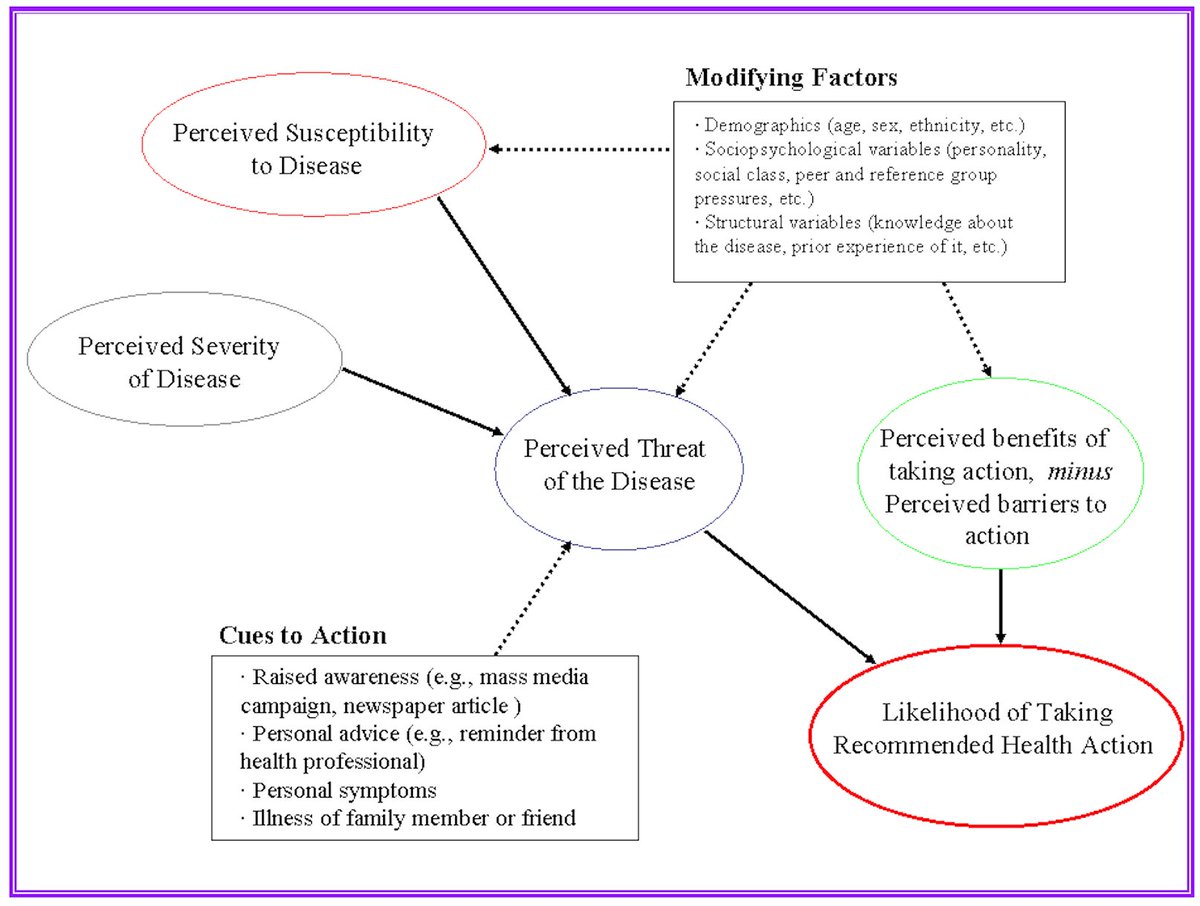
The Health Belief Model (HBM) consists of 5 components: perceived threat (lethality + Susceptibility),
perceived benefits,
perceived barriers and
cues to action.
Familiarise yourself with the definition of each concept in this table. 2/n
https://t.co/1tOz1cJFvc
Study this diagram to understand how the components are interrelated. 3/n
https://t.co/iUoaqNkgyP
Now let’s apply this to the COVID 19 pandemic.
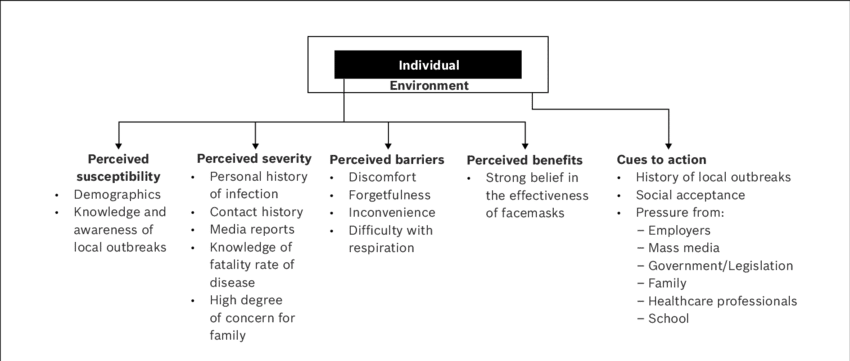
Review this diagram to see how the HBM applies to the behaviour of mask-wearing.
“perceived susceptibility appeared to be the most significant factor determining compliance” 4/n
https://t.co/xF6uwUx12N
Part I: The HBM
Increase the perceived threat of a disease
1) increase perceived severity: Confusing the general public with CFR & IFR- 2 indicators that are an order of magnitude apart.
People understood wrongly that the fatality rate of C19 is
Are you ready to explore? 1/n
The Health Belief Model (HBM) consists of 5 components: perceived threat (lethality + Susceptibility),
perceived benefits,
perceived barriers and
cues to action.
Familiarise yourself with the definition of each concept in this table. 2/n
https://t.co/1tOz1cJFvc
Study this diagram to understand how the components are interrelated. 3/n
https://t.co/iUoaqNkgyP
Now let’s apply this to the COVID 19 pandemic.
Review this diagram to see how the HBM applies to the behaviour of mask-wearing.
“perceived susceptibility appeared to be the most significant factor determining compliance” 4/n
https://t.co/xF6uwUx12N
Part I: The HBM
Increase the perceived threat of a disease
1) increase perceived severity: Confusing the general public with CFR & IFR- 2 indicators that are an order of magnitude apart.
People understood wrongly that the fatality rate of C19 is
"Globally, about 3.4% of reported #COVID19 cases have died. By comparison, seasonal flu generally kills far fewer than 1% of those infected"-@DrTedros #coronavirus
— World Health Organization (WHO) (@WHO) March 3, 2020
I disagree with you, Alastair. I believe @PanData19 is filling in the gaps that governments have failed to fill. I encourage you to have an open mind and listen intently to what we have to say. 1/n
Here’s how @PanData19 is approaching this crisis differently from governments:
We believe that "health is a state of complete physical, mental and social well-being and not merely the absence of disease or infirmity."- @WHO 2/n
To tackle the problem holistically, we have formed a multidisciplinary team made up of immunologist, microbiologist, geneticists, data scientists, physicians, economist, psychologists, educators, public health professionals and business owners. 3/n
We have also backed ourselves with a scientific advisory board made up of prominent experts in their fields.
@MartinKulldorff
@SunetraGupta
@MLevitt_NP2013
@MichaelYeadon3
#JayBhattacharya
#SucharitBhakdi
They are supporting us every step of the way. 4/n
We believe that "the right to health is one of a set of internationally agreed human rights standards, and is inseparable or ‘indivisible’ from these other rights.” @WHO 5/n
It\u2019s disappointing that you would join an organization comprised of non-experts, spreading harmful misinformation about a pandemic.
— Alastair \u2018Wear a Mask\u2019 McAlpine (@AlastairMcA30) December 11, 2020
I would urge you to reconsider.
Here’s how @PanData19 is approaching this crisis differently from governments:
We believe that "health is a state of complete physical, mental and social well-being and not merely the absence of disease or infirmity."- @WHO 2/n
To tackle the problem holistically, we have formed a multidisciplinary team made up of immunologist, microbiologist, geneticists, data scientists, physicians, economist, psychologists, educators, public health professionals and business owners. 3/n
We have also backed ourselves with a scientific advisory board made up of prominent experts in their fields.
@MartinKulldorff
@SunetraGupta
@MLevitt_NP2013
@MichaelYeadon3
#JayBhattacharya
#SucharitBhakdi
They are supporting us every step of the way. 4/n
We believe that "the right to health is one of a set of internationally agreed human rights standards, and is inseparable or ‘indivisible’ from these other rights.” @WHO 5/n
Humans inherently like the act of solidarity. We are social beings. We like to huddle up and be together.
They used this against us.
They convinced us that it was an act of solidarity to flatten the curve, to wear a mask for others, to take the vaccines for others,
and to reach #covidzero for others. They convinced us that this was for the greater good of society.
In reality, this couldn't be further away from the truth. They have divided us and broken the core structure of our society. They have dehumanized us with their masks.
They set us against each other into clans on opposite sides of a spectrum. They have turned us into aggressive beings fighting for our survival. Some of us fear harm from the virus, others fear harm from the vaccine, and yet others fear harm from the attack on our civilization.
We are all on a flight or fight mode. We are all operating under the influence of fear. We must collect ourselves and reflect on what has happened over the last year.
How is this for the greater good of society?
They used a tactical warfare strategy against us.
'Divide and conquer'.
We fell for it.
Now we must become aware of it and fight back.
We must reunite. We must find true solidarity to save our world. To free ourselves. To regain our autonomy.
They used this against us.
They convinced us that it was an act of solidarity to flatten the curve, to wear a mask for others, to take the vaccines for others,
If there was ever a time in our lifetime to be non-partisan and for citizens of all walks of life globally to unite behind the basic fundamentals of humanity, freedoms, liberties, human rights, sovereignty, autonomy, dignity, empathy and compassion: it is now. https://t.co/Fa3ieEq51x
— Kulvinder Kaur MD (@dockaurG) January 9, 2021
and to reach #covidzero for others. They convinced us that this was for the greater good of society.
In reality, this couldn't be further away from the truth. They have divided us and broken the core structure of our society. They have dehumanized us with their masks.
They set us against each other into clans on opposite sides of a spectrum. They have turned us into aggressive beings fighting for our survival. Some of us fear harm from the virus, others fear harm from the vaccine, and yet others fear harm from the attack on our civilization.
We are all on a flight or fight mode. We are all operating under the influence of fear. We must collect ourselves and reflect on what has happened over the last year.
How is this for the greater good of society?
They used a tactical warfare strategy against us.
'Divide and conquer'.
We fell for it.
Now we must become aware of it and fight back.
We must reunite. We must find true solidarity to save our world. To free ourselves. To regain our autonomy.