Carp can switch over to an anaerobic metabolism and quietly exhale booze until the situation gets better.
An interesting thing about carp is that they can go into anoxic hibernation and switch to an anaerobic metabolism based on converting glycogen to ethanol.
The waste ethanol is diffused out the gills
Carp can switch over to an anaerobic metabolism and quietly exhale booze until the situation gets better.
In theory, if you spent a few thousand years breeding carp for it, you could use them to make booze.
They'd be enormous, almost entirely glycogen deposits with a fish added as an afterthought.
You, a human, have only about 100 grams of glycogen in your liver, about 400 more grams in your skeletal muscles. Call it 500 grams total.
Carp can be 12% glycogen by weight.
A 75kg human would need to have 9kg of glycogen to match their carp friend.
https://t.co/Bt29kS7pO5
Call it 18 days worth. You'd need a lot more if you wanted to beat your carp friend at holding your breaths.
You currently do this in the liver, by further metabolizing ethanol into acetaldehyde.
You do this completely differently depending on whether you're a fetus or not.
https://t.co/gsnliVwr3G
You're gonna need a bigger liver or a better way
You're gonna scare your carp friends by pissing vinegar at them.
More from Anosognosiogenesis


So you want to generate interesting melodies.
1. Make a file called 1235.txt containing, one per line, all 24 unique permutations of the elements 1 2 3 5.
2. Cp 1235.txt to D.txt
3. Use sed to convert the numbers in D.txt to notes. Now you have 24 permutations of the major tetrachord in D.
4. Play them each. If it sounds like it increases tension, mark the beginning of that cell in 1235.txt with a +. If it sounds like it decreases tension, mark with a -.
Now those 24 melodic cells are divided into two groups: tension increasers and resolvers.
5. Rinse and repeat for all 12 keys.
You now have 13 plaintext files, filled with stuff like + 1 2 5 3 and - D E F# A
6. Figuratively roll dice to decide, given a +/- cell, what the next cell should be.
33% chance a + follows a +, etc.
Now you're outputting a stream of dynamic tensions: ++-+++-+-+---+ etc
1. Make a file called 1235.txt containing, one per line, all 24 unique permutations of the elements 1 2 3 5.
Claude Shannon made this machine to play the hex board game.
— Anosognosiogenesis (@pookleblinky) January 21, 2021
It is literally just a mesh of resistors and some light bulbs. No logic gates, no programming, nothing at all resembling AI.
Check it out: https://t.co/Zoyc9TmBcN pic.twitter.com/EANeMosPhT
2. Cp 1235.txt to D.txt
3. Use sed to convert the numbers in D.txt to notes. Now you have 24 permutations of the major tetrachord in D.
4. Play them each. If it sounds like it increases tension, mark the beginning of that cell in 1235.txt with a +. If it sounds like it decreases tension, mark with a -.
Now those 24 melodic cells are divided into two groups: tension increasers and resolvers.
5. Rinse and repeat for all 12 keys.
You now have 13 plaintext files, filled with stuff like + 1 2 5 3 and - D E F# A
6. Figuratively roll dice to decide, given a +/- cell, what the next cell should be.
33% chance a + follows a +, etc.
Now you're outputting a stream of dynamic tensions: ++-+++-+-+---+ etc
More from Science


💥💥 Situation Update, Dec. 7th – DNI John Ratcliffe, the bogus science of PCR testing and China’s GMO super soldiers
✅ I cover the bogus science behind PCR testing, explaining from a lab science point of view why no PCR instrument can “quantify” anything,
[M. Adams]

1. whether it’s a coronavirus viral load or the percentage of a food that’s GMO. In fact, literally all the tests currently conducted with PCR equipment are scientifically invalid when it comes to diagnosing illness or determining infectiousness. The sample acquisition used for
2. PCR tests — nasal swabs — aren’t even standardized! (100% bogus junk science).
After covering PCR tests, today’s update then goes into detail about Director of National Intelligence (DNI) John Ratcliffe, pointing out that he will be issuing a report on foreign interference
3. in U.S. elections on or before Dec. 18th. If this report confirms the existence of foreign interference that was capable of altering the outcome of the election, it gives President Trump full justification to declare the election null and void and dispatch military troops
4. to seize all ballots and hold a new count under military authority.
👉 Podcast notes and sources:
The office of military commissions has cleared its calendar for December:
https://t.co/u4nFRiUj8m
US military STOCKPILED Pfizer’s mRNA vaccineBEFORE it was approved by theFDA
✅ I cover the bogus science behind PCR testing, explaining from a lab science point of view why no PCR instrument can “quantify” anything,
[M. Adams]
1. whether it’s a coronavirus viral load or the percentage of a food that’s GMO. In fact, literally all the tests currently conducted with PCR equipment are scientifically invalid when it comes to diagnosing illness or determining infectiousness. The sample acquisition used for
2. PCR tests — nasal swabs — aren’t even standardized! (100% bogus junk science).
After covering PCR tests, today’s update then goes into detail about Director of National Intelligence (DNI) John Ratcliffe, pointing out that he will be issuing a report on foreign interference
3. in U.S. elections on or before Dec. 18th. If this report confirms the existence of foreign interference that was capable of altering the outcome of the election, it gives President Trump full justification to declare the election null and void and dispatch military troops
4. to seize all ballots and hold a new count under military authority.
👉 Podcast notes and sources:
The office of military commissions has cleared its calendar for December:
https://t.co/u4nFRiUj8m
US military STOCKPILED Pfizer’s mRNA vaccineBEFORE it was approved by theFDA


Localized Surface Plasmon Resonance - an overview | ScienceDirect Topics
https://t.co/mzS7vVSREJ
https://t.co/353PdAX2fa
https://t.co/3yBImjOdd4
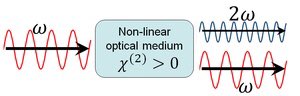
In some cases, almost 100% of the light energy can be converted to the second harmonic frequency. These cases typically involve intense pulsed laser beams passing through large crystals, and careful alignment to obtain phase matching.
https://t.co/mzS7vVSREJ
https://t.co/353PdAX2fa
https://t.co/3yBImjOdd4
In some cases, almost 100% of the light energy can be converted to the second harmonic frequency. These cases typically involve intense pulsed laser beams passing through large crystals, and careful alignment to obtain phase matching.

https://t.co/a6yrWK5dqg

https://t.co/Xe5xFdtDfO
https://t.co/e3RBxj0ly3
https://t.co/cJlCMqyP2v
https://t.co/5n5TK67iKB

https://t.co/Xe5xFdtDfO
https://t.co/e3RBxj0ly3
1. Monkey Outrage!
— Billy Bostickson \U0001f3f4\U0001f441&\U0001f441 \U0001f193 (@BillyBostickson) August 17, 2020
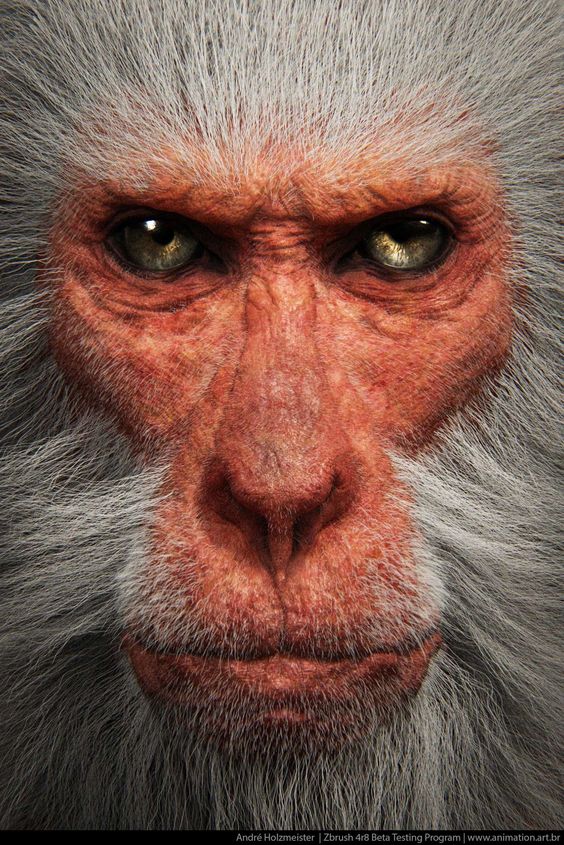
The worst treatment was kept for the monkeys. The macaques breed of monkeys are small, relatively light primates, which are often used for animal experiments at LPT. \u2018They are kept in cramped conditions in small cages. https://t.co/6D0yisjd9B
https://t.co/cJlCMqyP2v
11. Max Planck Monkey Photos (2) pic.twitter.com/0yE9D6iswp
— Billy Bostickson \U0001f3f4\U0001f441&\U0001f441 \U0001f193 (@BillyBostickson) August 17, 2020
https://t.co/5n5TK67iKB