Here's more on the new mitigation scenario for 1.5C. How does it work? What would society look like? Are we willing to do what's required to stop climate breakdown? See thread.
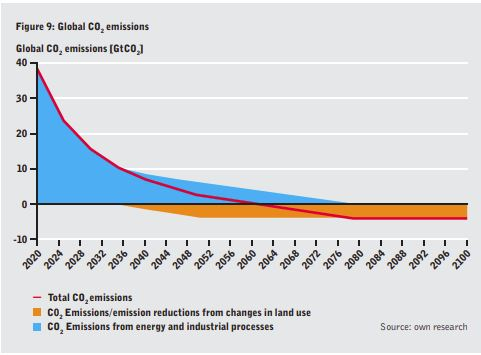
•a shift from private cars to public transportation
•reduction in flights
•smaller average house size
Meanwhile, consumption in the global South (non-Annex 1 countries) rises to converge.
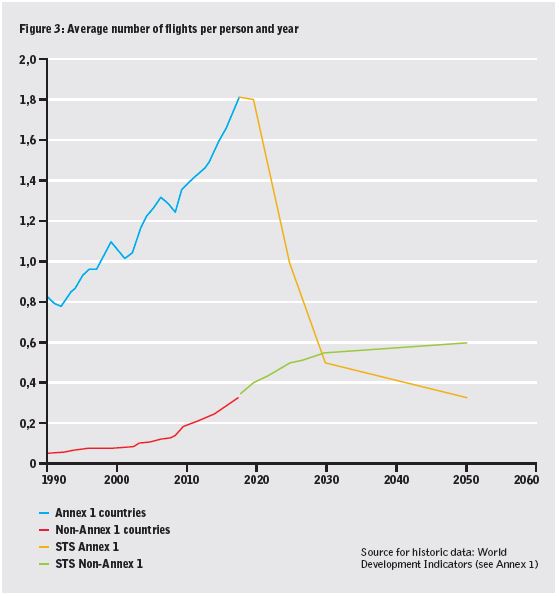
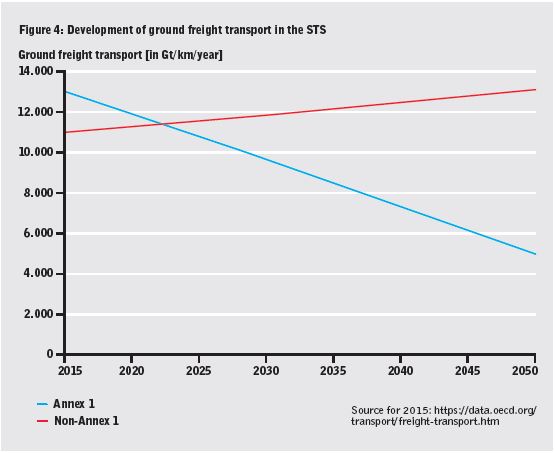
•Meat consumption in high-income nations falls by about two-thirds (with specific focus on beef).
•Significant reduction in food waste.
•Global transition from industrial farming to regenerative agricultural methods to restore soils and biodiversity.
•Universal public services
•Shorter working hours
•Basic income and maximum wage
•Radical reduction in inequality
These measures ensure that all people have access to the resources they need to live flourishing lives even as aggregate economic output declines.
More from Science


JUST ONE PERSON—UK 🇬🇧 scientists think one immunocompromised person who cleared virus slowly & only partially wiped out an infection, leaving behind genetically-hardier viruses that rebound & learn how to survive better. That’s likely how #B117 started. 🧵 https://t.co/bMMjM8Hiuz
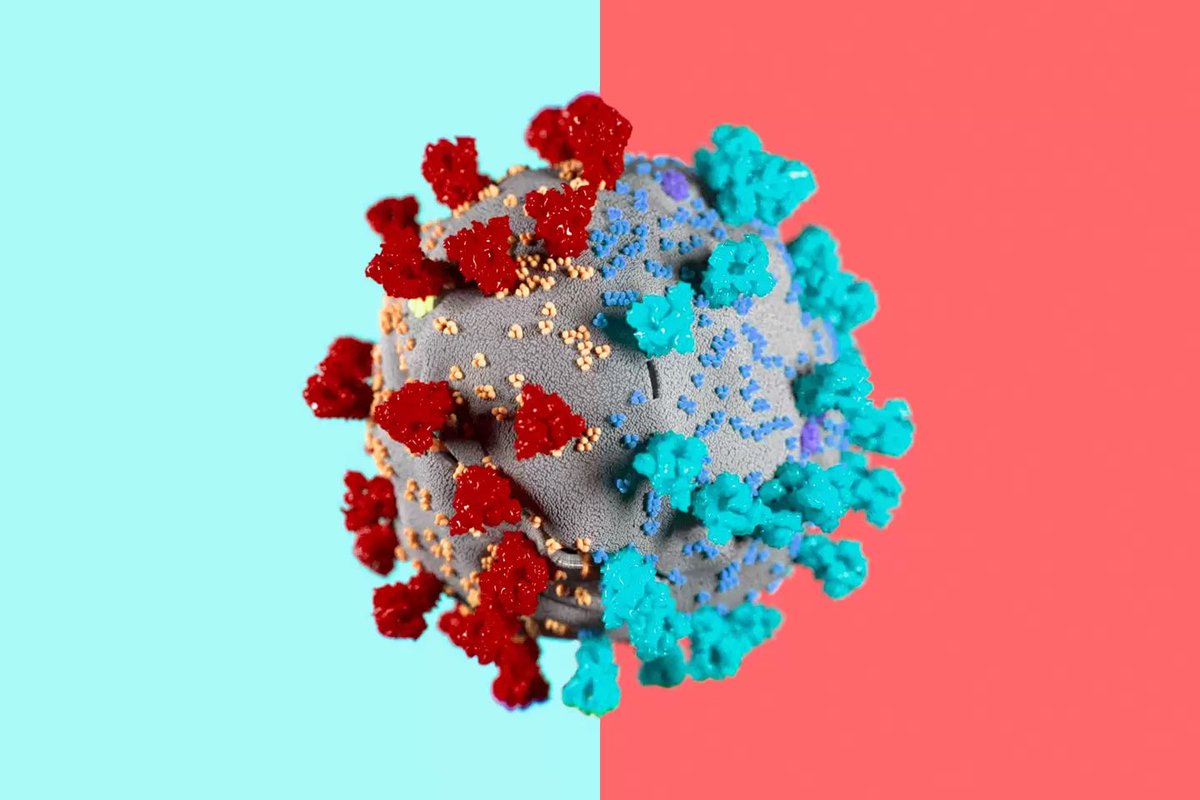
2) The leading hypothesis is that the new variant evolved within just one person, chronically infected with the virus for so long it was able to evolve into a new, more infectious form.
same thing happened in Boston in another immunocompromised person that was sick for 155 days.
3) What happened in Boston with one 45 year old man who was highly infectious for 155 days straight before he died... is exactly what scientists think happened in Kent, England that gave rise to #B117.
4) Doctors were shocked to find virus has evolved many different forms inside of this one immunocompromised man. 20 new mutations in one virus, akin to the #B117. This is possibly how #B1351 in South Africa 🇿🇦 and #P1 in Brazil 🇧🇷 also evolved.
5) “On its own, the appearance of a new variant in genomic databases doesn’t tell us much. “That’s just one genome amongst thousands every week. It wouldn’t necessarily stick out,” says Oliver Pybus, a professor of evolution and infectious disease at Oxford.
2) The leading hypothesis is that the new variant evolved within just one person, chronically infected with the virus for so long it was able to evolve into a new, more infectious form.
same thing happened in Boston in another immunocompromised person that was sick for 155 days.
3) What happened in Boston with one 45 year old man who was highly infectious for 155 days straight before he died... is exactly what scientists think happened in Kent, England that gave rise to #B117.
Immunocompromised 45 year old suffered from #COVID19 for 155 days before he died. The virus was changing very quickly inside the man's body\u2014it acquired a big cluster of >20 mutations\u2014resembled the same ones seen in #B117 & #B1351. (NPR audio Part 1 of 2)\U0001f9f5https://t.co/7kWiBZ1xGk pic.twitter.com/ZJ7AExB78Y
— Eric Feigl-Ding (@DrEricDing) February 8, 2021
4) Doctors were shocked to find virus has evolved many different forms inside of this one immunocompromised man. 20 new mutations in one virus, akin to the #B117. This is possibly how #B1351 in South Africa 🇿🇦 and #P1 in Brazil 🇧🇷 also evolved.
2) NPR report audio part 2 of 2:
— Eric Feigl-Ding (@DrEricDing) February 8, 2021
Dr. Li couldn't believe what they found. "I was shocked," he says. "When I saw the virus sequences, I knew that we were dealing with something completely different and potentially very important." pic.twitter.com/HT3Yt6djFd
5) “On its own, the appearance of a new variant in genomic databases doesn’t tell us much. “That’s just one genome amongst thousands every week. It wouldn’t necessarily stick out,” says Oliver Pybus, a professor of evolution and infectious disease at Oxford.

Localized Surface Plasmon Resonance - an overview | ScienceDirect Topics
https://t.co/mzS7vVSREJ
https://t.co/353PdAX2fa
https://t.co/3yBImjOdd4
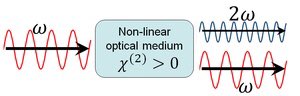
In some cases, almost 100% of the light energy can be converted to the second harmonic frequency. These cases typically involve intense pulsed laser beams passing through large crystals, and careful alignment to obtain phase matching.
https://t.co/mzS7vVSREJ
https://t.co/353PdAX2fa
https://t.co/3yBImjOdd4
In some cases, almost 100% of the light energy can be converted to the second harmonic frequency. These cases typically involve intense pulsed laser beams passing through large crystals, and careful alignment to obtain phase matching.


Ever since @JesseJenkins and colleagues work on a zero carbon US and this work by @DrChrisClack and colleagues on incorporating DER, I've been having the following set of thoughts about how to reduce the risk of failure in a US clean energy buildout. Bottom line is much more DER.
Typically, when we see zero-carbon electricity coupled to electrification of transport and buildings, implicitly standing behind that is totally unprecedented buildout of the transmission system. The team from Princeton's modeling work has this in spades for example.
But that, more even than the new generation required, runs straight into a thicket/woodchipper of environmental laws and public objections that currently (and for the last 50y) limit new transmission in the US. We built most transmission prior to the advent of environmental law.
So what these studies are really (implicitly) saying is that NEPA, CEQA, ESA, §404 permitting, eminent domain law, etc, - and the public and democratic objections that drive them - will have to change in order to accommodate the necessary transmission buildout.
I live in a D supermajority state that has, for at least the last 20 years, been in the midst of a housing crisis that creates punishing impacts for people's lives in the here-and-now and is arguably mostly caused by the same issues that create the transmission bottlenecks.
Rooftop solar can play a key role in a transition to 100% renewable energy - and it can help American's pocketbooks #GoSolarhttps://t.co/6p9jb62EGW
— Environment America (@EnvAm) January 14, 2021
Typically, when we see zero-carbon electricity coupled to electrification of transport and buildings, implicitly standing behind that is totally unprecedented buildout of the transmission system. The team from Princeton's modeling work has this in spades for example.
But that, more even than the new generation required, runs straight into a thicket/woodchipper of environmental laws and public objections that currently (and for the last 50y) limit new transmission in the US. We built most transmission prior to the advent of environmental law.
So what these studies are really (implicitly) saying is that NEPA, CEQA, ESA, §404 permitting, eminent domain law, etc, - and the public and democratic objections that drive them - will have to change in order to accommodate the necessary transmission buildout.
I live in a D supermajority state that has, for at least the last 20 years, been in the midst of a housing crisis that creates punishing impacts for people's lives in the here-and-now and is arguably mostly caused by the same issues that create the transmission bottlenecks.