same thing happened in Boston in another immunocompromised person that was sick for 155 days.
JUST ONE PERSON—UK 🇬🇧 scientists think one immunocompromised person who cleared virus slowly & only partially wiped out an infection, leaving behind genetically-hardier viruses that rebound & learn how to survive better. That’s likely how #B117 started. 🧵 https://t.co/bMMjM8Hiuz
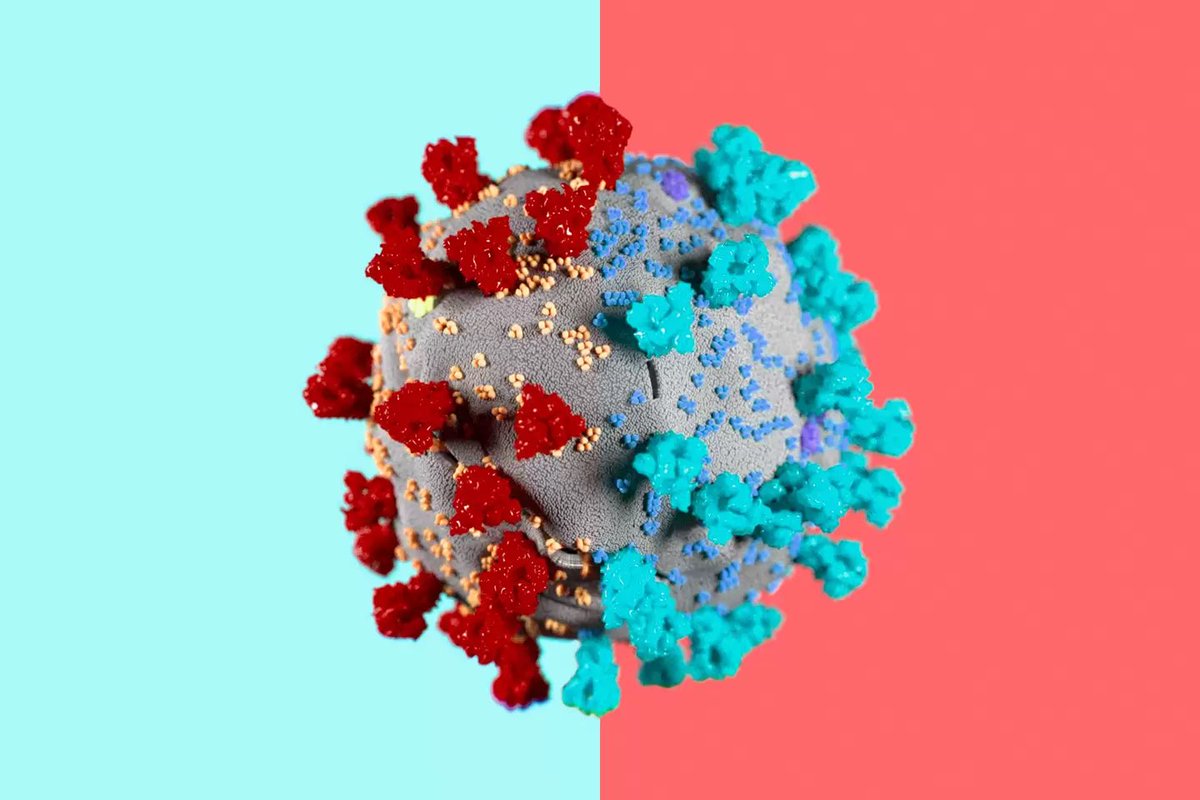
same thing happened in Boston in another immunocompromised person that was sick for 155 days.
Immunocompromised 45 year old suffered from #COVID19 for 155 days before he died. The virus was changing very quickly inside the man's body\u2014it acquired a big cluster of >20 mutations\u2014resembled the same ones seen in #B117 & #B1351. (NPR audio Part 1 of 2)\U0001f9f5https://t.co/7kWiBZ1xGk pic.twitter.com/ZJ7AExB78Y
— Eric Feigl-Ding (@DrEricDing) February 8, 2021
2) NPR report audio part 2 of 2:
— Eric Feigl-Ding (@DrEricDing) February 8, 2021
Dr. Li couldn't believe what they found. "I was shocked," he says. "When I saw the virus sequences, I knew that we were dealing with something completely different and potentially very important." pic.twitter.com/HT3Yt6djFd
It was only when it became obvious that measures in Kent were failing that Public Health England realised the outbreak was being driven by a new variant.”
DIFFERENCE A VARIANT CAN MAKE: Early in the Oxford-AstraZeneca\u2019s South Africa \U0001f1ff\U0001f1e6 trial, before #B1351 variant became dominant, the AZ vaccine had a great efficacy of 75% risk reduction of #COVID19 after a single dose! But all that disappeared once B1351 variant showed up... \U0001f9f5 pic.twitter.com/LcVcV2aVzE
— Eric Feigl-Ding (@DrEricDing) February 8, 2021
Worrisome discovery\u2014Among placebo group for Novavax\u2019s vaccine in South Africa\U0001f1ff\U0001f1e6: people with prior #COVID19 infections appeared just as likely to get sick as people without prior infections\u2014means past infection wasn\u2019t fully protective for #B1351 variant.\U0001f9f5https://t.co/K5zY4ZcSMV pic.twitter.com/LB1HKIur34
— Eric Feigl-Ding (@DrEricDing) February 6, 2021
\u26a0\ufe0fSURGING #B117 WITHIN US\u2014growing 7% per day, doubling every 9.8 days nationally, & expected to become dominant by March 23rd. It is surging fastest in Florida\u2014doubling every 9.1 days. Scientists are extremely worried: 35-45% more transmissible.\U0001f9f5#COVID19 https://t.co/T3GV8anzYz pic.twitter.com/RFyifNq4QS
— Eric Feigl-Ding (@DrEricDing) February 7, 2021
\u26a0\ufe0fConcerning\u2014new data shows the more contagious #B117 variant is growing so quickly in Florida\u2014now almost 10% of all #COVID19 case. California only ~2 weeks behind. Surge of #B117 may yield April wave if vaccine rollout slow. \U0001f9f5
— Eric Feigl-Ding (@DrEricDing) February 11, 2021
(Dashboard by @my_helix)https://t.co/MrM1RYl52b pic.twitter.com/dBdWwNr65q
Behold... a #ZeroCovid utopia without any #COVID19, no variants, no vaccine or syringe shortages, no mask wars, kids in schools, & people just having fun!
— Eric Feigl-Ding (@DrEricDing) February 11, 2021
It\u2019s all possible if we aim for full suppression, and not just half-ass mitigation. We can do this. pic.twitter.com/tY4wBdPlac
More from Eric Feigl-Ding

📍DOUBLE REINFECTIONS—wow, both PM Justin Trudeau and Biden’s HHS Secretary Becerra got *reinfected* with #COVID19–from same conference—➡️when did Becerra last get infected? May 18th 2022—not even a full month ago! Trudeau in Jan 2022. I worry it’s reinfections due to #BA5/#BA4.
2) #BA5 and #BA4 are worrisome. They are surging and they have high reinfection potential. Your past BA1/BA2 doesn’t substantially protect you from #Ba5/4
3) Excess deaths—the new #BA4 & #BA5 variants of the coronavirus are currently the **fastest growing** strains in the US & UK. ➡️They are exponentially replacing all other past strains. Learn from South Africa’s early warning signs and their excess deaths. #CovidIsNotOver #COVID
4) Is it a Paxlovid rebound for Becerra, as some are asking? Unclear—Paxlovid rebound usually only happens at day 10-14 that we know of and have data. The FDA says it’s 1-2% rebound but I counted 12% from this Pfizer graph submitted to FDA.
5) and yes, #ba5 / #BA4 are very problematic. they are 2x more resistant than even BA2 for neutralizing the virus compared to those who had breakthrough reinfections from older Omicron.
HHS @SecBecerra has tested positive for COVID-19 again, the agency just announced. Last time he tested positive was May 18, after attending the G-7 Summit.
— Ariel Cohen (@ArielCohen37) June 13, 2022
2) #BA5 and #BA4 are worrisome. They are surging and they have high reinfection potential. Your past BA1/BA2 doesn’t substantially protect you from #Ba5/4
\U0001f4c8Surging #BA5 & #BA4 variants in both US & England. It\u2019s looking like #Ba5 is the new fastest strain\u2014which has ~10x increased in England in 1 month. Also notice that older #Omicron #B11529/#BA1 are already near *extinct*. I worry the \u201cnew\u201d Omicron BA1 bivalent vaccine is behind. pic.twitter.com/kLNH0gzPk3
— Eric Feigl-Ding (@DrEricDing) June 9, 2022
3) Excess deaths—the new #BA4 & #BA5 variants of the coronavirus are currently the **fastest growing** strains in the US & UK. ➡️They are exponentially replacing all other past strains. Learn from South Africa’s early warning signs and their excess deaths. #CovidIsNotOver #COVID
To anyone pointing to South Africa to suggest the impact of the omicron wave has been 'mild' or that the BA.4/5 haven't had much impact, I'd urge you to look at excess deaths. 29,500 excess deaths since Jan (omicron wave) & a peak of 1,844 excess deaths/wk during BA.4/5 wave.\U0001f9f5 pic.twitter.com/r7kLzmD5dG
— Dr. Deepti Gurdasani (@dgurdasani1) June 11, 2022
4) Is it a Paxlovid rebound for Becerra, as some are asking? Unclear—Paxlovid rebound usually only happens at day 10-14 that we know of and have data. The FDA says it’s 1-2% rebound but I counted 12% from this Pfizer graph submitted to FDA.
4) Look at these 97 Paxlovid patients here with viral RNA load data over time. Of 97, i conservatively counted at least 12 of 97 (12%) with viral load rebound after day 10. Even more if you count rebound after day 5. Thus, FDA\u2019s 1-2% doesn\u2019t match up here. https://t.co/bNoqj5W3Sk pic.twitter.com/B3Kh0Lc1A4
— Eric Feigl-Ding (@DrEricDing) May 5, 2022
5) and yes, #ba5 / #BA4 are very problematic. they are 2x more resistant than even BA2 for neutralizing the virus compared to those who had breakthrough reinfections from older Omicron.
Unfortunately neutralization experiments found that BA.4/5 is 2x more resistant than BA.2 to the blood obtained from vaccinated individuals who had a breakthrough infection with BA.1 or BA.2. 4/ pic.twitter.com/MEOPXuqTgg
— Dr. Jeff Gilchrist (@jeffgilchrist) June 13, 2022
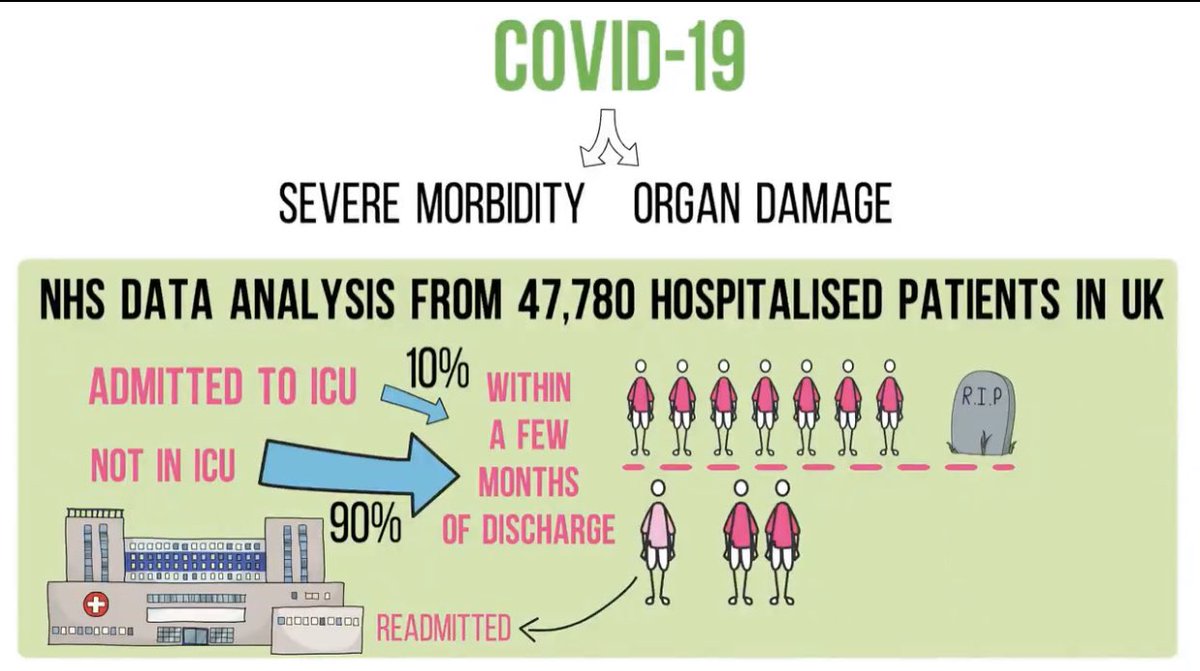
Wow. 1 in 3 hospitalized with #COVID19 gets readmitted to the hospital within a few months after discharge. ~48,000 UK patients.
Great animated lecture on #LongCovid by @Dr2NisreenAlwan, animated by @VickiGSP using info from UK @IndependentSage experts.

2) Furthermore, 1 in 8 of those who were discharged subsequently die. And many suffer long term ailments like heart disease, liver, kidney, diabetes, and more. This doesn’t even include less clinical critical cognitive effects. #LongCovid is real.
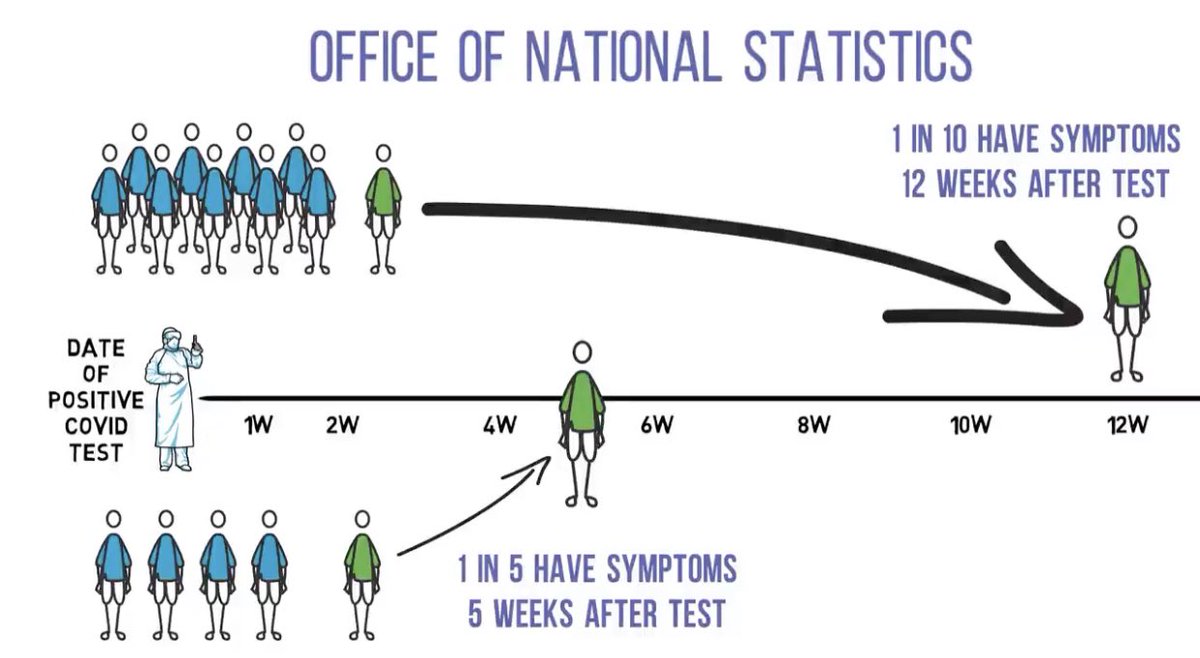
3) How common is #LongCovid overall? UK estimates 1 in 5 at 5 weeks and 1 in 10 have symptoms have even 12 weeks after initial #COVID19 diagnosis.
Lecture again by @Dr2NisreenAlwan

4) Let these numbers sink in... 1 in 10 at 12 weeks still have symptoms!
5) Here is the original study of the above lecture from few weeks ago. We need to prepare our healthcare system long term for the impact of millions with #LongCovid. This is gonna be larger than Gulf War Syndrome or long term health of 9/11 first responders.
Great animated lecture on #LongCovid by @Dr2NisreenAlwan, animated by @VickiGSP using info from UK @IndependentSage experts.
2) Furthermore, 1 in 8 of those who were discharged subsequently die. And many suffer long term ailments like heart disease, liver, kidney, diabetes, and more. This doesn’t even include less clinical critical cognitive effects. #LongCovid is real.
3) How common is #LongCovid overall? UK estimates 1 in 5 at 5 weeks and 1 in 10 have symptoms have even 12 weeks after initial #COVID19 diagnosis.
Lecture again by @Dr2NisreenAlwan
4) Let these numbers sink in... 1 in 10 at 12 weeks still have symptoms!
5) Here is the original study of the above lecture from few weeks ago. We need to prepare our healthcare system long term for the impact of millions with #LongCovid. This is gonna be larger than Gulf War Syndrome or long term health of 9/11 first responders.
LONG COVID\u201430% of hospital recovered #COVID19 patients end up back in hospital in <5 months; up to 12% die of complications. \u201cwe really need to prepare for #LongCovid. It\u2019s a mammoth task to follow up w/ these patients, but monitoring needs to be arranged\u201dhttps://t.co/h0y8WUn8sQ pic.twitter.com/Pk8GhQc9J5
— Eric Feigl-Ding (@DrEricDing) January 18, 2021

⚠️TWO DIFFERENT #COVID19 PANDEMICS—Many think with cases dropping that pandemic is nearly over. But truth is, there are now 2 different #SARSCoV2 pandemics diverging—old strain is waning, while the more contagious #B117 strain is dominating. We will be soon slammed very hard. 🧵
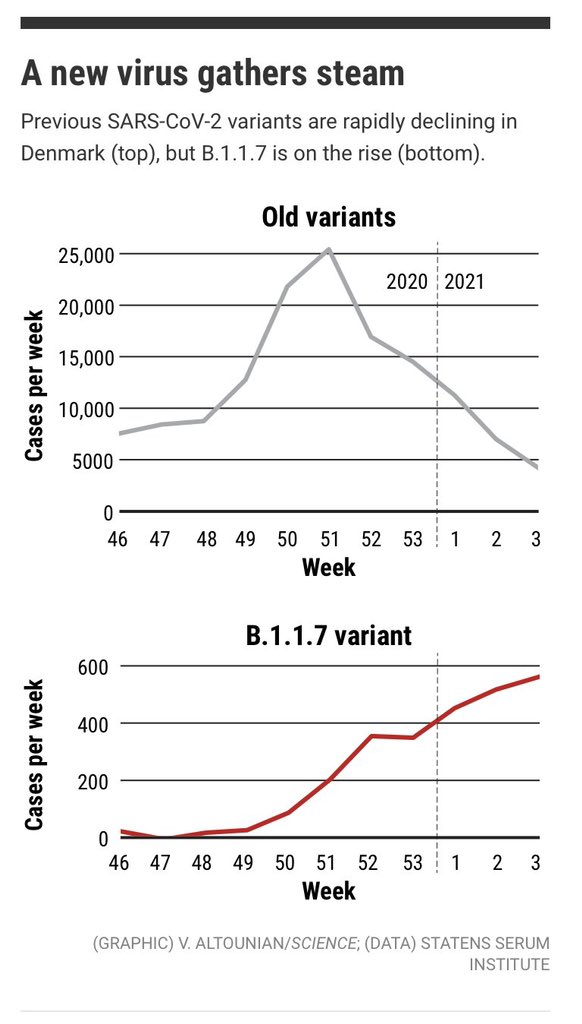
2) Here is what is really going to happen... most countries are having a gentle case decline with R(e) currently around 0.9. But this is deceiving. The #B117 is still relatively rare so far, so the R is being influenced mostly by the old common variant. But not for long...
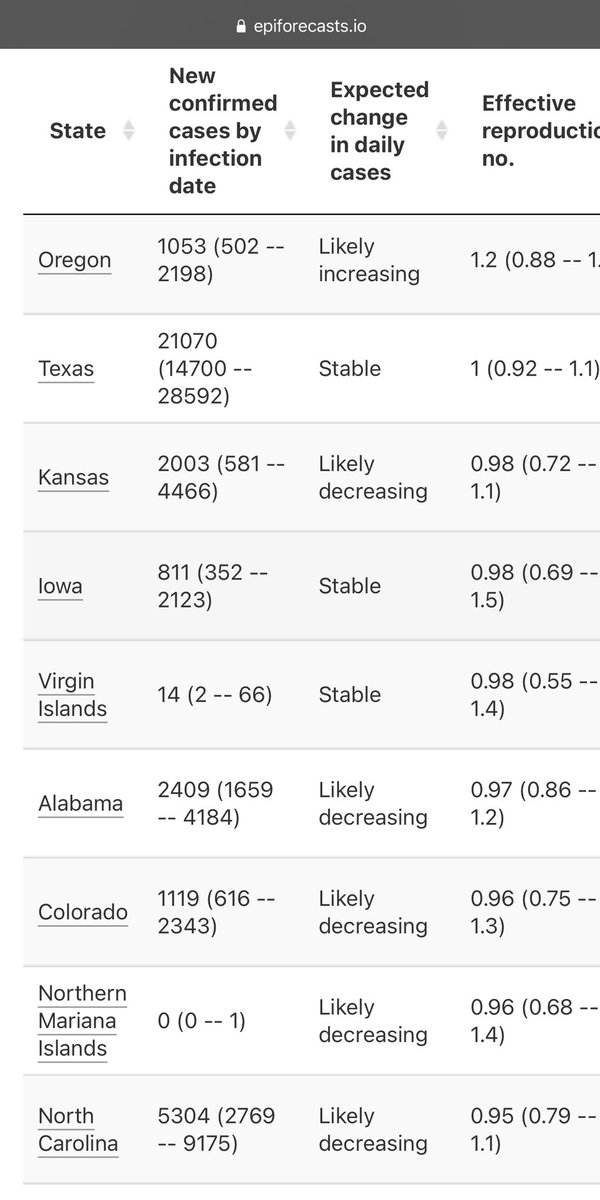
3) Here is what is going to happen... currently R is ~0.9 in many places, but with the more infectious #B117, the R will jump 50% approximately. And it is inevitable (all CDC and Danish models say this) that B117 will take over as the reigning dominant variant soon...
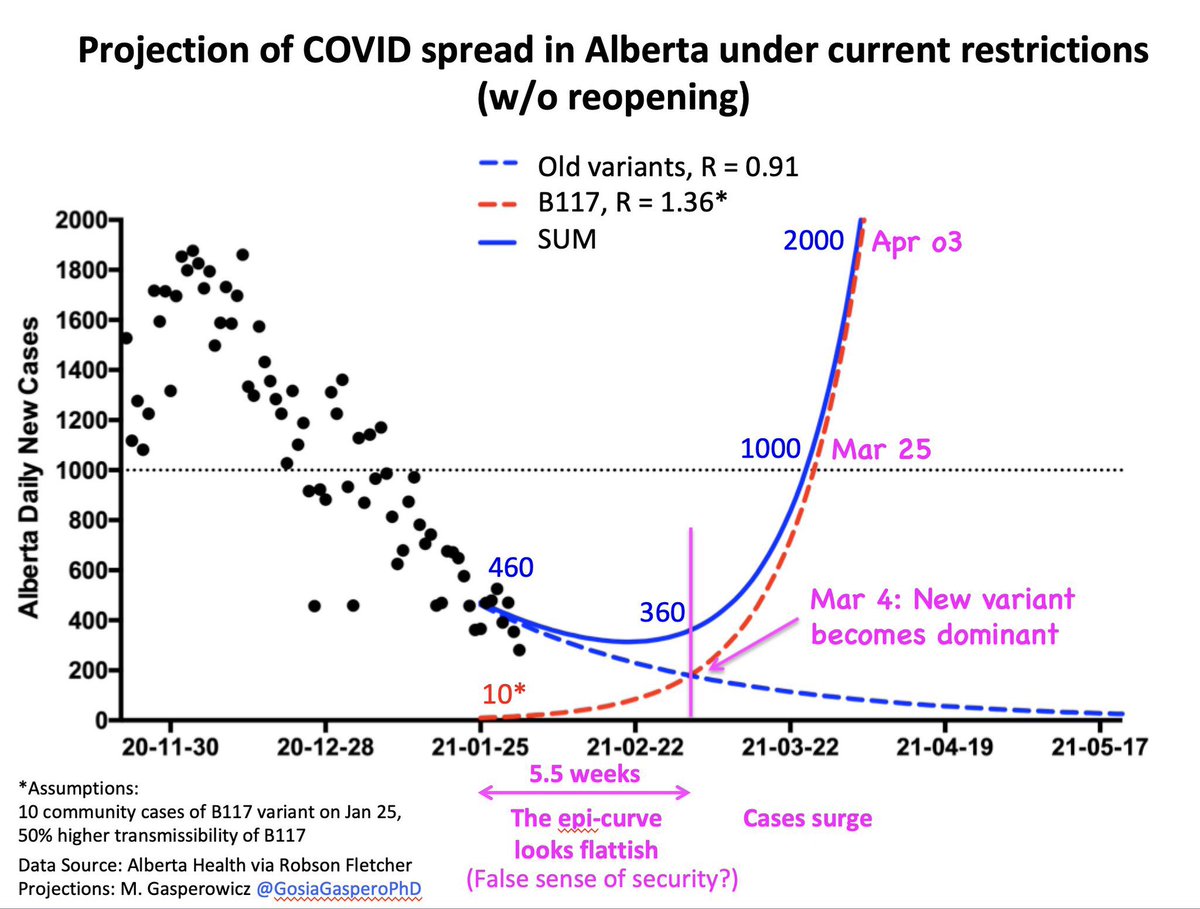
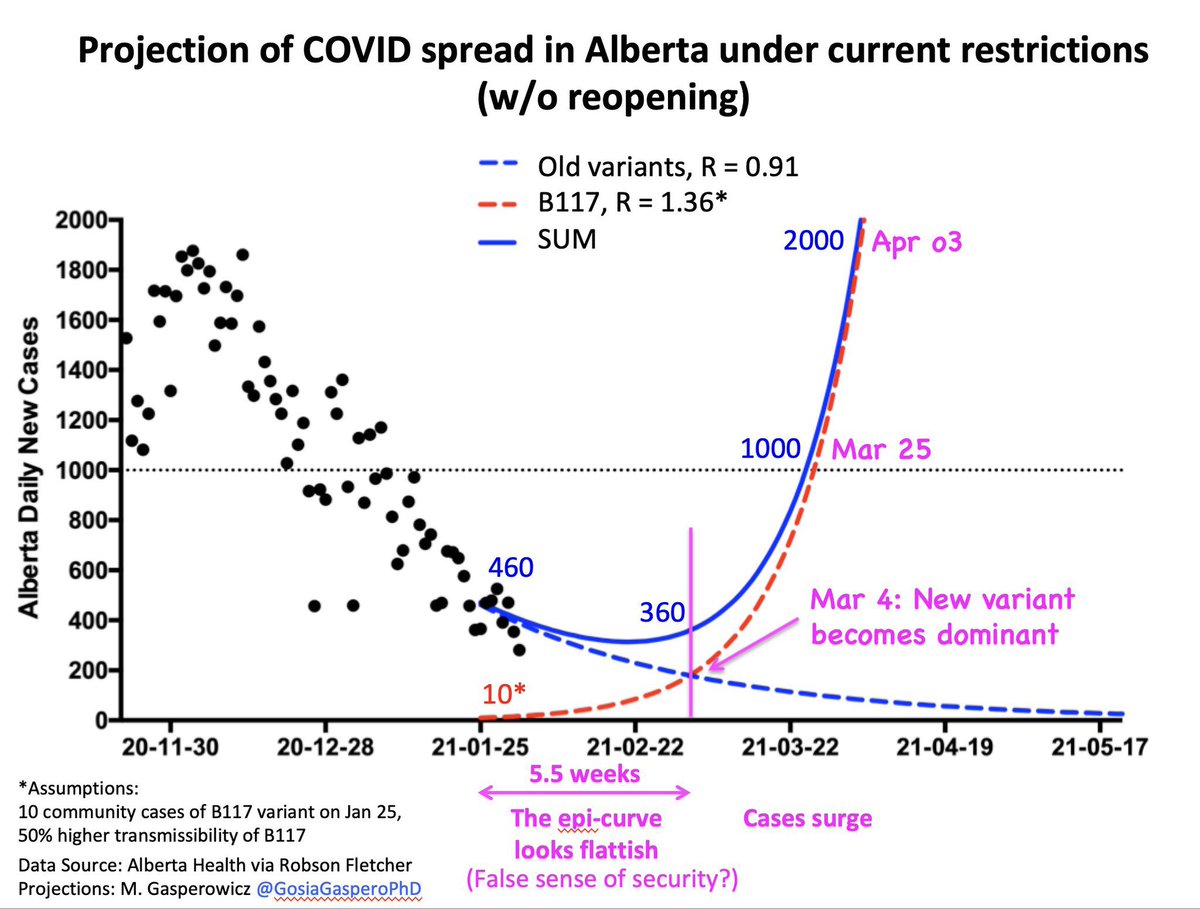
4) and when that happens, what worked before to keep the pandemic contained at R of 0.9 will no longer work. Here is the model for Alberta, 🇨🇦 by @GosiaGasperoPhD. The B117 dotted red line will soon dominate and drive a new surge in latter half of March and April.
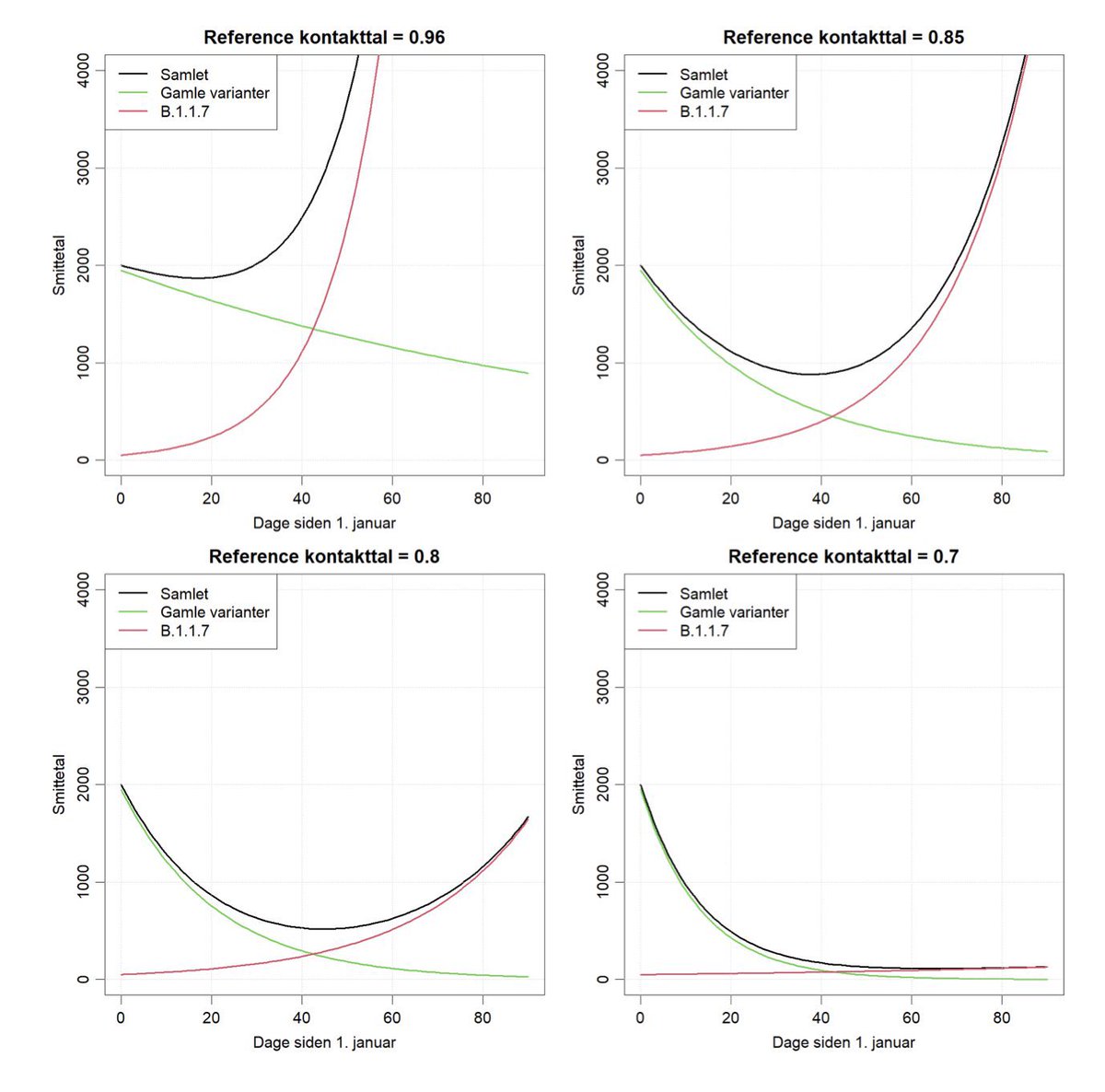
5) And Denmark 🇩🇰 CDC has found the same thing. I GQR works now for keeping R around 0.9 or even 0.8, will absolutely not work anymore once #B117 variant takes over. Forget about it. We will be hit hard. But there is a way—if we suppress R to 0.7 or less.
https://t.co/gOq0put4H5
2) Here is what is really going to happen... most countries are having a gentle case decline with R(e) currently around 0.9. But this is deceiving. The #B117 is still relatively rare so far, so the R is being influenced mostly by the old common variant. But not for long...
3) Here is what is going to happen... currently R is ~0.9 in many places, but with the more infectious #B117, the R will jump 50% approximately. And it is inevitable (all CDC and Danish models say this) that B117 will take over as the reigning dominant variant soon...
4) and when that happens, what worked before to keep the pandemic contained at R of 0.9 will no longer work. Here is the model for Alberta, 🇨🇦 by @GosiaGasperoPhD. The B117 dotted red line will soon dominate and drive a new surge in latter half of March and April.
5) And Denmark 🇩🇰 CDC has found the same thing. I GQR works now for keeping R around 0.9 or even 0.8, will absolutely not work anymore once #B117 variant takes over. Forget about it. We will be hit hard. But there is a way—if we suppress R to 0.7 or less.
https://t.co/gOq0put4H5

More from Science

An interesting thing about carp is that they can go into anoxic hibernation and switch to an anaerobic metabolism based on converting glycogen to ethanol.
The waste ethanol is diffused out the gills
https://t.co/V3D1umHf04
Carp can switch over to an anaerobic metabolism and quietly exhale booze until the situation gets better.
They basically evolved the same metabolic pathway as yeast, independently.
In theory, if you spent a few thousand years breeding carp for it, you could use them to make booze.
They'd be enormous, almost entirely glycogen deposits with a fish added as an afterthought.
The really interesting thing about anaerobic carp, is that they can go 4-5 months without oxygen by relying on liver glycogen.
You, a human, have only about 100 grams of glycogen in your liver, about 400 more grams in your skeletal muscles. Call it 500 grams total.
In humans, glycogen is also burned for energy. This is where the marathon runner's bonk comes from: you only have about 2,000 calories worth, and running a marathon burns those 2,000 calories.
The waste ethanol is diffused out the gills
https://t.co/V3D1umHf04
Carp can switch over to an anaerobic metabolism and quietly exhale booze until the situation gets better.
They basically evolved the same metabolic pathway as yeast, independently.
In theory, if you spent a few thousand years breeding carp for it, you could use them to make booze.
They'd be enormous, almost entirely glycogen deposits with a fish added as an afterthought.
The really interesting thing about anaerobic carp, is that they can go 4-5 months without oxygen by relying on liver glycogen.
You, a human, have only about 100 grams of glycogen in your liver, about 400 more grams in your skeletal muscles. Call it 500 grams total.
In humans, glycogen is also burned for energy. This is where the marathon runner's bonk comes from: you only have about 2,000 calories worth, and running a marathon burns those 2,000 calories.


Hugh Everett's birthday! Pioneer of the Many-Worlds Interpretation of quantum mechanics. Let us celebrate by thinking about ontological extravagance. I will do so by way of analogy, because I have found that everyone loves analogies and nobody ever willfully misconstrues them.
We look at the night sky and see photons arriving to us, emitted by distant stars. Let's contrast two different theories about how stars emit photons.
One theory says, we know how stars shine, and our equations predict that they emit photons roughly uniformly in all directions. Call this the "Many-Photons Interpretation" (MPI).
But! Others object. That is *so many photons*. Most of which we don't observe, and can't observe, since they're moving away at the speed of light. It's too ontologically extravagant to posit a huge number of unobservable things!
So they suggest a "Photon Collapse Interpretation." According to this theory, the photons emitted toward us actually exist. But photons that would be emitted in directions we will never observe simply collapse into utter non-existence.
The physicist Hugh Everett III was born #OTD in 1930. His \u201crelative state\u201d formulation of quantum mechanics, which we now call the \u201cMany Worlds Interpretation,\u201d was published in 1957. pic.twitter.com/ZqMsZcPJDG
— Robert McNees, the bastegod (@mcnees) November 11, 2020
We look at the night sky and see photons arriving to us, emitted by distant stars. Let's contrast two different theories about how stars emit photons.
One theory says, we know how stars shine, and our equations predict that they emit photons roughly uniformly in all directions. Call this the "Many-Photons Interpretation" (MPI).
But! Others object. That is *so many photons*. Most of which we don't observe, and can't observe, since they're moving away at the speed of light. It's too ontologically extravagant to posit a huge number of unobservable things!
So they suggest a "Photon Collapse Interpretation." According to this theory, the photons emitted toward us actually exist. But photons that would be emitted in directions we will never observe simply collapse into utter non-existence.


Hard agree. And if this is useful, let me share something that often gets omitted (not by @kakape).
Variants always emerge, & are not good or bad, but expected. The challenge is figuring out which variants are bad, and that can't be done with sequence alone.
You can't just look at a sequence and say, "Aha! A mutation in spike. This must be more transmissible or can evade antibody neutralization." Sure, we can use computational models to try and predict the functional consequence of a given mutation, but models are often wrong.
The virus acquires mutations randomly every time it replicates. Many mutations don't change the virus at all. Others may change it in a way that have no consequences for human transmission or disease. But you can't tell just looking at sequence alone.
In order to determine the functional impact of a mutation, you need to actually do experiments. You can look at some effects in cell culture, but to address questions relating to transmission or disease, you have to use animal models.
The reason people were concerned initially about B.1.1.7 is because of epidemiological evidence showing that it rapidly became dominant in one area. More rapidly that could be explained unless it had some kind of advantage that allowed it to outcompete other circulating variants.
Variants always emerge, & are not good or bad, but expected. The challenge is figuring out which variants are bad, and that can't be done with sequence alone.
Feels like the next thing we're going to need is a ranking system for how concerning "variants of concern\u201d actually are.
— Kai Kupferschmidt (@kakape) January 15, 2021
A lot of constellations of mutations are concerning, but people are lumping together variants with vastly different levels of evidence that we need to worry.
You can't just look at a sequence and say, "Aha! A mutation in spike. This must be more transmissible or can evade antibody neutralization." Sure, we can use computational models to try and predict the functional consequence of a given mutation, but models are often wrong.
The virus acquires mutations randomly every time it replicates. Many mutations don't change the virus at all. Others may change it in a way that have no consequences for human transmission or disease. But you can't tell just looking at sequence alone.
In order to determine the functional impact of a mutation, you need to actually do experiments. You can look at some effects in cell culture, but to address questions relating to transmission or disease, you have to use animal models.
The reason people were concerned initially about B.1.1.7 is because of epidemiological evidence showing that it rapidly became dominant in one area. More rapidly that could be explained unless it had some kind of advantage that allowed it to outcompete other circulating variants.